
BuddhistCatholicContemplativeEvangelicalGeneral ChristianHinduJewishLatter-day SaintMuslimNew VisionsProgressive Christian
Beliefs
- Buddhist
- Catholic
- Contemplative
- Evangelical
- General Christian
- Hindu
- Jewish
- Latter-day Saint
- More Voices
- Muslim
- New Visions
- Pagan
- Progressive Christian
Topics
- Religion News
- Food and Religion
- Sports and Religion
- Religious Art
- Religious Music and Entertainment
- Religious Events
- History and Religion
- Style and Religion
- Politics and Religion
- Women in Religion
- Recreation Outdoors and Religion
- Business Finance and Religion
- Careers Workplace and Religion
- Education and Religion
- Family Parenting and Religion
- Health Fitness and Religion
- Home and Religion
- Relationships and Religion
- Technology and Religion
- Travel and Religion
Columnists
- Buddhist Columnists
- Business Finance and Religion Columnists
- Careers Workplace and Religion Columnists
- Catholic Columnists
- Contemplative Columnists
- Education and Religion Columnists
- Evangelists Columnists
- Family Parenting and Religion Columnists
- General Christian Columnists
- Health Fitness and Religion Columnists
- Hindu Columnists
- History and Religion Columnists
- Home and Religion Columnists
- Jewish Columnists
- More Voices Columnists
- Latter Day Columnists
- Muslim Columnists
- New Visions Columnists
- Nonreligious Columnists
- Pagan Columnists
- Politics and Religion Columnists
- Progressive Columnists
- Recreation Outdoors and Religion Columnists
- Relationships and Religion Columnists
- Religion News Columnists
- Religious Art Columnists
- Religious Events Columnists
- Religious Music and Entertainment Columnists
- Sports and Religion Columnists
- Style and Religion Columnists
- Technology and Religion Columnists
- Travel and Religion Columnists
- Women in Religion Columnists
Resource Library
- 2026 Calendar
- Library of World Religions
- The 100 Most Holy Places on Earth
- Patheos Answers
- Podcasts
- Videos
- Faith Leaders Database
- Anglican Episcopalian
- Bahai
- Baptist
- Buddhism
- Christianity
- Confucianism
- Eastern Orthodoxy
- Hinduism
- Holiness and Pentecostal
- ISKCON
- Islam
- Judaism
- Lutheran
- Methodist
- The Church of Jesus Christ of Latter-day Saints
- New Age
- Paganism
- Presbytarian and Reformed
- Protestantism
- Religion Behind the Scenes
- Roman Catholic
- Scientology
- Shia Islam
- Sikhism
- Sufism
- Sunni Islam
- Taoism
- Zen
- See all religions
Research Tools
 Ad-Free & Subscriber Log-In Subscription Support
Ad-Free & Subscriber Log-In Subscription Support
Follow Patheos 

- Trending:
- Forgiveness
- |
- Marriage
- |
- Consciousness
- |
- Death Penalty
- |
- Election
- |
- Halloween
 Good Letters
-
Contributors
- Home
- Catholic
- Living on the Threshold
Living on the Threshold
Last updated on: July 17, 2013 at 1:00 am by Guest Blogger
Living on the Threshold 2013-07-15T13:22:03-07:00 Guest Blogger
Patheos Explore the world's faith through different perspectives on religion and spirituality! Patheos has the views of the prevalent religions and spiritualities of the world.
 Guest Post
By Elizabeth Kalman
My house sits on the edge of a salt marsh in Charleston, South Carolina. On one side of the house is the street, on the other, the marsh, teeming with life. I have a fence between my yard and the marsh, but the crabs, snakes, rats, and cockroaches all ignore it. The Night herons, in particular, use the fence as a perching place before they hop down and crap on my deck.
The bank is about to foreclose on this house, so I live on a threshold between homeownership and something else, something unknown. And that unknown place is where God keeps me. For better or for worse, here I am.
I got some insight into the meaning of thresholds last summer when I returned to Nantucket Island—my hometown—to help my son get his house in shape for the rental market. I pulled weeds and hauled stuff to the dump and painted, but every Tuesday evening I gathered up my notebook and scraps of poems and walked into town for a poetry workshop led by Greg Orr.
We met on the second floor of Mitchell’s Book Corner: Greg, a group of year-round islander poets, a smattering of summer visitors, and me. I began to learn how to write a poem.
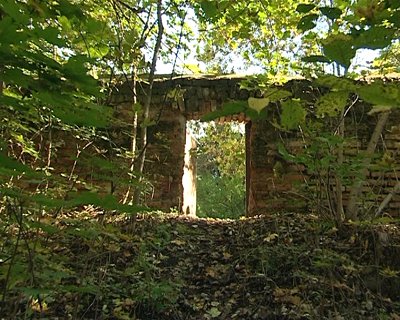
Greg introduced me to a concept about creative energy I found so compelling that I have ruminated on it for almost an entire year. This is what he said: If you go to any threshold in nature, you will find a high concentration of life and activity. Go, linger, and pay attention at the edge of a forest, the bank of a pond, or the shoreline at the beach. They are places of great poetic inspiration.
In his book, Poetry As Survival, Orr writes:
The threshold is a place of transition; as such, it is a place of enormous vitality and activity as well as danger…poets are drawn to and write from their thresholds, either inner or outer. In order to write well, a poet needs to go to that place where energy and intensity concentrate, that place just beyond which chaos and randomness reign.
I thought about some of my favorite poets. No one could argue that John Keats was dwelling on the threshold of life and death as he wrote “Ode to a Nightingale.” Certainly Robert Frost had an interest in thresholds. Here, for example, is a stanza from “Stopping by Woods on a Snowy Evening”:
My little horse must think it queer
To stop without a farmhouse near
Between the woods and frozen lake
The darkest evening of the year.
Orr’s poems from his volume titled, Concerning the Book That is the Body of the Beloved have become some of my favorites, and they are filled with thresholds. For example:
The shape of the Book
Is the door to the grave,
Is the shape of the stone
Closed over us, so that
We may know terror
Is what we pass through
To reach hope, and courage
Is our necessary companion.
But why stop with poetry? I look around my office and realize I’ve pinned photos of thresholds everywhere. I tore the cover off The New Yorker’s January 7 issue, its artwork by Chris Ware illustrating the aftermath of the Sandy Hook shootings. The painting is of teachers standing in a doorway, with a line of children filing in, and the anxious faces of their parents out in the street; safety outside, danger inside, teachers on the threshold.
I printed a copy of Michelangelo’s painting of Adam and God—God, straining through a portal from heaven, reaching out to Adam, who languishes on Earth, extending a limp hand toward God. Imagine the energy and tension between those two fingers.
The shoreline at the beach is the threshold that most feeds my creative imagination.
In the fall, The Thoreau Society issued a call for papers. They were particularly interested in Thoreau’s statement that he was “a mystic, a transcendentalist, and a natural philosopher to boot.” Natural philosophy is the predecessor of modern day physics, and my son, Nicholas Holdgate, is a physicist. Well, he was a physicist for NASA before he became a doctor, so I asked him if he wanted to collaborate. Our topic? Writing From the Threshold: Thoreau Amidst the Chaos at the Edge of the Sea. Here is a snippet from our work:
Thoreau grappled to understand the dynamics of the threshold between the sea and the shore that we all know and love as the beach. Generally the beach is considered to be a place of refreshment from the summer heat, a place to escape from the stress of daily life, and a place to relax. However, as islanders, we know it is also the slim space between life and death during times of storms and shipwrecks.
In his book, Cape Cod*, Thoreau, the self-proclaimed “natural philosopher,” writes at regular intervals about the steady sound of the surf, for “the reader must not forget that the dash and roar of the waves were incessant.” This sound of turbulent surf, and the friction breaking down glass, wood, and stone against stone is the result of the transfer of the endless energy of the ocean to the shore.*
This energy is largely the product of cosmic and terrestrial forces. The sun and moon’s gravity pull the tides into motion. Swells of water are traveling energies, much like light. Bent at the shore’s edge as though passing though a lens or prism, the energy stored in a traveling swell is condensed by the rising sea floor beneath the water that causes it to build and consolidate until there is a critical amount of energy, which overcomes gravity and discharges.
At the threshold.
I’ve spent most of my life teetering on one threshold or another (teen pregnancy, spousal abuse, divorce, breast cancer). Foreclosure is simply the current precipice.
I seem always to be in this place, squinting into a foggy distance, wondering what’s coming next. For this reason, the first thing I do every morning is go to my porch overlooking the salt marsh with steaming coffee and my Bible. I couldn’t bear the mystery of my future without the daily reminder that God is with me and that he’s placed many of his beloved on thresholds.
I think life on the threshold is evidence in and of itself that God is present. Who can forget Paul’s shipwreck on his journey to Rome? An angel visited him in the midst of a violent ocean storm. In the morning, Paul said, “Therefore, keep up your courage, men, for I believe God that it will turn out exactly as I have been told. But we must first run aground.”
On a threshold.
Elizabeth Kalman (www.ElizabethKalman.com) is the great-great-great granddaughter of a Cherokee Indian maiden picked up by a wagon train on its way from the Trail of Tears in Texas to the Kentucky coalfields. Her great-great grandfather was one of the first merchants to bring silk worms to the U.S. He kept a detailed hand-written journal that Elizabeth is in the process of editing. She is presenting a lectures this summer about Henry David Thoreau at the Thoreau Society’s annual gathering and at the Nantucket Atheneum. Her essays have been featured in the Charleston Post and Courier, The Gettysburg Review, Crazyhorse, and the blogzine Magical Teaching. She earned an MFA in Creative Nonfiction from Seattle Pacific University.
Previous Post

July 16, 2013
Holy Water
Next Post
July 18, 2013 Camping with God
Browse Our Archives
Select a Category A. G. Harmon Alissa Wilkinson Allison Backous Art Authors Brad Fruhauff Bradford Winters Bryan Bliss Caroline Langston Chad Thomas Johnston Chris Hoke Christiana N. Peterson Culture D.G. Myers D.L. Mayfield Daniel Bowman Jr. David Griffith Elizabeth Duffy Faith Film Greg Wolfe Guest Contributor Interview Jan Vallone Jeffrey Overstreet Jessica Eddings-Roeser Jessica Mesman Griffith Kelly Foster Lindsey Crittenden Morgan Meis music Natalie Vestin Nick Olson Peggy Rosenthal Personal Reflection Poetry Friday Reflection Relationships Review Richard Chess Richard Cole Sara Zarr Shannon Huffman Polson Sonya Bilocerkowycz Tania Runyan Tony Woodlief Topical Categories Uncategorized Vic Sizemore Writing
Select a Month October 2018 September 2018 August 2018 July 2018 June 2018 May 2018 April 2018 March 2018 February 2018 January 2018 December 2017 November 2017 October 2017 September 2017 August 2017 July 2017 June 2017 May 2017 April 2017 March 2017 February 2017 January 2017 December 2016 November 2016 October 2016 September 2016 August 2016 July 2016 June 2016 May 2016 April 2016 March 2016 February 2016 January 2016 December 2015 November 2015 October 2015 September 2015 August 2015 July 2015 June 2015 May 2015 April 2015 March 2015 February 2015 January 2015 December 2014 November 2014 October 2014 September 2014 August 2014 July 2014 June 2014 May 2014 April 2014 March 2014 February 2014 January 2014 December 2013 November 2013 October 2013 September 2013 August 2013 July 2013 June 2013 May 2013 April 2013 March 2013 February 2013 January 2013 December 2012 November 2012 October 2012 September 2012 August 2012 July 2012 June 2012 May 2012 February 2008
Follow Us!
TAKE THE
Religious Wisdom Quiz
How many days was Jesus tempted in the wilderness?
Select your answer to see how you score.
40 days 50 days 60 days 30 days
Related posts from Good Letters


On Writing Odes: Taking Time to Celebrate

Poetry Friday: "The Burned Butterfly"

A Conversation with Alicia Ostriker: Part 1
TRENDING AT PATHEOS Catholic

Rejecting Doom: Christian Hope And Human Action
Christianity is a religion of hope. We are to have hope and...

It’s What Comes From Within Which Matters
One of the most difficult things for us to understand is why...

Why I Choose the Eucharist Over the Sermon
Choose the Eucharist, Not the Sermon What are we supposed to get...

5 Design Elements Found in Spiritually Rooted Homes
Putting Spirituality Into Home Decor Our homes are more than our living...

Credo: A Story of God Told with the...
About 10 years ago, I began to imagine a personal "Credo" that...

The Anatomy of Divine Revelation in Catholic Thought
The claim that God has made Himself known to human beings is...
view all Catholic blogs
Ad-Free & Subscriber Log-In Subscription Support
- About Us
- 2026 Calendar
- Videos
- Podcasts
- Library of World Religions
- Faith In Media Tracker
- Advertise With Us
- Write for Us
- Privacy Policy
- Terms of Service
- Do Not Sell My Data
- Contact Us
- Radiant Digital
- Manage Newsletter Subscriptions
- Unsubscribe From Notifications
- Sitemap
Copyright 2008-2026, Patheos. All rights reserved.
Subscription Support Ad-Free & Subscriber Log-In
Follow Patheos