
BuddhistCatholicContemplativeEvangelicalGeneral ChristianHinduJewishLatter-day SaintMuslimNew VisionsProgressive Christian
Beliefs
- Buddhist
- Catholic
- Contemplative
- Evangelical
- General Christian
- Hindu
- Jewish
- Latter-day Saint
- More Voices
- Muslim
- New Visions
- Pagan
- Progressive Christian
Topics
- Religion News
- Food and Religion
- Sports and Religion
- Religious Art
- Religious Music and Entertainment
- Religious Events
- History and Religion
- Style and Religion
- Politics and Religion
- Women in Religion
- Recreation Outdoors and Religion
- Business Finance and Religion
- Careers Workplace and Religion
- Education and Religion
- Family Parenting and Religion
- Health Fitness and Religion
- Home and Religion
- Relationships and Religion
- Technology and Religion
- Travel and Religion
Columnists
- Buddhist Columnists
- Business Finance and Religion Columnists
- Careers Workplace and Religion Columnists
- Catholic Columnists
- Contemplative Columnists
- Education and Religion Columnists
- Evangelists Columnists
- Family Parenting and Religion Columnists
- General Christian Columnists
- Health Fitness and Religion Columnists
- Hindu Columnists
- History and Religion Columnists
- Home and Religion Columnists
- Jewish Columnists
- More Voices Columnists
- Latter Day Columnists
- Muslim Columnists
- New Visions Columnists
- Nonreligious Columnists
- Pagan Columnists
- Politics and Religion Columnists
- Progressive Columnists
- Recreation Outdoors and Religion Columnists
- Relationships and Religion Columnists
- Religion News Columnists
- Religious Art Columnists
- Religious Events Columnists
- Religious Music and Entertainment Columnists
- Sports and Religion Columnists
- Style and Religion Columnists
- Technology and Religion Columnists
- Travel and Religion Columnists
- Women in Religion Columnists
Resource Library
- 2026 Calendar
- Library of World Religions
- The 100 Most Holy Places on Earth
- Patheos Answers
- Podcasts
- Videos
- Faith Leaders Database
- Anglican Episcopalian
- Bahai
- Baptist
- Buddhism
- Christianity
- Confucianism
- Eastern Orthodoxy
- Hinduism
- Holiness and Pentecostal
- ISKCON
- Islam
- Judaism
- Lutheran
- Methodist
- The Church of Jesus Christ of Latter-day Saints
- New Age
- Paganism
- Presbytarian and Reformed
- Protestantism
- Religion Behind the Scenes
- Roman Catholic
- Scientology
- Shia Islam
- Sikhism
- Sufism
- Sunni Islam
- Taoism
- Zen
- See all religions
Research Tools
 Ad-Free & Subscriber Log-In Subscription Support
Ad-Free & Subscriber Log-In Subscription Support
Follow Patheos 

- Trending:
- Forgiveness
- |
- Marriage
- |
- Consciousness
- |
- Death Penalty
- |
- Election
- |
- Halloween
 Good Letters
-
Contributors
- Home
- Catholic
- Camping with God
Camping with God
Last updated on: July 18, 2013 at 1:00 am by Bradford Winters
Camping with God 2013-07-17T10:20:09-07:00 Bradford Winters
Patheos Explore the world's faith through different perspectives on religion and spirituality! Patheos has the views of the prevalent religions and spiritualities of the world.
 The exodus (small “e”) was a family of five fleeing the New York summer in our Volvo wagon just last week.
Crossing the East River on the Brooklyn Bridge, a veritable wall of water reared up on either side of us in the gray-out of a rainstorm indistinguishable from the river below. Naturally, this was followed by bumper-to-bumper traffic on the FDR, a seeming pile-up of similar-minded refugees, enemy chariots, or both.
All in the effort—in our case, at least—to finally inaugurate family camping.
The desire to do so had been brewing in me for years, what with city life and three kids whose feet were far more used to asphalt than grass, to crosswalks than nature walks, and streetlights than trees. Though our youngest is only three, and thus a significant liability to collective sleep in a shared tent, our oldest recently turned nine—meaning there was only so much time before she’d rather die than go camping with her family.
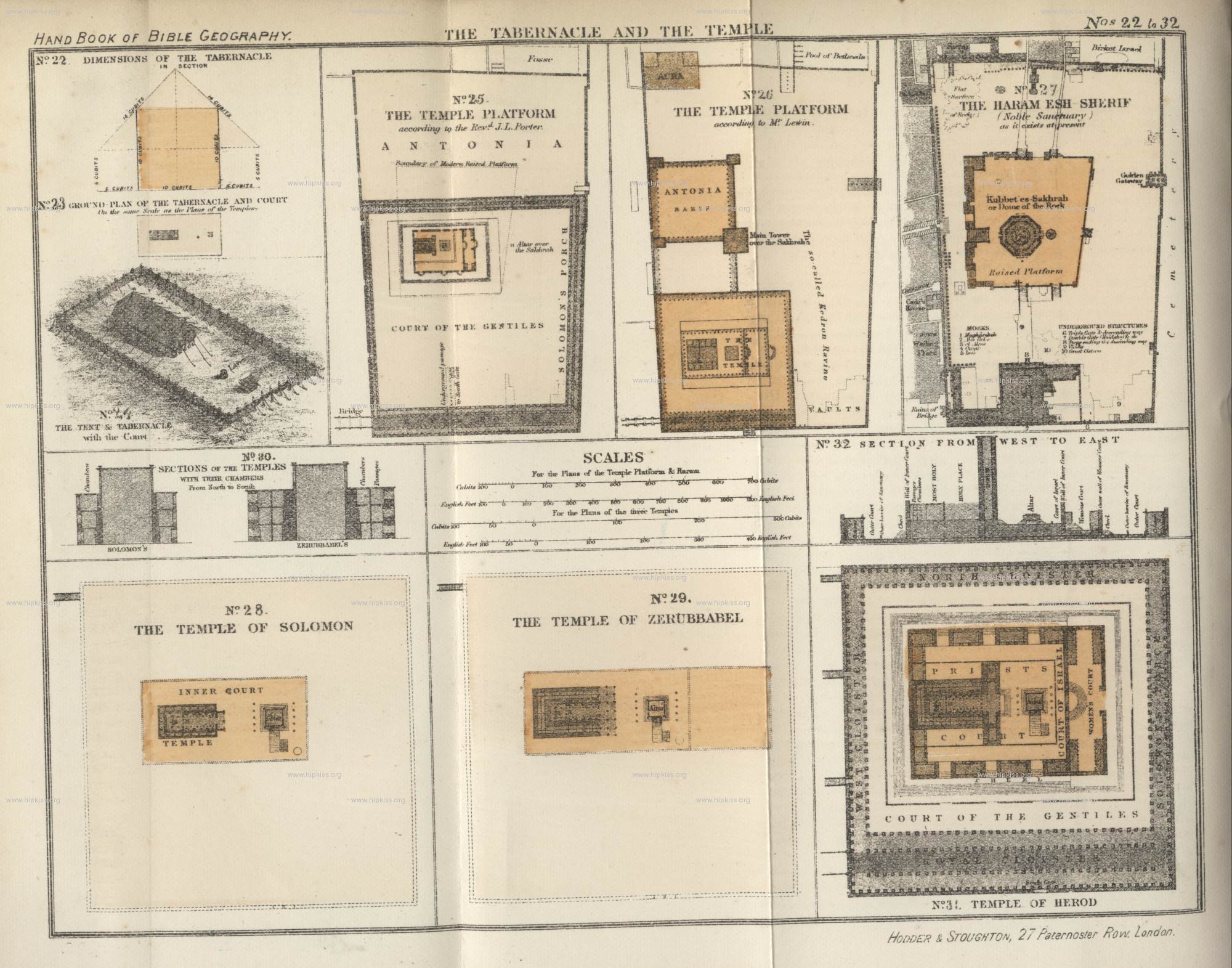
Not by coincidence did this desire in me grow alongside my interest in the Tabernacle, that singular tent of meeting in the epic family camping experience of the Exodus.
For the beloved half-verse of Exodus 7:16, “Let my people go” when quoted is rarely followed by the second half: “that they may serve me in the wilderness.” I’m veering off into the subject for another post here, i.e. the purpose of liberation being servitude, but for the purposes of this post the focal point of higher service in the wilderness was a revelatory structure of breathtaking beauty only apparent to those who stood inside it.
I had no such hopes for the Kelty Acadia 6, our family tent recommended by a friend. But the fact that I could stand inside it and hang a candle lantern from the dome was enough of an approximation to the Tabernacle for me.
Ten hours later arriving in central Vermont after a drive that was supposed to be half that long without relentless rain and traffic, I didn’t even get to set the damn thing up.
The rooftop cargo bag had proven to be only so waterproof, and I had reserved an isolated campsite so as not to pitch our tent alongside an R.V. This meant repeatedly walking several hundred yards from the car to the site as my wife and I ferried our equipment in the rain while the kids took shelter in the lean-to.
Thank God there was a lean-to. There we spent the first of our two nights camping, a dinner of freeze-dried beef stroganoff followed by a fitful night of sleep in damp bags on the hard wooden floor.
I went to bed laughing at how preposterous a thought the Exodus and Tabernacle were: if this is what it was like for a mere family of five on a two-night holiday in lush Vermont (before the weeklong rental at a farmhouse further north), how cold roughly 600,000 Israelites hold it together on a forty-year sojourn in the barren wilderness?
The silver sockets alone for the boards of the Tabernacle weighed an estimated five-and-a-half tons, for crying out loud.
There’s plenty of scholarship out there to say that the Israelites didn’t hold it together, in fact—neither the Exodus nor the Tabernacle—because both are scriptural fictions.
But the preposterous thought somehow had the opposite effect of dampening my romance with these biblical stories amidst the driving rain that first night. If anything, my heartfelt witness to them only grew warmer and brighter in the dark for their frictional effect, opposed to anything fictional, of rubbing up against my hyper-civilized life—a life in which my iPhone roughly bears the same dimensions in miniature of the Tabernacle.
As I fell asleep that first night, I found myself thinking back to travels in the Xinjiang province of western China twelve years ago with my good friend, Travis.
In the Kazak hinterlands bordering Pakistan, as dead center in the absolute middle of nowhere as I have ever been, we spent my thirtieth birthday with a tiny community of Uighur shepherd families living in less than a dozen yurts on the edge of Lake Karakol.
At the time I had no idea that my turning thirty was the age of consecration to priesthood in ancient Israel; nor that having shaved my head to mark the milestone reflected an Egyptian tradition for their own priests.
But it makes for a good and wise laugh to see these factoids as a picture of the latter in me chasing the former in me, all the way to that Asian wilderness and this belated appreciation for the remote relevance to a doomed excursion in Vermont.
Aside from seeing a huge full moon over Lake Karakol that night, and hearing Travis belt out “Helpless” by Neil Young on his guitar for a rapt audience of wind-burned Uighurs in their yurt, what struck me most was the sight of them sleeping side by side on blankets on the floor. It was family camping of the lifelong variety.
The image would only strike me more in hindsight a few years later upon the onset of parenthood, what with its arsenal of cribs, baby monitors, and the like. In the yurt there was none of that, and it seemed to be a far more orderly, peaceful scene for it.
Perhaps this memory counterbalances any thought of the Exodus and Tabernacle as preposterous endeavors, putting contemporary domesticity in its own questionable light.
So it was that on the second night of our inaugural family camping experience, with the Kelty tent still in its bag and my family sleeping side-by-side like Uighurs in the lean-to, I sat down to read Stephen F. Olford’s The Tabernacle: Camping with God by headlamp.
The swollen river was running hard through the trees below our campsite, and thunder rumbled softly over the Green Mountains above.
I could hear Travis singing “Helpless,” this time for me in the face of a tableau so holy.
Bradford Winters is a screenwriter and poet, and works for The Levinson/Fontana Company as a producer and writer in television. He lives in Brooklyn with his wife and three children.
Previous Post

July 17, 2013
Living on the Threshold
Next Post
July 19, 2013 What Came Before Numbering Our Days?
Browse Our Archives
Select a Category A. G. Harmon Alissa Wilkinson Allison Backous Art Authors Brad Fruhauff Bradford Winters Bryan Bliss Caroline Langston Chad Thomas Johnston Chris Hoke Christiana N. Peterson Culture D.G. Myers D.L. Mayfield Daniel Bowman Jr. David Griffith Elizabeth Duffy Faith Film Greg Wolfe Guest Contributor Interview Jan Vallone Jeffrey Overstreet Jessica Eddings-Roeser Jessica Mesman Griffith Kelly Foster Lindsey Crittenden Morgan Meis music Natalie Vestin Nick Olson Peggy Rosenthal Personal Reflection Poetry Friday Reflection Relationships Review Richard Chess Richard Cole Sara Zarr Shannon Huffman Polson Sonya Bilocerkowycz Tania Runyan Tony Woodlief Topical Categories Uncategorized Vic Sizemore Writing
Select a Month October 2018 September 2018 August 2018 July 2018 June 2018 May 2018 April 2018 March 2018 February 2018 January 2018 December 2017 November 2017 October 2017 September 2017 August 2017 July 2017 June 2017 May 2017 April 2017 March 2017 February 2017 January 2017 December 2016 November 2016 October 2016 September 2016 August 2016 July 2016 June 2016 May 2016 April 2016 March 2016 February 2016 January 2016 December 2015 November 2015 October 2015 September 2015 August 2015 July 2015 June 2015 May 2015 April 2015 March 2015 February 2015 January 2015 December 2014 November 2014 October 2014 September 2014 August 2014 July 2014 June 2014 May 2014 April 2014 March 2014 February 2014 January 2014 December 2013 November 2013 October 2013 September 2013 August 2013 July 2013 June 2013 May 2013 April 2013 March 2013 February 2013 January 2013 December 2012 November 2012 October 2012 September 2012 August 2012 July 2012 June 2012 May 2012 February 2008
Follow Us!
TAKE THE
Religious Wisdom Quiz
How many days was Jesus tempted in the wilderness?
Select your answer to see how you score.
40 days 50 days 60 days 30 days
Related posts from Good Letters



Leonard Cohen’s Holy and Broken Hallelujah

Ready or Not for the Days of Awe
TRENDING AT PATHEOS Catholic

Rejecting Doom: Christian Hope And Human Action
Christianity is a religion of hope. We are to have hope and...

It’s What Comes From Within Which Matters
One of the most difficult things for us to understand is why...

Why I Choose the Eucharist Over the Sermon
Choose the Eucharist, Not the Sermon What are we supposed to get...

5 Design Elements Found in Spiritually Rooted Homes
Putting Spirituality Into Home Decor Our homes are more than our living...

Credo: A Story of God Told with the...
About 10 years ago, I began to imagine a personal "Credo" that...

The Anatomy of Divine Revelation in Catholic Thought
The claim that God has made Himself known to human beings is...
view all Catholic blogs
Ad-Free & Subscriber Log-In Subscription Support
- About Us
- 2026 Calendar
- Videos
- Podcasts
- Library of World Religions
- Faith In Media Tracker
- Advertise With Us
- Write for Us
- Privacy Policy
- Terms of Service
- Do Not Sell My Data
- Contact Us
- Radiant Digital
- Manage Newsletter Subscriptions
- Unsubscribe From Notifications
- Sitemap
Copyright 2008-2026, Patheos. All rights reserved.
Subscription Support Ad-Free & Subscriber Log-In
Follow Patheos