
BuddhistCatholicContemplativeEvangelicalGeneral ChristianHinduJewishLatter-day SaintMuslimNew VisionsProgressive Christian
Beliefs
- Buddhist
- Catholic
- Contemplative
- Evangelical
- General Christian
- Hindu
- Jewish
- Latter-day Saint
- More Voices
- Muslim
- New Visions
- Pagan
- Progressive Christian
Topics
- Religion News
- Food and Religion
- Sports and Religion
- Religious Art
- Religious Music and Entertainment
- Religious Events
- History and Religion
- Style and Religion
- Politics and Religion
- Women in Religion
- Recreation Outdoors and Religion
- Business Finance and Religion
- Careers Workplace and Religion
- Education and Religion
- Family Parenting and Religion
- Health Fitness and Religion
- Home and Religion
- Relationships and Religion
- Technology and Religion
- Travel and Religion
Columnists
- Buddhist Columnists
- Business Finance and Religion Columnists
- Careers Workplace and Religion Columnists
- Catholic Columnists
- Contemplative Columnists
- Education and Religion Columnists
- Evangelists Columnists
- Family Parenting and Religion Columnists
- General Christian Columnists
- Health Fitness and Religion Columnists
- Hindu Columnists
- History and Religion Columnists
- Home and Religion Columnists
- Jewish Columnists
- More Voices Columnists
- Latter Day Columnists
- Muslim Columnists
- New Visions Columnists
- Nonreligious Columnists
- Pagan Columnists
- Politics and Religion Columnists
- Progressive Columnists
- Recreation Outdoors and Religion Columnists
- Relationships and Religion Columnists
- Religion News Columnists
- Religious Art Columnists
- Religious Events Columnists
- Religious Music and Entertainment Columnists
- Sports and Religion Columnists
- Style and Religion Columnists
- Technology and Religion Columnists
- Travel and Religion Columnists
- Women in Religion Columnists
Resource Library
- 2026 Calendar
- Library of World Religions
- The 100 Most Holy Places on Earth
- Patheos Answers
- Podcasts
- Videos
- Faith Leaders Database
- Anglican Episcopalian
- Bahai
- Baptist
- Buddhism
- Christianity
- Confucianism
- Eastern Orthodoxy
- Hinduism
- Holiness and Pentecostal
- ISKCON
- Islam
- Judaism
- Lutheran
- Methodist
- The Church of Jesus Christ of Latter-day Saints
- New Age
- Paganism
- Presbytarian and Reformed
- Protestantism
- Religion Behind the Scenes
- Roman Catholic
- Scientology
- Shia Islam
- Sikhism
- Sufism
- Sunni Islam
- Taoism
- Zen
- See all religions
Research Tools
 Ad-Free & Subscriber Log-In Subscription Support
Ad-Free & Subscriber Log-In Subscription Support
Follow Patheos 

- Trending:
- Forgiveness
- |
- Marriage
- |
- Consciousness
- |
- Death Penalty
- |
- Election
- |
- Halloween
 Good Letters
-
Contributors
- Home
- Catholic
- Wiman and Words
Wiman and Words
Last updated on: June 11, 2013 at 1:56 pm by Peggy Rosenthal
Wiman and Words 2013-06-11T13:56:28-07:00 Peggy Rosenthal
Patheos Explore the world's faith through different perspectives on religion and spirituality! Patheos has the views of the prevalent religions and spiritualities of the world.
 At “Good Letters,” words are what we work with.
Of course, this is true of all blogs, all writing. Yet consciousness of the craft of writing is key to our posts. No matter what our declared subject, our undeclared subject—our subtext—is always what are my words doing here? What can words do—anywhere?
Words Made Flesh: it’s on our “Good Letters” logo.
That short phrase reverberates with many meanings. The Christian connotation, yes: the Incarnation. But that’s a singular Word. Singular, unique. Whereas we spin out many words. To make them flesh, we try to immerse them in our personal experience. Or we immerse ourselves in our experience and seek for words there.
Either way, we try to make our words more concrete than abstract, yet here I am, talking in abstractions.
The experience we seek words for usually has a spiritual dimension. And then we’re plunged into the conundrum that poet and essayist Christian Wiman speaks about in his interview in the current Image (76): “How does one even begin to speak of God?”
Parsing a poem by Seamus Heaney, Wiman says that “those who use religious language” can learn from Heaney’s craft: for instance “the way abstraction derives its meaning from the concrete, a meaning which it then exponentially enlarges.”
I can’t read a word of Wiman’s poetry or prose, without awareness of the death that hangs over him, in the form of his life-threatening blood cancer.
What could be more concrete than death? Than our mortality?
We flower like the flowers of the field
The wind blows
and we are gone
And our place never sees us again.
Psalm 103. The concrete as metaphor. Metaphor as the concrete.
Yet before living with his dread diagnosis, Wiman might not have asked “how does one even begin to speak of God?”
Naturally (very naturally), we all live with death hanging over us. But most of us, understandably, do our best to distract ourselves from this fact. Those flowers of the field that are gone with the wind are not the metaphor we choose for our lives.
What metaphors (what words) do we prefer?
Life as a journey. The path of life. Sailing life’s seas. Oh dear, no! Not metaphor as cliché!
Those flowers have more to offer. Their blossoming as life’s hope and beauty and fragrance. Their beauty as trust in God (consider the lilies of the field…).
And considering the lilies of the field, I recall R.S. Thomas’ “Bright Field”:
I have seen the sun break through
to illuminate a small field
for a while, and gone my way
and forgotten it. But that was the pearl
of great price, the one field that had
the treasure in it.
Field as pearl, as treasure, as glimpse of paradise on earth.
And considering metaphors of paradise on earth, I recall Denise Levertov’s “A Clearing”:
What lies at the end of enticing
country driveways, curving
off among trees? Often only
a car graveyard, a house-trailer,
a trashy bungalow. But this one,
for once, brings you
through the shade of its green tunnel
to a paradise of cedars,
of lawns mown but not too closely,
of iris, moss, fern, rivers of stone rounded
by sea or stream…
One is sheltered here
from the assaultive world
as if escaped from it, and yet
once arrived, is given (oneself
and others being a part of that world)
a generous welcome.
It’s paradise
as a paradigm for how
to live on earth,
how to be private and open
quiet and richly eloquent.…
This poem is one of my favorites for exemplifying religious abstraction made concrete. As the clearing at the end of the driveway becomes a metaphor for paradise, paradise then becomes a metaphor for poetry, and—at the poem’s end—poetry a metaphor for paradise:
It is paradise, and paradise
is a kind of poem; it has
a poem’s characteristics:
inspiration; starting with the given;
unexpected harmonies; revelations.
It’s rare among
the worlds one finds
at the end of enticing driveways.
The meaning at the end of the driveway has certainly (to use Wiman’s term) “enlarged exponentially.” What could be larger than paradise? What could be larger than a poem?
In the same issue of Image, former “Good Letters” writer Kelly Foster reviews Wiman’s new book of prose, My Bright Abyss: Meditation of a Modern Believer. She writes that Wiman “is rendering a modern prose meditation in the style of poetry that grapples with the ultimate ancient questions—what does it mean to have faith? What is the purpose of suffering? What role does poetry play when life is falling apart? What does heaven really mean?”
For Levertov, heaven means the paradise that is like a poem. It is a heaven that we can sometimes experience on earth, like a clearing “at the end of enticing driveways.” A heaven that shares poetry’s characteristics of “unexpected harmonies, revelations.”
Maybe—just maybe—this is how we can, in Wiman’s words, “begin to speak of God.”
Peggy Rosenthal is director of Poetry Retreats and writes widely on poetry as a spiritual resource. Her books include Praying through Poetry: Hope for Violent Times (Franciscan Media), and The Poets’ Jesus (Oxford). Click here for a full list of books. She also teaches an online course, Poetry as a Spiritual Practice, through Image’s Glen Online program.
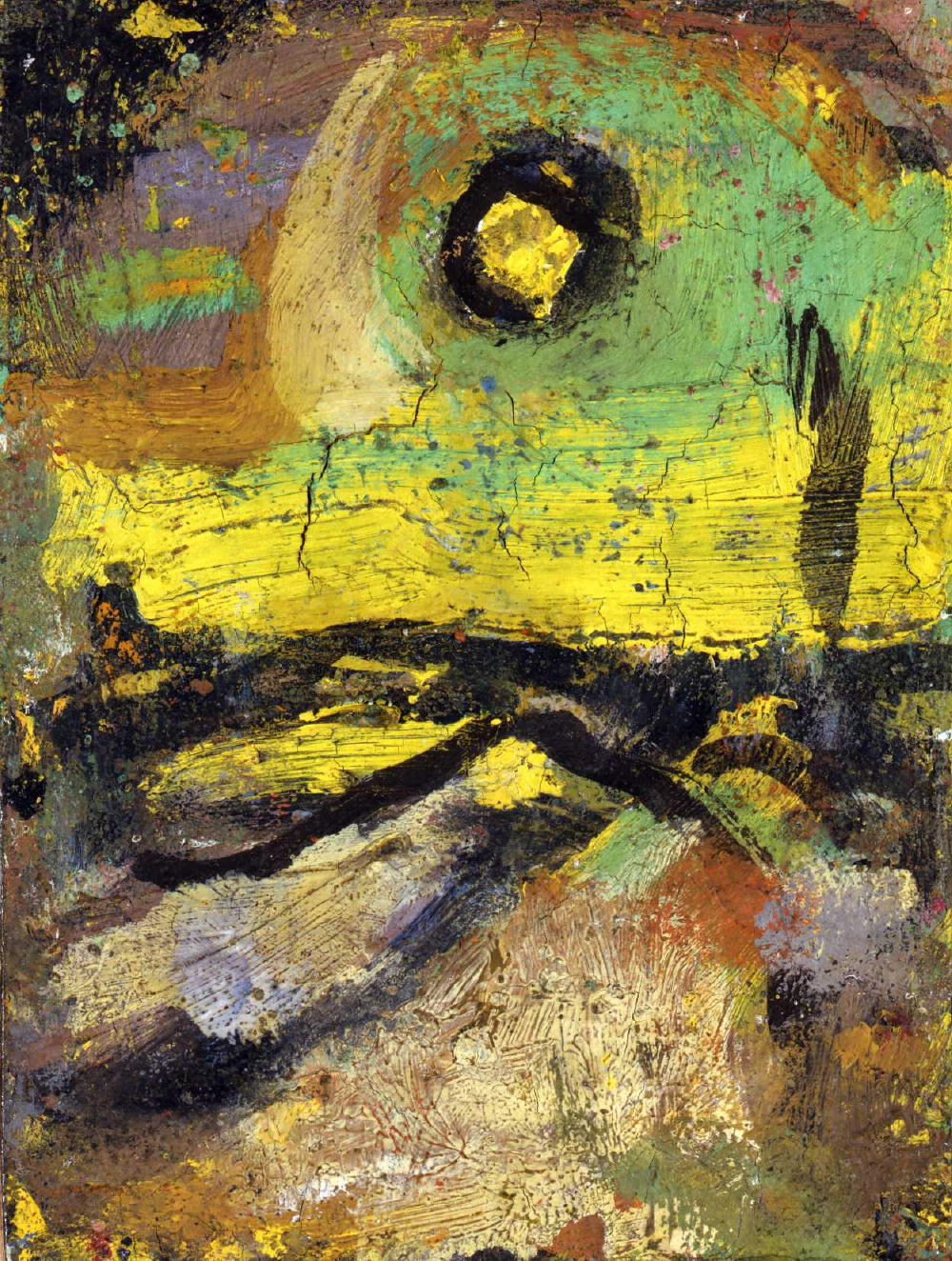
Art above: Landscape, Georges Rouault
poetry as a spiritual practice
Previous Post

June 9, 2013
Nebuchadnezzar, Nevermore
Next Post
June 11, 2013 The Mystery Inside Me
Browse Our Archives
Select a Category A. G. Harmon Alissa Wilkinson Allison Backous Art Authors Brad Fruhauff Bradford Winters Bryan Bliss Caroline Langston Chad Thomas Johnston Chris Hoke Christiana N. Peterson Culture D.G. Myers D.L. Mayfield Daniel Bowman Jr. David Griffith Elizabeth Duffy Faith Film Greg Wolfe Guest Contributor Interview Jan Vallone Jeffrey Overstreet Jessica Eddings-Roeser Jessica Mesman Griffith Kelly Foster Lindsey Crittenden Morgan Meis music Natalie Vestin Nick Olson Peggy Rosenthal Personal Reflection Poetry Friday Reflection Relationships Review Richard Chess Richard Cole Sara Zarr Shannon Huffman Polson Sonya Bilocerkowycz Tania Runyan Tony Woodlief Topical Categories Uncategorized Vic Sizemore Writing
Select a Month October 2018 September 2018 August 2018 July 2018 June 2018 May 2018 April 2018 March 2018 February 2018 January 2018 December 2017 November 2017 October 2017 September 2017 August 2017 July 2017 June 2017 May 2017 April 2017 March 2017 February 2017 January 2017 December 2016 November 2016 October 2016 September 2016 August 2016 July 2016 June 2016 May 2016 April 2016 March 2016 February 2016 January 2016 December 2015 November 2015 October 2015 September 2015 August 2015 July 2015 June 2015 May 2015 April 2015 March 2015 February 2015 January 2015 December 2014 November 2014 October 2014 September 2014 August 2014 July 2014 June 2014 May 2014 April 2014 March 2014 February 2014 January 2014 December 2013 November 2013 October 2013 September 2013 August 2013 July 2013 June 2013 May 2013 April 2013 March 2013 February 2013 January 2013 December 2012 November 2012 October 2012 September 2012 August 2012 July 2012 June 2012 May 2012 February 2008
Follow Us!
TAKE THE
Religious Wisdom Quiz
Which Persian king allowed Ezra to take Jewish exiles and gifts to Jerusalem?
Select your answer to see how you score.
Darius Nebuchadnezzar Artaxerxes Cyrus
Related posts from Good Letters


On Writing Odes: Taking Time to Celebrate

Poetry Friday: "The Burned Butterfly"

A Conversation with Alicia Ostriker: Part 1
TRENDING AT PATHEOS Catholic

Rejecting Doom: Christian Hope And Human Action
Christianity is a religion of hope. We are to have hope and...

It’s What Comes From Within Which Matters
One of the most difficult things for us to understand is why...

Why I Choose the Eucharist Over the Sermon
Choose the Eucharist, Not the Sermon What are we supposed to get...

5 Design Elements Found in Spiritually Rooted Homes
Putting Spirituality Into Home Decor Our homes are more than our living...

Credo: A Story of God Told with the...
About 10 years ago, I began to imagine a personal "Credo" that...

The Anatomy of Divine Revelation in Catholic Thought
The claim that God has made Himself known to human beings is...
view all Catholic blogs
Ad-Free & Subscriber Log-In Subscription Support
- About Us
- 2026 Calendar
- Videos
- Podcasts
- Library of World Religions
- Faith In Media Tracker
- Advertise With Us
- Write for Us
- Privacy Policy
- Terms of Service
- Do Not Sell My Data
- Contact Us
- Radiant Digital
- Manage Newsletter Subscriptions
- Unsubscribe From Notifications
- Sitemap
Copyright 2008-2026, Patheos. All rights reserved.
Subscription Support Ad-Free & Subscriber Log-In
Follow Patheos