
BuddhistCatholicContemplativeEvangelicalGeneral ChristianHinduJewishLatter-day SaintMuslimNew VisionsProgressive Christian
Beliefs
- Buddhist
- Catholic
- Contemplative
- Evangelical
- General Christian
- Hindu
- Jewish
- Latter-day Saint
- More Voices
- Muslim
- New Visions
- Pagan
- Progressive Christian
Topics
- Religion News
- Food and Religion
- Sports and Religion
- Religious Art
- Religious Music and Entertainment
- Religious Events
- History and Religion
- Style and Religion
- Politics and Religion
- Women in Religion
- Recreation Outdoors and Religion
- Business Finance and Religion
- Careers Workplace and Religion
- Education and Religion
- Family Parenting and Religion
- Health Fitness and Religion
- Home and Religion
- Relationships and Religion
- Technology and Religion
- Travel and Religion
Columnists
- Buddhist Columnists
- Business Finance and Religion Columnists
- Careers Workplace and Religion Columnists
- Catholic Columnists
- Contemplative Columnists
- Education and Religion Columnists
- Evangelists Columnists
- Family Parenting and Religion Columnists
- General Christian Columnists
- Health Fitness and Religion Columnists
- Hindu Columnists
- History and Religion Columnists
- Home and Religion Columnists
- Jewish Columnists
- More Voices Columnists
- Latter Day Columnists
- Muslim Columnists
- New Visions Columnists
- Nonreligious Columnists
- Pagan Columnists
- Politics and Religion Columnists
- Progressive Columnists
- Recreation Outdoors and Religion Columnists
- Relationships and Religion Columnists
- Religion News Columnists
- Religious Art Columnists
- Religious Events Columnists
- Religious Music and Entertainment Columnists
- Sports and Religion Columnists
- Style and Religion Columnists
- Technology and Religion Columnists
- Travel and Religion Columnists
- Women in Religion Columnists
Resource Library
- 2026 Calendar
- Library of World Religions
- The 100 Most Holy Places on Earth
- Patheos Answers
- Podcasts
- Videos
- Faith Leaders Database
- Anglican Episcopalian
- Bahai
- Baptist
- Buddhism
- Christianity
- Confucianism
- Eastern Orthodoxy
- Hinduism
- Holiness and Pentecostal
- ISKCON
- Islam
- Judaism
- Lutheran
- Methodist
- The Church of Jesus Christ of Latter-day Saints
- New Age
- Paganism
- Presbytarian and Reformed
- Protestantism
- Religion Behind the Scenes
- Roman Catholic
- Scientology
- Shia Islam
- Sikhism
- Sufism
- Sunni Islam
- Taoism
- Zen
- See all religions
Research Tools
 Ad-Free & Subscriber Log-In Subscription Support
Ad-Free & Subscriber Log-In Subscription Support
Follow Patheos 

- Trending:
- Forgiveness
- |
- Marriage
- |
- Consciousness
- |
- Death Penalty
- |
- Election
- |
- Halloween
 Good Letters
-
Contributors
- Home
- Catholic
- The Fragrance of the Unknown, Part 1
The Fragrance of the Unknown, Part 1
Last updated on: June 26, 2013 at 1:00 am by Richard Chess
The Fragrance of the Unknown, Part 1 2013-06-21T14:46:57-07:00 Richard Chess
Patheos Explore the world's faith through different perspectives on religion and spirituality! Patheos has the views of the prevalent religions and spiritualities of the world.
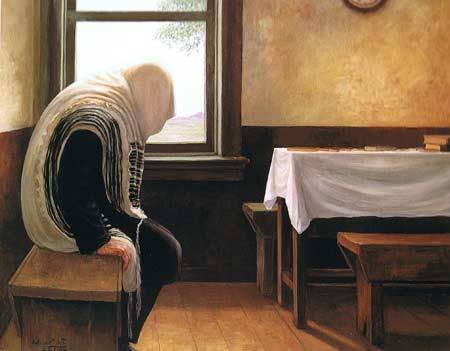 With less than two days before the retreat began, and only a grain of time unclaimed by other responsibilities, I opened the Etz Hayim to Parashat Hukat and began to read.
I’d been asked to lead an aliyah, a calling forth of worshippers to chant blessings before and after the reading of a portion of the Torah.
Rabbi Jeff Roth, my friend and teacher and leader of the four night silent meditation retreat, had asked me to prepare a teaching based on a few verses of my choosing from Hukat (the name of that week’s Torah portion, hukat means “ritual law”). Those worshippers drawn by the theme of my teaching, which offered before the chanting of the Torah, would be invited up for a group aliyah.
The blessing before the reading: an opportunity to gather one’s attention, inviting heart, ear, and mind to open to receive Torah’s wisdom. The blessing after the reading: an opportunity to experience the resonance of the Torah reading. Blessings before and after, and attending to the Torah reading itself: mindfulness practices.
While the discipline of my daily mindfulness practice (morning meditation, reading of the daily psalm) was unflagging as I headed into this retreat, my prayer practice, communally and in private, and my study of Torah had been at best infrequent for many months. No wonder, then, that my dedication if not devotion to other work—writing for “Good Letters,” reading illuminating poetry and prose, attending to important personal and family matters such as completing a will and an advanced medical directive—took precedence over preparing a teaching on a verse or two from Parashat Hukat.
Finally, fearing humiliation, were I to stand before the other retreat participants and offer a superficial teaching, I forced myself to lift the heavy book, turn to Numbers 19:1, and begin to read: “The Lord spoke to Moses and Aaron, saying: This is the ritual that the Lord has commanded: Instruct the Israelite people to bring you a red cow without blemish, in which there is no defect and on which no yoke has been laid.”
Reluctant to give myself—intellectually, imaginatively, spiritually—to the text, I willed myself to continue reading, desperate to stumble across a passage—a verse, a phrase—that would narrow the distance between Torah and me, that would save me.
“You shall give it to Eleazar the priest. It shall be taken outside the camp and slaughtered in his presence. Eleazar the priest shall take some of its blood with his finger and sprinkle it seven times toward the front of the Tent of Meeting.”
Still nothing. Still a hundred more tasks on my to-do list. A list that stood between me and Torah.
I needed a way in, and I needed it right away. The retreat would begin on Wednesday. That meant that I would still have a few days until Shabbat to prepare. But because reading and writing are discouraged on this kind of retreat, I didn’t want to miss the opportunity to give myself fully to the work of the retreat itself: extended periods of walking and sitting meditation, daily chanting of heart-opening lines from Hebrew prayers.
Merely a few verses into Hukat, a portion that runs from Numbers 19:1 to 22:1, I felt defeated. And I was experiencing anticipatory resentment at what seemed to me the inevitability of my having to “take time out” of the retreat to study the portion and prepare my teaching.
“The cow shall be burned in his sight—its hide, flesh, and blood shall be burned, its dung included—and the priest shall take cedar wood, hyssop, and crimson stuff, and throw them into the fire consuming the cow.”
In his sight: that phrase did it. My disinterest vanished. My detachment instantly dissipated. I had found my verses, Numbers 19: 5 – 6, or, more accurately, the verses had found me. Now I was awake and present. And I could see: from cow to hide, flesh, blood, and dung, the Torah zoomed in as if to make sure, make sure that…. Well, the next insight would arise only later.
Now I could turn to some rabbinic commentary. To have done so before, I felt, would have been cheating.
The opening verses in Parashat Hukkat describe what the commentators in Etz Hayim call “the strange ritual of the brown (‘red’) cow.” This ritual, they say, is “the classic example of a law that defies rational explanation.” “Yet,” they write, “there have been persistent efforts to uncover the lessons taught to us by this ritual.”
“Defies rational explanation”; “persistent efforts to uncover the lessons.” Of course! It’s not just a rabbinic response, a Jewish response to what appears to defy reason. This, too, might be worth highlighting: the way rabbis and the rest of us react when encountering the unknown, when reaching the limit of what we know and can know.
But where, in my own experience, can I find examples of how I respond to the unknown or uncertain? Without specific examples from my own life, my teaching would be merely a disembodied idea.
Tomorrow I witness the burning of the cow!
Richard Chess is the author of three books of poetry, Tekiah, Chair in the Desert, and Third Temple. His poems have appeared in a number of anthologies, including Bearing the Mystery: 20 Years of Image, Telling and Remembering: A Century of American Jewish Poetry, and Best Spiritual Writing 2005. He is the Roy Carroll Professor of Arts & Sciences at UNC Asheville. He directs UNC Asheville’s Center for Jewish Studies.
Previous Post

June 25, 2013
Pondering Prayer
Next Post
June 27, 2013 The Fragrance of the Unknown, Part 2
Browse Our Archives
Select a Category A. G. Harmon Alissa Wilkinson Allison Backous Art Authors Brad Fruhauff Bradford Winters Bryan Bliss Caroline Langston Chad Thomas Johnston Chris Hoke Christiana N. Peterson Culture D.G. Myers D.L. Mayfield Daniel Bowman Jr. David Griffith Elizabeth Duffy Faith Film Greg Wolfe Guest Contributor Interview Jan Vallone Jeffrey Overstreet Jessica Eddings-Roeser Jessica Mesman Griffith Kelly Foster Lindsey Crittenden Morgan Meis music Natalie Vestin Nick Olson Peggy Rosenthal Personal Reflection Poetry Friday Reflection Relationships Review Richard Chess Richard Cole Sara Zarr Shannon Huffman Polson Sonya Bilocerkowycz Tania Runyan Tony Woodlief Topical Categories Uncategorized Vic Sizemore Writing
Select a Month October 2018 September 2018 August 2018 July 2018 June 2018 May 2018 April 2018 March 2018 February 2018 January 2018 December 2017 November 2017 October 2017 September 2017 August 2017 July 2017 June 2017 May 2017 April 2017 March 2017 February 2017 January 2017 December 2016 November 2016 October 2016 September 2016 August 2016 July 2016 June 2016 May 2016 April 2016 March 2016 February 2016 January 2016 December 2015 November 2015 October 2015 September 2015 August 2015 July 2015 June 2015 May 2015 April 2015 March 2015 February 2015 January 2015 December 2014 November 2014 October 2014 September 2014 August 2014 July 2014 June 2014 May 2014 April 2014 March 2014 February 2014 January 2014 December 2013 November 2013 October 2013 September 2013 August 2013 July 2013 June 2013 May 2013 April 2013 March 2013 February 2013 January 2013 December 2012 November 2012 October 2012 September 2012 August 2012 July 2012 June 2012 May 2012 February 2008
Follow Us!
TAKE THE
Religious Wisdom Quiz
What did Solomon ask God for when he became king?
Select your answer to see how you score.
Wisdom Long life Victory Riches
Related posts from Good Letters

Ready or Not for the Days of Awe
The Vision Will Not Disappoint


TRENDING AT PATHEOS Catholic

Creation, Preservation, and Teleology in Catholic Theology
As I write this, it is very early Monday morning. Like millions...

The Parable Of The Sower And The Word...
One of Christ’s most famous parables is that of the sower who...

Rejecting Doom: Christian Hope And Human Action
Christianity is a religion of hope. We are to have hope and...

Why I Choose the Eucharist Over the Sermon
Choose the Eucharist, Not the Sermon What are we supposed to get...

5 Design Elements Found in Spiritually Rooted Homes
Putting Spirituality Into Home Decor Our homes are more than our living...

Credo: A Story of God Told with the...
About 10 years ago, I began to imagine a personal "Credo" that...
view all Catholic blogs
Ad-Free & Subscriber Log-In Subscription Support
- About Us
- 2026 Calendar
- Videos
- Podcasts
- Library of World Religions
- Faith In Media Tracker
- Advertise With Us
- Write for Us
- Privacy Policy
- Terms of Service
- Do Not Sell My Data
- Contact Us
- Radiant Digital
- Manage Newsletter Subscriptions
- Unsubscribe From Notifications
- Sitemap
Copyright 2008-2026, Patheos. All rights reserved.
Subscription Support Ad-Free & Subscriber Log-In
Follow Patheos