
BuddhistCatholicContemplativeEvangelicalGeneral ChristianHinduJewishLatter-day SaintMuslimNew VisionsProgressive Christian
Beliefs
- Buddhist
- Catholic
- Contemplative
- Evangelical
- General Christian
- Hindu
- Jewish
- Latter-day Saint
- More Voices
- Muslim
- New Visions
- Pagan
- Progressive Christian
Topics
- Religion News
- Food and Religion
- Sports and Religion
- Religious Art
- Religious Music and Entertainment
- Religious Events
- History and Religion
- Style and Religion
- Politics and Religion
- Women in Religion
- Recreation Outdoors and Religion
- Business Finance and Religion
- Careers Workplace and Religion
- Education and Religion
- Family Parenting and Religion
- Health Fitness and Religion
- Home and Religion
- Relationships and Religion
- Technology and Religion
- Travel and Religion
Columnists
- Buddhist Columnists
- Business Finance and Religion Columnists
- Careers Workplace and Religion Columnists
- Catholic Columnists
- Contemplative Columnists
- Education and Religion Columnists
- Evangelists Columnists
- Family Parenting and Religion Columnists
- General Christian Columnists
- Health Fitness and Religion Columnists
- Hindu Columnists
- History and Religion Columnists
- Home and Religion Columnists
- Jewish Columnists
- More Voices Columnists
- Latter Day Columnists
- Muslim Columnists
- New Visions Columnists
- Nonreligious Columnists
- Pagan Columnists
- Politics and Religion Columnists
- Progressive Columnists
- Recreation Outdoors and Religion Columnists
- Relationships and Religion Columnists
- Religion News Columnists
- Religious Art Columnists
- Religious Events Columnists
- Religious Music and Entertainment Columnists
- Sports and Religion Columnists
- Style and Religion Columnists
- Technology and Religion Columnists
- Travel and Religion Columnists
- Women in Religion Columnists
Resource Library
- 2026 Calendar
- Library of World Religions
- The 100 Most Holy Places on Earth
- Patheos Answers
- Podcasts
- Videos
- Faith Leaders Database
- Anglican Episcopalian
- Bahai
- Baptist
- Buddhism
- Christianity
- Confucianism
- Eastern Orthodoxy
- Hinduism
- Holiness and Pentecostal
- ISKCON
- Islam
- Judaism
- Lutheran
- Methodist
- The Church of Jesus Christ of Latter-day Saints
- New Age
- Paganism
- Presbytarian and Reformed
- Protestantism
- Religion Behind the Scenes
- Roman Catholic
- Scientology
- Shia Islam
- Sikhism
- Sufism
- Sunni Islam
- Taoism
- Zen
- See all religions
Research Tools
 Ad-Free & Subscriber Log-In Subscription Support
Ad-Free & Subscriber Log-In Subscription Support
Follow Patheos 

- Trending:
- Forgiveness
- |
- Marriage
- |
- Consciousness
- |
- Death Penalty
- |
- Election
- |
- Halloween
 Good Letters
-
Contributors
- Home
- Catholic
- Remembering Deacon Patenotte
Remembering Deacon Patenotte
Last updated on: June 28, 2013 at 1:00 am by Caroline Langston
Remembering Deacon Patenotte 2013-06-25T14:27:28-07:00 Caroline Langston
Patheos Explore the world's faith through different perspectives on religion and spirituality! Patheos has the views of the prevalent religions and spiritualities of the world.
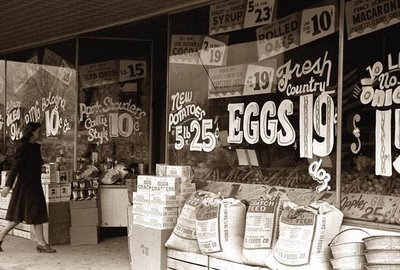 On Wednesday, June 12, 2013, at more or less the same time that I was standing in a Greek Orthodox cathedral for the memorial prayers honoring the second anniversary of my mother’s passing, the Funeral Mass for David “Deacon” Patenotte was about to take place at St. Mary’s Catholic Church in my hometown of Yazoo City, Mississippi.
I am a longtime Mississippi exile by this point, but I would have given anything to be in both places at once. As Father Steve censed the icon of Christ and asked for my mother’s memory to be eternal, I lifted up Mr. Patenotte’s name, too.
David, or “Deacon,” as he was known by most folks, was the owner of Patenotte’s Grocery on Grand Avenue: the expansive, tree-lined street that led out from the nineteenth century downtown to houses that were gradually newer, and finally to the flat streets of small 1950s and 60s houses that had been carved out of what had originally been the Curran family’s plantation.
The original Patenotte’s had been a country store back when Grand Avenue ended in gravel, but by the time I was a child, a new, modern store with plate-glass windows and sky-blue iron siding was already several years old.
The store was a mere one block from my house around the corner, and various members of my large family would run over there multiple times a day, to pickup some item needed item, and Mr. Patenotte let us pay on credit. I was also allowed to go to Patenotte’s by myself when I was around four years old, an age that sounds insanely young for me to be crossing streets and going around corners.
But go I did, a dime and nickel in hand to buy a Three Musketeers bar, which cost thirteen cents.
One time, in one of my most frightening memories of early childhood (I must have been about two), I dropped a glass jar of Ovaltine and watched it explode on the linoleum into a cloud of chocolate and broken glass. I also remember, more than once, curling up to hide on the stack of twenty-five pouds bags of flour, clad in flowered cotton, that were on the bottom of the shelf of the baking aisle.
Given that Patenotte’s effectively functioned as an extension of our pantry, I had a front-row seat for the quotidian dramas that played out in its aisles. Mr. Patenotte was both owner and patriarch, and his voluminous energy and will permeated the store like a palpable force.
The windows were taped from top to bottom with his own hand-lettered sale notices, created from butcher paper scrawled with purple magic marker whose pungent ink was identical to the mimeograph machines in school: Try Some! Marked down now! And next to a basket of odd or dented items, Reduced for Quick Sale!
His office was perched in a little glassed-in cube up a few stairs from the store floor, and from which he could peer out over the store entrance and the two checkout lanes. More than once, I witnessed him ream out an employee—loudly, publicly, in a way that might be lawsuit-worthy today (a “tough love boss,” as his daughter Lillie noted on Facebook in announcing his funeral).
In this small supermarket his employees were like an ensemble cast: Pugh with his white paper hat and jacket back in the icy meat room, Caesar Felton who later became the Yazoo City sheriff, Ruth Brown whom I still go by to see at the Essco drugstore when I happen to be back home.
These employees I’m mentioning are all African-Americans, although he had many white employees as well. For part of the story of Mr. Patenotte is his courage during the Civil Rights movement: In the years of agony that preceded the final integration of the town’s public schools in 1970, Mr. Patenotte stood on the side of progress, inspired by the social justice teachings of his Catholic faith in a state that is still only 2% Catholic.
He joined the local NAACP, and thus avoided the local integration boycott by the black community, only to be accused by whites of being in it to make off with business for himself. My siblings had neighborhood friends whose parents forbade them to go to Patenotte’s on account of Mr. Patenotte’s politics.
“It was the first time I had witnessed that kind of explicit racism up close,” one of my brothers says.
Google Deacon Patenotte when you have a moment, and you can read the poignant, yet modest profile of him in Willie Morris’ Yazoo: Integration in a Deep Southern Town. This legacy should not be forgotten.
At the same time, the story of Mr. Patenotte is exactly opposite the kind of story we have come to tell about courage under these kinds of circumstances. He did not leap onto any kind of national stage; he did not try to capitalize on his simple efforts to live his values.
What he did do was keep running the store. He worked harder than any staff member he hired, from around six o’clock in the morning until long after dark. He worked in that store long enough to witness personal tragedy, from the death of his oldest daughter to the brain injury of his fourth daughter and death of his wife in a car accident.
He ran the store during the decades when the Yazoo Public Schools almost completely re-segregated, and later when the crack epidemic hit.
All along, it remained just that one well-run store, linoleum floors always smelling of Pine-Sol. There was no expectation that Patenotte’s grocery was something that needed to be marketed, or “brought to scale.”
He was faithful in a small thing. The name “Patenotte,” I am pretty sure, is a French diminutive of the Latin paternoster, in other words, the Our Father. I smile to myself thinking, what a providential and telling coincidence.
A native of Yazoo City, Mississippi, Caroline Langston is a convert to the Eastern Orthodox Church. She is a widely published writer and essayist, a winner of the Pushcart Prize, and a commentator for NPR’s “All Things Considered.”
Previous Post

June 27, 2013
The Fragrance of the Unknown, Part 2
Next Post
June 30, 2013 Antisuperchrist: How the Man of Steel Saves, Part 1
Browse Our Archives
Select a Category A. G. Harmon Alissa Wilkinson Allison Backous Art Authors Brad Fruhauff Bradford Winters Bryan Bliss Caroline Langston Chad Thomas Johnston Chris Hoke Christiana N. Peterson Culture D.G. Myers D.L. Mayfield Daniel Bowman Jr. David Griffith Elizabeth Duffy Faith Film Greg Wolfe Guest Contributor Interview Jan Vallone Jeffrey Overstreet Jessica Eddings-Roeser Jessica Mesman Griffith Kelly Foster Lindsey Crittenden Morgan Meis music Natalie Vestin Nick Olson Peggy Rosenthal Personal Reflection Poetry Friday Reflection Relationships Review Richard Chess Richard Cole Sara Zarr Shannon Huffman Polson Sonya Bilocerkowycz Tania Runyan Tony Woodlief Topical Categories Uncategorized Vic Sizemore Writing
Select a Month October 2018 September 2018 August 2018 July 2018 June 2018 May 2018 April 2018 March 2018 February 2018 January 2018 December 2017 November 2017 October 2017 September 2017 August 2017 July 2017 June 2017 May 2017 April 2017 March 2017 February 2017 January 2017 December 2016 November 2016 October 2016 September 2016 August 2016 July 2016 June 2016 May 2016 April 2016 March 2016 February 2016 January 2016 December 2015 November 2015 October 2015 September 2015 August 2015 July 2015 June 2015 May 2015 April 2015 March 2015 February 2015 January 2015 December 2014 November 2014 October 2014 September 2014 August 2014 July 2014 June 2014 May 2014 April 2014 March 2014 February 2014 January 2014 December 2013 November 2013 October 2013 September 2013 August 2013 July 2013 June 2013 May 2013 April 2013 March 2013 February 2013 January 2013 December 2012 November 2012 October 2012 September 2012 August 2012 July 2012 June 2012 May 2012 February 2008
Follow Us!
TAKE THE
Religious Wisdom Quiz
What Christian denomination is known for circuit riders and revival meetings in America?
Select your answer to see how you score.
Presbyterian Episcopalian Catholic Methodist
Related posts from Good Letters



Leonard Cohen’s Holy and Broken Hallelujah

Ready or Not for the Days of Awe
TRENDING AT PATHEOS Catholic

Rejecting Doom: Christian Hope And Human Action
Christianity is a religion of hope. We are to have hope and...

It’s What Comes From Within Which Matters
One of the most difficult things for us to understand is why...

Why I Choose the Eucharist Over the Sermon
Choose the Eucharist, Not the Sermon What are we supposed to get...

5 Design Elements Found in Spiritually Rooted Homes
Putting Spirituality Into Home Decor Our homes are more than our living...

Credo: A Story of God Told with the...
About 10 years ago, I began to imagine a personal "Credo" that...

The Anatomy of Divine Revelation in Catholic Thought
The claim that God has made Himself known to human beings is...
view all Catholic blogs
Ad-Free & Subscriber Log-In Subscription Support
- About Us
- 2026 Calendar
- Videos
- Podcasts
- Library of World Religions
- Faith In Media Tracker
- Advertise With Us
- Write for Us
- Privacy Policy
- Terms of Service
- Do Not Sell My Data
- Contact Us
- Radiant Digital
- Manage Newsletter Subscriptions
- Unsubscribe From Notifications
- Sitemap
Copyright 2008-2026, Patheos. All rights reserved.
Subscription Support Ad-Free & Subscriber Log-In
Follow Patheos