
BuddhistCatholicContemplativeEvangelicalGeneral ChristianHinduJewishLatter-day SaintMuslimNew VisionsProgressive Christian
Beliefs
- Buddhist
- Catholic
- Contemplative
- Evangelical
- General Christian
- Hindu
- Jewish
- Latter-day Saint
- More Voices
- Muslim
- New Visions
- Pagan
- Progressive Christian
Topics
- Religion News
- Food and Religion
- Sports and Religion
- Religious Art
- Religious Music and Entertainment
- Religious Events
- History and Religion
- Style and Religion
- Politics and Religion
- Women in Religion
- Recreation Outdoors and Religion
- Business Finance and Religion
- Careers Workplace and Religion
- Education and Religion
- Family Parenting and Religion
- Health Fitness and Religion
- Home and Religion
- Relationships and Religion
- Technology and Religion
- Travel and Religion
Columnists
- Buddhist Columnists
- Business Finance and Religion Columnists
- Careers Workplace and Religion Columnists
- Catholic Columnists
- Contemplative Columnists
- Education and Religion Columnists
- Evangelists Columnists
- Family Parenting and Religion Columnists
- General Christian Columnists
- Health Fitness and Religion Columnists
- Hindu Columnists
- History and Religion Columnists
- Home and Religion Columnists
- Jewish Columnists
- More Voices Columnists
- Latter Day Columnists
- Muslim Columnists
- New Visions Columnists
- Nonreligious Columnists
- Pagan Columnists
- Politics and Religion Columnists
- Progressive Columnists
- Recreation Outdoors and Religion Columnists
- Relationships and Religion Columnists
- Religion News Columnists
- Religious Art Columnists
- Religious Events Columnists
- Religious Music and Entertainment Columnists
- Sports and Religion Columnists
- Style and Religion Columnists
- Technology and Religion Columnists
- Travel and Religion Columnists
- Women in Religion Columnists
Resource Library
- 2026 Calendar
- Library of World Religions
- The 100 Most Holy Places on Earth
- Patheos Answers
- Podcasts
- Videos
- Faith Leaders Database
- Anglican Episcopalian
- Bahai
- Baptist
- Buddhism
- Christianity
- Confucianism
- Eastern Orthodoxy
- Hinduism
- Holiness and Pentecostal
- ISKCON
- Islam
- Judaism
- Lutheran
- Methodist
- The Church of Jesus Christ of Latter-day Saints
- New Age
- Paganism
- Presbytarian and Reformed
- Protestantism
- Religion Behind the Scenes
- Roman Catholic
- Scientology
- Shia Islam
- Sikhism
- Sufism
- Sunni Islam
- Taoism
- Zen
- See all religions
Research Tools
 Ad-Free & Subscriber Log-In Subscription Support
Ad-Free & Subscriber Log-In Subscription Support
Follow Patheos 

- Trending:
- Forgiveness
- |
- Marriage
- |
- Consciousness
- |
- Death Penalty
- |
- Election
- |
- Halloween
 Good Letters
-
Contributors
- Home
- Catholic
- The Glass Coffin
The Glass Coffin
Last updated on: May 17, 2013 at 12:39 am by Caroline Langston
The Glass Coffin 2013-05-17T00:39:03-07:00 Caroline Langston
Patheos Explore the world's faith through different perspectives on religion and spirituality! Patheos has the views of the prevalent religions and spiritualities of the world.
 For Hella Winston
“To be full of things is to be empty of God. To be empty of things is to be full of God.”
–Meister Eckhart
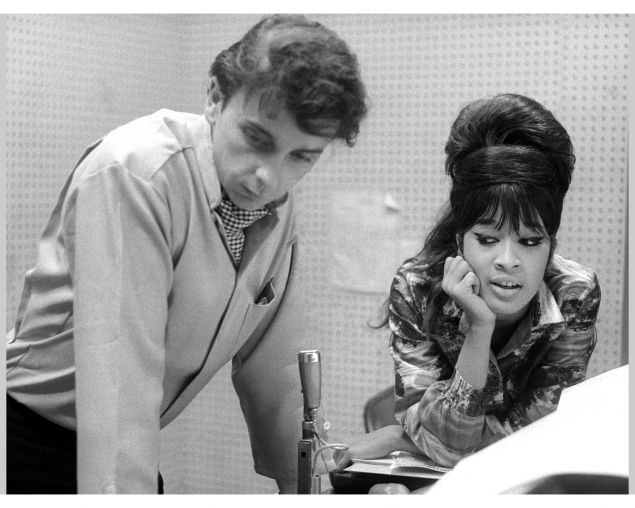
It seems rather ghastly now, given that he is serving a sentence of nineteen-years-to-life for murdering a cocktail waitress, but when I was in high school, I became obsessed with music producer Phil Spector—the eccentric and reclusive originator of the “Wall of Sound” that echoed from a dozen girl groups in the early 1960s.
I was a scholarship student at a fancy boarding school in Massachusetts where the workload was notoriously heavy and for me, particularly difficult. I failed a year of mathematics and made mediocre grades in everything else. Instead of studying, though, I sat around reading Tom Wolfe’s essay on Spector from The Kandy-Colored Tangerine-Flake Streamline Baby, which I kept checking out from the school library.
In a school where most students listened to the Grateful Dead, I photocopied old magazine articles on Spector, which I carried everywhere, like talismans. On weekend nights when the eighteenth century quadrangles would echo with twenty-minute Bob Weir guitar solos, I huddled in my room listening to an AM oldies station from Lowell, the signal occasionally blurred by bursts of static.
According to an article about Ronnie Spector I read in Interview magazine, when the former lead singer of the Ronettes was still married to Spector, he kept her a virtual prisoner inside his Bel-Air mansion. Once, she claimed, he threatened to shut her inside a glass coffin in the basement and just look at her.
From then on, whether trudging through snow across campus, or sitting in a darkened auditorium watching tapes of the Watergate hearings for History 300, I carried the idea of the glass coffin inside me as a place of repose. Whenever I was frightened or lonely—which was often—I could withdraw inside it.
I imagined descending, the small of my back touching its cool flat plane, the arresting stillness of a lack of air. My arms were graceful, arranged like the necks of swans; the soles of my feet just touched the coffin’s lip. From this awkward angle, I could behold everything. The transparent glass seemed to magnify objects outside of it like a lens. And above it, over all the things I saw, loomed Spector’s mysterious presence.
Certainly, the coffin scene in my mind was drenched in adolescent sexuality, albeit of a rather neurasthenic sort. Some girls in my dorm had a poster of Millais’s “The Death of Ophelia” on their wall that preoccupied me. There was something about the alliance of sex and a delicate masochism (Ophelia’s waxen white hands held out in the water’s shimmer) that was far more appealing than sex as it actually appeared to be practiced between average prep school students—a combative, greedy affair, about as subtle as a hockey game.
To me, sex seemed inextricably tied to death, and dissolution of boundaries, though at the time I wasn’t aware of this notion’s venerable history.
To submit oneself to the glass coffin, then, was to lay oneself bare to violation, and not merely to a sexual violation, but to something more transfiguring. I came to think that I gave myself up to the terrifying power of revelation. But as I gave myself up in my imagination to the coffin’s limitations, I discovered the most amazing paradox: I was freed to become an observer.
In surrendering all expectation, the world became magnified around me, infinite in the small. With all its illogic, the fantasy came to signify the creative possibilities inherent in capitulation. This was not something that my education encouraged.
For a school that prided itself on being politically progressive, we were encouraged to set about our studies with the voracity of nineteenth-century colonialists. Learning was framed in the language of mastery and conquest, but rarely awe. Even understanding came to have a certain violence, in the picture of these affluent teenagers from California and New York, glib with their shorthand for the universe.
It was an excellent education, but it was also like studying a vast historic temple—its intricate layout, its mosaics and friezes—in order to best discover how to raid the treasure.
The exception came in the spring trimester of my senior year. Mud season had ended, the lilacs were in bloom, and it was so warm and radiant that Mr. Thomas moved my History of Jazz Music class outdoors and brought along his saxophone.
Mr. Thomas was a tall, reserved black man who played in nightclub house bands and always wore a coat and tie. He said he was going to play a piece he composed about his sister, who was a manic-depressive. Ten or so students splayed out nervously in a circle on the grass. What if his playing were horrible? Or since we didn’t really think it would be bad—he was our teacher, after all—what if it were just embarrassing?
He began slowly, drawing out long lateral notes, like breaths. I knew nothing about musical composition, but as he played, I began to perceive architecture. What began as regularly as breathing rose, became giddy like laughter, but ever more frenzied until the notes spilled over themselves, blending into one another, hitting a high, thin sigh, and then falling into sobs.
Mr. Thomas was weeping and his sister was weeping in him. Then his playing became lower, heavier and dense, prolonged again, and finally resolved.
The class erupted in applause, but no one said a word. No one moved to leave. Mr. Thomas wiped his brow, which was glowing with sweat, and did not look at any of us. With a wave of his hand, he dismissed class.
Thus, for me the creative drive became to witness another so clearly, to submit myself in effect, so that I could become that Other. This was the transfiguration the glass coffin promised.
It is still the only means I’ve found to overcome violence and sorrow, and all that is unspeakable.
Previous Post

May 15, 2013
An Orchestra Against Ignorance
Next Post
May 20, 2013 Why We Make Art
Browse Our Archives
Select a Category A. G. Harmon Alissa Wilkinson Allison Backous Art Authors Brad Fruhauff Bradford Winters Bryan Bliss Caroline Langston Chad Thomas Johnston Chris Hoke Christiana N. Peterson Culture D.G. Myers D.L. Mayfield Daniel Bowman Jr. David Griffith Elizabeth Duffy Faith Film Greg Wolfe Guest Contributor Interview Jan Vallone Jeffrey Overstreet Jessica Eddings-Roeser Jessica Mesman Griffith Kelly Foster Lindsey Crittenden Morgan Meis music Natalie Vestin Nick Olson Peggy Rosenthal Personal Reflection Poetry Friday Reflection Relationships Review Richard Chess Richard Cole Sara Zarr Shannon Huffman Polson Sonya Bilocerkowycz Tania Runyan Tony Woodlief Topical Categories Uncategorized Vic Sizemore Writing
Select a Month October 2018 September 2018 August 2018 July 2018 June 2018 May 2018 April 2018 March 2018 February 2018 January 2018 December 2017 November 2017 October 2017 September 2017 August 2017 July 2017 June 2017 May 2017 April 2017 March 2017 February 2017 January 2017 December 2016 November 2016 October 2016 September 2016 August 2016 July 2016 June 2016 May 2016 April 2016 March 2016 February 2016 January 2016 December 2015 November 2015 October 2015 September 2015 August 2015 July 2015 June 2015 May 2015 April 2015 March 2015 February 2015 January 2015 December 2014 November 2014 October 2014 September 2014 August 2014 July 2014 June 2014 May 2014 April 2014 March 2014 February 2014 January 2014 December 2013 November 2013 October 2013 September 2013 August 2013 July 2013 June 2013 May 2013 April 2013 March 2013 February 2013 January 2013 December 2012 November 2012 October 2012 September 2012 August 2012 July 2012 June 2012 May 2012 February 2008
Follow Us!
TAKE THE
Religious Wisdom Quiz
In what town did Jesus grow up?
Select your answer to see how you score.
Jericho Jerusalem Nazareth Bethlehem
Related posts from Good Letters


Leonard Cohen’s Holy and Broken Hallelujah


A Conversation with Welcome Wagon’s Vito Aiuto, Part...
TRENDING AT PATHEOS Catholic

Rejecting Doom: Christian Hope And Human Action
Christianity is a religion of hope. We are to have hope and...

It’s What Comes From Within Which Matters
One of the most difficult things for us to understand is why...

Why I Choose the Eucharist Over the Sermon
Choose the Eucharist, Not the Sermon What are we supposed to get...

5 Design Elements Found in Spiritually Rooted Homes
Putting Spirituality Into Home Decor Our homes are more than our living...

Credo: A Story of God Told with the...
About 10 years ago, I began to imagine a personal "Credo" that...

The Anatomy of Divine Revelation in Catholic Thought
The claim that God has made Himself known to human beings is...
view all Catholic blogs
Ad-Free & Subscriber Log-In Subscription Support
- About Us
- 2026 Calendar
- Videos
- Podcasts
- Library of World Religions
- Faith In Media Tracker
- Advertise With Us
- Write for Us
- Privacy Policy
- Terms of Service
- Do Not Sell My Data
- Contact Us
- Radiant Digital
- Manage Newsletter Subscriptions
- Unsubscribe From Notifications
- Sitemap
Copyright 2008-2026, Patheos. All rights reserved.
Subscription Support Ad-Free & Subscriber Log-In
Follow Patheos