
BuddhistCatholicContemplativeEvangelicalGeneral ChristianHinduJewishLatter-day SaintMuslimNew VisionsProgressive Christian
Beliefs
- Buddhist
- Catholic
- Contemplative
- Evangelical
- General Christian
- Hindu
- Jewish
- Latter-day Saint
- More Voices
- Muslim
- New Visions
- Pagan
- Progressive Christian
Topics
- Religion News
- Food and Religion
- Sports and Religion
- Religious Art
- Religious Music and Entertainment
- Religious Events
- History and Religion
- Style and Religion
- Politics and Religion
- Women in Religion
- Recreation Outdoors and Religion
- Business Finance and Religion
- Careers Workplace and Religion
- Education and Religion
- Family Parenting and Religion
- Health Fitness and Religion
- Home and Religion
- Relationships and Religion
- Technology and Religion
- Travel and Religion
Columnists
- Buddhist Columnists
- Business Finance and Religion Columnists
- Careers Workplace and Religion Columnists
- Catholic Columnists
- Contemplative Columnists
- Education and Religion Columnists
- Evangelists Columnists
- Family Parenting and Religion Columnists
- General Christian Columnists
- Health Fitness and Religion Columnists
- Hindu Columnists
- History and Religion Columnists
- Home and Religion Columnists
- Jewish Columnists
- More Voices Columnists
- Latter Day Columnists
- Muslim Columnists
- New Visions Columnists
- Nonreligious Columnists
- Pagan Columnists
- Politics and Religion Columnists
- Progressive Columnists
- Recreation Outdoors and Religion Columnists
- Relationships and Religion Columnists
- Religion News Columnists
- Religious Art Columnists
- Religious Events Columnists
- Religious Music and Entertainment Columnists
- Sports and Religion Columnists
- Style and Religion Columnists
- Technology and Religion Columnists
- Travel and Religion Columnists
- Women in Religion Columnists
Resource Library
- 2026 Calendar
- Library of World Religions
- The 100 Most Holy Places on Earth
- Patheos Answers
- Podcasts
- Videos
- Faith Leaders Database
- Anglican Episcopalian
- Bahai
- Baptist
- Buddhism
- Christianity
- Confucianism
- Eastern Orthodoxy
- Hinduism
- Holiness and Pentecostal
- ISKCON
- Islam
- Judaism
- Lutheran
- Methodist
- The Church of Jesus Christ of Latter-day Saints
- New Age
- Paganism
- Presbytarian and Reformed
- Protestantism
- Religion Behind the Scenes
- Roman Catholic
- Scientology
- Shia Islam
- Sikhism
- Sufism
- Sunni Islam
- Taoism
- Zen
- See all religions
Research Tools
 Ad-Free & Subscriber Log-In Subscription Support
Ad-Free & Subscriber Log-In Subscription Support
Follow Patheos 

- Trending:
- Forgiveness
- |
- Marriage
- |
- Consciousness
- |
- Death Penalty
- |
- Election
- |
- Halloween
 Good Letters
-
Contributors
- Home
- Catholic
- An Orchestra Against Ignorance
An Orchestra Against Ignorance
Last updated on: May 15, 2013 at 10:35 pm by Peggy Rosenthal
An Orchestra Against Ignorance 2013-05-15T22:35:53-07:00 Peggy Rosenthal
Patheos Explore the world's faith through different perspectives on religion and spirituality! Patheos has the views of the prevalent religions and spiritualities of the world.
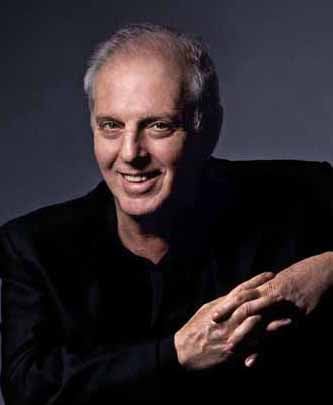 The alumni magazine of Brown University, my alma mater, begins its article on a unique orchestra like this:
“We are an orchestra against ignorance.” That’s how Israeli conductor Daniel Barenboim describes the West-Eastern Divan, which consists of young musicians hailing from Israel and its Arab neighbors.
Picture a teenage violinist from Israel; his name is Ilya. Picture a teenage violinist from Lebanon; his name is Claude. They know nothing of one another’s lives. Or, actually, they think they do know about each other’s lives, because each has been raised on negative stereotypes about the other.
In the late 1990s, renowned Israeli conductor Daniel Barenboim and his friend, the late Palestinian-American professor Edward Said, began brainstorming about how to bring these two violinists together, along with other young musicians from the Arab Middle East.
Their goal: to give young people a chance to know each other through the music they would create together.
Barenboim and Said had no illusions that creating the harmony of music would automatically create harmony among peoples who are burdened by histories of hatred and by political leaders who exploit that history. But at least a few young people would have the opportunity for personal contact, would have an opportunity to dispel their ignorance about each other.
Barenboim and Said’s vision materialized in a workshop for young musicians from the Middle East that first took place in Weimar, Germany, in August 1999. The workshop has continued every summer since, in various countries.
At the workshop, Barenboim works the kids hard: he treats them with the same respect and expectation of high standards as his adult professional orchestras. And the hard work pays off: soon the West-Eastern Divan, as the orchestra is named, was performing in major European cities.
Yet maybe a stronger measure of the success of this enterprise is the bonds that form among the musicians. Here are Claude and Ilya, chatting in an outside courtyard at that first workshop.
Claude: “At first it was strange. But soon: we sit at the same stand, so know I know how he plays, and he knows how I play—so we actually have some connection. Now we understand each other more.”
Ilya: “This is the first year, but the workshop must keep going. Even if in two or three years there is peace between Israel and the Arab countries, the workshop should continue—just to bring people together.”
Claude gets angry: “Peace! How can you talk about peace! This is only music!” And he stalks off. Ilya shakes his head with a smile.
A few years later, during audience applause at the end of a concert, the camera shows these two standing with the rest of the orchestra, Claude patting Ilya on the back.
We have this conversation on film—thanks to another artist, filmmaker Paul Smaczny.
It happened that Smaczny was working on a profile of Daniel Barenboim in the late 1990s—just as Barenboim and Said were hatching plans for the West-Eastern Divan Orchestra project. On the website of the film that Smaczny eventually made about the project, he writes, “I thought I would stay and film two or three days to document Barenboim’s activities in reconciling Israelis and Palestinians. I ended up following this unique experience for seven years.”
The result was Smaczny’s 2005 documentary, Knowledge is the Beginning. Knowledge, that is, of people of whom one had been previously ignorant.
As the film makes clear, playing music is the core of the Barenboim-Said project. But the two men sought other ways to open the youths to the others’ experience. During the 1999 summer workshop in Weimar, for instance, they arranged a trip to nearby Buchenwald, the former Nazi concentration camp.
Afterward, Barenboim spoke to Said and to the camera:
There was one Arab kid, after we walked through the crematorium, who came to me; and his face was shaking from what he had seen. And he took my arm and said to me, “You know what I’ve just thought. If we had all lived here, you*—whom we respect so much—we,* all of us, Arabs and Jews, would have ended here.” In other words, he had to come here to see how close we are—as a Semitic race.
So why was the West-Eastern Divan featured in my Brown University alumni magazine? Because Brown hosted the orchestra for a week this past January. (After their Brown gig, which was accompanied by “painfully open public conversations about the Middle East,” says the article, “they headed to Carnegie Hall, where they wowed New York City audiences with the full Beethoven symphony cycle.”)
Brown is also developing an ongoing relationship with Barenboim and the orchestra.
The next step in Brown’s collaboration with the Divan will center on the founding of the Barenboim-Said Academy in Berlin, which is scheduled to open in 2015. The mayor of Berlin has given space for the school, and the state has pledged $27 million…. Brown faculty members are helping design the academy’s curriculum, a third of which will focus on the humanities, and they will teach there as well…. The academy will enroll students from Israel and its Arab neighbors, as well as from Brown.
I easily fall into despair at the entrenched hostilities in the Middle East. But this collaboration is for me a small sign of hope.
As is Barenboim himself.
Astonishingly hardworking, duly conscious of his fame, he is at the same time humble and gentle, with a wry sense of humor—evident throughout Smaczny’s film and also captured in this small bit from the Brown article:
“We are blessed—or cursed—to live side by side or together. Not back-to-back,” Barenboim said, criticizing both Palestinians and Jews for their lack of curiosity about one another. “I have both an Israeli and a Palestinian passport, so I am in constant dialogue with myself.”
Previous Post

May 15, 2013
A Corporal Work of Mercy
Next Post
May 17, 2013 The Glass Coffin
Browse Our Archives
Select a Category A. G. Harmon Alissa Wilkinson Allison Backous Art Authors Brad Fruhauff Bradford Winters Bryan Bliss Caroline Langston Chad Thomas Johnston Chris Hoke Christiana N. Peterson Culture D.G. Myers D.L. Mayfield Daniel Bowman Jr. David Griffith Elizabeth Duffy Faith Film Greg Wolfe Guest Contributor Interview Jan Vallone Jeffrey Overstreet Jessica Eddings-Roeser Jessica Mesman Griffith Kelly Foster Lindsey Crittenden Morgan Meis music Natalie Vestin Nick Olson Peggy Rosenthal Personal Reflection Poetry Friday Reflection Relationships Review Richard Chess Richard Cole Sara Zarr Shannon Huffman Polson Sonya Bilocerkowycz Tania Runyan Tony Woodlief Topical Categories Uncategorized Vic Sizemore Writing
Select a Month October 2018 September 2018 August 2018 July 2018 June 2018 May 2018 April 2018 March 2018 February 2018 January 2018 December 2017 November 2017 October 2017 September 2017 August 2017 July 2017 June 2017 May 2017 April 2017 March 2017 February 2017 January 2017 December 2016 November 2016 October 2016 September 2016 August 2016 July 2016 June 2016 May 2016 April 2016 March 2016 February 2016 January 2016 December 2015 November 2015 October 2015 September 2015 August 2015 July 2015 June 2015 May 2015 April 2015 March 2015 February 2015 January 2015 December 2014 November 2014 October 2014 September 2014 August 2014 July 2014 June 2014 May 2014 April 2014 March 2014 February 2014 January 2014 December 2013 November 2013 October 2013 September 2013 August 2013 July 2013 June 2013 May 2013 April 2013 March 2013 February 2013 January 2013 December 2012 November 2012 October 2012 September 2012 August 2012 July 2012 June 2012 May 2012 February 2008
Follow Us!
TAKE THE
Religious Wisdom Quiz
What does "Shema" mean in Hebrew?
Select your answer to see how you score.
Obey Hear Wait Pray
Related posts from Good Letters


Leonard Cohen’s Holy and Broken Hallelujah


TRENDING AT PATHEOS Catholic

Rejecting Doom: Christian Hope And Human Action
Christianity is a religion of hope. We are to have hope and...

It’s What Comes From Within Which Matters
One of the most difficult things for us to understand is why...

Why I Choose the Eucharist Over the Sermon
Choose the Eucharist, Not the Sermon What are we supposed to get...

5 Design Elements Found in Spiritually Rooted Homes
Putting Spirituality Into Home Decor Our homes are more than our living...

Credo: A Story of God Told with the...
About 10 years ago, I began to imagine a personal "Credo" that...

The Anatomy of Divine Revelation in Catholic Thought
The claim that God has made Himself known to human beings is...
view all Catholic blogs
Ad-Free & Subscriber Log-In Subscription Support
- About Us
- 2026 Calendar
- Videos
- Podcasts
- Library of World Religions
- Faith In Media Tracker
- Advertise With Us
- Write for Us
- Privacy Policy
- Terms of Service
- Do Not Sell My Data
- Contact Us
- Radiant Digital
- Manage Newsletter Subscriptions
- Unsubscribe From Notifications
- Sitemap
Copyright 2008-2026, Patheos. All rights reserved.
Subscription Support Ad-Free & Subscriber Log-In
Follow Patheos