
BuddhistCatholicContemplativeEvangelicalGeneral ChristianHinduJewishLatter-day SaintMuslimNew VisionsProgressive Christian
Beliefs
- Buddhist
- Catholic
- Contemplative
- Evangelical
- General Christian
- Hindu
- Jewish
- Latter-day Saint
- More Voices
- Muslim
- New Visions
- Pagan
- Progressive Christian
Topics
- Religion News
- Food and Religion
- Sports and Religion
- Religious Art
- Religious Music and Entertainment
- Religious Events
- History and Religion
- Style and Religion
- Politics and Religion
- Women in Religion
- Recreation Outdoors and Religion
- Business Finance and Religion
- Careers Workplace and Religion
- Education and Religion
- Family Parenting and Religion
- Health Fitness and Religion
- Home and Religion
- Relationships and Religion
- Technology and Religion
- Travel and Religion
Columnists
- Buddhist Columnists
- Business Finance and Religion Columnists
- Careers Workplace and Religion Columnists
- Catholic Columnists
- Contemplative Columnists
- Education and Religion Columnists
- Evangelists Columnists
- Family Parenting and Religion Columnists
- General Christian Columnists
- Health Fitness and Religion Columnists
- Hindu Columnists
- History and Religion Columnists
- Home and Religion Columnists
- Jewish Columnists
- More Voices Columnists
- Latter Day Columnists
- Muslim Columnists
- New Visions Columnists
- Nonreligious Columnists
- Pagan Columnists
- Politics and Religion Columnists
- Progressive Columnists
- Recreation Outdoors and Religion Columnists
- Relationships and Religion Columnists
- Religion News Columnists
- Religious Art Columnists
- Religious Events Columnists
- Religious Music and Entertainment Columnists
- Sports and Religion Columnists
- Style and Religion Columnists
- Technology and Religion Columnists
- Travel and Religion Columnists
- Women in Religion Columnists
Resource Library
- 2026 Calendar
- Library of World Religions
- The 100 Most Holy Places on Earth
- Patheos Answers
- Podcasts
- Videos
- Faith Leaders Database
- Anglican Episcopalian
- Bahai
- Baptist
- Buddhism
- Christianity
- Confucianism
- Eastern Orthodoxy
- Hinduism
- Holiness and Pentecostal
- ISKCON
- Islam
- Judaism
- Lutheran
- Methodist
- The Church of Jesus Christ of Latter-day Saints
- New Age
- Paganism
- Presbytarian and Reformed
- Protestantism
- Religion Behind the Scenes
- Roman Catholic
- Scientology
- Shia Islam
- Sikhism
- Sufism
- Sunni Islam
- Taoism
- Zen
- See all religions
Research Tools
 Ad-Free & Subscriber Log-In Subscription Support
Ad-Free & Subscriber Log-In Subscription Support
Follow Patheos 

- Trending:
- Forgiveness
- |
- Marriage
- |
- Consciousness
- |
- Death Penalty
- |
- Election
- |
- Halloween
 Good Letters
-
Contributors
- Home
- Catholic
- A Theology of Singleness, Part 2
A Theology of Singleness, Part 2
Last updated on: May 10, 2013 at 1:00 am by Guest Contributor
A Theology of Singleness, Part 2 2013-05-09T09:06:33-07:00 Guest Contributor
Patheos Explore the world's faith through different perspectives on religion and spirituality! Patheos has the views of the prevalent religions and spiritualities of the world.
 Guest Post
By J. M. Samuelson
Continued from yesterday.
Alan Jacobs recently made a wise observation: “there are certain kinds of ‘growing up’ that don’t happen until you get married—that simply getting older doesn’t do for you.”
I’d like to point to some parallel category of knowledge specific to singleness, but I don’t know if I can. Marriage seems to reconstitute one’s experience of time in a way that singleness simply cannot.
Man is the doubtful creature: every avenue of life prompts its own order of doubts and questions. Have I merely aged with time, or do I exhibit a pattern of real growth made possible precisely by the strange road my life has taken?
Single time offers few intimations of meaning through which one may map one’s experiences. Because the sacrifices of marriage are not incumbent on me, whatever difficulties I do encounter tend not to carry the immediate reminder that one’s troubles are folded into a greater good.
The perpetually single Christian confronts a genuine void, into which subterranean questions about one’s motivations and purpose have a habit of oozing.
Single life has its seasons of joy and freedom. And there is boredom, fear, sadness, stagnation, and emptiness.
I relish the void when I wish to pity myself; I resent it when the consequences of self-pity prove inconvenient. But loneliness is not the exclusive property of singleness that I, crowned in self-regard, might like to imagine. A grain of truth obtains in Anton Chekhov’s admonition: “If you are afraid of loneliness, do not marry.”
I understand how some strains of loneliness may be unique to marriage, since marrying can take once fruitful relationships to a necessary point of terminus or drastic alteration.
Building on Makoto Fujimura’s observations mentioned yesterday, Andy Crouch in his essay, “The Gospel: How Is Art a Gift, a Calling, an Obedience?” offers great insight on creativity and cultivation in the second chapter of Genesis. Crouch considers the precious gold and bdellium and onyx of Havilah, near the river Pishon:
They are latent—lying below the surface of the very good world. Only by exploration and excavation will they be discovered. Only by experimentation and craftsmanship will their possibilities be disclosed. God has placed primordial humanity in a world that will only reach its full potential for beauty when it is cultivated, explored—where more goodness waits to be unearthed. The world is even better than it appears. The gold of that land is good.
One gift of singleness is a certain intensity of perspective, ideal for attending to latent goodness and beauty.
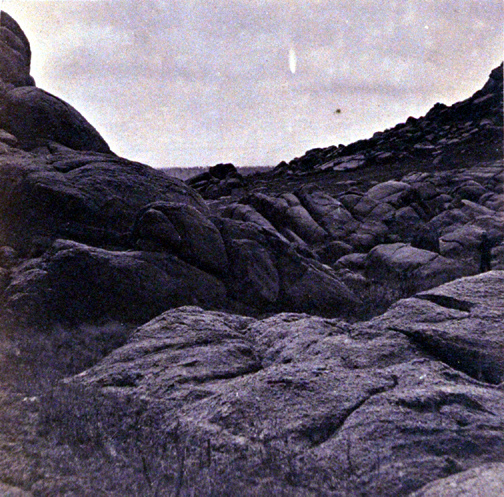
The Austrian writer Adalbert Stifter wrote a beautiful story called “Limestone,” which relates a surveyor’s glimpse into the life of a poor country priest. As the surveyor learns, this unnamed man became a priest in the wake of great personal loss long ago. His pastoral devotion extends to the gnarled karst landscape, which is, in his plain benediction, “as God has made it…and at times it is more beautiful than any region in the world.”
In her introduction to Stifter’s tales, Helen Watanabe-O’Kelly remarks: “The priest in Limestone learns to see and love the unpropitious karst which most people find hideous. Here he finds his moral purpose, yet the karst, like himself, is hiding something, for all its flora and fauna are to be found only by attentive searching in little cracks in the stones.”
The priest’s secret is a sacrificial gift to his parish, revealed to the community only after his death.
Karst is a landscape defined by erosion. Where there is no dissolution, there is no karst—just regular soluble rock like limestone and gypsum. The vegetation of karst derives where water collects: in the terrain’s flaws and scars. Life stems from hidden cavities through which water springs to irrigate many regions. Acidic depletion carries the danger of water pollution, and so karst culture requires vigilance in care and stewardship.
My life bears scant resemblance to the country priest’s path of quiet self-sacrifice. But I recognize “the unpropitious karst,” where the cultivator is called into places of scarification and general gnarliness.
I came to understand that whole orders of creativity are possible only in singleness, and without the cross-irrigating influence thereof marital life would suffer. The single person stands in a unique position to demonstrate that “the world is even better than it appears.”
I resolved singleness in high school and am prepared to carry on for the remainder of my life. But I make no demands on the future. Perhaps they know me better than I know myself who tell me that I am, in spite of it all, suited for marriage.
But in the meantime I embrace the mean times.
By the meantime I mean the time. I mean the brimming palette of days stretched out in front of me, ready for exploration, pooled there along the warped rim of my vision. Look at this prospect of sunken hills and lustrous trees and gleaming good water. Look at these gem-laden plants feeding the soil.
What shall I see today, venturing into the Lord’s provinces? What shall I make today? What garment shall I weave from earth’s inner thoughts spiced with gold? What tapestries of earthen ornament might be formed and adorned with jewel-extracted dyes? What resplendent dream waits to be born from ancient scars and striations? What impulse of divine joy sustains the patient stones and herds the glacial ice?
These fossils were living plants once, and wait in long desire. Agate, chrysolite, jasper: the rock that made them made the one that named them.
Beryl, carbuncle, amethyst. The beauty of the stone, the beauty of the stone’s name. Emerald, sapphire, pearl. Ruby, topaz, diamond. Horse, dog, bumblebee. Man, woman, child. “Still Life with Eggplant.” Frankincense. Subject, verb, object. Gold, bdellium, onyx. Wonderful, mighty, father.
J. M. Samuelson lives in Lynchburg, Virginia. He graduated from Liberty University.
Previous Post

May 9, 2013
A Theology of Singleness, Part 1
Next Post
May 13, 2013 Two Tribes: Good Wishes and Good Works
Browse Our Archives
Select a Category A. G. Harmon Alissa Wilkinson Allison Backous Art Authors Brad Fruhauff Bradford Winters Bryan Bliss Caroline Langston Chad Thomas Johnston Chris Hoke Christiana N. Peterson Culture D.G. Myers D.L. Mayfield Daniel Bowman Jr. David Griffith Elizabeth Duffy Faith Film Greg Wolfe Guest Contributor Interview Jan Vallone Jeffrey Overstreet Jessica Eddings-Roeser Jessica Mesman Griffith Kelly Foster Lindsey Crittenden Morgan Meis music Natalie Vestin Nick Olson Peggy Rosenthal Personal Reflection Poetry Friday Reflection Relationships Review Richard Chess Richard Cole Sara Zarr Shannon Huffman Polson Sonya Bilocerkowycz Tania Runyan Tony Woodlief Topical Categories Uncategorized Vic Sizemore Writing
Select a Month October 2018 September 2018 August 2018 July 2018 June 2018 May 2018 April 2018 March 2018 February 2018 January 2018 December 2017 November 2017 October 2017 September 2017 August 2017 July 2017 June 2017 May 2017 April 2017 March 2017 February 2017 January 2017 December 2016 November 2016 October 2016 September 2016 August 2016 July 2016 June 2016 May 2016 April 2016 March 2016 February 2016 January 2016 December 2015 November 2015 October 2015 September 2015 August 2015 July 2015 June 2015 May 2015 April 2015 March 2015 February 2015 January 2015 December 2014 November 2014 October 2014 September 2014 August 2014 July 2014 June 2014 May 2014 April 2014 March 2014 February 2014 January 2014 December 2013 November 2013 October 2013 September 2013 August 2013 July 2013 June 2013 May 2013 April 2013 March 2013 February 2013 January 2013 December 2012 November 2012 October 2012 September 2012 August 2012 July 2012 June 2012 May 2012 February 2008
Follow Us!
TAKE THE
Religious Wisdom Quiz
What did Solomon ask God for when he became king?
Select your answer to see how you score.
Wisdom Long life Victory Riches
Related posts from Good Letters

Leonard Cohen’s Holy and Broken Hallelujah

Ready or Not for the Days of Awe


TRENDING AT PATHEOS Catholic

Creation, Preservation, and Teleology in Catholic Theology
As I write this, it is very early Monday morning. Like millions...

The Parable Of The Sower And The Word...
One of Christ’s most famous parables is that of the sower who...

Rejecting Doom: Christian Hope And Human Action
Christianity is a religion of hope. We are to have hope and...

Why I Choose the Eucharist Over the Sermon
Choose the Eucharist, Not the Sermon What are we supposed to get...

5 Design Elements Found in Spiritually Rooted Homes
Putting Spirituality Into Home Decor Our homes are more than our living...

Credo: A Story of God Told with the...
About 10 years ago, I began to imagine a personal "Credo" that...
view all Catholic blogs
Ad-Free & Subscriber Log-In Subscription Support
- About Us
- 2026 Calendar
- Videos
- Podcasts
- Library of World Religions
- Faith In Media Tracker
- Advertise With Us
- Write for Us
- Privacy Policy
- Terms of Service
- Do Not Sell My Data
- Contact Us
- Radiant Digital
- Manage Newsletter Subscriptions
- Unsubscribe From Notifications
- Sitemap
Copyright 2008-2026, Patheos. All rights reserved.
Subscription Support Ad-Free & Subscriber Log-In
Follow Patheos