
BuddhistCatholicContemplativeEvangelicalGeneral ChristianHinduJewishLatter-day SaintMuslimNew VisionsProgressive Christian
Beliefs
- Buddhist
- Catholic
- Contemplative
- Evangelical
- General Christian
- Hindu
- Jewish
- Latter-day Saint
- More Voices
- Muslim
- New Visions
- Pagan
- Progressive Christian
Topics
- Religion News
- Food and Religion
- Sports and Religion
- Religious Art
- Religious Music and Entertainment
- Religious Events
- History and Religion
- Style and Religion
- Politics and Religion
- Women in Religion
- Recreation Outdoors and Religion
- Business Finance and Religion
- Careers Workplace and Religion
- Education and Religion
- Family Parenting and Religion
- Health Fitness and Religion
- Home and Religion
- Relationships and Religion
- Technology and Religion
- Travel and Religion
Columnists
- Buddhist Columnists
- Business Finance and Religion Columnists
- Careers Workplace and Religion Columnists
- Catholic Columnists
- Contemplative Columnists
- Education and Religion Columnists
- Evangelists Columnists
- Family Parenting and Religion Columnists
- General Christian Columnists
- Health Fitness and Religion Columnists
- Hindu Columnists
- History and Religion Columnists
- Home and Religion Columnists
- Jewish Columnists
- More Voices Columnists
- Latter Day Columnists
- Muslim Columnists
- New Visions Columnists
- Nonreligious Columnists
- Pagan Columnists
- Politics and Religion Columnists
- Progressive Columnists
- Recreation Outdoors and Religion Columnists
- Relationships and Religion Columnists
- Religion News Columnists
- Religious Art Columnists
- Religious Events Columnists
- Religious Music and Entertainment Columnists
- Sports and Religion Columnists
- Style and Religion Columnists
- Technology and Religion Columnists
- Travel and Religion Columnists
- Women in Religion Columnists
Resource Library
- 2026 Calendar
- Library of World Religions
- The 100 Most Holy Places on Earth
- Patheos Answers
- Podcasts
- Videos
- Faith Leaders Database
- Anglican Episcopalian
- Bahai
- Baptist
- Buddhism
- Christianity
- Confucianism
- Eastern Orthodoxy
- Hinduism
- Holiness and Pentecostal
- ISKCON
- Islam
- Judaism
- Lutheran
- Methodist
- The Church of Jesus Christ of Latter-day Saints
- New Age
- Paganism
- Presbytarian and Reformed
- Protestantism
- Religion Behind the Scenes
- Roman Catholic
- Scientology
- Shia Islam
- Sikhism
- Sufism
- Sunni Islam
- Taoism
- Zen
- See all religions
Research Tools
 Ad-Free & Subscriber Log-In Subscription Support
Ad-Free & Subscriber Log-In Subscription Support
Follow Patheos 

- Trending:
- Forgiveness
- |
- Marriage
- |
- Consciousness
- |
- Death Penalty
- |
- Election
- |
- Halloween
 Good Letters
-
Contributors
- Home
- Catholic
- The Last Taboo in Hollywood, Take 3
The Last Taboo in Hollywood, Take 3
Last updated on: April 23, 2013 at 3:10 pm by Bradford Winters
The Last Taboo in Hollywood, Take 3 2013-04-23T15:10:45-07:00 Bradford Winters
Patheos Explore the world's faith through different perspectives on religion and spirituality! Patheos has the views of the prevalent religions and spiritualities of the world.
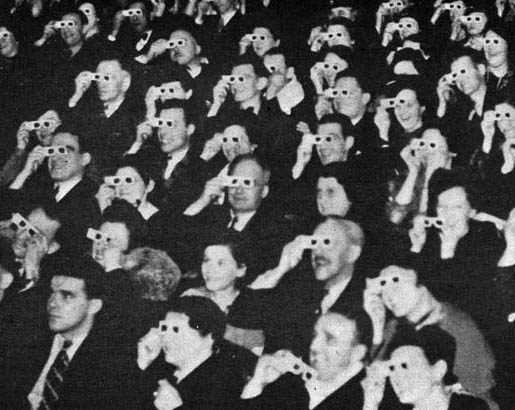 In yesterday’s post I did a “second take” (in keeping with the Hollywood motif) on my first post in this unanticipated sequence. Take 2 reconsidered my original point about “the gross lack of anything but lame portrayals of Christian characters in TV and film” in light of comments from readers that helped to correct me on one front (quantity of more nuanced portrayals) and adjust the terms of my argument on another front (quality of such nuanced portrayals).
In this latter vein, one reader’s comment on the oblique treatment of faith in Lars and the Real Girl brought to mind Emily Dickinson’s famous dictum to “tell it slant.” And lest I or anyone else forget, God himself subscribes to the same aesthetic with the parabolic mode throughout the Scriptures.
That said, stories told head-on about faith also have their due, as Ingmar Bergman’s Winter Light and Robert Duvall’s The Apostle both so effectively attest. Undoubtedly films like these meet a certain need in me for a full-frontal view of faith that is often hard to look at.
But my needs aren’t necessarily my neighbor’s needs, and to this extent it would have been fitting for me to make a qualifying statement or two in my criticism of The Bible that allowed for its potential impact on other viewers.
Over Easter weekend we were joined by a family acquaintance who had seen the miniseries but not read my post, and she spoke to how surprisingly affected she had been by the mini-series.
Maybe she stuck with it past the first twenty minutes; or maybe my own critique was not without a touch of cynicism and pride. A little yeast leavens the whole loaf. And though she hadn’t read the post, I still enjoyed my other shoe for a side dish with the leg of lamb on Easter Sunday.
Keeping my sense of repentance in check, though, was difficult when a jousting comment from Rick came on Maundy Thursday. I thought it better to let Holy Week pass before I replied, and for good reason given the tenor of his comment:
TV and movies don’t show Christian characters for the same reason they don’t show a lot of middle managers—the point of fiction is to tell a story, not to affirm the mundane details of your life.
If Christians need to see a lot of Christians just like themselves on the screen, I think they are essentially asking Hollywood to “make me feel good about myself.” Statistically, about seventy percent of Americans consider themselves “Christian” (Protestant, Catholic, evangelical, whatever). Asking Hollywood for a shout-out to the overwhelming majority is like asking them to praise everyone who ate cereal this week.
In the first draft of my reply I bit hard on the bait, with an opening I was wisely advised to cut for its emotional charge:
Such a pitiful pathetic bunch, this overwhelming majority of spiritual middle managers who won’t feel good about ourselves unless Hollywood deigns to grant us a shout-out. Please. Following your cereal trope, this argument has as much weight as a bowl of Froot Loops.
After undoing the hook from my mouth, I then posted a more measured reply:
That’s a pretty big piece of bait on the line, and it’s probably best that I don’t bite too hard. Yes, the point of fiction is to tell a story; but what’s the point of telling a story? Kenneth Burke said it well: “Stories are equipment for living.”
The reason I’d like to see more stories onscreen that impinge upon the Christian experience is not so that I can feel better about myself for a shallow sense of inclusion in the public discourse thanks to entertainment; politics does that just fine all on its own. Rather, I’d like to see more of such stories for the equipping function that Burke cites.
The logic of your claim that Christians who feel underrepresented onscreen simply want Hollywood to “make them feel good about themselves” would seem to suggest that this same design has been the motivating force in efforts by women, minorities, and gays toward greater representation.
But that logic would be offensive in the latter application, wouldn’t it? (I don’t put Christians in remotely the same camp as these other groups, by the way, just to state the obvious for the very reason of demographics that you cite.)
There are ways my argument did go wrong in the post, which I plan to address in my next post; but the implication you make here wasn’t one of them.
Nevertheless, I’m thankful to Rick for helping me to clarify further what perhaps were inarticulate intentions beneath the surface of my post: not so much to make a sweeping thesis statement about the C-word in Hollywood that at least one reader like Purves could easily refute, but to ask why the very subject even matters in the first place.
Because in addition to the whole armor of God—the breastplate of righteousness and the shield of faith, the helmet of salvation and the sword of the Spirit—the narrative equipment of stories play a central role in the battle that is life.
How? By inspiring us—that is, by “breathing into” us. The same primal transaction between God and Adam, the Creator inspiring the creature with life itself, reverberates through all generations past and to come with its narrative correlatives: myth or scripture, fiction or film, the oral lore we inherit in our very own families.
As I said to my students at the Glen Workshop screenwriting seminar a couple years ago, the term “moving pictures” is a double entendre: yes, moving in the same sense of motion pictures across a screen, but also in the sense of their emotional charge.
If we are mountains, as certain parabolic references in the Scriptures would suggest, and we are so moved by the force of stories, then telling them and hearing them is itself an act of tremendous faith.
On that note, I think it’s now fair to say: “That’s a wrap! Moving on!”
The Image staff compiled a list of all the Good Letters readers’ recommendations for films and television shows that feature more nuanced portrayals of faith, in response to Bradford’s question. See the whole list here. For more on this topic, read our interview with writer Patton Dodd on Christian film villains.
Previous Post

April 15, 2013
The Last Taboo in Hollywood, Take 2
Next Post
April 17, 2013 Mother of Sorrows: Colm Toibin's Testament of Mary
Browse Our Archives
Select a Category A. G. Harmon Alissa Wilkinson Allison Backous Art Authors Brad Fruhauff Bradford Winters Bryan Bliss Caroline Langston Chad Thomas Johnston Chris Hoke Christiana N. Peterson Culture D.G. Myers D.L. Mayfield Daniel Bowman Jr. David Griffith Elizabeth Duffy Faith Film Greg Wolfe Guest Contributor Interview Jan Vallone Jeffrey Overstreet Jessica Eddings-Roeser Jessica Mesman Griffith Kelly Foster Lindsey Crittenden Morgan Meis music Natalie Vestin Nick Olson Peggy Rosenthal Personal Reflection Poetry Friday Reflection Relationships Review Richard Chess Richard Cole Sara Zarr Shannon Huffman Polson Sonya Bilocerkowycz Tania Runyan Tony Woodlief Topical Categories Uncategorized Vic Sizemore Writing
Select a Month October 2018 September 2018 August 2018 July 2018 June 2018 May 2018 April 2018 March 2018 February 2018 January 2018 December 2017 November 2017 October 2017 September 2017 August 2017 July 2017 June 2017 May 2017 April 2017 March 2017 February 2017 January 2017 December 2016 November 2016 October 2016 September 2016 August 2016 July 2016 June 2016 May 2016 April 2016 March 2016 February 2016 January 2016 December 2015 November 2015 October 2015 September 2015 August 2015 July 2015 June 2015 May 2015 April 2015 March 2015 February 2015 January 2015 December 2014 November 2014 October 2014 September 2014 August 2014 July 2014 June 2014 May 2014 April 2014 March 2014 February 2014 January 2014 December 2013 November 2013 October 2013 September 2013 August 2013 July 2013 June 2013 May 2013 April 2013 March 2013 February 2013 January 2013 December 2012 November 2012 October 2012 September 2012 August 2012 July 2012 June 2012 May 2012 February 2008
Follow Us!
TAKE THE
Religious Wisdom Quiz
What does "Redeemer" mean?
Select your answer to see how you score.
One who gives One who buys back One who judges One who conquers
Related posts from Good Letters

Leonard Cohen’s Holy and Broken Hallelujah

Ready or Not for the Days of Awe


TRENDING AT PATHEOS Catholic

Creation, Preservation, and Teleology in Catholic Theology
As I write this, it is very early Monday morning. Like millions...

The Parable Of The Sower And The Word...
One of Christ’s most famous parables is that of the sower who...

Rejecting Doom: Christian Hope And Human Action
Christianity is a religion of hope. We are to have hope and...

Why I Choose the Eucharist Over the Sermon
Choose the Eucharist, Not the Sermon What are we supposed to get...

5 Design Elements Found in Spiritually Rooted Homes
Putting Spirituality Into Home Decor Our homes are more than our living...

Credo: A Story of God Told with the...
About 10 years ago, I began to imagine a personal "Credo" that...
view all Catholic blogs
Ad-Free & Subscriber Log-In Subscription Support
- About Us
- 2026 Calendar
- Videos
- Podcasts
- Library of World Religions
- Faith In Media Tracker
- Advertise With Us
- Write for Us
- Privacy Policy
- Terms of Service
- Do Not Sell My Data
- Contact Us
- Radiant Digital
- Manage Newsletter Subscriptions
- Unsubscribe From Notifications
- Sitemap
Copyright 2008-2026, Patheos. All rights reserved.
Subscription Support Ad-Free & Subscriber Log-In
Follow Patheos