
BuddhistCatholicContemplativeEvangelicalGeneral ChristianHinduJewishLatter-day SaintMuslimNew VisionsProgressive Christian
Beliefs
- Buddhist
- Catholic
- Contemplative
- Evangelical
- General Christian
- Hindu
- Jewish
- Latter-day Saint
- More Voices
- Muslim
- New Visions
- Pagan
- Progressive Christian
Topics
- Religion News
- Food and Religion
- Sports and Religion
- Religious Art
- Religious Music and Entertainment
- Religious Events
- History and Religion
- Style and Religion
- Politics and Religion
- Women in Religion
- Recreation Outdoors and Religion
- Business Finance and Religion
- Careers Workplace and Religion
- Education and Religion
- Family Parenting and Religion
- Health Fitness and Religion
- Home and Religion
- Relationships and Religion
- Technology and Religion
- Travel and Religion
Columnists
- Buddhist Columnists
- Business Finance and Religion Columnists
- Careers Workplace and Religion Columnists
- Catholic Columnists
- Contemplative Columnists
- Education and Religion Columnists
- Evangelists Columnists
- Family Parenting and Religion Columnists
- General Christian Columnists
- Health Fitness and Religion Columnists
- Hindu Columnists
- History and Religion Columnists
- Home and Religion Columnists
- Jewish Columnists
- More Voices Columnists
- Latter Day Columnists
- Muslim Columnists
- New Visions Columnists
- Nonreligious Columnists
- Pagan Columnists
- Politics and Religion Columnists
- Progressive Columnists
- Recreation Outdoors and Religion Columnists
- Relationships and Religion Columnists
- Religion News Columnists
- Religious Art Columnists
- Religious Events Columnists
- Religious Music and Entertainment Columnists
- Sports and Religion Columnists
- Style and Religion Columnists
- Technology and Religion Columnists
- Travel and Religion Columnists
- Women in Religion Columnists
Resource Library
- 2026 Calendar
- Library of World Religions
- The 100 Most Holy Places on Earth
- Patheos Answers
- Podcasts
- Videos
- Faith Leaders Database
- Anglican Episcopalian
- Bahai
- Baptist
- Buddhism
- Christianity
- Confucianism
- Eastern Orthodoxy
- Hinduism
- Holiness and Pentecostal
- ISKCON
- Islam
- Judaism
- Lutheran
- Methodist
- The Church of Jesus Christ of Latter-day Saints
- New Age
- Paganism
- Presbytarian and Reformed
- Protestantism
- Religion Behind the Scenes
- Roman Catholic
- Scientology
- Shia Islam
- Sikhism
- Sufism
- Sunni Islam
- Taoism
- Zen
- See all religions
Research Tools
 Ad-Free & Subscriber Log-In Subscription Support
Ad-Free & Subscriber Log-In Subscription Support
Follow Patheos 

- Trending:
- Forgiveness
- |
- Marriage
- |
- Consciousness
- |
- Death Penalty
- |
- Election
- |
- Halloween
 Good Letters
-
Contributors
- Home
- Catholic
- Love Thy Neighbor…and Her Lice
Love Thy Neighbor…and Her Lice
Last updated on: April 2, 2013 at 1:00 am by Guest Contributor
Love Thy Neighbor…and Her Lice 2013-04-01T23:10:57-07:00 Guest Contributor
Patheos Explore the world's faith through different perspectives on religion and spirituality! Patheos has the views of the prevalent religions and spiritualities of the world.
Guest Post
By Cathy Warner
I’d only known her a month when Blythe called with a problem: The family puppy had parvo. She needed money. Would I pay her twenty-five dollars in exchange for a massage?
Blythe lived in a run-down cabin up the road from our remodeled cabin. She had three grubby kids whose noses always ran, a grimy husband who drove a rusty van, and was missing two teeth (my eyes always focused on the gaps).
I didn’t know what parvo was (expensive and deadly) and I’d never had a massage. My husband drove a company car and worked in Silicon Valley, we had two clean and intelligent daughters, and I had all my teeth—straightened and shiny.
I was used to rescuing struggling family members, doling out advice and funds. But I didn’t do so with the cheerful heart God apparently admired. I gave fearfully. My checks were readily cashed, but my advice was never taken, trouble always returned, and somehow I felt responsible. If only I’d done more….
I offered money without the exchange, but Blythe refused. One fall morning while our children were at school, our husbands at work, she wedged a folding massage table into my bedroom, asked for a sheet and blanket, spread them over the padding, told me to remove as much clothing as I felt comfortable with, and stepped out while I changed.
We were almost strangers and I was going to pay her to touch me so she could save her dog.
I kept on my underwear and slid under the blanket.
She was good with her hands—licensed and had practiced where they’d lived before—kneading the knots in my neck while she told me about herself, but I didn’t relax much. I found myself less bothered with my draped nakedness than with her self-exposure.
Blythe went to Jazzercise and afterward to the local bakery with me, a group of other moms, and our children. Her youngest, a boy, who picked his nose and rarely spoke, sat in her lap, licking donut frosting off his filthy fingers, while she spoke about her husband’s marijuana use, his insistence she keep her hair long, and his desire for anal sex, which she kept refusing.
I glanced at my daughters, sitting at the next table, and resisted the urge to pull them from the warm bakery onto the cold sidewalk, yeast and sugar wafting after us. I didn’t know what to say, so I gulped my tea and scalded my mouth.
She left him after he raped her, took the three kids (the dog didn’t survive) and moved into a two-room cabin at the other end of the same road. He drove the van to Mexico.
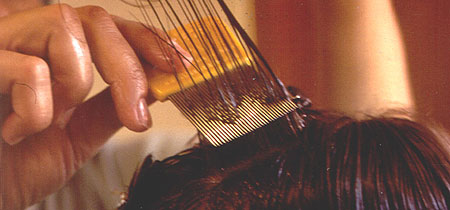
Head lice hit that winter. Everyone had lice, more than once. Classroom volunteers, like me, grew proficient at head checks. With pencil tips we picked and combed, looking for tiny nits.
I purchased special shampoo and combs, slathered my girls’ heads, popped on plastic caps, and sent them to watch TV while my husband and I stuffed toy animals and quilts into Hefty bags to set aside for two weeks so anything that might hatch would die.
I washed everything, sprayed tea-tree oil on our furniture, vacuumed, combed through my girls’ hair, wiped nits onto Kleenex, flushed them, and soaked the combs in alcohol.
Eradicating lice was inconvenient; it took time and energy, but it was doable.
For Blythe it was nearly impossible. She had no washer or dryer and no spare bedding. Their two mattresses rested on the carpet, and clothes were piled along the walls. Lice could breed anywhere and they did.
She called me one rainy Saturday afternoon and asked if I would check her for lice. My husband had checked my hair when I’d begun itching during our cleanup (the power of suggestion). Who else could Blythe ask? Her kids?
Her overheated cabin reeked of unwashed clothes, bodies, and dishes mingling with insecticidal shampoo. I sat on a mattress, breathing through my mouth.
Blythe sat on the floor in front of me, head bowed. Her hair was red, thick, and hung to her waist. I worked through it from forehead to floor, touching every flake of dandruff and gummy skin I’d learned to distinguish from nits, and nits. It took hours.
She was more exposed than I had ever been receiving my massage and I knew it.
At school, mothers (Blythe told them) were angered by Blythe’s nerve and upset by my cooperation, worried it might’ve been them. I said it wasn’t so bad, that we’d all benefit if her family conquered lice.
But there was more to Blythe than trouble and need.
She cut her hair short, and her daughters’ too. They came to Vacation Bible School and stayed when school started. Blythe joined my women’s prayer group. Freed from her circumstances, bound only to God and the hands we clasped, she freely voiced her troubles. But she went further: she added thanksgiving, praise, and hope, ending her prayer with, “Blessed Be.”
Our children found new friends, we drifted apart, she moved to another town and when I saw Blythe ten years later, she had remarried, finished graduate school, and was in the process of becoming a marriage and family therapist.
She handed me a flier offering free massages for the homeless. We hugged goodbye. She smiled, the teeth still missing.
I thought Blythe had been my most difficult neighbor. I was afraid of her requests because I couldn’t say no. My family used blame and shame to assure we always said yes to one another, thinking and hoping consent meant love, and desperately craving both.
I can say no now, and now I understand that Blythe’s asking truly was a request. If I refused, she would have asked someone else without resentment.
I used to think I was the one loving my poor troubled neighbor.
Cathy Warner is the literary editor for Good Letters and a graduate of Seattle Pacific University’s MFA program in Creative Writing. Retired from parish ministry, she lives with her husband on Bainbridge Island, Washington, where she hosts a writers retreat and blogs about remodeling.
Previous Post

April 1, 2013
If Necessary, Use Words
Next Post
April 3, 2013 The Seed in the Grave
Browse Our Archives
Select a Category A. G. Harmon Alissa Wilkinson Allison Backous Art Authors Brad Fruhauff Bradford Winters Bryan Bliss Caroline Langston Chad Thomas Johnston Chris Hoke Christiana N. Peterson Culture D.G. Myers D.L. Mayfield Daniel Bowman Jr. David Griffith Elizabeth Duffy Faith Film Greg Wolfe Guest Contributor Interview Jan Vallone Jeffrey Overstreet Jessica Eddings-Roeser Jessica Mesman Griffith Kelly Foster Lindsey Crittenden Morgan Meis music Natalie Vestin Nick Olson Peggy Rosenthal Personal Reflection Poetry Friday Reflection Relationships Review Richard Chess Richard Cole Sara Zarr Shannon Huffman Polson Sonya Bilocerkowycz Tania Runyan Tony Woodlief Topical Categories Uncategorized Vic Sizemore Writing
Select a Month October 2018 September 2018 August 2018 July 2018 June 2018 May 2018 April 2018 March 2018 February 2018 January 2018 December 2017 November 2017 October 2017 September 2017 August 2017 July 2017 June 2017 May 2017 April 2017 March 2017 February 2017 January 2017 December 2016 November 2016 October 2016 September 2016 August 2016 July 2016 June 2016 May 2016 April 2016 March 2016 February 2016 January 2016 December 2015 November 2015 October 2015 September 2015 August 2015 July 2015 June 2015 May 2015 April 2015 March 2015 February 2015 January 2015 December 2014 November 2014 October 2014 September 2014 August 2014 July 2014 June 2014 May 2014 April 2014 March 2014 February 2014 January 2014 December 2013 November 2013 October 2013 September 2013 August 2013 July 2013 June 2013 May 2013 April 2013 March 2013 February 2013 January 2013 December 2012 November 2012 October 2012 September 2012 August 2012 July 2012 June 2012 May 2012 February 2008
Follow Us!
TAKE THE
Religious Wisdom Quiz
What was the name of the man who suffered great loss but remained faithful to God?
Select your answer to see how you score.
Noah Job Abraham Elijah
Related posts from Good Letters

Leonard Cohen’s Holy and Broken Hallelujah

Ready or Not for the Days of Awe

Emmy Watch: The Marvelous Mrs. Maisel

TRENDING AT PATHEOS Catholic

Rejecting Doom: Christian Hope And Human Action
Christianity is a religion of hope. We are to have hope and...

It’s What Comes From Within Which Matters
One of the most difficult things for us to understand is why...

Why I Choose the Eucharist Over the Sermon
Choose the Eucharist, Not the Sermon What are we supposed to get...

5 Design Elements Found in Spiritually Rooted Homes
Putting Spirituality Into Home Decor Our homes are more than our living...

Credo: A Story of God Told with the...
About 10 years ago, I began to imagine a personal "Credo" that...

The Anatomy of Divine Revelation in Catholic Thought
The claim that God has made Himself known to human beings is...
view all Catholic blogs
Ad-Free & Subscriber Log-In Subscription Support
- About Us
- 2026 Calendar
- Videos
- Podcasts
- Library of World Religions
- Faith In Media Tracker
- Advertise With Us
- Write for Us
- Privacy Policy
- Terms of Service
- Do Not Sell My Data
- Contact Us
- Radiant Digital
- Manage Newsletter Subscriptions
- Unsubscribe From Notifications
- Sitemap
Copyright 2008-2026, Patheos. All rights reserved.
Subscription Support Ad-Free & Subscriber Log-In
Follow Patheos