
BuddhistCatholicContemplativeEvangelicalGeneral ChristianHinduJewishLatter-day SaintMuslimNew VisionsProgressive Christian
Beliefs
- Buddhist
- Catholic
- Contemplative
- Evangelical
- General Christian
- Hindu
- Jewish
- Latter-day Saint
- More Voices
- Muslim
- New Visions
- Pagan
- Progressive Christian
Topics
- Religion News
- Food and Religion
- Sports and Religion
- Religious Art
- Religious Music and Entertainment
- Religious Events
- History and Religion
- Style and Religion
- Politics and Religion
- Women in Religion
- Recreation Outdoors and Religion
- Business Finance and Religion
- Careers Workplace and Religion
- Education and Religion
- Family Parenting and Religion
- Health Fitness and Religion
- Home and Religion
- Relationships and Religion
- Technology and Religion
- Travel and Religion
Columnists
- Buddhist Columnists
- Business Finance and Religion Columnists
- Careers Workplace and Religion Columnists
- Catholic Columnists
- Contemplative Columnists
- Education and Religion Columnists
- Evangelists Columnists
- Family Parenting and Religion Columnists
- General Christian Columnists
- Health Fitness and Religion Columnists
- Hindu Columnists
- History and Religion Columnists
- Home and Religion Columnists
- Jewish Columnists
- More Voices Columnists
- Latter Day Columnists
- Muslim Columnists
- New Visions Columnists
- Nonreligious Columnists
- Pagan Columnists
- Politics and Religion Columnists
- Progressive Columnists
- Recreation Outdoors and Religion Columnists
- Relationships and Religion Columnists
- Religion News Columnists
- Religious Art Columnists
- Religious Events Columnists
- Religious Music and Entertainment Columnists
- Sports and Religion Columnists
- Style and Religion Columnists
- Technology and Religion Columnists
- Travel and Religion Columnists
- Women in Religion Columnists
Resource Library
- 2026 Calendar
- Library of World Religions
- The 100 Most Holy Places on Earth
- Patheos Answers
- Podcasts
- Videos
- Faith Leaders Database
- Anglican Episcopalian
- Bahai
- Baptist
- Buddhism
- Christianity
- Confucianism
- Eastern Orthodoxy
- Hinduism
- Holiness and Pentecostal
- ISKCON
- Islam
- Judaism
- Lutheran
- Methodist
- The Church of Jesus Christ of Latter-day Saints
- New Age
- Paganism
- Presbytarian and Reformed
- Protestantism
- Religion Behind the Scenes
- Roman Catholic
- Scientology
- Shia Islam
- Sikhism
- Sufism
- Sunni Islam
- Taoism
- Zen
- See all religions
Research Tools
 Ad-Free & Subscriber Log-In Subscription Support
Ad-Free & Subscriber Log-In Subscription Support
Follow Patheos 

- Trending:
- Forgiveness
- |
- Marriage
- |
- Consciousness
- |
- Death Penalty
- |
- Election
- |
- Halloween
 Good Letters
-
Contributors
- Home
- Catholic
- If Necessary, Use Words
If Necessary, Use Words
Last updated on: April 1, 2013 at 3:22 pm by A. G. Harmon
If Necessary, Use Words 2013-04-01T15:22:33-07:00 A. G. Harmon
Patheos Explore the world's faith through different perspectives on religion and spirituality! Patheos has the views of the prevalent religions and spiritualities of the world.
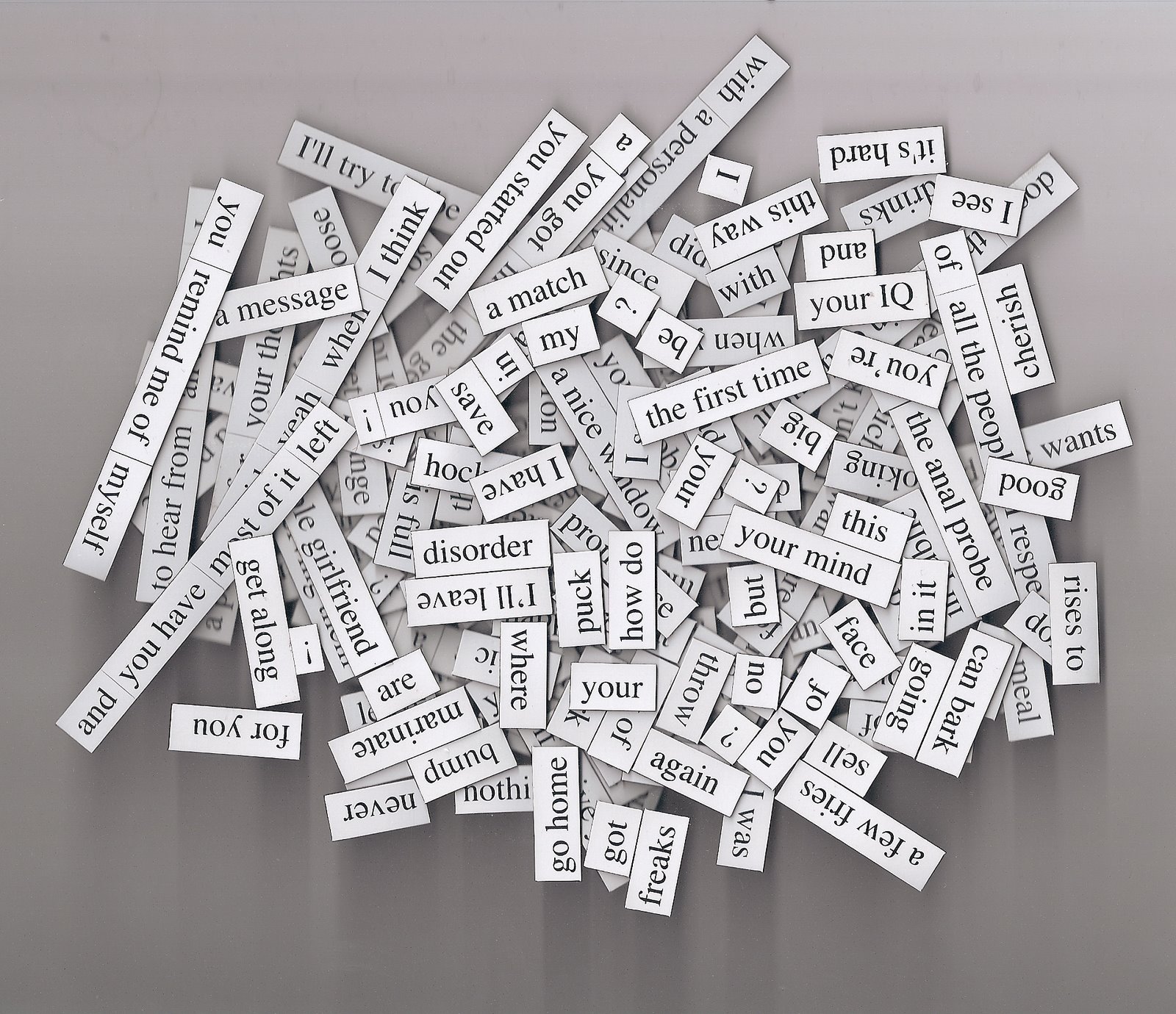 As a retort to the old saying that “a New Englander never uses ten words when one will do,” I’ve heard it said that “a Southerner never uses one word when ten will do.”
I’m proof of the latter. I’ve got a big mouth and have gotten into trouble using it for most of my life.
“You sure do talk a lot.”
“You shouldn’t have said that.”
“Why do you ask so many questions?”
These are common observations by my friends from other climes. Every time I go out, I swear to myself that I won’t dominate the dialogue. But I customarily fail before I’ve even taken my coat off. There has never been an awkward silence with me in the house.
It’s not exactly all my fault, though. I was raised to be verbose; we would get in trouble if we didn’t talk at the supper table. I’m not kidding; we really would. To my mother, conversation was considered a serious responsibility, and you were expected to carry your fair share of it.
Despite remarks said to me like the ones above, I’ve found this training has stood me in good stead on the whole. A lot of folks are glad to have me around, so that they can eat and drink more than they ordinarily would while I play the host for them.
Still, as far as the inclination towards words is concerned, I keep coming across adages that discourage the practice. Or at least, they find it secondary or supplementary to that which is really important. The most recent example is the saying, attributed to St. Francis of Assisi, that’s currently making the rounds: “Preach the gospel; if necessary, use words.”
Always popular, the maxim is even more prevalent because the Argentine Bishop chosen as Pope has taken St. Francis’ name. And as one who has counseled the faithful to live deeds of service, and who himself has led a humble life, the former Cardinal Bergoglio seems a good model to show how example is more efficacious than homiletics.
Deep down, we probably all believe this. It’s self-evident. Action is the place where conviction finds the gas pedal. It’s the proof that sustains the pledge. A man who can back up what he says is to be admired. Otherwise, in the parlance of my people: “He’s all hat and no cattle.”
So judging by his history, Pope Francis not only has a big miter, he also has a sizeable flock to match it: 1.2 billion of us, I keep hearing them say.
I’ve even taught this maxim in an ethics class before, with a couple of trusty tales pulled out whenever the question turns to authenticity. The most popular involves a man down in Tennessee who lost his child in a house fire. Wailing and moaning, he explained to TV reporters how much he loved his infant son and how difficult life would be without him: “I ran back in [the house] and got my stereo out, and I almost had time to go back for my baby before the smoke got too thick.”
That one is counterbalanced with another: the man of gruff countenance and few words, never complimenting, praising, or embracing his children, but who worked three jobs—day, night, and weekends—to provide not only for their daily bread, but also for their music lessons and college funds.
Of course, the point of these elementary examples is to contrast the ease with which words are spoken and the difficulty with which acts are accomplished.
Now, in the perfect situation, you would marry the expression of the charlatan stereo-saver with the activity of the silent patron of all desires. There’s no reason why they cannot be integrated, and something is missing in a world without words. We could get by without the voice, I suppose, but we’re enriched by its contributions.
We need our St. Augustine as much as we do our St. Francis.
In fact, before we take Francis to an extreme that would be unfair to him, it should be cautioned that in times like these, we are in dire need of words. There are so many false prophets and diabolical obfuscators—so many who tempt us not only by deeds, but also by lovely, luxurious words spoken with a serpentine sibilance.
These must be offset by the truth—words that are hard, and even sometimes unlovely, but that counteract the great book of lies that the world writes for us every day.
“Faith without works is dead,” is a complimentary adage to that of Francis, and I concede that good deeds are the greater testimony. They are also a witness that any, regardless of eloquence, can provide.
But living in the days of the Great Confusion as we do, words are often—however tragic the case—all too necessary. If we can, we must find our way to them, so that our witness is no more silent than the circumstances call for.
Previous Post

March 28, 2013
We Are Not Forsaken
Next Post
April 2, 2013 Love Thy Neighbor...and Her Lice
Browse Our Archives
Select a Category A. G. Harmon Alissa Wilkinson Allison Backous Art Authors Brad Fruhauff Bradford Winters Bryan Bliss Caroline Langston Chad Thomas Johnston Chris Hoke Christiana N. Peterson Culture D.G. Myers D.L. Mayfield Daniel Bowman Jr. David Griffith Elizabeth Duffy Faith Film Greg Wolfe Guest Contributor Interview Jan Vallone Jeffrey Overstreet Jessica Eddings-Roeser Jessica Mesman Griffith Kelly Foster Lindsey Crittenden Morgan Meis music Natalie Vestin Nick Olson Peggy Rosenthal Personal Reflection Poetry Friday Reflection Relationships Review Richard Chess Richard Cole Sara Zarr Shannon Huffman Polson Sonya Bilocerkowycz Tania Runyan Tony Woodlief Topical Categories Uncategorized Vic Sizemore Writing
Select a Month October 2018 September 2018 August 2018 July 2018 June 2018 May 2018 April 2018 March 2018 February 2018 January 2018 December 2017 November 2017 October 2017 September 2017 August 2017 July 2017 June 2017 May 2017 April 2017 March 2017 February 2017 January 2017 December 2016 November 2016 October 2016 September 2016 August 2016 July 2016 June 2016 May 2016 April 2016 March 2016 February 2016 January 2016 December 2015 November 2015 October 2015 September 2015 August 2015 July 2015 June 2015 May 2015 April 2015 March 2015 February 2015 January 2015 December 2014 November 2014 October 2014 September 2014 August 2014 July 2014 June 2014 May 2014 April 2014 March 2014 February 2014 January 2014 December 2013 November 2013 October 2013 September 2013 August 2013 July 2013 June 2013 May 2013 April 2013 March 2013 February 2013 January 2013 December 2012 November 2012 October 2012 September 2012 August 2012 July 2012 June 2012 May 2012 February 2008
Follow Us!
TAKE THE
Religious Wisdom Quiz
What was the sign of the new covenant given in Ezekiel's vision?
Select your answer to see how you score.
Gold in the Temple A new heart and new spirit Fiery chariots Rebuilt walls
Related posts from Good Letters

Leonard Cohen’s Holy and Broken Hallelujah

Ready or Not for the Days of Awe


TRENDING AT PATHEOS Catholic

Creation, Preservation, and Teleology in Catholic Theology
As I write this, it is very early Monday morning. Like millions...

The Parable Of The Sower And The Word...
One of Christ’s most famous parables is that of the sower who...

Rejecting Doom: Christian Hope And Human Action
Christianity is a religion of hope. We are to have hope and...

Why I Choose the Eucharist Over the Sermon
Choose the Eucharist, Not the Sermon What are we supposed to get...

5 Design Elements Found in Spiritually Rooted Homes
Putting Spirituality Into Home Decor Our homes are more than our living...

Credo: A Story of God Told with the...
About 10 years ago, I began to imagine a personal "Credo" that...
view all Catholic blogs
Ad-Free & Subscriber Log-In Subscription Support
- About Us
- 2026 Calendar
- Videos
- Podcasts
- Library of World Religions
- Faith In Media Tracker
- Advertise With Us
- Write for Us
- Privacy Policy
- Terms of Service
- Do Not Sell My Data
- Contact Us
- Radiant Digital
- Manage Newsletter Subscriptions
- Unsubscribe From Notifications
- Sitemap
Copyright 2008-2026, Patheos. All rights reserved.
Subscription Support Ad-Free & Subscriber Log-In
Follow Patheos