
BuddhistCatholicContemplativeEvangelicalGeneral ChristianHinduJewishLatter-day SaintMuslimNew VisionsProgressive Christian
Beliefs
- Buddhist
- Catholic
- Contemplative
- Evangelical
- General Christian
- Hindu
- Jewish
- Latter-day Saint
- More Voices
- Muslim
- New Visions
- Pagan
- Progressive Christian
Topics
- Religion News
- Food and Religion
- Sports and Religion
- Religious Art
- Religious Music and Entertainment
- Religious Events
- History and Religion
- Style and Religion
- Politics and Religion
- Women in Religion
- Recreation Outdoors and Religion
- Business Finance and Religion
- Careers Workplace and Religion
- Education and Religion
- Family Parenting and Religion
- Health Fitness and Religion
- Home and Religion
- Relationships and Religion
- Technology and Religion
- Travel and Religion
Columnists
- Buddhist Columnists
- Business Finance and Religion Columnists
- Careers Workplace and Religion Columnists
- Catholic Columnists
- Contemplative Columnists
- Education and Religion Columnists
- Evangelists Columnists
- Family Parenting and Religion Columnists
- General Christian Columnists
- Health Fitness and Religion Columnists
- Hindu Columnists
- History and Religion Columnists
- Home and Religion Columnists
- Jewish Columnists
- More Voices Columnists
- Latter Day Columnists
- Muslim Columnists
- New Visions Columnists
- Nonreligious Columnists
- Pagan Columnists
- Politics and Religion Columnists
- Progressive Columnists
- Recreation Outdoors and Religion Columnists
- Relationships and Religion Columnists
- Religion News Columnists
- Religious Art Columnists
- Religious Events Columnists
- Religious Music and Entertainment Columnists
- Sports and Religion Columnists
- Style and Religion Columnists
- Technology and Religion Columnists
- Travel and Religion Columnists
- Women in Religion Columnists
Resource Library
- 2026 Calendar
- Library of World Religions
- The 100 Most Holy Places on Earth
- Patheos Answers
- Podcasts
- Videos
- Faith Leaders Database
- Anglican Episcopalian
- Bahai
- Baptist
- Buddhism
- Christianity
- Confucianism
- Eastern Orthodoxy
- Hinduism
- Holiness and Pentecostal
- ISKCON
- Islam
- Judaism
- Lutheran
- Methodist
- The Church of Jesus Christ of Latter-day Saints
- New Age
- Paganism
- Presbytarian and Reformed
- Protestantism
- Religion Behind the Scenes
- Roman Catholic
- Scientology
- Shia Islam
- Sikhism
- Sufism
- Sunni Islam
- Taoism
- Zen
- See all religions
Research Tools
 Ad-Free & Subscriber Log-In Subscription Support
Ad-Free & Subscriber Log-In Subscription Support
Follow Patheos 

- Trending:
- Forgiveness
- |
- Marriage
- |
- Consciousness
- |
- Death Penalty
- |
- Election
- |
- Halloween
 Good Letters
-
Contributors
- Home
- Catholic
- We Are All Immigrants
We Are All Immigrants
Last updated on: February 26, 2013 at 1:00 am by Caroline Langston
We Are All Immigrants 2013-02-25T11:05:12-07:00 Caroline Langston
Patheos Explore the world's faith through different perspectives on religion and spirituality! Patheos has the views of the prevalent religions and spiritualities of the world.
 Several years ago I had the humbling honor of sharing my journey as a convert to the Orthodox Church with former my parish, a large cathedral in Washington DC. Here are some of my remarks:
Being a part of this family, and having the Orthodox Church as my spiritual home, comes at the end of a long road of hope and longing for me. For so many of you, the depth of your faith and your commitment to the Church—indeed, your experience of the grace of Jesus Christ—are closely tied to the stories of your immigrant ancestors and how they came to this country: the yia yia who was once a scared little girl crossing the Atlantic, the uncle who swept diner floors from dawn until dark and managed to squirrel away millions.
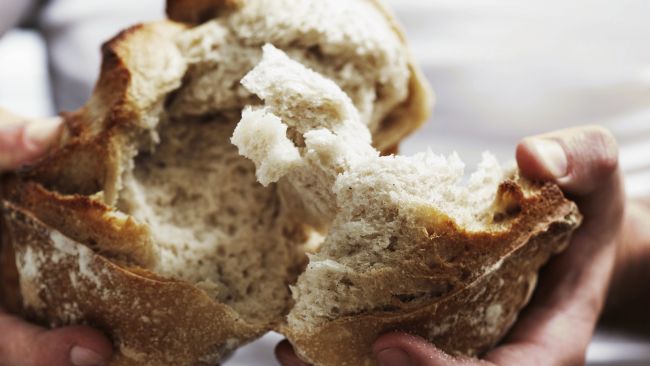
As a child growing up in a little Southern town, I was always fascinated with the stories of immigrants who came to the United States in big ships and then lived in close-knit neighborhoods where houses, churches and synagogues, and stores all were in one block, and everything, I imagined, smelled like hot sweet bread from the bakery down the street.
I realize a lot of what I just mentioned about Greeks and immigrants is cliché, and that your own family stories are entirely distinctive. But there are some elements common to all immigrant stories, that explain why they have such a powerful hold on us: the experience of losing a homeland, the need to go to a new place and to find a new way to live, the experience of pain, uncertainty, and fear about the future, and the reliance upon faith and tradition to navigate difficult times.
As different as my Southern Protestant background is from the faith many of you learned at nouna’s knee, my own story is a kind of immigrant experience. From the earliest time I could remember, I’ve felt a sense of loss about the past, and that there was a source of joy I was missing.
I know now that our church fathers talk about how we miss our true homeland in God, and you all have heard Father talk about how each of us is the Prodigal Son in the far country, and God is our father welcoming us home.
My parents taught me the basics about God and Jesus, and the reasons to be honest and moral, for which I am grateful, but by the time I came along, my sisters and brothers were in high school and rebellious, members of the church of Jimi Hendrix. The family had stopped going to church, and I never had a sense growing up that faith connected to our everyday life as a family.
The worst was when, after forty-five years of smoking two packs of cigarettes a day, my father contracted lung cancer.
Sometime during the long fall when he was sick, though, I read a book that still haunts me. The book was about girls at a Catholic convent boarding school around the time of World War I. One rather naughty and doubtful girl discovers that her sister is on the verge of death from scarlet fever. As I recall it, the girl penitently goes to the chapel and asks the Virgin Mary—the Panagia, I call her now—to help change her heart and heal her sister. As it happened, the sister was healed.
This was an image that stayed with me: a woman who reflected God, beauty, and love. This was the kind of woman I wanted to be, even if the odds were against it. I hadn’t understood that Mary was more than a china figurine from our Christmas Nativity set.
An all-loving mother whom I could ask for help and who would pray for my protection was soon going to be something I really needed: My father did die. My siblings were all grown up and gone. Lacking a family, what I needed was the church.
The young evangelical couple across the street began to invite me over for dinner. As Greeks, you all can recognize the importance of food. You know that the simple giving of food can be more than just physical nourishment; it can be a true taste of heaven. This couple gave the gift of their love and their table, and I began to believe that the good news of Jesus Christ might really be true.
When I was in my mid-twenties, bare Protestant churches with one-hour sermons and abstract theology began to leave me cold. I began to want to be in a church where I could worship God with all of my senses. I wanted a church where there was beauty, and where they didn’t give easy explanations for why people suffer.
As it happened I was living in a community with a large and vibrant Antiochian Arab parish, and I walked in one day—right in the middle of the Festival, as it happened—and never left.
And as many churches as I have been in since, one thing has been the same about each of them: they were home. The Liturgy became a concrete expression of God’s invisible reality. As God stood in for the father I had lost, the Church stood in the places where my own mother, as much as I love her, was not able to go.
I want to thank you for all of your kindnesses to me, and to challenge you to continue and increase your fulfillment of the tasks of mercy and hospitality—concepts that are both deeply Biblical, Hebraic, and Hellenic—remember Nausikaa taking care of a tired Odysseus after he washed ashore.
As affluent and educated as so many of us have become, the immigrant experience often doesn’t seem to end. It just changes. And we need to reach out in a real and substantive way to the suffering around us. May this be a Lenten lesson for us all.
Previous Post

February 24, 2013
Living in a Border State
Next Post
February 26, 2013 The Poverty of Language
Browse Our Archives
Select a Category A. G. Harmon Alissa Wilkinson Allison Backous Art Authors Brad Fruhauff Bradford Winters Bryan Bliss Caroline Langston Chad Thomas Johnston Chris Hoke Christiana N. Peterson Culture D.G. Myers D.L. Mayfield Daniel Bowman Jr. David Griffith Elizabeth Duffy Faith Film Greg Wolfe Guest Contributor Interview Jan Vallone Jeffrey Overstreet Jessica Eddings-Roeser Jessica Mesman Griffith Kelly Foster Lindsey Crittenden Morgan Meis music Natalie Vestin Nick Olson Peggy Rosenthal Personal Reflection Poetry Friday Reflection Relationships Review Richard Chess Richard Cole Sara Zarr Shannon Huffman Polson Sonya Bilocerkowycz Tania Runyan Tony Woodlief Topical Categories Uncategorized Vic Sizemore Writing
Select a Month October 2018 September 2018 August 2018 July 2018 June 2018 May 2018 April 2018 March 2018 February 2018 January 2018 December 2017 November 2017 October 2017 September 2017 August 2017 July 2017 June 2017 May 2017 April 2017 March 2017 February 2017 January 2017 December 2016 November 2016 October 2016 September 2016 August 2016 July 2016 June 2016 May 2016 April 2016 March 2016 February 2016 January 2016 December 2015 November 2015 October 2015 September 2015 August 2015 July 2015 June 2015 May 2015 April 2015 March 2015 February 2015 January 2015 December 2014 November 2014 October 2014 September 2014 August 2014 July 2014 June 2014 May 2014 April 2014 March 2014 February 2014 January 2014 December 2013 November 2013 October 2013 September 2013 August 2013 July 2013 June 2013 May 2013 April 2013 March 2013 February 2013 January 2013 December 2012 November 2012 October 2012 September 2012 August 2012 July 2012 June 2012 May 2012 February 2008
Follow Us!
TAKE THE
Religious Wisdom Quiz
Which Psalm is quoted by Jesus on the cross, "My God, my God, why have you forsaken me?"
Select your answer to see how you score.
Psalm 34 Psalm 2 Psalm 137 Psalm 22
Related posts from Good Letters


Leonard Cohen’s Holy and Broken Hallelujah

Ready or Not for the Days of Awe

TRENDING AT PATHEOS Catholic

Rejecting Doom: Christian Hope And Human Action
Christianity is a religion of hope. We are to have hope and...

It’s What Comes From Within Which Matters
One of the most difficult things for us to understand is why...

Why I Choose the Eucharist Over the Sermon
Choose the Eucharist, Not the Sermon What are we supposed to get...

5 Design Elements Found in Spiritually Rooted Homes
Putting Spirituality Into Home Decor Our homes are more than our living...

Credo: A Story of God Told with the...
About 10 years ago, I began to imagine a personal "Credo" that...

The Anatomy of Divine Revelation in Catholic Thought
The claim that God has made Himself known to human beings is...
view all Catholic blogs
Ad-Free & Subscriber Log-In Subscription Support
- About Us
- 2026 Calendar
- Videos
- Podcasts
- Library of World Religions
- Faith In Media Tracker
- Advertise With Us
- Write for Us
- Privacy Policy
- Terms of Service
- Do Not Sell My Data
- Contact Us
- Radiant Digital
- Manage Newsletter Subscriptions
- Unsubscribe From Notifications
- Sitemap
Copyright 2008-2026, Patheos. All rights reserved.
Subscription Support Ad-Free & Subscriber Log-In
Follow Patheos