
BuddhistCatholicContemplativeEvangelicalGeneral ChristianHinduJewishLatter-day SaintMuslimNew VisionsProgressive Christian
Beliefs
- Buddhist
- Catholic
- Contemplative
- Evangelical
- General Christian
- Hindu
- Jewish
- Latter-day Saint
- More Voices
- Muslim
- New Visions
- Pagan
- Progressive Christian
Topics
- Religion News
- Food and Religion
- Sports and Religion
- Religious Art
- Religious Music and Entertainment
- Religious Events
- History and Religion
- Style and Religion
- Politics and Religion
- Women in Religion
- Recreation Outdoors and Religion
- Business Finance and Religion
- Careers Workplace and Religion
- Education and Religion
- Family Parenting and Religion
- Health Fitness and Religion
- Home and Religion
- Relationships and Religion
- Technology and Religion
- Travel and Religion
Columnists
- Buddhist Columnists
- Business Finance and Religion Columnists
- Careers Workplace and Religion Columnists
- Catholic Columnists
- Contemplative Columnists
- Education and Religion Columnists
- Evangelists Columnists
- Family Parenting and Religion Columnists
- General Christian Columnists
- Health Fitness and Religion Columnists
- Hindu Columnists
- History and Religion Columnists
- Home and Religion Columnists
- Jewish Columnists
- More Voices Columnists
- Latter Day Columnists
- Muslim Columnists
- New Visions Columnists
- Nonreligious Columnists
- Pagan Columnists
- Politics and Religion Columnists
- Progressive Columnists
- Recreation Outdoors and Religion Columnists
- Relationships and Religion Columnists
- Religion News Columnists
- Religious Art Columnists
- Religious Events Columnists
- Religious Music and Entertainment Columnists
- Sports and Religion Columnists
- Style and Religion Columnists
- Technology and Religion Columnists
- Travel and Religion Columnists
- Women in Religion Columnists
Resource Library
- 2026 Calendar
- Library of World Religions
- The 100 Most Holy Places on Earth
- Patheos Answers
- Podcasts
- Videos
- Faith Leaders Database
- Anglican Episcopalian
- Bahai
- Baptist
- Buddhism
- Christianity
- Confucianism
- Eastern Orthodoxy
- Hinduism
- Holiness and Pentecostal
- ISKCON
- Islam
- Judaism
- Lutheran
- Methodist
- The Church of Jesus Christ of Latter-day Saints
- New Age
- Paganism
- Presbytarian and Reformed
- Protestantism
- Religion Behind the Scenes
- Roman Catholic
- Scientology
- Shia Islam
- Sikhism
- Sufism
- Sunni Islam
- Taoism
- Zen
- See all religions
Research Tools
 Ad-Free & Subscriber Log-In Subscription Support
Ad-Free & Subscriber Log-In Subscription Support
Follow Patheos 

- Trending:
- Forgiveness
- |
- Marriage
- |
- Consciousness
- |
- Death Penalty
- |
- Election
- |
- Halloween
 Good Letters
-
Contributors
- Home
- Catholic
- The Value of What I Teach
The Value of What I Teach
Last updated on: February 5, 2013 at 1:00 am by Richard Chess
The Value of What I Teach 2013-02-04T14:30:37-07:00 Richard Chess
Patheos Explore the world's faith through different perspectives on religion and spirituality! Patheos has the views of the prevalent religions and spiritualities of the world.
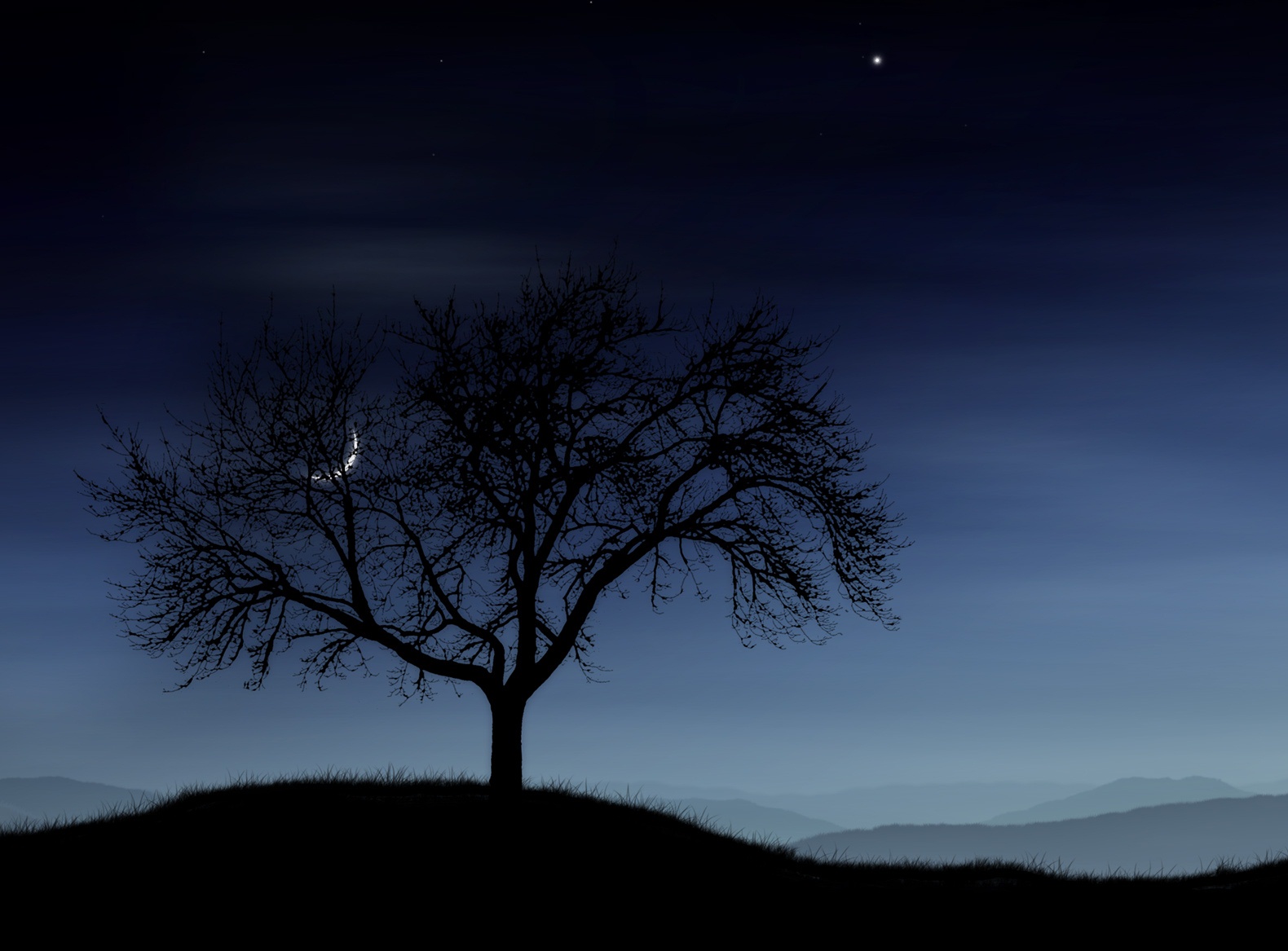 “Inch your way through dead dreams to another land.”
—“Box of Rain,” Robert Hunter, lyrics; Phil Lesh, music.
As I write this, during an ice storm, we’ve just finished the second week of classes. A few nights ago, my class “Contemplation and Imagination,” a writing and mindfulness meditation workshop for honors students, met.
That night’s exercise:
- Write down a list of three experiences that you regard as defining moments in your life.
- Choose one that you are willing to tell to another student in class.
- Find a partner and, in about five minutes, tell your story to her.
- Listeners should just listen. Don’t respond, either to approve or express sympathy or question. Just listen, attentively, openly.
- Switch roles.
The students formed groups of two, exchanged stories, and then returned to the classroom.
The next instructions:
- As accurately as you can, write down your partner’s story.
- Write it in the first person, as if it were your story.
In Florida, Governor Rick Scott’s task force on higher education has recommended that tuition for students studying engineering, science, health care and technology be frozen for the next three years. This, the task force argues, will provide an incentive for students to choose those fields of study which will prepare them for jobs most likely to need skilled, educated workers in the coming years.
Rising tuition for students drawn to the study of, say, history and other disciplines in the humanities and arts may provide a disincentive for students to pursue academic and artistic interests in those areas.
After the thirteen students in my class finished writing, in the first person, their partners’ stories, I invited them to reflect on the experience. This was only the second time we had met, but the students already seemed comfortable with each other and, typical for honors students, more than willing to contribute to class discussion.
Earlier that evening, we had had a lively, frank discussion of students’ experiences practicing, or not, mindfulness meditation in the week since we last met. Now, however, they hesitated, briefly but noticeably, before responding to my question.
Equally noticeable, when they did begin to speak, was their discomfort in claiming their partners’ stories as their own. It was such an important moment in her life, I didn’t want to get anything wrong, one said. It felt like a violation, said another. If we had been asked to write it in third person, said yet another.
Though I hadn’t anticipated this reaction, the minute the first student spoke I got it. It was obvious, but not simplistic. Call it social or even moral intelligence. A profound respect for each other’s personal possessions: their stories.
I knew where we were heading that night—to a discussion of a few haiku by Basho. (We’re reading Robert Hass’s anthology The Essential Haiku.)
I’m a latecomer to Basho, to haiku.
“Changes in one’s experience may require aspects of the poetry language one had no need for before—the poems of Li Bai, or of John Dryden, for example, encountered at fifty may be just the thing to turn one’s work around the right direction,” writes Kenneth Koch in Making Your Own Days: The Pleasures of Reading and Writing Poetry.
I’m fifty-nine. About five years ago, I established a disciplined mindfulness meditation practice. The practice may have prepared me for Basho (translated by Robert Hass).
Felling a tree
and seeing the cut end—
tonight’s moon.
Awake at night—
the sound of the water jar
cracking in the cold.
Who fells the tree? Who sees the moon? Who or what is “awake at night”?
Maybe these are the wrong questions, but they are my questions and they lead me to a further question: what happens when a poet withholds the “I”, the subject, the active and perceiving self from a poem?
The title of the third short chapter of Jon Kabat Zinn’s Mindfulness for Beginners, a chapter we had read for that night: “Who Is Breathing?”
Of course! I hadn’t anticipated. I didn’t know.
Inch your way through dead dreams to another land: the instant the students responded to the writing exercise, I woke up. I discovered where I was, where we were. And I shared this discovery with the class—we’re here, exploring our relation to “I”, I said, and, if I read their expressions right, they seemed to wake up, too, recognizing that their discomfort claiming another’s “I” was an opportunity for them to investigate what they mean when they use “I.”
In a draft of its strategic plan for 2013 – 2018, The University of North Carolina, the seventeen-campus system in which I teach, expresses an intention to encourage and support “game-changing research and scholarship that solves the problems of North Carolina—and the world.” Where, according to the draft of the plan, is “game-changing research and scholarship” likely to occur?
In the sciences, in technology, in engineering, in math.
Is there any value in cultivating a practice of inquiring into assumptions that are so widely held that one no longer sees them as assumptions? Who is breathing? Who—or what is I?
What subjects are worthy of inquiry, of an investment of our intellectual and imaginative capital? “Nothing is too small,” writes poet Gerald Stern, “for my sarcasm.”
What don’t you know about what you know? I invite my students interested in writing out of their own experiences to explore that question. Is there any value to the state, the nation, the world in an academic environment in which students are encouraged to ask that question again and again and again, in writing classes and biology and physics and management and history and…
How might Basho answer?
The spring we don’t see—
on the back of a hand mirror
a plum tree in flower.
Previous Post

February 4, 2013
Amateur Mentors
Next Post
February 6, 2013 Visiting My Own Grave
Browse Our Archives
Select a Category A. G. Harmon Alissa Wilkinson Allison Backous Art Authors Brad Fruhauff Bradford Winters Bryan Bliss Caroline Langston Chad Thomas Johnston Chris Hoke Christiana N. Peterson Culture D.G. Myers D.L. Mayfield Daniel Bowman Jr. David Griffith Elizabeth Duffy Faith Film Greg Wolfe Guest Contributor Interview Jan Vallone Jeffrey Overstreet Jessica Eddings-Roeser Jessica Mesman Griffith Kelly Foster Lindsey Crittenden Morgan Meis music Natalie Vestin Nick Olson Peggy Rosenthal Personal Reflection Poetry Friday Reflection Relationships Review Richard Chess Richard Cole Sara Zarr Shannon Huffman Polson Sonya Bilocerkowycz Tania Runyan Tony Woodlief Topical Categories Uncategorized Vic Sizemore Writing
Select a Month October 2018 September 2018 August 2018 July 2018 June 2018 May 2018 April 2018 March 2018 February 2018 January 2018 December 2017 November 2017 October 2017 September 2017 August 2017 July 2017 June 2017 May 2017 April 2017 March 2017 February 2017 January 2017 December 2016 November 2016 October 2016 September 2016 August 2016 July 2016 June 2016 May 2016 April 2016 March 2016 February 2016 January 2016 December 2015 November 2015 October 2015 September 2015 August 2015 July 2015 June 2015 May 2015 April 2015 March 2015 February 2015 January 2015 December 2014 November 2014 October 2014 September 2014 August 2014 July 2014 June 2014 May 2014 April 2014 March 2014 February 2014 January 2014 December 2013 November 2013 October 2013 September 2013 August 2013 July 2013 June 2013 May 2013 April 2013 March 2013 February 2013 January 2013 December 2012 November 2012 October 2012 September 2012 August 2012 July 2012 June 2012 May 2012 February 2008
Follow Us!
TAKE THE
Religious Wisdom Quiz
How many years did it take Solomon to build his palace?
Select your answer to see how you score.
15 years 13 years 7 years 10 years
Related posts from Good Letters


On Writing Odes: Taking Time to Celebrate

Poetry Friday: "The Burned Butterfly"

A Conversation with Alicia Ostriker: Part 1
TRENDING AT PATHEOS Catholic

Creation, Preservation, and Teleology in Catholic Theology
As I write this, it is very early Monday morning. Like millions...

The Parable Of The Sower And The Word...
One of Christ’s most famous parables is that of the sower who...

Rejecting Doom: Christian Hope And Human Action
Christianity is a religion of hope. We are to have hope and...

Why I Choose the Eucharist Over the Sermon
Choose the Eucharist, Not the Sermon What are we supposed to get...

5 Design Elements Found in Spiritually Rooted Homes
Putting Spirituality Into Home Decor Our homes are more than our living...

Credo: A Story of God Told with the...
About 10 years ago, I began to imagine a personal "Credo" that...
view all Catholic blogs
Ad-Free & Subscriber Log-In Subscription Support
- About Us
- 2026 Calendar
- Videos
- Podcasts
- Library of World Religions
- Faith In Media Tracker
- Advertise With Us
- Write for Us
- Privacy Policy
- Terms of Service
- Do Not Sell My Data
- Contact Us
- Radiant Digital
- Manage Newsletter Subscriptions
- Unsubscribe From Notifications
- Sitemap
Copyright 2008-2026, Patheos. All rights reserved.
Subscription Support Ad-Free & Subscriber Log-In
Follow Patheos