
BuddhistCatholicContemplativeEvangelicalGeneral ChristianHinduJewishLatter-day SaintMuslimNew VisionsProgressive Christian
Beliefs
- Buddhist
- Catholic
- Contemplative
- Evangelical
- General Christian
- Hindu
- Jewish
- Latter-day Saint
- More Voices
- Muslim
- New Visions
- Pagan
- Progressive Christian
Topics
- Religion News
- Food and Religion
- Sports and Religion
- Religious Art
- Religious Music and Entertainment
- Religious Events
- History and Religion
- Style and Religion
- Politics and Religion
- Women in Religion
- Recreation Outdoors and Religion
- Business Finance and Religion
- Careers Workplace and Religion
- Education and Religion
- Family Parenting and Religion
- Health Fitness and Religion
- Home and Religion
- Relationships and Religion
- Technology and Religion
- Travel and Religion
Columnists
- Buddhist Columnists
- Business Finance and Religion Columnists
- Careers Workplace and Religion Columnists
- Catholic Columnists
- Contemplative Columnists
- Education and Religion Columnists
- Evangelists Columnists
- Family Parenting and Religion Columnists
- General Christian Columnists
- Health Fitness and Religion Columnists
- Hindu Columnists
- History and Religion Columnists
- Home and Religion Columnists
- Jewish Columnists
- More Voices Columnists
- Latter Day Columnists
- Muslim Columnists
- New Visions Columnists
- Nonreligious Columnists
- Pagan Columnists
- Politics and Religion Columnists
- Progressive Columnists
- Recreation Outdoors and Religion Columnists
- Relationships and Religion Columnists
- Religion News Columnists
- Religious Art Columnists
- Religious Events Columnists
- Religious Music and Entertainment Columnists
- Sports and Religion Columnists
- Style and Religion Columnists
- Technology and Religion Columnists
- Travel and Religion Columnists
- Women in Religion Columnists
Resource Library
- 2026 Calendar
- Library of World Religions
- The 100 Most Holy Places on Earth
- Patheos Answers
- Podcasts
- Videos
- Faith Leaders Database
- Anglican Episcopalian
- Bahai
- Baptist
- Buddhism
- Christianity
- Confucianism
- Eastern Orthodoxy
- Hinduism
- Holiness and Pentecostal
- ISKCON
- Islam
- Judaism
- Lutheran
- Methodist
- The Church of Jesus Christ of Latter-day Saints
- New Age
- Paganism
- Presbytarian and Reformed
- Protestantism
- Religion Behind the Scenes
- Roman Catholic
- Scientology
- Shia Islam
- Sikhism
- Sufism
- Sunni Islam
- Taoism
- Zen
- See all religions
Research Tools
 Ad-Free & Subscriber Log-In Subscription Support
Ad-Free & Subscriber Log-In Subscription Support
Follow Patheos 

- Trending:
- Forgiveness
- |
- Marriage
- |
- Consciousness
- |
- Death Penalty
- |
- Election
- |
- Halloween
 Good Letters
-
Contributors
- Home
- Catholic
- Commonplacing
Commonplacing
Last updated on: January 23, 2013 at 1:00 am by Guest Contributor
Commonplacing 2013-01-22T17:50:55-07:00 Guest Contributor
Patheos Explore the world's faith through different perspectives on religion and spirituality! Patheos has the views of the prevalent religions and spiritualities of the world.
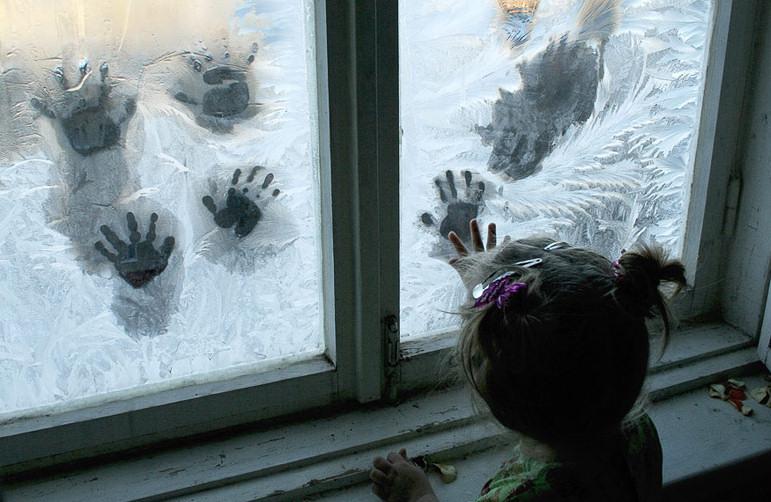 Encore Guest Post by Ann Conway
Here in central Maine, the world has come down to bone. The songbirds are gone and crows, which poet Mary Oliver terms “the deep muscle of the world,” have taken over my street. The landscape seems empty; the ground, a carpet of desiccated leaves.
One longs for the blanketing stillness of snow. The world, dark at four, appears grim.
I’ve started keeping a commonplace book in the hope of seeing better.
Most wintry day thus far, 43 degrees in a dark gray sky. Gunmetal black river with brown lawns silhouetted against it. Gulls float over downtown…at the hoarders’ house, shrunken tomatoes still cling to the vines.
I first learned of commonplacing in David Plante’s American Ghosts, a memoir set in our mutual birthplace, a neighborhood in Providence, Rhode Island.
As Plante recalled his religious upbringing, he recorded a series of images that occurred to him—a lit bulb at the back of a closed shop, a tennis ball on an empty beach. He then connected the images to his youthful studies of St. Thomas Aquinas.
Aquinas, Plante remarked, had no sense of the unconscious, believing that “the objects of consciousness all came into consciousness by way of outside stimulation of the senses.” We are born tabula rasa—everything that makes us comes from outside, to be inscribed on the empty slate. Aquinas suggested that a sense beyond the five senses—a transcending awareness—gives coherence to what we take in.
In my warm house: The pleasure of measuring, water, oil, honey with flour, salt, yeast and powdered milk. Outside my kitchen window, the freshet brook tumbling under fallen trees from the ice storm.
I could use some coherence. I’ve kept a diary since my freshman year in college, a commonplace book in one of its classic forms—a compendium, or hodgepodge, of quotations, reflections, clippings.
Now I have a hodgepodge of a memoir about my childhood—quotations, outlines, drafts. I have too much information and too cloudy a lens with which to view it. These days I’m more interested in a commonplace book’s other form—a distillation of experience that awakens the reader to something more universal.
But how do I get there? Perhaps a commonplace book will clear my thoughts and provide an antidote to the darkest months. So I write of my quiet life.
Debris on the lawn from high winds, the yellow maple leaves quivering. The old dog that once ran up the dark hills? Now he sits at the top of the back yard’s stone stairs, sniffing the breeze.
“Isn’t it odd how the term ‘commonplace’ has gone out of style?” a friend noted a few weeks ago—perhaps because our life these days increasingly consists of sitting alone before a screen, where images flit by at lightning speed, but still seem to demand something from us.
My commonplace observations are different. I feel an ease, a release in simply noticing what is available in my life. It seems blessedly amoral. I don’t have to be good, to feel “grateful” for or “astonished” by it. What I observe just is.
The memoir still consists of folders, scraps and pieces. Still a mess, I think. Recently, however, I read that the novelist Paul Harding, whose gorgeous Tinkers recently won the Pulitzer, has a pretty frenetic life as the parent of two small children. He wrote Tinkers using the hodgepodge method—scraps of paper, loose leaf, legal pads—which he stuffed in his pockets, then folders. Eventually he took them out and spread them on the living room floor.
In the process, he found his story.
How is it we never notice the great bowl of sky above us? In their trucks going to work at the State, every third person smokes. Layoffs projected. The blue smoke going up through the cracked windows, making its way to the heedless clouds.
I continue to keep my commonplace book of the everyday, which, strangely, is helping me understand the memoir. The latter’s images: a church like a Byzantine jewel box in a city of thundering mills. The blood of a small boy run over by a snowplow. A Eucharistic monstrance created from the gold of melted wedding rings. The close air of old Kate’s Mohan’s tenement, her parlor’s marble-topped mahogany table. The wild Atlantic waves beating a spit of land called Galilee.
Something coheres here, I think, spreading my work on the floor, something arising from the darkness, something luminous. Perhaps it is what Plante calls, “a Thomistic sense of something whole, something whole outside and around me.”
Something, I think, worth describing.
A former regular contributor to Good Letters, Ann Conway is a sociologist as well as a writer. She has published in Maine Times, Commonweal, Maine Arts Magazine, Faith and Leadership and other venues. Her forthcoming memoir is based on the essay, “The Rosary,” originally published in Image, which was placed on the notable list of Best Spiritual Writing 2011.
This Good Letters post originally appeared on December 9, 2010.
Previous Post

January 21, 2013
Writing in the Age of Unbelief
Next Post
January 24, 2013 Road Rage and Repentance
Browse Our Archives
Select a Category A. G. Harmon Alissa Wilkinson Allison Backous Art Authors Brad Fruhauff Bradford Winters Bryan Bliss Caroline Langston Chad Thomas Johnston Chris Hoke Christiana N. Peterson Culture D.G. Myers D.L. Mayfield Daniel Bowman Jr. David Griffith Elizabeth Duffy Faith Film Greg Wolfe Guest Contributor Interview Jan Vallone Jeffrey Overstreet Jessica Eddings-Roeser Jessica Mesman Griffith Kelly Foster Lindsey Crittenden Morgan Meis music Natalie Vestin Nick Olson Peggy Rosenthal Personal Reflection Poetry Friday Reflection Relationships Review Richard Chess Richard Cole Sara Zarr Shannon Huffman Polson Sonya Bilocerkowycz Tania Runyan Tony Woodlief Topical Categories Uncategorized Vic Sizemore Writing
Select a Month October 2018 September 2018 August 2018 July 2018 June 2018 May 2018 April 2018 March 2018 February 2018 January 2018 December 2017 November 2017 October 2017 September 2017 August 2017 July 2017 June 2017 May 2017 April 2017 March 2017 February 2017 January 2017 December 2016 November 2016 October 2016 September 2016 August 2016 July 2016 June 2016 May 2016 April 2016 March 2016 February 2016 January 2016 December 2015 November 2015 October 2015 September 2015 August 2015 July 2015 June 2015 May 2015 April 2015 March 2015 February 2015 January 2015 December 2014 November 2014 October 2014 September 2014 August 2014 July 2014 June 2014 May 2014 April 2014 March 2014 February 2014 January 2014 December 2013 November 2013 October 2013 September 2013 August 2013 July 2013 June 2013 May 2013 April 2013 March 2013 February 2013 January 2013 December 2012 November 2012 October 2012 September 2012 August 2012 July 2012 June 2012 May 2012 February 2008
Follow Us!
TAKE THE
Religious Wisdom Quiz
Who prayed in a den of lions?
Select your answer to see how you score.
Daniel David Noah Elijah
Related posts from Good Letters

On Writing Odes: Taking Time to Celebrate


A Conversation with Barbara Brown Taylor
Sonnets in the Prime of My Life
TRENDING AT PATHEOS Catholic

Rejecting Doom: Christian Hope And Human Action
Christianity is a religion of hope. We are to have hope and...

It’s What Comes From Within Which Matters
One of the most difficult things for us to understand is why...

Why I Choose the Eucharist Over the Sermon
Choose the Eucharist, Not the Sermon What are we supposed to get...

5 Design Elements Found in Spiritually Rooted Homes
Putting Spirituality Into Home Decor Our homes are more than our living...

Credo: A Story of God Told with the...
About 10 years ago, I began to imagine a personal "Credo" that...

The Anatomy of Divine Revelation in Catholic Thought
The claim that God has made Himself known to human beings is...
view all Catholic blogs
Ad-Free & Subscriber Log-In Subscription Support
- About Us
- 2026 Calendar
- Videos
- Podcasts
- Library of World Religions
- Faith In Media Tracker
- Advertise With Us
- Write for Us
- Privacy Policy
- Terms of Service
- Do Not Sell My Data
- Contact Us
- Radiant Digital
- Manage Newsletter Subscriptions
- Unsubscribe From Notifications
- Sitemap
Copyright 2008-2026, Patheos. All rights reserved.
Subscription Support Ad-Free & Subscriber Log-In
Follow Patheos