
BuddhistCatholicContemplativeEvangelicalGeneral ChristianHinduJewishLatter-day SaintMuslimNew VisionsProgressive Christian
Beliefs
- Buddhist
- Catholic
- Contemplative
- Evangelical
- General Christian
- Hindu
- Jewish
- Latter-day Saint
- More Voices
- Muslim
- New Visions
- Pagan
- Progressive Christian
Topics
- Religion News
- Food and Religion
- Sports and Religion
- Religious Art
- Religious Music and Entertainment
- Religious Events
- History and Religion
- Style and Religion
- Politics and Religion
- Women in Religion
- Recreation Outdoors and Religion
- Business Finance and Religion
- Careers Workplace and Religion
- Education and Religion
- Family Parenting and Religion
- Health Fitness and Religion
- Home and Religion
- Relationships and Religion
- Technology and Religion
- Travel and Religion
Columnists
- Buddhist Columnists
- Business Finance and Religion Columnists
- Careers Workplace and Religion Columnists
- Catholic Columnists
- Contemplative Columnists
- Education and Religion Columnists
- Evangelists Columnists
- Family Parenting and Religion Columnists
- General Christian Columnists
- Health Fitness and Religion Columnists
- Hindu Columnists
- History and Religion Columnists
- Home and Religion Columnists
- Jewish Columnists
- More Voices Columnists
- Latter Day Columnists
- Muslim Columnists
- New Visions Columnists
- Nonreligious Columnists
- Pagan Columnists
- Politics and Religion Columnists
- Progressive Columnists
- Recreation Outdoors and Religion Columnists
- Relationships and Religion Columnists
- Religion News Columnists
- Religious Art Columnists
- Religious Events Columnists
- Religious Music and Entertainment Columnists
- Sports and Religion Columnists
- Style and Religion Columnists
- Technology and Religion Columnists
- Travel and Religion Columnists
- Women in Religion Columnists
Resource Library
- 2026 Calendar
- Library of World Religions
- The 100 Most Holy Places on Earth
- Patheos Answers
- Podcasts
- Videos
- Faith Leaders Database
- Anglican Episcopalian
- Bahai
- Baptist
- Buddhism
- Christianity
- Confucianism
- Eastern Orthodoxy
- Hinduism
- Holiness and Pentecostal
- ISKCON
- Islam
- Judaism
- Lutheran
- Methodist
- The Church of Jesus Christ of Latter-day Saints
- New Age
- Paganism
- Presbytarian and Reformed
- Protestantism
- Religion Behind the Scenes
- Roman Catholic
- Scientology
- Shia Islam
- Sikhism
- Sufism
- Sunni Islam
- Taoism
- Zen
- See all religions
Research Tools
 Ad-Free & Subscriber Log-In Subscription Support
Ad-Free & Subscriber Log-In Subscription Support
Follow Patheos 

- Trending:
- Forgiveness
- |
- Marriage
- |
- Consciousness
- |
- Death Penalty
- |
- Election
- |
- Halloween
 Good Letters
-
Contributors
- Home
- Catholic
- Science and the Death of Philosophy
Science and the Death of Philosophy
Last updated on: December 9, 2012 at 9:14 pm by Vic Sizemore
Science and the Death of Philosophy 2012-12-09T21:14:21-07:00 Vic Sizemore
Patheos Explore the world's faith through different perspectives on religion and spirituality! Patheos has the views of the prevalent religions and spiritualities of the world.
 My boy is a bit of a science geek. He subscribes to Discover and Popular Science. They are both styled after the fashion of other pop magazines in an attempt to appeal to non-scientists (“Cold Fusion: A Special Investigation”).
Popular Science focuses on technology. The past year’s issues have featured an invisible, invincible war ship, faster racecars, the ultimate scuba system, elevators with speeds of forty miles an hour.
And there’s the new no-pulse mechanical heart that has revolutionized heart replacement by running steadily at 10,000 rpm instead of trying to pulse like a heart made of muscle. This advance is making the old heart, “that mimics nature’s lub-dub… as comically shortsighted as Leonardo Da Vinci designing a flying machine with flapping wings.” People are now walking around, living comfortably, with no pulse whatsoever.
Discover magazine has similarly catchy titles (“Death by Black Hole,” “Interview with a Hobbit Hunter”) but is not concerned with technology. Here’s a quick scan of featured stories from the past year: “Immortality within a Decade?” “How We Can Hide from Time,” “Dog Dreams,” “Life at the Edge of Space,” and “Do You Have Superhuman Vision?”
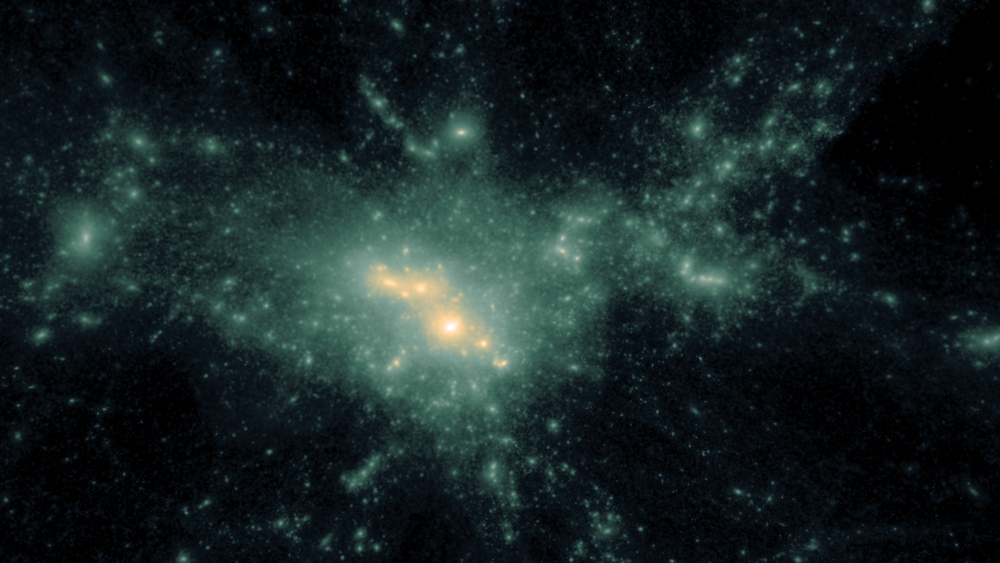
Two topics that arise regularly in Discover are cosmology and origins. November of this year featured “Life before the Dinosaurs.” In September it was “How the Earth Was Made.” Nestled between those, in the October issue was “One Second after the Big Bang.” In this article cosmologist Sean Carroll explains how he and his colleagues plan to travel back in time to 1/10,000 of a second after the Big Bang.
Carroll appears genuinely awed by what he and his colleagues are doing. He begins by giving paleontologists a little jab, saying that no matter how many or what kind of bones they dig up, “they still can tell only a small part of the story of what life on Earth was like millions, or even thousands, of years ago.”
In contrast, Carroll writes like a breathless groupie about what cosmologists are doing: it is “particularly amazing…impressive detective work,” which, “will surely go down as one of the most impressive accomplishments of the human intellect.”
All the superlatives aside, what they are doing is fascinating. The way they determine how far back they are looking has to do with finding “artifacts that have remained largely intact over vast spans of time.” And they have found light particles, or photons, which have “traveled undisturbed” dating back to “380,000 years after the Big Bang.” They aren’t content with that; they want to go further back, and they’re pretty sure they’ve found a way.
A couple of cosmologists came up with predictions and called their theory Big Bang Nucleosynthesis. They can, and have, tested this theory, and it is holding up. On the basis of this, cosmologists have “extrapolated our understanding back 13.7 billion years, to a few seconds after the universe began.” To get to the 1/10,000 second mark depends on their finding dark matter and then being able to test it as they have tested light.
Nobody is sure what dark matter is, much less how to find some to study. Still, what they have done is impressive detective work indeed.
My boy and I were talking about it, and I said to him, “What was one second before that?” He said, “A singularity,” but was quick to add that maybe it wasn’t that. There are other ways to explain it.
Some physicists posit the existence of many universes, or a multiverse, of which this is only one small part. That takes the pressure off of cosmologists to explain what was before the Big Bang, since the singularity would have to be, as Tim Maudlin, philosopher of physics at New York University explains, one of “low entropy” which is “very improbable or unlikely.”
This universe sprang from something that came before. Of course then there’s the question of where that came from, which I suppose we could follow back to Aristotle’s unmoved mover, but scientists are loath to go there.
That’s the realm of philosophy, and no less a thinker than Stephen Hawking has declared that philosophy “has not kept up with modern developments in science,” and therefore, “philosophy is dead.” I assume he believes theology to have been dead long enough as to not warrant mention.
Maudlin explains in an Atlantic interview: the multiverse theory exists in part to explain not only how our world began, but how it has come to be so uniquely tuned for supporting life. If there are many worlds operating by many different sets of physical laws, then eventually one is going to spring up to support life. Otherwise it appears to have been finely tuned by a genius.
He is quick to warn against mistakenly assuming that there are only two options here, a multiverse, or intelligent design (a term he seems careful to avoid).
If Sean Carroll and his colleagues find dark matter, and test it, and get back all the way to 1/10,000 of a second after the Big Bang, it will truly be an amazing accomplishment. If they could go a split second further, to 1/10,000 of a second before the Big Bang, now that would be something else.
And it would open up a whole new world of questions. This is why science needs philosophy. As Maudlin said in the interview, “There is just too much we don’t know.”
Previous Post

December 7, 2012
The Eclipse of the Airport Chapel
Next Post
December 10, 2012 Seasons of the Soul
Browse Our Archives
Select a Category A. G. Harmon Alissa Wilkinson Allison Backous Art Authors Brad Fruhauff Bradford Winters Bryan Bliss Caroline Langston Chad Thomas Johnston Chris Hoke Christiana N. Peterson Culture D.G. Myers D.L. Mayfield Daniel Bowman Jr. David Griffith Elizabeth Duffy Faith Film Greg Wolfe Guest Contributor Interview Jan Vallone Jeffrey Overstreet Jessica Eddings-Roeser Jessica Mesman Griffith Kelly Foster Lindsey Crittenden Morgan Meis music Natalie Vestin Nick Olson Peggy Rosenthal Personal Reflection Poetry Friday Reflection Relationships Review Richard Chess Richard Cole Sara Zarr Shannon Huffman Polson Sonya Bilocerkowycz Tania Runyan Tony Woodlief Topical Categories Uncategorized Vic Sizemore Writing
Select a Month October 2018 September 2018 August 2018 July 2018 June 2018 May 2018 April 2018 March 2018 February 2018 January 2018 December 2017 November 2017 October 2017 September 2017 August 2017 July 2017 June 2017 May 2017 April 2017 March 2017 February 2017 January 2017 December 2016 November 2016 October 2016 September 2016 August 2016 July 2016 June 2016 May 2016 April 2016 March 2016 February 2016 January 2016 December 2015 November 2015 October 2015 September 2015 August 2015 July 2015 June 2015 May 2015 April 2015 March 2015 February 2015 January 2015 December 2014 November 2014 October 2014 September 2014 August 2014 July 2014 June 2014 May 2014 April 2014 March 2014 February 2014 January 2014 December 2013 November 2013 October 2013 September 2013 August 2013 July 2013 June 2013 May 2013 April 2013 March 2013 February 2013 January 2013 December 2012 November 2012 October 2012 September 2012 August 2012 July 2012 June 2012 May 2012 February 2008
Follow Us!
TAKE THE
Religious Wisdom Quiz
What does "blessed are the peacemakers" mean?
Select your answer to see how you score.
Cause trouble Always win Start fights Promote peace
Related posts from Good Letters



TRENDING AT PATHEOS Catholic

The Parable Of The Sower And The Word...
One of Christ’s most famous parables is that of the sower who...

Rejecting Doom: Christian Hope And Human Action
Christianity is a religion of hope. We are to have hope and...

Why I Choose the Eucharist Over the Sermon
Choose the Eucharist, Not the Sermon What are we supposed to get...

5 Design Elements Found in Spiritually Rooted Homes
Putting Spirituality Into Home Decor Our homes are more than our living...

Credo: A Story of God Told with the...
About 10 years ago, I began to imagine a personal "Credo" that...

The Anatomy of Divine Revelation in Catholic Thought
The claim that God has made Himself known to human beings is...
view all Catholic blogs
Ad-Free & Subscriber Log-In Subscription Support
- About Us
- 2026 Calendar
- Videos
- Podcasts
- Library of World Religions
- Faith In Media Tracker
- Advertise With Us
- Write for Us
- Privacy Policy
- Terms of Service
- Do Not Sell My Data
- Contact Us
- Radiant Digital
- Manage Newsletter Subscriptions
- Unsubscribe From Notifications
- Sitemap
Copyright 2008-2026, Patheos. All rights reserved.
Subscription Support Ad-Free & Subscriber Log-In
Follow Patheos