
BuddhistCatholicContemplativeEvangelicalGeneral ChristianHinduJewishLatter-day SaintMuslimNew VisionsProgressive Christian
Beliefs
- Buddhist
- Catholic
- Contemplative
- Evangelical
- General Christian
- Hindu
- Jewish
- Latter-day Saint
- More Voices
- Muslim
- New Visions
- Pagan
- Progressive Christian
Topics
- Religion News
- Food and Religion
- Sports and Religion
- Religious Art
- Religious Music and Entertainment
- Religious Events
- History and Religion
- Style and Religion
- Politics and Religion
- Women in Religion
- Recreation Outdoors and Religion
- Business Finance and Religion
- Careers Workplace and Religion
- Education and Religion
- Family Parenting and Religion
- Health Fitness and Religion
- Home and Religion
- Relationships and Religion
- Technology and Religion
- Travel and Religion
Columnists
- Buddhist Columnists
- Business Finance and Religion Columnists
- Careers Workplace and Religion Columnists
- Catholic Columnists
- Contemplative Columnists
- Education and Religion Columnists
- Evangelists Columnists
- Family Parenting and Religion Columnists
- General Christian Columnists
- Health Fitness and Religion Columnists
- Hindu Columnists
- History and Religion Columnists
- Home and Religion Columnists
- Jewish Columnists
- More Voices Columnists
- Latter Day Columnists
- Muslim Columnists
- New Visions Columnists
- Nonreligious Columnists
- Pagan Columnists
- Politics and Religion Columnists
- Progressive Columnists
- Recreation Outdoors and Religion Columnists
- Relationships and Religion Columnists
- Religion News Columnists
- Religious Art Columnists
- Religious Events Columnists
- Religious Music and Entertainment Columnists
- Sports and Religion Columnists
- Style and Religion Columnists
- Technology and Religion Columnists
- Travel and Religion Columnists
- Women in Religion Columnists
Resource Library
- 2026 Calendar
- Library of World Religions
- The 100 Most Holy Places on Earth
- Patheos Answers
- Podcasts
- Videos
- Faith Leaders Database
- Anglican Episcopalian
- Bahai
- Baptist
- Buddhism
- Christianity
- Confucianism
- Eastern Orthodoxy
- Hinduism
- Holiness and Pentecostal
- ISKCON
- Islam
- Judaism
- Lutheran
- Methodist
- The Church of Jesus Christ of Latter-day Saints
- New Age
- Paganism
- Presbytarian and Reformed
- Protestantism
- Religion Behind the Scenes
- Roman Catholic
- Scientology
- Shia Islam
- Sikhism
- Sufism
- Sunni Islam
- Taoism
- Zen
- See all religions
Research Tools
 Ad-Free & Subscriber Log-In Subscription Support
Ad-Free & Subscriber Log-In Subscription Support
Follow Patheos 

- Trending:
- Forgiveness
- |
- Marriage
- |
- Consciousness
- |
- Death Penalty
- |
- Election
- |
- Halloween
 Good Letters
-
Contributors
- Home
- Catholic
- Cicero and Machiavelli: Being and Seeming
Cicero and Machiavelli: Being and Seeming
Last updated on: December 6, 2012 at 1:00 am by A. G. Harmon
Cicero and Machiavelli: Being and Seeming 2012-12-04T15:49:32-07:00 A. G. Harmon
Patheos Explore the world's faith through different perspectives on religion and spirituality! Patheos has the views of the prevalent religions and spiritualities of the world.
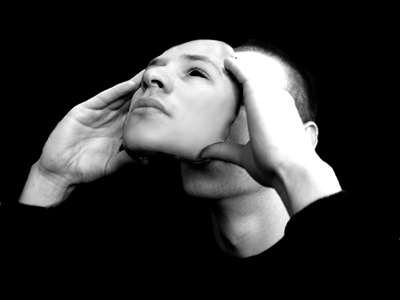 Cicero said that it is better to be than to seem. Some fifteen centuries later, Machiavelli said it was better to seem than to be. The greater good, thought the former, lay in what you actually were rather than in what others thought you were. Loser talk, thought the latter.
Cicero’s tenet was consistent with Aristotle, who said the more valuable of two things is that which men would be satisfied only with possessing outright, rather than that which they would be satisfied with only appearing to possess.
Health, therefore, is valued higher in this scheme than courage, since we want to be truly healthy rather than only seem to be so and we’re pretty satisfied with only appearing to be courageous.
Regardless of such distinctions of actual worth, Machiavelli saw that power lay in the ostensible as much as it did in the actual, and with far less cost.
The healthy man can run as many marathons as he wants. While he’s doing that, the apparently courageous man will accede to the throne of the fiefdom—as long as he also appears to be healthy, intelligent, charming, etc.
The people are suckers for that stuff, Machiavelli did not say, but could have.
Cicero’s view is classical, noble, honor-bound. Machiavelli’s is modern, practical, streetwise.
Cicero died by execution. Marc Antony, his political enemy, cut off his head and hands and nailed them up in the forum. Machiavelli had a rather less bloody end. Cicero isn’t read much anymore, outside of courses in the classics, but everybody reads The Prince.
The total triumph of Machiavelli’s view, even among those who have never heard of him, can be witnessed in the image maintenance undergone by those in both the public and private sphere.
Instead of championing classical virtues, we advocate persona, aura, impression. It’s all in the presentation—in the PR—in the spin. We’ve even changed the way we talk about virtues, and even changed what we aspire to achieve.
For example, seldom is the idea of temperance put forward or cultivated anymore—i.e., the ability to meet both fortune and ruin with equilibrium. Instead, in trying situations, we’re cautioned to “never let them see you sweat.”
But while it would seem the two are the same thing—and indeed an outward showing of fortitude may in fact be evidence of an inward investment of courage (a distinctly different virtue)—it’s more likely that the modern counsel lies in the way of putting on a show:
Even if you’re torn up inside, don’t give the world the satisfaction of knowing that you are.
And that’s clearly not the same thing as temperance; it’s a semblance, not a reality, and the only victory lies in the worldly scheme of power against power, not in the advancement of the soul.
The virtue of humility is another example of this confusion. Classically, the merit lies in a detachment from worldly appraisals and honorifics—a “poverty of the spirit,” as it used to be called.
Like the states of contrition and piety, humility is an inward condition that can only be verified by the possessor (and God, of course). But now humility is oddly mistaken for its converse—the outward show of want.
It would seem to go without saying that humble circumstances, though they can lead to the state of humility, need not do so. Nevertheless, nowadays they’re offered as direct and convincing evidence of the same. Conversely, while earthly means may make the condition harder to achieve, they do not frustrate it entirely, nor are they direct evidence of its lack.
Notice how many politicians begin their campaigns with involved encomiums to their working class backgrounds. They do so because it’s effective; we identify the thing by its semblance. Incontrovertible proof—endless stories of modesty and countless tales of an unassuming nature—cannot earn the wealthy man this badge.
It’s worth remembering that the classical mind also had a deep appreciation for how things looked. The orator’s ethos—his credibility and authority as a speaker—was one of Aristotle’s three modes of persuasion. Still, another distinction presents itself. Ethos is not at all what we now call charisma.
Ethos belongs to a speaker by way of what he truly is—what he truly possesses. His outward character must be a reflection of his inward self. In contrast, charisma is only that which the speaker exudes; it is the shape of the man, but not the substance.
I don’t see things swinging back to Cicero’s way any time soon. As a culture, we’ve bought in to the other franchise in a big way. Why sift for a man’s true nature when his persona is so very appealing?
But appearances are deceiving, they say. And it depends on how you look at it.
Previous Post

December 5, 2012
Life and Longing in Laramie
Next Post
December 7, 2012 The Eclipse of the Airport Chapel
Browse Our Archives
Select a Category A. G. Harmon Alissa Wilkinson Allison Backous Art Authors Brad Fruhauff Bradford Winters Bryan Bliss Caroline Langston Chad Thomas Johnston Chris Hoke Christiana N. Peterson Culture D.G. Myers D.L. Mayfield Daniel Bowman Jr. David Griffith Elizabeth Duffy Faith Film Greg Wolfe Guest Contributor Interview Jan Vallone Jeffrey Overstreet Jessica Eddings-Roeser Jessica Mesman Griffith Kelly Foster Lindsey Crittenden Morgan Meis music Natalie Vestin Nick Olson Peggy Rosenthal Personal Reflection Poetry Friday Reflection Relationships Review Richard Chess Richard Cole Sara Zarr Shannon Huffman Polson Sonya Bilocerkowycz Tania Runyan Tony Woodlief Topical Categories Uncategorized Vic Sizemore Writing
Select a Month October 2018 September 2018 August 2018 July 2018 June 2018 May 2018 April 2018 March 2018 February 2018 January 2018 December 2017 November 2017 October 2017 September 2017 August 2017 July 2017 June 2017 May 2017 April 2017 March 2017 February 2017 January 2017 December 2016 November 2016 October 2016 September 2016 August 2016 July 2016 June 2016 May 2016 April 2016 March 2016 February 2016 January 2016 December 2015 November 2015 October 2015 September 2015 August 2015 July 2015 June 2015 May 2015 April 2015 March 2015 February 2015 January 2015 December 2014 November 2014 October 2014 September 2014 August 2014 July 2014 June 2014 May 2014 April 2014 March 2014 February 2014 January 2014 December 2013 November 2013 October 2013 September 2013 August 2013 July 2013 June 2013 May 2013 April 2013 March 2013 February 2013 January 2013 December 2012 November 2012 October 2012 September 2012 August 2012 July 2012 June 2012 May 2012 February 2008
Follow Us!
TAKE THE
Religious Wisdom Quiz
What is taught about gossip in the Bible?
Select your answer to see how you score.
Enjoy it Encourage it Avoid it Spread it
Related posts from Good Letters



Can a Racist Drive a Prius? Stereotypes and...

The Crown and Victoria: Tales of Two Queens
TRENDING AT PATHEOS Catholic

Rejecting Doom: Christian Hope And Human Action
Christianity is a religion of hope. We are to have hope and...

It’s What Comes From Within Which Matters
One of the most difficult things for us to understand is why...

Why I Choose the Eucharist Over the Sermon
Choose the Eucharist, Not the Sermon What are we supposed to get...

5 Design Elements Found in Spiritually Rooted Homes
Putting Spirituality Into Home Decor Our homes are more than our living...

Credo: A Story of God Told with the...
About 10 years ago, I began to imagine a personal "Credo" that...

The Anatomy of Divine Revelation in Catholic Thought
The claim that God has made Himself known to human beings is...
view all Catholic blogs
Ad-Free & Subscriber Log-In Subscription Support
- About Us
- 2026 Calendar
- Videos
- Podcasts
- Library of World Religions
- Faith In Media Tracker
- Advertise With Us
- Write for Us
- Privacy Policy
- Terms of Service
- Do Not Sell My Data
- Contact Us
- Radiant Digital
- Manage Newsletter Subscriptions
- Unsubscribe From Notifications
- Sitemap
Copyright 2008-2026, Patheos. All rights reserved.
Subscription Support Ad-Free & Subscriber Log-In
Follow Patheos