
BuddhistCatholicContemplativeEvangelicalGeneral ChristianHinduJewishLatter-day SaintMuslimNew VisionsProgressive Christian
Beliefs
- Buddhist
- Catholic
- Contemplative
- Evangelical
- General Christian
- Hindu
- Jewish
- Latter-day Saint
- More Voices
- Muslim
- New Visions
- Pagan
- Progressive Christian
Topics
- Religion News
- Food and Religion
- Sports and Religion
- Religious Art
- Religious Music and Entertainment
- Religious Events
- History and Religion
- Style and Religion
- Politics and Religion
- Women in Religion
- Recreation Outdoors and Religion
- Business Finance and Religion
- Careers Workplace and Religion
- Education and Religion
- Family Parenting and Religion
- Health Fitness and Religion
- Home and Religion
- Relationships and Religion
- Technology and Religion
- Travel and Religion
Columnists
- Buddhist Columnists
- Business Finance and Religion Columnists
- Careers Workplace and Religion Columnists
- Catholic Columnists
- Contemplative Columnists
- Education and Religion Columnists
- Evangelists Columnists
- Family Parenting and Religion Columnists
- General Christian Columnists
- Health Fitness and Religion Columnists
- Hindu Columnists
- History and Religion Columnists
- Home and Religion Columnists
- Jewish Columnists
- More Voices Columnists
- Latter Day Columnists
- Muslim Columnists
- New Visions Columnists
- Nonreligious Columnists
- Pagan Columnists
- Politics and Religion Columnists
- Progressive Columnists
- Recreation Outdoors and Religion Columnists
- Relationships and Religion Columnists
- Religion News Columnists
- Religious Art Columnists
- Religious Events Columnists
- Religious Music and Entertainment Columnists
- Sports and Religion Columnists
- Style and Religion Columnists
- Technology and Religion Columnists
- Travel and Religion Columnists
- Women in Religion Columnists
Resource Library
- 2026 Calendar
- Library of World Religions
- The 100 Most Holy Places on Earth
- Patheos Answers
- Podcasts
- Videos
- Faith Leaders Database
- Anglican Episcopalian
- Bahai
- Baptist
- Buddhism
- Christianity
- Confucianism
- Eastern Orthodoxy
- Hinduism
- Holiness and Pentecostal
- ISKCON
- Islam
- Judaism
- Lutheran
- Methodist
- The Church of Jesus Christ of Latter-day Saints
- New Age
- Paganism
- Presbytarian and Reformed
- Protestantism
- Religion Behind the Scenes
- Roman Catholic
- Scientology
- Shia Islam
- Sikhism
- Sufism
- Sunni Islam
- Taoism
- Zen
- See all religions
Research Tools
 Ad-Free & Subscriber Log-In Subscription Support
Ad-Free & Subscriber Log-In Subscription Support
Follow Patheos 

- Trending:
- Forgiveness
- |
- Marriage
- |
- Consciousness
- |
- Death Penalty
- |
- Election
- |
- Halloween
 Good Letters
-
Contributors
- Home
- Catholic
- Alone at Christmas
Alone at Christmas
Last updated on: December 16, 2015 at 9:15 pm by Shannon Huffman Polson
Alone at Christmas 2015-12-16T21:15:48-07:00 Shannon Huffman Polson
Patheos Explore the world's faith through different perspectives on religion and spirituality! Patheos has the views of the prevalent religions and spiritualities of the world.
By Shannon Huffman Polson
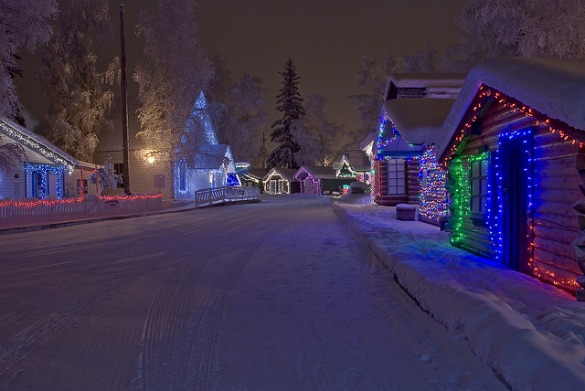 I went alone that Christmas to a place far away from any one or any place I knew.
Two mountain passes and four hours of driving, and a flat gray lake absorbing the wake of a rickety ferry fell behind me, and I sat with my head against a school bus window bumping up a dirt road into a snowy mountain valley and arrived to an unlocked dorm room with a single bed and white walls blank enough to give the shadows I brought with me a place to live.
I’d heard about Holden, a tiny Lutheran community in the North Cascades tucked into a mountain valley, and I decided to go.
Alone.
My coming here had alarmed those I knew, who demanded I come to visit, who let voices drip with disapproval that I wasn’t going home.
But I’d helped sell my childhood home the previous summer after my dad and step-mom were killed. There was no home for me to visit.
I had orchestrated a funeral, a burial, a house cleaning, a house selling, and an adoption of some new version of normal I didn’t want and couldn’t interpret in my life in another city.
I had no interest in maneuvering through family dynamics with those who remained. I had no interest in submitting to others’ attempts at cheer or denial or counsel.
Christmas had always been my favorite holiday. Returning home and walking off the plane in past years, I easily sighted my dad’s tall figure next to my step-mom at the back of the crowd just past security, mountains glowing icy-white in the quick-falling Alaska night through the terminal windows behind them.
The easy holiday cheer, both sacred and secular, pierced any young-adult angst I might have carried with me. I loved midnight mass and the carols and someone wearing a Santa hat passing out presents, and stockings stuffed with oranges, toothpaste, and sundries.
This year was different. The walls closed me in and I wanted them to. I wanted to shut out the artificial brightness of lights and smiles. I watched shadows. I looked at snow on the mountains and my mind processed blankness.
I went for walks. I sat at communal tables forcing small smiles during meals and it took everything I had to participate in conversation. “You’re here alone?” someone would ask. “Yes,” I’d say, and though I was used to answering that way, both the question and my answer stung.
And then, because I didn’t want to hide and I didn’t know how to be polite, I would say: “My dad and stepmom were killed by a bear last summer. I needed to be somewhere quiet this Christmas.”
In the city when you say something like that it shuts people up.
At Holden, shock dissolved on open hearts the moment it appeared, an acceptance of brokenness. Maybe it was the wilderness, the circling shield of a mountain valley. Maybe it was Christmas.
At dinner my first night in Holden, a father, also a pastor, said: “I’m so sorry.” The way he said it put me at ease. He didn’t break eye contact, didn’t have that momentary hesitation that begs you to stop interrupting a comfortable life with tragedy.
He introduced his wife and son and daughter. The boy asked me to pass the basket of bread, and I did. I found out they were from Wisconsin.
I went to my tiny bare room and wrote letters to my dad that smeared under my tears.
I went to the chapel to help someone put up a tree from the forest, someone who didn’t comment on my reticence. The needles crushed under my hands, impaling me, and I breathed in the deep smell of pine.
I went back to my room where the white walls protected me and I napped and I cried and I stared at—and only sometimes out of—the window.
This was good, I thought, because tears had not come easily. My tears had not come until the day of the burial when their deluge threatened to obscure the cruelly long Alaskan summer day.
Despite my desire to hide, the meals added a liturgy to my life that week in the mountains. There was a place to be, and a time to be there, a communion with others recognizing the presence of God–however absent he felt to me–and acceptance of my thin reaches for connection and desperate retreats into privacy.
I went for a snowshoe with two other visitors, and saw ice sparkling on the trees, and we walked by the furnaces Holden staff kept fired to warm the buildings against the winter freeze.
And then I went back to my room and subjected myself to emptiness and to flooding. Somehow I knew how necessary were these rivers, as impotent as they seemed.
They tore off scabs so that brief moments of fellowship with humanity or God or the brightness of snow crystals or the fast darkening days could heal the edges, begining to form the scar of grief that would start to allow life.
The secular world begins celebrating Christmas during Advent, a season of waiting. But even in the Christian tradition, after the waiting, the gift of Christmas does not come simply wrapped in a ribbon.
After bearing my own children, I know that the gift can come with discomfort, with blood, tearing, and screams. The arrival of the gift does not negate the pain.
And sometimes the gift is the pain.
That Christmas loneliness was the waiting, and aloneness was the gift. Reticence was the waiting, and community was the gift. Solitude was the waiting, and the quiet mountains and the music carried on the flickering of candles in a dark chapel was the gift. Pain was the waiting, and acceptance of that pain was the gift.
It was only by receiving the pain that I could begin to imagine one day letting it go.
Shannon Huffman Polson is a Seattle based writer and graduate of Seattle Pacific University’s MFA program. Her memoir, North of Hope: A Daughter’s Arctic Journey, came out in April 2013.
Previous Post

December 10, 2012
Seasons of the Soul
Next Post
December 13, 2012 The Hobbit on Steroids
Browse Our Archives
Select a Category A. G. Harmon Alissa Wilkinson Allison Backous Art Authors Brad Fruhauff Bradford Winters Bryan Bliss Caroline Langston Chad Thomas Johnston Chris Hoke Christiana N. Peterson Culture D.G. Myers D.L. Mayfield Daniel Bowman Jr. David Griffith Elizabeth Duffy Faith Film Greg Wolfe Guest Contributor Interview Jan Vallone Jeffrey Overstreet Jessica Eddings-Roeser Jessica Mesman Griffith Kelly Foster Lindsey Crittenden Morgan Meis music Natalie Vestin Nick Olson Peggy Rosenthal Personal Reflection Poetry Friday Reflection Relationships Review Richard Chess Richard Cole Sara Zarr Shannon Huffman Polson Sonya Bilocerkowycz Tania Runyan Tony Woodlief Topical Categories Uncategorized Vic Sizemore Writing
Select a Month October 2018 September 2018 August 2018 July 2018 June 2018 May 2018 April 2018 March 2018 February 2018 January 2018 December 2017 November 2017 October 2017 September 2017 August 2017 July 2017 June 2017 May 2017 April 2017 March 2017 February 2017 January 2017 December 2016 November 2016 October 2016 September 2016 August 2016 July 2016 June 2016 May 2016 April 2016 March 2016 February 2016 January 2016 December 2015 November 2015 October 2015 September 2015 August 2015 July 2015 June 2015 May 2015 April 2015 March 2015 February 2015 January 2015 December 2014 November 2014 October 2014 September 2014 August 2014 July 2014 June 2014 May 2014 April 2014 March 2014 February 2014 January 2014 December 2013 November 2013 October 2013 September 2013 August 2013 July 2013 June 2013 May 2013 April 2013 March 2013 February 2013 January 2013 December 2012 November 2012 October 2012 September 2012 August 2012 July 2012 June 2012 May 2012 February 2008
Follow Us!
TAKE THE
Religious Wisdom Quiz
True or False: Mark's Gospel is the shortest of the four Gospels.
Select your answer to see how you score.
TRUE FALSE
Related posts from Good Letters

Leonard Cohen’s Holy and Broken Hallelujah

Ready or Not for the Days of Awe


TRENDING AT PATHEOS Catholic

Rejecting Doom: Christian Hope And Human Action
Christianity is a religion of hope. We are to have hope and...

It’s What Comes From Within Which Matters
One of the most difficult things for us to understand is why...

Why I Choose the Eucharist Over the Sermon
Choose the Eucharist, Not the Sermon What are we supposed to get...

5 Design Elements Found in Spiritually Rooted Homes
Putting Spirituality Into Home Decor Our homes are more than our living...

Credo: A Story of God Told with the...
About 10 years ago, I began to imagine a personal "Credo" that...

The Anatomy of Divine Revelation in Catholic Thought
The claim that God has made Himself known to human beings is...
view all Catholic blogs
Ad-Free & Subscriber Log-In Subscription Support
- About Us
- 2026 Calendar
- Videos
- Podcasts
- Library of World Religions
- Faith In Media Tracker
- Advertise With Us
- Write for Us
- Privacy Policy
- Terms of Service
- Do Not Sell My Data
- Contact Us
- Radiant Digital
- Manage Newsletter Subscriptions
- Unsubscribe From Notifications
- Sitemap
Copyright 2008-2026, Patheos. All rights reserved.
Subscription Support Ad-Free & Subscriber Log-In
Follow Patheos