
BuddhistCatholicContemplativeEvangelicalGeneral ChristianHinduJewishLatter-day SaintMuslimNew VisionsProgressive Christian
Beliefs
- Buddhist
- Catholic
- Contemplative
- Evangelical
- General Christian
- Hindu
- Jewish
- Latter-day Saint
- More Voices
- Muslim
- New Visions
- Pagan
- Progressive Christian
Topics
- Religion News
- Food and Religion
- Sports and Religion
- Religious Art
- Religious Music and Entertainment
- Religious Events
- History and Religion
- Style and Religion
- Politics and Religion
- Women in Religion
- Recreation Outdoors and Religion
- Business Finance and Religion
- Careers Workplace and Religion
- Education and Religion
- Family Parenting and Religion
- Health Fitness and Religion
- Home and Religion
- Relationships and Religion
- Technology and Religion
- Travel and Religion
Columnists
- Buddhist Columnists
- Business Finance and Religion Columnists
- Careers Workplace and Religion Columnists
- Catholic Columnists
- Contemplative Columnists
- Education and Religion Columnists
- Evangelists Columnists
- Family Parenting and Religion Columnists
- General Christian Columnists
- Health Fitness and Religion Columnists
- Hindu Columnists
- History and Religion Columnists
- Home and Religion Columnists
- Jewish Columnists
- More Voices Columnists
- Latter Day Columnists
- Muslim Columnists
- New Visions Columnists
- Nonreligious Columnists
- Pagan Columnists
- Politics and Religion Columnists
- Progressive Columnists
- Recreation Outdoors and Religion Columnists
- Relationships and Religion Columnists
- Religion News Columnists
- Religious Art Columnists
- Religious Events Columnists
- Religious Music and Entertainment Columnists
- Sports and Religion Columnists
- Style and Religion Columnists
- Technology and Religion Columnists
- Travel and Religion Columnists
- Women in Religion Columnists
Resource Library
- 2026 Calendar
- Library of World Religions
- The 100 Most Holy Places on Earth
- Patheos Answers
- Podcasts
- Videos
- Faith Leaders Database
- Anglican Episcopalian
- Bahai
- Baptist
- Buddhism
- Christianity
- Confucianism
- Eastern Orthodoxy
- Hinduism
- Holiness and Pentecostal
- ISKCON
- Islam
- Judaism
- Lutheran
- Methodist
- The Church of Jesus Christ of Latter-day Saints
- New Age
- Paganism
- Presbytarian and Reformed
- Protestantism
- Religion Behind the Scenes
- Roman Catholic
- Scientology
- Shia Islam
- Sikhism
- Sufism
- Sunni Islam
- Taoism
- Zen
- See all religions
Research Tools
 Ad-Free & Subscriber Log-In Subscription Support
Ad-Free & Subscriber Log-In Subscription Support
Follow Patheos 

- Trending:
- Forgiveness
- |
- Marriage
- |
- Consciousness
- |
- Death Penalty
- |
- Election
- |
- Halloween
 Good Letters
-
Contributors
- Home
- Catholic
- The Cost of Writing the Truth
The Cost of Writing the Truth
Last updated on: December 2, 2012 at 5:00 am by Tony Woodlief
The Cost of Writing the Truth 2012-12-02T05:00:17-07:00 Tony Woodlief
Patheos Explore the world's faith through different perspectives on religion and spirituality! Patheos has the views of the prevalent religions and spiritualities of the world.
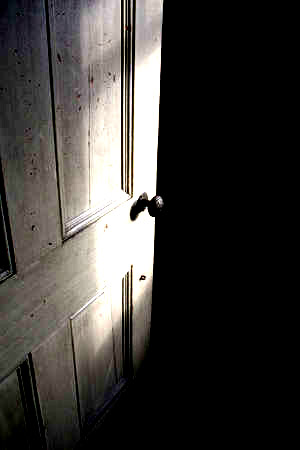 I remember my mother used to go to bed for the day. The blackness of her mood seemed to darken her room. I don’t know why she left her door open. Maybe she knew, even in her unresponsive state, that she needed to be able to hear us. Maybe she thought it would be less frightening for us if we could see her. She was wrong. She loved us, but she was wrong.
We learned not to talk to her. We passed her doorway quickly, as if someone had died, as if we thought something might reach out from its depths and lay hold of us. Some days I wonder if something did.
Perhaps the hardest thing about writing is deciding what you will omit. Most of the first draft is usually dreck. The best may be the line you’re not even sure about, because you haven’t seen its like before, because it gouges deep and you’re accustomed to dribbling blood onto the page by the pinprick.
What the reader may need most is what you’re inclined to excise, because the terrible secrets of your life—those human truths that hold the power to make a reader see, with her quavering heart’s eye, that she is not alone—shame you, and undermine your cultivated, attractively broken image.
You court troubles, however, when you write that your mother is manic-depressive, that some of it rubbed off, that sometimes the world is so dark you can scarcely rise from bed, that it is dark no matter how early you start drinking or how late you sleep, the world is dark like the strangled light in your mother’s bedroom.
She might see what you write, and be wounded, and drag you back to that place where you manage your feelings so she can feel better. A friend may read it, and imagine he can help you by talking, because his is the kind of life in which talking makes things better.
And those are the people who love you. Who knows what one of the low-down bastards you have the misfortune of knowing may do with it. Maybe you’ve got a day job, and you have to consider how someone can twist something you write into a weapon. Maybe you are divorced, and you worry about what some cold-souled courtroom bureaucrat will decide your words prove about your parental fitness.
The most heartening thing I ever got from therapy was the realization that we’re in a generational struggle. My mother never molested her children, as was done to her, and I haven’t yet curled into a ball at ten in the morning and left my children to fend for themselves. My stepfather never beat me unconscious, and I haven’t burned any of my children with a cigarette lighter because I didn’t like the pants they were wearing.
Philo of Alexandria was right: we are each of us fighting a great battle. Some of us are fighting to make our children noble poets; others are fighting just to keep them fed. Some of us—maybe most of us, if we’re honest—do both, depending on the day of the week.
If you set about telling the truth about your battle, every sentence becomes a decision. Even if you are one of those philosophically sophisticated types who believes there is no truth, that we only know some variant of things by their not-ness, you still decide what to tell about what you think you have seen and what your synapses conspire to hold as memory.
Some advice I received about this telling, like many writers before me, is that I should write to my ideal reader. I suppose a body could agonize over that, but for me it was always pretty simple: my reader won’t leave. She may step away for a smoke, but she will come back. My words stick in her gut and she comes back.
The struggle, however, even when you are writing fiction, is that the other reader shows up. You know him. He’s the one who rolls his eyes at your inability to get past something you saw or something that was done to you. That reader is the pale preacher, the ringleader of the popular kids, the petty grammar god.
Maybe that reader isn’t in your head, maybe he is your very real enemy at work, or in your own family, and you weigh every word as a stone, and ask yourself how it will feel when he sends it careening into the back of your skull.
You weigh your words and you exchange the heavy ones for pea stone, because it is useful and civilized and isn’t worth throwing at anyone. You set out to build a temple, and instead you lay down a neat suburban driveway.
Sometimes there is a cost to writing the truth, if only in the remembering. This is why, I will one day explain to my sons, your father sometimes doesn’t sleep, and why most mornings he is quiet, and why some nights you wake to find his hand pressed to your heads, praying as much for himself as for you, that he might finish the race—not the best father or even writer, but a father who brought you a little further along, a writer who sometimes, at least, told something like the truth.
Previous Post

November 29, 2012
Books for Holiday Giving
Next Post
December 3, 2012 Constructive Disruption: On Derek Webb's Mind Ctrl Part One
Browse Our Archives
Select a Category A. G. Harmon Alissa Wilkinson Allison Backous Art Authors Brad Fruhauff Bradford Winters Bryan Bliss Caroline Langston Chad Thomas Johnston Chris Hoke Christiana N. Peterson Culture D.G. Myers D.L. Mayfield Daniel Bowman Jr. David Griffith Elizabeth Duffy Faith Film Greg Wolfe Guest Contributor Interview Jan Vallone Jeffrey Overstreet Jessica Eddings-Roeser Jessica Mesman Griffith Kelly Foster Lindsey Crittenden Morgan Meis music Natalie Vestin Nick Olson Peggy Rosenthal Personal Reflection Poetry Friday Reflection Relationships Review Richard Chess Richard Cole Sara Zarr Shannon Huffman Polson Sonya Bilocerkowycz Tania Runyan Tony Woodlief Topical Categories Uncategorized Vic Sizemore Writing
Select a Month October 2018 September 2018 August 2018 July 2018 June 2018 May 2018 April 2018 March 2018 February 2018 January 2018 December 2017 November 2017 October 2017 September 2017 August 2017 July 2017 June 2017 May 2017 April 2017 March 2017 February 2017 January 2017 December 2016 November 2016 October 2016 September 2016 August 2016 July 2016 June 2016 May 2016 April 2016 March 2016 February 2016 January 2016 December 2015 November 2015 October 2015 September 2015 August 2015 July 2015 June 2015 May 2015 April 2015 March 2015 February 2015 January 2015 December 2014 November 2014 October 2014 September 2014 August 2014 July 2014 June 2014 May 2014 April 2014 March 2014 February 2014 January 2014 December 2013 November 2013 October 2013 September 2013 August 2013 July 2013 June 2013 May 2013 April 2013 March 2013 February 2013 January 2013 December 2012 November 2012 October 2012 September 2012 August 2012 July 2012 June 2012 May 2012 February 2008
Follow Us!
TAKE THE
Religious Wisdom Quiz
Who was Abraham's nephew?
Select your answer to see how you score.
Jacob Lot Isaac Ishmael
Related posts from Good Letters

Morning in a Forgotten Neighborhood

On Writing Odes: Taking Time to Celebrate


TRENDING AT PATHEOS Catholic

Rejecting Doom: Christian Hope And Human Action
Christianity is a religion of hope. We are to have hope and...

It’s What Comes From Within Which Matters
One of the most difficult things for us to understand is why...

Why I Choose the Eucharist Over the Sermon
Choose the Eucharist, Not the Sermon What are we supposed to get...

5 Design Elements Found in Spiritually Rooted Homes
Putting Spirituality Into Home Decor Our homes are more than our living...

Credo: A Story of God Told with the...
About 10 years ago, I began to imagine a personal "Credo" that...

The Anatomy of Divine Revelation in Catholic Thought
The claim that God has made Himself known to human beings is...
view all Catholic blogs
Ad-Free & Subscriber Log-In Subscription Support
- About Us
- 2026 Calendar
- Videos
- Podcasts
- Library of World Religions
- Faith In Media Tracker
- Advertise With Us
- Write for Us
- Privacy Policy
- Terms of Service
- Do Not Sell My Data
- Contact Us
- Radiant Digital
- Manage Newsletter Subscriptions
- Unsubscribe From Notifications
- Sitemap
Copyright 2008-2026, Patheos. All rights reserved.
Subscription Support Ad-Free & Subscriber Log-In
Follow Patheos