
BuddhistCatholicContemplativeEvangelicalGeneral ChristianHinduJewishLatter-day SaintMuslimNew VisionsProgressive Christian
Beliefs
- Buddhist
- Catholic
- Contemplative
- Evangelical
- General Christian
- Hindu
- Jewish
- Latter-day Saint
- More Voices
- Muslim
- New Visions
- Pagan
- Progressive Christian
Topics
- Religion News
- Food and Religion
- Sports and Religion
- Religious Art
- Religious Music and Entertainment
- Religious Events
- History and Religion
- Style and Religion
- Politics and Religion
- Women in Religion
- Recreation Outdoors and Religion
- Business Finance and Religion
- Careers Workplace and Religion
- Education and Religion
- Family Parenting and Religion
- Health Fitness and Religion
- Home and Religion
- Relationships and Religion
- Technology and Religion
- Travel and Religion
Columnists
- Buddhist Columnists
- Business Finance and Religion Columnists
- Careers Workplace and Religion Columnists
- Catholic Columnists
- Contemplative Columnists
- Education and Religion Columnists
- Evangelists Columnists
- Family Parenting and Religion Columnists
- General Christian Columnists
- Health Fitness and Religion Columnists
- Hindu Columnists
- History and Religion Columnists
- Home and Religion Columnists
- Jewish Columnists
- More Voices Columnists
- Latter Day Columnists
- Muslim Columnists
- New Visions Columnists
- Nonreligious Columnists
- Pagan Columnists
- Politics and Religion Columnists
- Progressive Columnists
- Recreation Outdoors and Religion Columnists
- Relationships and Religion Columnists
- Religion News Columnists
- Religious Art Columnists
- Religious Events Columnists
- Religious Music and Entertainment Columnists
- Sports and Religion Columnists
- Style and Religion Columnists
- Technology and Religion Columnists
- Travel and Religion Columnists
- Women in Religion Columnists
Resource Library
- 2026 Calendar
- Library of World Religions
- The 100 Most Holy Places on Earth
- Patheos Answers
- Podcasts
- Videos
- Faith Leaders Database
- Anglican Episcopalian
- Bahai
- Baptist
- Buddhism
- Christianity
- Confucianism
- Eastern Orthodoxy
- Hinduism
- Holiness and Pentecostal
- ISKCON
- Islam
- Judaism
- Lutheran
- Methodist
- The Church of Jesus Christ of Latter-day Saints
- New Age
- Paganism
- Presbytarian and Reformed
- Protestantism
- Religion Behind the Scenes
- Roman Catholic
- Scientology
- Shia Islam
- Sikhism
- Sufism
- Sunni Islam
- Taoism
- Zen
- See all religions
Research Tools
 Ad-Free & Subscriber Log-In Subscription Support
Ad-Free & Subscriber Log-In Subscription Support
Follow Patheos 

- Trending:
- Forgiveness
- |
- Marriage
- |
- Consciousness
- |
- Death Penalty
- |
- Election
- |
- Halloween
 Good Letters
-
Contributors
- Home
- Catholic
- Denise Levertov: A Poet’s Life, Part Two
Denise Levertov: A Poet’s Life, Part Two
Last updated on: November 14, 2012 at 12:43 pm by Peggy Rosenthal
Denise Levertov: A Poet’s Life, Part Two 2012-11-14T12:43:36-07:00 Peggy Rosenthal
Patheos Explore the world's faith through different perspectives on religion and spirituality! Patheos has the views of the prevalent religions and spiritualities of the world.
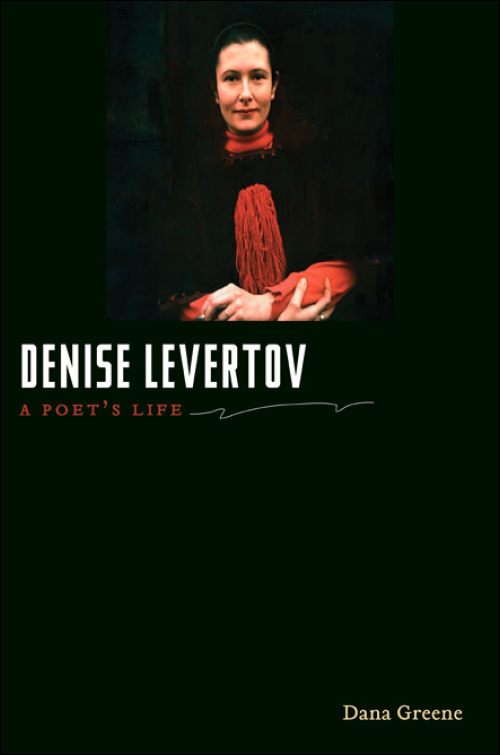 Yesterday, in Part One of my review of the major new biography, Denise Levertov: A Poet’s Life, by Dana Greene, I focused on Greene’s information and insights into Levertov’s life. Today I turn to the other term of the book’s sub-title: the poet.
Since Greene is writing a biography, not a work of literary criticism, her interest is in how Levertov’s extraordinary body of poetry both shaped and was shaped by her life experience. Indeed, Levertov’s life and art were unusually integrated.
Greene quotes one of Levertov’s colleagues after her death: “She was a unique presence because in her… everything came together in an organic whole—poetry, religion, history and politics, the natural world and people.”
From childhood, Denise sensed her vocation as a poet. At age twelve, she boldly sent some poems to T.S. Eliot. He replied encouragingly, re-enforcing her vocational identity.
Other major literary figures mentored her and made contacts for her with the poetry world, especially after she moved to the U.S., including: Kenneth Rexroth, William Carlos Williams, Robert Duncan, Robert Creeley, and James Laughlin (head of New Directions, which soon became her publisher.)
Levertov’s early and continuing acclaim, which the quality of her poetry did deserve, was facilitated by a personal charm that made these people eager to advocate for her.
Earning a living as a poet came more slowly. Gradually, as her fame grew, she was invited to give paid poetry readings around the country—and later in life, around the world. But financial security as a poet didn’t come until she began receiving faculty appointments at various universities from Brandeis to Sydney, Australia, with her longest stays at Tufts and Stanford Universities.
Meanwhile, her poetic style was evolving.
Her first published collection, in 1946 (when she was twenty-three), was considered by Rexroth to be representative of the New Romanticism. Greene points out that its title, The Double Image, captured the duality of joy and sorrow that would remain the poles of Levertov’s poetic vision all her life.
When she moved to the U.S., she put herself under the tutelage of William Carlos Williams, eager as she was to write pared-down poetry in the American idiom.
But by the time her collection The Jacob’s Ladder came out in 1961, she had found her own voice and vision. Her poetry, Greene writes, “would be a celebration of mystery.” It would also probe the world’s evil and suffering.
Levertov thought a lot about the poet’s role in the larger culture. In her diaries, letters, and (as her fame grew) lectures and essays, she spoke about the interaction of poetry and lived experience.
Greene quotes from a 1967 lecture on the poet’s responsibility:
When words penetrate deep into us they change the chemistry of the soul, of the imagination. We have no right to do that to people if we don’t share the consequences.
By this time, Levertov had thrown herself into political activism, and her poetry engaged this dimension of her life. Criticized by many for writing political poetry, she was eloquent in her defense—and utterly consistent with her lifelong conviction that a poet must write out of what she experiences.
Greene summarizes: “If the work of poetry was to celebrate life, then the poet must have total involvement in life in order to preserve it. To be poet was to be ‘poet in the world’”—this last phrase the title of Levertov’s 1973 essay collection.
Similarly, when Levertov began moving toward Christian faith and then finally embraced it, her poetry both reflected and furthered her spiritual journey.
For instance, it was “through her engagement with the images given her in the creation of poems” that she worked through theological issues that puzzled her. For Levertov, Greene continues, “both art and faith were dependent on imagination; both were ‘ventures into the unknown.’”
Many more riches await the reader of this biography, insights not only into Levertov’s own life and poetry but also into the mysterious interaction of life and art in all of us.
In a moving epilogue, Greene is forthright about the limits of what a biography can accomplish—especially when the subject had so complex an inner life.
This biography was undertaken as an experiment in penetrating the inner life of Denise Levertov. The voluminous raw materials—diaries, written and oral interviews, correspondence, poetry, and essays—allow the biographer to investigate and intuit, patch and paste, imagine and verify. To gain a closer, tauter hold on Levertov is to discover that she remains elusive, much like the mountain [viewed from the window of her final Seattle home]—present and absent, her person never fully grasped, but only pointed to and honored.
When I first held Greene’s biography, I was puzzled by the cover: solid black, with a small photo portrait of Levertov’s face, bright red scarf, and red sleeve barely emerging from the blackness.
Having now read the book, I find this jacket cover the perfect image of Levertov’s elusiveness and of the dark background out of which she wrote magnificent poetry of both sorrow and brilliant joy.
Her face has a calm smile, an inner peace—grounded in God—that she was finally blessed with.
Previous Post

November 5, 2012
Denise Levertov: A Poet’s Life, Part One
Next Post
November 7, 2012 Do-It-Yourself Sacramental Tedium
Browse Our Archives
Select a Category A. G. Harmon Alissa Wilkinson Allison Backous Art Authors Brad Fruhauff Bradford Winters Bryan Bliss Caroline Langston Chad Thomas Johnston Chris Hoke Christiana N. Peterson Culture D.G. Myers D.L. Mayfield Daniel Bowman Jr. David Griffith Elizabeth Duffy Faith Film Greg Wolfe Guest Contributor Interview Jan Vallone Jeffrey Overstreet Jessica Eddings-Roeser Jessica Mesman Griffith Kelly Foster Lindsey Crittenden Morgan Meis music Natalie Vestin Nick Olson Peggy Rosenthal Personal Reflection Poetry Friday Reflection Relationships Review Richard Chess Richard Cole Sara Zarr Shannon Huffman Polson Sonya Bilocerkowycz Tania Runyan Tony Woodlief Topical Categories Uncategorized Vic Sizemore Writing
Select a Month October 2018 September 2018 August 2018 July 2018 June 2018 May 2018 April 2018 March 2018 February 2018 January 2018 December 2017 November 2017 October 2017 September 2017 August 2017 July 2017 June 2017 May 2017 April 2017 March 2017 February 2017 January 2017 December 2016 November 2016 October 2016 September 2016 August 2016 July 2016 June 2016 May 2016 April 2016 March 2016 February 2016 January 2016 December 2015 November 2015 October 2015 September 2015 August 2015 July 2015 June 2015 May 2015 April 2015 March 2015 February 2015 January 2015 December 2014 November 2014 October 2014 September 2014 August 2014 July 2014 June 2014 May 2014 April 2014 March 2014 February 2014 January 2014 December 2013 November 2013 October 2013 September 2013 August 2013 July 2013 June 2013 May 2013 April 2013 March 2013 February 2013 January 2013 December 2012 November 2012 October 2012 September 2012 August 2012 July 2012 June 2012 May 2012 February 2008
Follow Us!
TAKE THE
Religious Wisdom Quiz
What Christian tradition requires confession to a priest for forgiveness of sins?
Select your answer to see how you score.
Baptist Methodist Roman Catholic Quaker
Related posts from Good Letters


On Writing Odes: Taking Time to Celebrate

Poetry Friday: "The Burned Butterfly"

A Conversation with Alicia Ostriker: Part 1
TRENDING AT PATHEOS Catholic

Creation, Preservation, and Teleology in Catholic Theology
As I write this, it is very early Monday morning. Like millions...

The Parable Of The Sower And The Word...
One of Christ’s most famous parables is that of the sower who...

Rejecting Doom: Christian Hope And Human Action
Christianity is a religion of hope. We are to have hope and...

Why I Choose the Eucharist Over the Sermon
Choose the Eucharist, Not the Sermon What are we supposed to get...

5 Design Elements Found in Spiritually Rooted Homes
Putting Spirituality Into Home Decor Our homes are more than our living...

Credo: A Story of God Told with the...
About 10 years ago, I began to imagine a personal "Credo" that...
view all Catholic blogs
Ad-Free & Subscriber Log-In Subscription Support
- About Us
- 2026 Calendar
- Videos
- Podcasts
- Library of World Religions
- Faith In Media Tracker
- Advertise With Us
- Write for Us
- Privacy Policy
- Terms of Service
- Do Not Sell My Data
- Contact Us
- Radiant Digital
- Manage Newsletter Subscriptions
- Unsubscribe From Notifications
- Sitemap
Copyright 2008-2026, Patheos. All rights reserved.
Subscription Support Ad-Free & Subscriber Log-In
Follow Patheos