
BuddhistCatholicContemplativeEvangelicalGeneral ChristianHinduJewishLatter-day SaintMuslimNew VisionsProgressive Christian
Beliefs
- Buddhist
- Catholic
- Contemplative
- Evangelical
- General Christian
- Hindu
- Jewish
- Latter-day Saint
- More Voices
- Muslim
- New Visions
- Pagan
- Progressive Christian
Topics
- Religion News
- Food and Religion
- Sports and Religion
- Religious Art
- Religious Music and Entertainment
- Religious Events
- History and Religion
- Style and Religion
- Politics and Religion
- Women in Religion
- Recreation Outdoors and Religion
- Business Finance and Religion
- Careers Workplace and Religion
- Education and Religion
- Family Parenting and Religion
- Health Fitness and Religion
- Home and Religion
- Relationships and Religion
- Technology and Religion
- Travel and Religion
Columnists
- Buddhist Columnists
- Business Finance and Religion Columnists
- Careers Workplace and Religion Columnists
- Catholic Columnists
- Contemplative Columnists
- Education and Religion Columnists
- Evangelists Columnists
- Family Parenting and Religion Columnists
- General Christian Columnists
- Health Fitness and Religion Columnists
- Hindu Columnists
- History and Religion Columnists
- Home and Religion Columnists
- Jewish Columnists
- More Voices Columnists
- Latter Day Columnists
- Muslim Columnists
- New Visions Columnists
- Nonreligious Columnists
- Pagan Columnists
- Politics and Religion Columnists
- Progressive Columnists
- Recreation Outdoors and Religion Columnists
- Relationships and Religion Columnists
- Religion News Columnists
- Religious Art Columnists
- Religious Events Columnists
- Religious Music and Entertainment Columnists
- Sports and Religion Columnists
- Style and Religion Columnists
- Technology and Religion Columnists
- Travel and Religion Columnists
- Women in Religion Columnists
Resource Library
- 2026 Calendar
- Library of World Religions
- The 100 Most Holy Places on Earth
- Patheos Answers
- Podcasts
- Videos
- Faith Leaders Database
- Anglican Episcopalian
- Bahai
- Baptist
- Buddhism
- Christianity
- Confucianism
- Eastern Orthodoxy
- Hinduism
- Holiness and Pentecostal
- ISKCON
- Islam
- Judaism
- Lutheran
- Methodist
- The Church of Jesus Christ of Latter-day Saints
- New Age
- Paganism
- Presbytarian and Reformed
- Protestantism
- Religion Behind the Scenes
- Roman Catholic
- Scientology
- Shia Islam
- Sikhism
- Sufism
- Sunni Islam
- Taoism
- Zen
- See all religions
Research Tools
 Ad-Free & Subscriber Log-In Subscription Support
Ad-Free & Subscriber Log-In Subscription Support
Follow Patheos 

- Trending:
- Forgiveness
- |
- Marriage
- |
- Consciousness
- |
- Death Penalty
- |
- Election
- |
- Halloween
 Good Letters
-
Contributors
- Home
- Catholic
- To Live by the Light of Fiction
To Live by the Light of Fiction
Last updated on: November 14, 2012 at 12:33 pm by Richard Chess
To Live by the Light of Fiction 2012-11-14T12:33:43-07:00 Richard Chess
Patheos Explore the world's faith through different perspectives on religion and spirituality! Patheos has the views of the prevalent religions and spiritualities of the world.
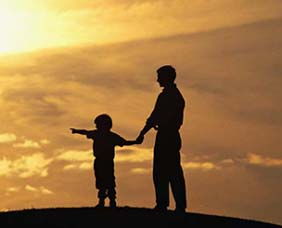 “In the end, a story is never going to make a damn bit of difference to the dead.” —The Yiddish Policeman’s Union, Michael Chabon
When I’m gone, son, tell me the story of the day you collided with the opponent’s keeper, his knee to your temple, and collapsed, face down, on the pitch until the EMS crew rolled you off the field on a gurney.
Tell me the story of how, during the month you waited to play again, you tried to rally the flagging team and inspire them to turn around their season.
Tell me the story of the coach who failed to recognize your talents and dedication—as player and leader—so I can rally to your defense—if the dead can come to the defense of a good son.
Tell me the story of your trip to Quail Ridge Books, across the street from North Carolina’s Governor’s School East, your third personal bookstore, after Malaprop’s in Asheville and the Strand in Manhattan—but the first that was yours alone, your discovery to share with me, a bookstore lover since the 1960s. Tell me about discovering Jonathan Lethem there, his novel The Fortress of Solitude.
And tell me again about the artist, an American woman who had lived in Gaza, who spoke to NCGSE students and staff that summer about the Israeli occupation. Tell me about how you stepped out of the auditorium to call me, to check facts so you could question and challenge her.
You already knew a thing or two about Israel. When you were four, our family—the five of us—spent two months there. After your sisters were grown and busy with their lives, you, mom, and I returned to Israel for another three-week stay. You’d heard me say many times that the three years I lived in Israel—1976-1979—were defining years of my adult life.
Even though, by the end of your junior year, you’d grown critical of Israeli treatment of Palestinians, you nevertheless felt compelled to challenge—for the benefit of your peers, counselors and faculty, few of whom knew much about the complex history and situation of Israel, let alone anything about Jewish history—the one dimensional story they were being told.
Tell me the story of conviction and courage and the pursuit of truth the summer of your intellectual and artistic awakening. Tell me the story. I don’t care if, because I’m dead, it won’t make a difference to me.
You need not tell me the story, if it’s too painful to tell, of your expulsion, just a few nights before the conclusion of the six-week program.
Sneaking with a friend off campus after curfew to meet a few of his friends for a late-night snack at McDonald’s. Of course, you were caught. Of course, you confessed and apologized.
You were ashamed, heartbroken, apologetic. Expelled: that dirty word was now yours—and mine.
I wanted to hold your pain, to ease it. Yes, you’d made a costly mistake. Yes, you had to suffer the consequences. But you’d responded, when you were caught, in an honorable way. I knew it, your mother knew it, your counselors knew it, and even the director of NCGSE knew it. He told me so when he called at four in the morning.
This unfortunate experience, too, contributed to the deep learning you experienced that summer. You had entered a new period of your life fueled by curiosity and passion for literature, politics, philosophy, art, and steadied by a sense of what it means to live by one’s words (say, an honor code).
Tell me these stories, and tell me other stories I lived with you. Tell me stories you lived apart from me and later, on a phone call or a visit, shared, and tell me the stories that you never told me, including, if not especially, stories that unfold after I move beyond reach.
The stories of your days, spoken into the air, projected from a mountain top, Mt. Pisgah or Bear, or sung over the ocean, from Avon or Ventura, either beach, either coast we loved—don’t stop telling them.
Say them aloud or to yourself when a thought is sparked by the smell of cilantro or a glance at a family photo. (The photographer, I am usually absent from family photos, preparing even then to be among the missing.)
“In the end, a story is never going to make a damn bit of difference to the dead,” writes Michael Chabon, one of our favorite authors, in The Yiddish Policemen’s Union, one of our favorite novels.
But this: The dead, when they’re dead, aren’t the dead any more. Only the living speak of the dead, only the living speak to the dead.
If Chabon is wrong, and when I’m dead I will be able to receive if not exactly hear (the physics of sound and physiology of hearing may not apply) the stories, your stories will be the tides of hope and disappointment, talent and obstacles, drive and redirection and accomplishment on which *I—*or whatever replaces I when the complex system of this one human life is simplified, shut down—will swell and subside.
“A story is never going to make a damn bit of difference to the dead.”
Tell me your stories, son: determination, courage, honor, discipline, creation, grief, delight. Don’t stop telling them until we know whether Chabon’s right, whether we live by the light of fiction, the light of art, or whether art—like science, like philosophy, like love—illuminates one room, one heart only to deliver us to the deeper dark.
Previous Post

October 29, 2012
Sleeping in Slave Quarters at Sweet Briar College
Next Post
October 31, 2012 The Work Awaits, Part Two
Browse Our Archives
Select a Category A. G. Harmon Alissa Wilkinson Allison Backous Art Authors Brad Fruhauff Bradford Winters Bryan Bliss Caroline Langston Chad Thomas Johnston Chris Hoke Christiana N. Peterson Culture D.G. Myers D.L. Mayfield Daniel Bowman Jr. David Griffith Elizabeth Duffy Faith Film Greg Wolfe Guest Contributor Interview Jan Vallone Jeffrey Overstreet Jessica Eddings-Roeser Jessica Mesman Griffith Kelly Foster Lindsey Crittenden Morgan Meis music Natalie Vestin Nick Olson Peggy Rosenthal Personal Reflection Poetry Friday Reflection Relationships Review Richard Chess Richard Cole Sara Zarr Shannon Huffman Polson Sonya Bilocerkowycz Tania Runyan Tony Woodlief Topical Categories Uncategorized Vic Sizemore Writing
Select a Month October 2018 September 2018 August 2018 July 2018 June 2018 May 2018 April 2018 March 2018 February 2018 January 2018 December 2017 November 2017 October 2017 September 2017 August 2017 July 2017 June 2017 May 2017 April 2017 March 2017 February 2017 January 2017 December 2016 November 2016 October 2016 September 2016 August 2016 July 2016 June 2016 May 2016 April 2016 March 2016 February 2016 January 2016 December 2015 November 2015 October 2015 September 2015 August 2015 July 2015 June 2015 May 2015 April 2015 March 2015 February 2015 January 2015 December 2014 November 2014 October 2014 September 2014 August 2014 July 2014 June 2014 May 2014 April 2014 March 2014 February 2014 January 2014 December 2013 November 2013 October 2013 September 2013 August 2013 July 2013 June 2013 May 2013 April 2013 March 2013 February 2013 January 2013 December 2012 November 2012 October 2012 September 2012 August 2012 July 2012 June 2012 May 2012 February 2008
Follow Us!
TAKE THE
Religious Wisdom Quiz
Who said, "He must increase, but I must decrease"?
Select your answer to see how you score.
Elijah John the Baptist Paul Peter
Related posts from Good Letters


Ready or Not for the Days of Awe

Poetry Friday: A Quick Interpretation of the Sixth...
TRENDING AT PATHEOS Catholic

The Parable Of The Sower And The Word...
One of Christ’s most famous parables is that of the sower who...

Rejecting Doom: Christian Hope And Human Action
Christianity is a religion of hope. We are to have hope and...

Why I Choose the Eucharist Over the Sermon
Choose the Eucharist, Not the Sermon What are we supposed to get...

5 Design Elements Found in Spiritually Rooted Homes
Putting Spirituality Into Home Decor Our homes are more than our living...

Credo: A Story of God Told with the...
About 10 years ago, I began to imagine a personal "Credo" that...

The Anatomy of Divine Revelation in Catholic Thought
The claim that God has made Himself known to human beings is...
view all Catholic blogs
Ad-Free & Subscriber Log-In Subscription Support
- About Us
- 2026 Calendar
- Videos
- Podcasts
- Library of World Religions
- Faith In Media Tracker
- Advertise With Us
- Write for Us
- Privacy Policy
- Terms of Service
- Do Not Sell My Data
- Contact Us
- Radiant Digital
- Manage Newsletter Subscriptions
- Unsubscribe From Notifications
- Sitemap
Copyright 2008-2026, Patheos. All rights reserved.
Subscription Support Ad-Free & Subscriber Log-In
Follow Patheos