
BuddhistCatholicContemplativeEvangelicalGeneral ChristianHinduJewishLatter-day SaintMuslimNew VisionsProgressive Christian
Beliefs
- Buddhist
- Catholic
- Contemplative
- Evangelical
- General Christian
- Hindu
- Jewish
- Latter-day Saint
- More Voices
- Muslim
- New Visions
- Pagan
- Progressive Christian
Topics
- Religion News
- Food and Religion
- Sports and Religion
- Religious Art
- Religious Music and Entertainment
- Religious Events
- History and Religion
- Style and Religion
- Politics and Religion
- Women in Religion
- Recreation Outdoors and Religion
- Business Finance and Religion
- Careers Workplace and Religion
- Education and Religion
- Family Parenting and Religion
- Health Fitness and Religion
- Home and Religion
- Relationships and Religion
- Technology and Religion
- Travel and Religion
Columnists
- Buddhist Columnists
- Business Finance and Religion Columnists
- Careers Workplace and Religion Columnists
- Catholic Columnists
- Contemplative Columnists
- Education and Religion Columnists
- Evangelists Columnists
- Family Parenting and Religion Columnists
- General Christian Columnists
- Health Fitness and Religion Columnists
- Hindu Columnists
- History and Religion Columnists
- Home and Religion Columnists
- Jewish Columnists
- More Voices Columnists
- Latter Day Columnists
- Muslim Columnists
- New Visions Columnists
- Nonreligious Columnists
- Pagan Columnists
- Politics and Religion Columnists
- Progressive Columnists
- Recreation Outdoors and Religion Columnists
- Relationships and Religion Columnists
- Religion News Columnists
- Religious Art Columnists
- Religious Events Columnists
- Religious Music and Entertainment Columnists
- Sports and Religion Columnists
- Style and Religion Columnists
- Technology and Religion Columnists
- Travel and Religion Columnists
- Women in Religion Columnists
Resource Library
- 2026 Calendar
- Library of World Religions
- The 100 Most Holy Places on Earth
- Patheos Answers
- Podcasts
- Videos
- Faith Leaders Database
- Anglican Episcopalian
- Bahai
- Baptist
- Buddhism
- Christianity
- Confucianism
- Eastern Orthodoxy
- Hinduism
- Holiness and Pentecostal
- ISKCON
- Islam
- Judaism
- Lutheran
- Methodist
- The Church of Jesus Christ of Latter-day Saints
- New Age
- Paganism
- Presbytarian and Reformed
- Protestantism
- Religion Behind the Scenes
- Roman Catholic
- Scientology
- Shia Islam
- Sikhism
- Sufism
- Sunni Islam
- Taoism
- Zen
- See all religions
Research Tools
 Ad-Free & Subscriber Log-In Subscription Support
Ad-Free & Subscriber Log-In Subscription Support
Follow Patheos 

- Trending:
- Forgiveness
- |
- Marriage
- |
- Consciousness
- |
- Death Penalty
- |
- Election
- |
- Halloween
 Good Letters
-
Contributors
- Home
- Catholic
- The Poetics of Painting: Part Two
The Poetics of Painting: Part Two
Last updated on: November 14, 2012 at 12:11 pm by Guest Contributor
The Poetics of Painting: Part Two 2012-11-14T12:11:08-07:00 Guest Contributor
Patheos Explore the world's faith through different perspectives on religion and spirituality! Patheos has the views of the prevalent religions and spiritualities of the world.
Part Two: Beyond the Image
Guest Post
By Daniel Siedell
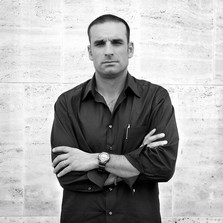 Have you ever been underwhelmed by a painting? Have you been excited to see a well-known and often reproduced painting on tour at your local art museum, your hopes built up to be utterly transformed and…nothing?
Often the painting appears tiny and timid, even vulnerable, surrounded by a crowd of people thinking the very same thing you are. Or it appears less colorful, less dynamic than it had in the glossy reproduction in the magazine or on banners that peaked your interest.
Perhaps we’re embarrassed by our response, feeling that we’re missing something that someone else (a specialist like me, for instance) has clearly seen.
This has happened to me, more times than you might imagine. Far from being a lack of knowledge or taste, it is built into the nature of a painting itself.
Our expectations of a famous painting, whether it’s Leonardo’s Mona Lisa, Picasso’s Old Guitarist, or Munch’s The Scream, are built on our desire to see an image, an image we’ve seen in newspapers, magazines, television commercials, coffee mugs, T-shirts, and other merchandise. We are coming to experience the aura of a spectacle generated by the image.
We come to the museum and wait in line to see that image. And then we are disappointed.
So, for many artists, critics, and curators, not to mention well-meaning art lovers, the frequency of this disappointment seems to point to the fact that painting is dead or outmoded; that it is incapable of offering a powerful experience in our intensely visual age. In this context, painting—let’s just put it out there—is a boring image.
But a painting is not an image.
It is something more. An artist once shocked me by declaring that painting often distracts us by what it looks like. For him, what is most interesting about a painting is not what we think is most important. How can this be?
A painting is deceptive. Because it enters our visual field immediately and in its entirety, we presume that it should declare its meaning to us just as immediately.
This is how we experience most imagery. Internet ads, commercials, billboards, etc. function as visual clips that distract our attention in minute but intense visual bursts.
Literature and music, by contrast, must unfold over time, and so there is a tacit admission of suspending judgment, of allowing the work’s meaning to emerge more gradually.
Painting behaves like literature and music. It is a time-based art. And so we have to slow down and approach it as such.
A painting does two things at once. It is both form and content, or, perhaps a better way of phrasing it, presence and reference. First and foremost, a painting is form, or presence. It is an artifact that consists of smelly and sticky pigment smeared across coarsely woven fabric stretched over a frame. That is what confronts us in the gallery or the museum. A painting never lets us forget that it is an artifact, a constructed thing hanging on a wall.
But a painting is also content, a reference, a subject. It is a painting of something, depicting, representing. And that takes us, the viewer, away from the present moment into the realm of our imagination and experience:
This pigment-smeared area reminds us of a rose we gave our mother, or a tree, sunrise, or person that connects with our own experience and relationship with trees, sunrises, or persons. Those paint smears might represent a facial expression that evokes an emotion we strain to understand because we’ve witnessed that expression before, somewhere.
Finally, a painting is a flat surface that is spatial. A painting either opens up space, creating depth and breadth, or closes it off, fighting against our desire to see into or through a painting.
The history of painting in the western tradition can be understood as painters succeeding in creating the illusion of open, empty space (Renaissance) and painters closing off that space (Modernism). This dynamic between form and content, presence and reference, is as true for Masaccio as it is for de Kooning; for a classically trained portraitist as it is for an abstract painter.
It is only the emphasis that shifts.
Form and presence are privileged in abstract painting while content and reference are emphasized in representational painting. But neither tradition can do away with the tension. Abstract painting that forsakes content and reference deteriorates into decoration and representational painting that ignores form and presence becomes illustration.
But a painting happens in that conjunctive space which holds form and content, presence and reference, apart and together simultaneously. It is the movement between the two, the vibration, or as my artist friend referred to it, the flicker that gives painting its particular charge.
We are distracted creatures, living perpetually in either the past through regret and nostalgia, or the future, projecting hopes and aspirations. We rarely live in the present moment, the today that God has given us (2 Corinthians 6:2), where God can be present to us. Grace, by the way, can only come to us in the present moment.
Painting tethers our distracted minds to the here and now, with that painting at that moment, unfolding a world that has been given to us as a gift.
This reflection barely scratches the surface of the mystery that is painting, a mystery that twenty years into my investigation, I have barely penetrated. It is no wonder, then, that in the Eastern Orthodox belief and tradition, the mystery of the Incarnation of Christ is preserved in and through painting.
The next time you find yourself in a museum, slow down and allow a painting to unfold before you, see if you can sense that flicker, that tension. And see if my artist friend is right, that there is indeed more to a painting than meets the eye.
Daniel A. Siedell (M.A. SUNY-Stony Brook, Ph.D. Iowa) is on staff at Coral Ridge Presbyterian Church in Fort Lauderdale where he is curator of Liberate, the resource ministry of Tullian Tchividjian. He is the author of God in the Gallery (Baker Academic, 2008) and numerous writings on Christianity and modern art. He blogs weekly at Cultivare.
Previous Post

October 14, 2012
Mending Our Mother-Daughter Story
Next Post
October 17, 2012 Don’t Cry for Me, Bethesda
Browse Our Archives
Select a Category A. G. Harmon Alissa Wilkinson Allison Backous Art Authors Brad Fruhauff Bradford Winters Bryan Bliss Caroline Langston Chad Thomas Johnston Chris Hoke Christiana N. Peterson Culture D.G. Myers D.L. Mayfield Daniel Bowman Jr. David Griffith Elizabeth Duffy Faith Film Greg Wolfe Guest Contributor Interview Jan Vallone Jeffrey Overstreet Jessica Eddings-Roeser Jessica Mesman Griffith Kelly Foster Lindsey Crittenden Morgan Meis music Natalie Vestin Nick Olson Peggy Rosenthal Personal Reflection Poetry Friday Reflection Relationships Review Richard Chess Richard Cole Sara Zarr Shannon Huffman Polson Sonya Bilocerkowycz Tania Runyan Tony Woodlief Topical Categories Uncategorized Vic Sizemore Writing
Select a Month October 2018 September 2018 August 2018 July 2018 June 2018 May 2018 April 2018 March 2018 February 2018 January 2018 December 2017 November 2017 October 2017 September 2017 August 2017 July 2017 June 2017 May 2017 April 2017 March 2017 February 2017 January 2017 December 2016 November 2016 October 2016 September 2016 August 2016 July 2016 June 2016 May 2016 April 2016 March 2016 February 2016 January 2016 December 2015 November 2015 October 2015 September 2015 August 2015 July 2015 June 2015 May 2015 April 2015 March 2015 February 2015 January 2015 December 2014 November 2014 October 2014 September 2014 August 2014 July 2014 June 2014 May 2014 April 2014 March 2014 February 2014 January 2014 December 2013 November 2013 October 2013 September 2013 August 2013 July 2013 June 2013 May 2013 April 2013 March 2013 February 2013 January 2013 December 2012 November 2012 October 2012 September 2012 August 2012 July 2012 June 2012 May 2012 February 2008
Follow Us!
TAKE THE
Religious Wisdom Quiz
Who was Jacob's firstborn son?
Select your answer to see how you score.
Joseph Levi Reuben Judah
Related posts from Good Letters
Halos and Other Important Things
The Arm, the Girl, and the Guard
TRENDING AT PATHEOS Catholic

Rejecting Doom: Christian Hope And Human Action
Christianity is a religion of hope. We are to have hope and...

It’s What Comes From Within Which Matters
One of the most difficult things for us to understand is why...

Why I Choose the Eucharist Over the Sermon
Choose the Eucharist, Not the Sermon What are we supposed to get...

5 Design Elements Found in Spiritually Rooted Homes
Putting Spirituality Into Home Decor Our homes are more than our living...

Credo: A Story of God Told with the...
About 10 years ago, I began to imagine a personal "Credo" that...

The Anatomy of Divine Revelation in Catholic Thought
The claim that God has made Himself known to human beings is...
view all Catholic blogs
Ad-Free & Subscriber Log-In Subscription Support
- About Us
- 2026 Calendar
- Videos
- Podcasts
- Library of World Religions
- Faith In Media Tracker
- Advertise With Us
- Write for Us
- Privacy Policy
- Terms of Service
- Do Not Sell My Data
- Contact Us
- Radiant Digital
- Manage Newsletter Subscriptions
- Unsubscribe From Notifications
- Sitemap
Copyright 2008-2026, Patheos. All rights reserved.
Subscription Support Ad-Free & Subscriber Log-In
Follow Patheos