
BuddhistCatholicContemplativeEvangelicalGeneral ChristianHinduJewishLatter-day SaintMuslimNew VisionsProgressive Christian
Beliefs
- Buddhist
- Catholic
- Contemplative
- Evangelical
- General Christian
- Hindu
- Jewish
- Latter-day Saint
- More Voices
- Muslim
- New Visions
- Pagan
- Progressive Christian
Topics
- Religion News
- Food and Religion
- Sports and Religion
- Religious Art
- Religious Music and Entertainment
- Religious Events
- History and Religion
- Style and Religion
- Politics and Religion
- Women in Religion
- Recreation Outdoors and Religion
- Business Finance and Religion
- Careers Workplace and Religion
- Education and Religion
- Family Parenting and Religion
- Health Fitness and Religion
- Home and Religion
- Relationships and Religion
- Technology and Religion
- Travel and Religion
Columnists
- Buddhist Columnists
- Business Finance and Religion Columnists
- Careers Workplace and Religion Columnists
- Catholic Columnists
- Contemplative Columnists
- Education and Religion Columnists
- Evangelists Columnists
- Family Parenting and Religion Columnists
- General Christian Columnists
- Health Fitness and Religion Columnists
- Hindu Columnists
- History and Religion Columnists
- Home and Religion Columnists
- Jewish Columnists
- More Voices Columnists
- Latter Day Columnists
- Muslim Columnists
- New Visions Columnists
- Nonreligious Columnists
- Pagan Columnists
- Politics and Religion Columnists
- Progressive Columnists
- Recreation Outdoors and Religion Columnists
- Relationships and Religion Columnists
- Religion News Columnists
- Religious Art Columnists
- Religious Events Columnists
- Religious Music and Entertainment Columnists
- Sports and Religion Columnists
- Style and Religion Columnists
- Technology and Religion Columnists
- Travel and Religion Columnists
- Women in Religion Columnists
Resource Library
- 2026 Calendar
- Library of World Religions
- The 100 Most Holy Places on Earth
- Patheos Answers
- Podcasts
- Videos
- Faith Leaders Database
- Anglican Episcopalian
- Bahai
- Baptist
- Buddhism
- Christianity
- Confucianism
- Eastern Orthodoxy
- Hinduism
- Holiness and Pentecostal
- ISKCON
- Islam
- Judaism
- Lutheran
- Methodist
- The Church of Jesus Christ of Latter-day Saints
- New Age
- Paganism
- Presbytarian and Reformed
- Protestantism
- Religion Behind the Scenes
- Roman Catholic
- Scientology
- Shia Islam
- Sikhism
- Sufism
- Sunni Islam
- Taoism
- Zen
- See all religions
Research Tools
 Ad-Free & Subscriber Log-In Subscription Support
Ad-Free & Subscriber Log-In Subscription Support
Follow Patheos 

- Trending:
- Forgiveness
- |
- Marriage
- |
- Consciousness
- |
- Death Penalty
- |
- Election
- |
- Halloween
 Good Letters
-
Contributors
- Home
- Catholic
- Don’t Cry for Me, Bethesda
Don’t Cry for Me, Bethesda
Last updated on: July 18, 2013 at 11:41 am by Caroline Langston
Don’t Cry for Me, Bethesda 2013-07-18T11:41:41-07:00 Caroline Langston
Patheos Explore the world's faith through different perspectives on religion and spirituality! Patheos has the views of the prevalent religions and spiritualities of the world.
 Awhile back, a well-meaning (and very successful) friend said to me, “I just wish we could buy you a house in Bethesda so you wouldn’t have to live so far away from here.”
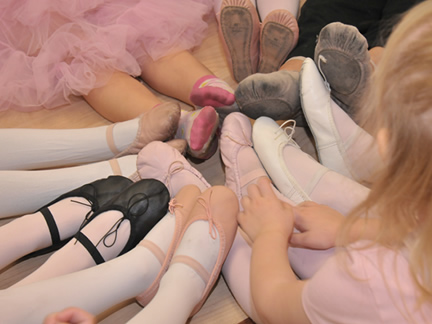
We had been talking about our families and children, and in particular, I’d been narrating the details of my epic, every-Saturday-morning drive across the city to my daughter’s ballet class (which I wrote about for Good Letters here.)
Yep, every Saturday morning, Scott Simon on the radio, I buckled her, pink tights and braided hair, into the car seat and drove off my leafy hill, down New York Avenue, past no-tell motels and abandoned warehouses, past the lobbying shops and monuments of downtown D.C., then back up the hills of embassies and leafy trees, to the bright-pink ballet studio where second-marriage fifty-something dads consoled tutu-wearing daughters having meltdowns worthy of Maria Callas.
“What exactly are you trying to prove?” asked another friend. “There are ballet studios that are closer, and just as good.”
So far away. In the nearly eight years I have lived in Prince George’s County, Maryland, that’s the phrase I’ve probably heard more than any other, starting from before we even moved. Never mind that the community where I live is barely a mile from the District of Columbia line.
By contrast, the fabled Tyson’s Corner Mall, which many people think might as well be an extension of the city—can be a two-hour drive to the Capitol in traffic.
It did not take me long to figure out that so far away was really coded language for a number of perceived defects.
In the minds of those on the glitzy western crescent of the city (both Virginia and Maryland), Prince George’s County is where the bad public schools are—never mind that Google co-founder Sergey Brin went to Eleanor Roosevelt High School in Greenbelt, and I have any number of educator friends in the system who can attest otherwise.
But it definitely is the place where the cheap real estate is, although I know how ridiculous it sounds in the rest of the country to call a 1600 square-foot house that costs $300,000 cheap. The same place might be $550,000 on the other side of town.
Ultimately, the coded language refers more than anything else to markers of race and class. Prince George’s County’s population is sixty-five percent African-American.
It is, in fact, the wealthiest majority-African-American county in the United States, and if you drive out past the cheap real estate neighborhoods where the public defenders, union organizers, and nonprofit employees like me live, you can find mini-mansions as grand as anything out in Virginia.
When the reality of digital fraud exploded everywhere, it was our side of town where you had to put your zip code in first at the gas pump and our arteries into the city where the most traffic-cameras were installed. The local public imagination sometimes refers to Prince George’s County as Washington, D.C.’s “Ward Nine,” referring to the two poorest neighborhoods in the city, Wards Seven and Eight.
I am a white woman from the Mississippi Delta, so I have long familiarity with the legacies of racial strife and inequity. But it’s only since living here that the burdens of those cultural assumptions have fallen on me, too, along with the higher costs of car insurance.
It’s the casual disdain that smarts, and from unexpected quarters as well. Another friend (a man of impeccable liberal leanings, who was a major staffer for a Congressional Democrat) once dismissed the whole county as once having been “run by the Hell’s Angels, and now by the black version of the same.”
This used to be—and here and there, you can still observe traces—a redneck county. (For an exploration of all these dynamics, read Eddie Dean’s landmark and magnificent 1998 article for the Washington City Paper, “A Brief History of White People in Southeast.)
More than anything, though, Prince George’s is home now, and a home I love: Little brick bungalows, old trees, and a landscape that has not been mowed into concrete and big-box submission like the wealthier suburbs. I love the lonely whistle of the freight trains at night, and the old 1950s liquor stores. I love the neighbors who will let me know if my child is down the street and misbehaving.
This is, you see, a neighborhood where all kinds of people, not just nannies, are home during the day.
I’m happy to be a minority here, and I’m just as happy being part of the variegated cultural project that the county is becoming, with intermarriages and families of all kinds.
But that’s also the key, I think, to why I will keep commuting for various purposes to elsewhere: I like the ballet studio better, for sure, but it’s also true that those folks across town, the ones who don’t even know where Prince George’s County is, need to see me.
Perhaps this is my version of the “struggle for recognition” that Alexandre Kojeve noted in his Introduction to the Reading of Hegel. (And Professor David Mikics, did you ever in your life think that Kojeve would be mustered to make an argument about class and kiddie ballet? Ah, such are the uses of a liberal arts education.)
No matter: There’s a crab night at the local American Legion next Saturday night. All you can eat crabs, and beer. I need to make sure I buy my tickets. Right after I sign up my daughter for the next semester of ballet, with the fifty-something senior partner dads, at the studio all the way across town.
Previous Post

October 16, 2012
The Poetics of Painting: Part Two
Next Post
October 18, 2012 The Three Deadliest Words in the World: It’s a Girl
Browse Our Archives
Select a Category A. G. Harmon Alissa Wilkinson Allison Backous Art Authors Brad Fruhauff Bradford Winters Bryan Bliss Caroline Langston Chad Thomas Johnston Chris Hoke Christiana N. Peterson Culture D.G. Myers D.L. Mayfield Daniel Bowman Jr. David Griffith Elizabeth Duffy Faith Film Greg Wolfe Guest Contributor Interview Jan Vallone Jeffrey Overstreet Jessica Eddings-Roeser Jessica Mesman Griffith Kelly Foster Lindsey Crittenden Morgan Meis music Natalie Vestin Nick Olson Peggy Rosenthal Personal Reflection Poetry Friday Reflection Relationships Review Richard Chess Richard Cole Sara Zarr Shannon Huffman Polson Sonya Bilocerkowycz Tania Runyan Tony Woodlief Topical Categories Uncategorized Vic Sizemore Writing
Select a Month October 2018 September 2018 August 2018 July 2018 June 2018 May 2018 April 2018 March 2018 February 2018 January 2018 December 2017 November 2017 October 2017 September 2017 August 2017 July 2017 June 2017 May 2017 April 2017 March 2017 February 2017 January 2017 December 2016 November 2016 October 2016 September 2016 August 2016 July 2016 June 2016 May 2016 April 2016 March 2016 February 2016 January 2016 December 2015 November 2015 October 2015 September 2015 August 2015 July 2015 June 2015 May 2015 April 2015 March 2015 February 2015 January 2015 December 2014 November 2014 October 2014 September 2014 August 2014 July 2014 June 2014 May 2014 April 2014 March 2014 February 2014 January 2014 December 2013 November 2013 October 2013 September 2013 August 2013 July 2013 June 2013 May 2013 April 2013 March 2013 February 2013 January 2013 December 2012 November 2012 October 2012 September 2012 August 2012 July 2012 June 2012 May 2012 February 2008
Follow Us!
TAKE THE
Religious Wisdom Quiz
Which Christian denomination is known for the "Book of Common Prayer"?
Select your answer to see how you score.
Anglican Presbyterian Lutheran Baptist
Related posts from Good Letters




TRENDING AT PATHEOS Catholic

Rejecting Doom: Christian Hope And Human Action
Christianity is a religion of hope. We are to have hope and...

It’s What Comes From Within Which Matters
One of the most difficult things for us to understand is why...

Why I Choose the Eucharist Over the Sermon
Choose the Eucharist, Not the Sermon What are we supposed to get...

5 Design Elements Found in Spiritually Rooted Homes
Putting Spirituality Into Home Decor Our homes are more than our living...

Credo: A Story of God Told with the...
About 10 years ago, I began to imagine a personal "Credo" that...

The Anatomy of Divine Revelation in Catholic Thought
The claim that God has made Himself known to human beings is...
view all Catholic blogs
Ad-Free & Subscriber Log-In Subscription Support
- About Us
- 2026 Calendar
- Videos
- Podcasts
- Library of World Religions
- Faith In Media Tracker
- Advertise With Us
- Write for Us
- Privacy Policy
- Terms of Service
- Do Not Sell My Data
- Contact Us
- Radiant Digital
- Manage Newsletter Subscriptions
- Unsubscribe From Notifications
- Sitemap
Copyright 2008-2026, Patheos. All rights reserved.
Subscription Support Ad-Free & Subscriber Log-In
Follow Patheos