
BuddhistCatholicContemplativeEvangelicalGeneral ChristianHinduJewishLatter-day SaintMuslimNew VisionsProgressive Christian
Beliefs
- Buddhist
- Catholic
- Contemplative
- Evangelical
- General Christian
- Hindu
- Jewish
- Latter-day Saint
- More Voices
- Muslim
- New Visions
- Pagan
- Progressive Christian
Topics
- Religion News
- Food and Religion
- Sports and Religion
- Religious Art
- Religious Music and Entertainment
- Religious Events
- History and Religion
- Style and Religion
- Politics and Religion
- Women in Religion
- Recreation Outdoors and Religion
- Business Finance and Religion
- Careers Workplace and Religion
- Education and Religion
- Family Parenting and Religion
- Health Fitness and Religion
- Home and Religion
- Relationships and Religion
- Technology and Religion
- Travel and Religion
Columnists
- Buddhist Columnists
- Business Finance and Religion Columnists
- Careers Workplace and Religion Columnists
- Catholic Columnists
- Contemplative Columnists
- Education and Religion Columnists
- Evangelists Columnists
- Family Parenting and Religion Columnists
- General Christian Columnists
- Health Fitness and Religion Columnists
- Hindu Columnists
- History and Religion Columnists
- Home and Religion Columnists
- Jewish Columnists
- More Voices Columnists
- Latter Day Columnists
- Muslim Columnists
- New Visions Columnists
- Nonreligious Columnists
- Pagan Columnists
- Politics and Religion Columnists
- Progressive Columnists
- Recreation Outdoors and Religion Columnists
- Relationships and Religion Columnists
- Religion News Columnists
- Religious Art Columnists
- Religious Events Columnists
- Religious Music and Entertainment Columnists
- Sports and Religion Columnists
- Style and Religion Columnists
- Technology and Religion Columnists
- Travel and Religion Columnists
- Women in Religion Columnists
Resource Library
- 2026 Calendar
- Library of World Religions
- The 100 Most Holy Places on Earth
- Patheos Answers
- Podcasts
- Videos
- Faith Leaders Database
- Anglican Episcopalian
- Bahai
- Baptist
- Buddhism
- Christianity
- Confucianism
- Eastern Orthodoxy
- Hinduism
- Holiness and Pentecostal
- ISKCON
- Islam
- Judaism
- Lutheran
- Methodist
- The Church of Jesus Christ of Latter-day Saints
- New Age
- Paganism
- Presbytarian and Reformed
- Protestantism
- Religion Behind the Scenes
- Roman Catholic
- Scientology
- Shia Islam
- Sikhism
- Sufism
- Sunni Islam
- Taoism
- Zen
- See all religions
Research Tools
 Ad-Free & Subscriber Log-In Subscription Support
Ad-Free & Subscriber Log-In Subscription Support
Follow Patheos 

- Trending:
- Forgiveness
- |
- Marriage
- |
- Consciousness
- |
- Death Penalty
- |
- Election
- |
- Halloween
 Good Letters
-
Contributors
- Home
- Catholic
- An Original, Revised Torah
An Original, Revised Torah
Last updated on: October 9, 2012 at 11:21 pm by Richard Chess
An Original, Revised Torah 2012-10-09T23:21:56-07:00 Richard Chess
Patheos Explore the world's faith through different perspectives on religion and spirituality! Patheos has the views of the prevalent religions and spiritualities of the world.
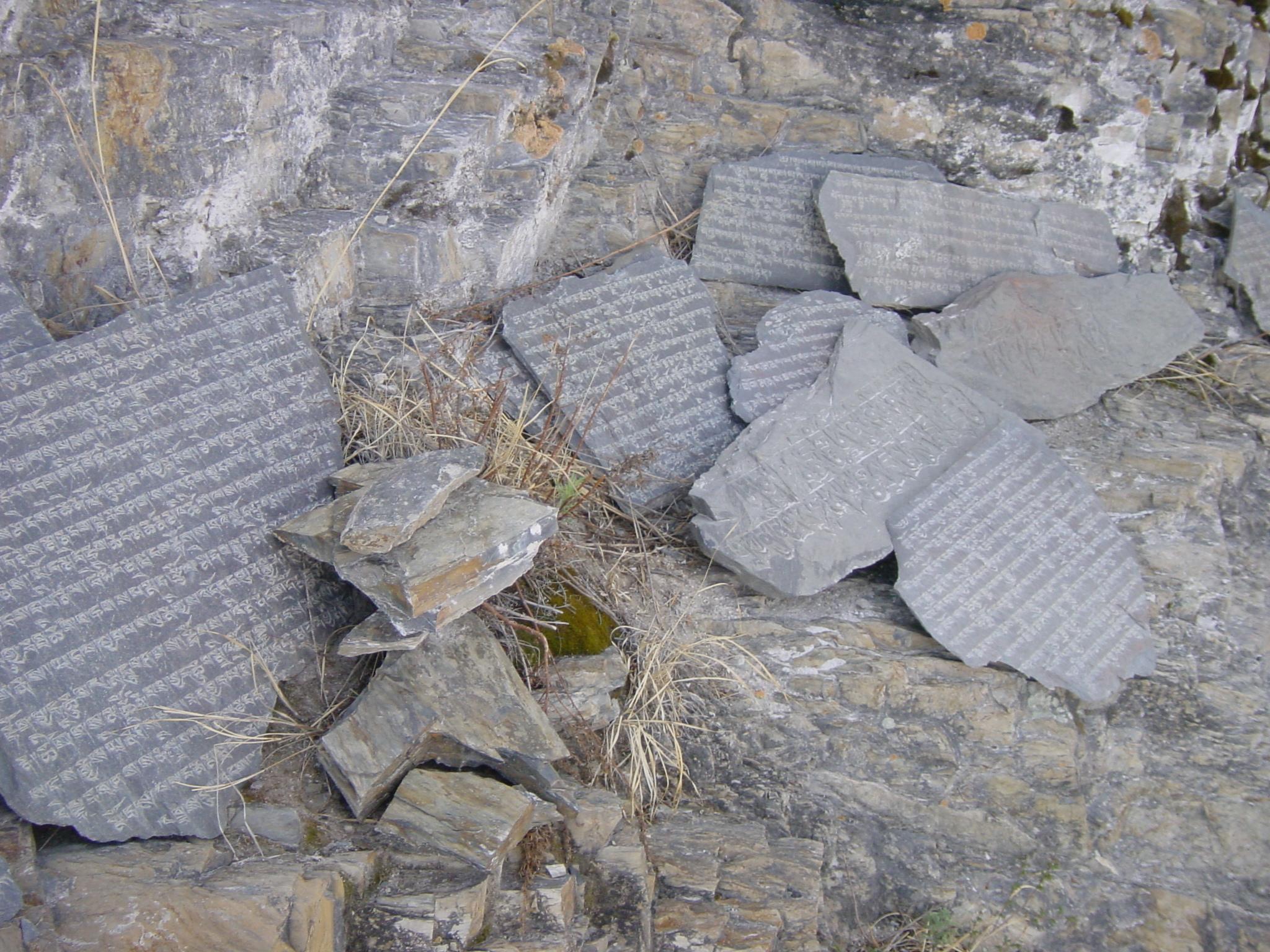 The tablets were God’s work, and the writing was God’s writing, incised upon the tablets. —Exodus 32:16
And the Lord gave me the two tablets of stone inscribed by the finger of God, with the exact words that the Lord had addressed to you on the mountain out of the fire on the day of the Assembly. —Deuteronomy 9:10
*Thereupon the Lord said to me, “Carve out two tablets of stone like the first, and come up to Me on the mountain; and make an ark of wood. I will inscribe on the tablets the commandments that were on the first tablets that you smashed, and you shall deposit them in the ark.” —*Deuteronomy 10:1 – 2
God hewed the first set of tablets and wrote directly on them. Moses carved the second set, and then God, with God’s finger, inscribed the exact words that God said “on the mountain out of the fire on the day of the Assembly.”
A replacement, a duplicate, though not exactly, from original to replica, from presence, flashing and fleeting, to preservation. From “from” to “to” and the distance between.
The rabbis know distance well, an obstacle blocking our way back (to Sinai, to revelation). They also know the reaction to such an obstacle: intense longing to get back to where we once belonged, even though we know we can’t.
This summer I listened to Joni Mitchell’s Ladies of the Canyon on my Prius’s sound system into which my smartphone is plugged. The past plugged into the present.
Joni Mitchell (Ladies and Blue), Tim Buckley (Happy Sad), Randy Newman (12 Songs), and Neil Young (After the Gold Rush) are the perfect diet for adolescent loneliness and longing. So why am I listening to them in late-middle age? Am I trying to get back to the early hours of looking for love (romantic, sexual, spiritual: I couldn’t distinguish among them then)?
Imagination, not music, not memory, and certainly not anti-depressants, is what the rabbis prescribe to cure homesickness for the past. They command me to use imagination to transport myself all the way back to Mt. Sinai where God is speaking, right now, to the more than one million (counting women and children) freed slaves.
I obey. I am transported. I tremble in awe at the foot of Sinai among this, my people. I hear the exact words*. This* morning.
This morning I sit quietly at my desk, more than 6,000 miles from Sinai, more than 3,000 years after the revelation. I hear muffled Spanish-speaking voices, painters working outside the study in which I try to concentrate on the voice (my voice? but if not mine, whose?) revealing, haltingly, word by word this meditation on the phrase “two tablets of stone like the first.”
The shattered pieces of the original tablets, the first draft, are gone now.
How sad, for had the tablets survived, the rabbis write, “every sorrow and calamity would have disappeared from the earth, and the world would have experienced freedom from the Angel of Death.”
So the rabbis imagine, so their story comes down to me through the work of the great anthologist of Jewish legend and lore, Howard Schwartz.
The second set of tablets, the revised work, that’s all we get to carry home.
Creation, destruction, revision: the creative process, a process the Torah represents again and again.
For instance, Eden is a perfect place to begin, until it isn’t. Take it away and begin again east of Eden. The generations leading from Adam to Noah: a great story of an unrighteous people—until it isn’t. Taken away by flood, the great erasure. Begin again.
Jacob? He doesn’t become our namesake until he’s wounded (revised). Then, only then, does he become Israel. Joseph? A father’s favorite, a spoiled son . . . until he’s buried and rises from the grave into his new (revised) identity, Vizier of Egypt, the only one with the power to save his family, his people from vanishing.
First thought best thought? Nope. Revise, revise, revise, the Torah tells us, chapter after chapter, verse after verse.
Yet, it knows us deeply and well, we who seek, who insist on, who will settle for nothing less than the original. Hadeish yameinu k’kedem, renew our days as before, we sing to the Torah scroll, now returned to the ark after the public chanting has concluded, moments before the ark is closed.
How we try to hold onto, preserve, fix permanently in place, some place, what came first, as if it were sacred.
We look at each other now, my first love and I, from a distance of thirty-six years, through the lens of an occasional e-mail, text, phone call. In my life, she is the author of Eat a Peach (The Allman Brothers) and The Revolution Will Not Be Televised (Gil Scott-Heron).
Did she break me? Did I break her? Do we imagine returning to the hour before the shattering? Hadeish yameniu k’kedem: renew our days. Is that the fantasy, my fantasy, hers, as our days recede further into the past?
I have revised my life, and it is good, very good.
The Torah knows, deeply and well, our nostalgia for home and the past. It gives it to us, repeatedly. And it takes it away from us, time and time again.
The authors of Torah do everything they can to model Torah as process, not product. Do not cling to it, they warn us, do not hold fast to every letter, in the exact order, in which it was originally revealed.
That’s the challenge, the steep challenge posed to us by Torah: To receive it and make something new of it. Even if that requires an action as bold as Moses’s.
Smashing it.
Previous Post

October 8, 2012
"Phineas and Ferb" versus "SpongeBob Squarepants"
Next Post
October 10, 2012 Make Your Life an Altar
Browse Our Archives
Select a Category A. G. Harmon Alissa Wilkinson Allison Backous Art Authors Brad Fruhauff Bradford Winters Bryan Bliss Caroline Langston Chad Thomas Johnston Chris Hoke Christiana N. Peterson Culture D.G. Myers D.L. Mayfield Daniel Bowman Jr. David Griffith Elizabeth Duffy Faith Film Greg Wolfe Guest Contributor Interview Jan Vallone Jeffrey Overstreet Jessica Eddings-Roeser Jessica Mesman Griffith Kelly Foster Lindsey Crittenden Morgan Meis music Natalie Vestin Nick Olson Peggy Rosenthal Personal Reflection Poetry Friday Reflection Relationships Review Richard Chess Richard Cole Sara Zarr Shannon Huffman Polson Sonya Bilocerkowycz Tania Runyan Tony Woodlief Topical Categories Uncategorized Vic Sizemore Writing
Select a Month October 2018 September 2018 August 2018 July 2018 June 2018 May 2018 April 2018 March 2018 February 2018 January 2018 December 2017 November 2017 October 2017 September 2017 August 2017 July 2017 June 2017 May 2017 April 2017 March 2017 February 2017 January 2017 December 2016 November 2016 October 2016 September 2016 August 2016 July 2016 June 2016 May 2016 April 2016 March 2016 February 2016 January 2016 December 2015 November 2015 October 2015 September 2015 August 2015 July 2015 June 2015 May 2015 April 2015 March 2015 February 2015 January 2015 December 2014 November 2014 October 2014 September 2014 August 2014 July 2014 June 2014 May 2014 April 2014 March 2014 February 2014 January 2014 December 2013 November 2013 October 2013 September 2013 August 2013 July 2013 June 2013 May 2013 April 2013 March 2013 February 2013 January 2013 December 2012 November 2012 October 2012 September 2012 August 2012 July 2012 June 2012 May 2012 February 2008
Follow Us!
TAKE THE
Religious Wisdom Quiz
But the fruit of the Spirit is love, joy, peace, forbearance, kindness, goodness, ____ and self-control.
Select your answer to see how you score.
Charity Gratitude Faithfulness Hope
Related posts from Good Letters

Leonard Cohen’s Holy and Broken Hallelujah

Ready or Not for the Days of Awe


TRENDING AT PATHEOS Catholic

Rejecting Doom: Christian Hope And Human Action
Christianity is a religion of hope. We are to have hope and...

It’s What Comes From Within Which Matters
One of the most difficult things for us to understand is why...

Why I Choose the Eucharist Over the Sermon
Choose the Eucharist, Not the Sermon What are we supposed to get...

5 Design Elements Found in Spiritually Rooted Homes
Putting Spirituality Into Home Decor Our homes are more than our living...

Credo: A Story of God Told with the...
About 10 years ago, I began to imagine a personal "Credo" that...

The Anatomy of Divine Revelation in Catholic Thought
The claim that God has made Himself known to human beings is...
view all Catholic blogs
Ad-Free & Subscriber Log-In Subscription Support
- About Us
- 2026 Calendar
- Videos
- Podcasts
- Library of World Religions
- Faith In Media Tracker
- Advertise With Us
- Write for Us
- Privacy Policy
- Terms of Service
- Do Not Sell My Data
- Contact Us
- Radiant Digital
- Manage Newsletter Subscriptions
- Unsubscribe From Notifications
- Sitemap
Copyright 2008-2026, Patheos. All rights reserved.
Subscription Support Ad-Free & Subscriber Log-In
Follow Patheos