
BuddhistCatholicContemplativeEvangelicalGeneral ChristianHinduJewishLatter-day SaintMuslimNew VisionsProgressive Christian
Beliefs
- Buddhist
- Catholic
- Contemplative
- Evangelical
- General Christian
- Hindu
- Jewish
- Latter-day Saint
- More Voices
- Muslim
- New Visions
- Pagan
- Progressive Christian
Topics
- Religion News
- Food and Religion
- Sports and Religion
- Religious Art
- Religious Music and Entertainment
- Religious Events
- History and Religion
- Style and Religion
- Politics and Religion
- Women in Religion
- Recreation Outdoors and Religion
- Business Finance and Religion
- Careers Workplace and Religion
- Education and Religion
- Family Parenting and Religion
- Health Fitness and Religion
- Home and Religion
- Relationships and Religion
- Technology and Religion
- Travel and Religion
Columnists
- Buddhist Columnists
- Business Finance and Religion Columnists
- Careers Workplace and Religion Columnists
- Catholic Columnists
- Contemplative Columnists
- Education and Religion Columnists
- Evangelists Columnists
- Family Parenting and Religion Columnists
- General Christian Columnists
- Health Fitness and Religion Columnists
- Hindu Columnists
- History and Religion Columnists
- Home and Religion Columnists
- Jewish Columnists
- More Voices Columnists
- Latter Day Columnists
- Muslim Columnists
- New Visions Columnists
- Nonreligious Columnists
- Pagan Columnists
- Politics and Religion Columnists
- Progressive Columnists
- Recreation Outdoors and Religion Columnists
- Relationships and Religion Columnists
- Religion News Columnists
- Religious Art Columnists
- Religious Events Columnists
- Religious Music and Entertainment Columnists
- Sports and Religion Columnists
- Style and Religion Columnists
- Technology and Religion Columnists
- Travel and Religion Columnists
- Women in Religion Columnists
Resource Library
- 2026 Calendar
- Library of World Religions
- The 100 Most Holy Places on Earth
- Patheos Answers
- Podcasts
- Videos
- Faith Leaders Database
- Anglican Episcopalian
- Bahai
- Baptist
- Buddhism
- Christianity
- Confucianism
- Eastern Orthodoxy
- Hinduism
- Holiness and Pentecostal
- ISKCON
- Islam
- Judaism
- Lutheran
- Methodist
- The Church of Jesus Christ of Latter-day Saints
- New Age
- Paganism
- Presbytarian and Reformed
- Protestantism
- Religion Behind the Scenes
- Roman Catholic
- Scientology
- Shia Islam
- Sikhism
- Sufism
- Sunni Islam
- Taoism
- Zen
- See all religions
Research Tools
 Ad-Free & Subscriber Log-In Subscription Support
Ad-Free & Subscriber Log-In Subscription Support
Follow Patheos 

- Trending:
- Forgiveness
- |
- Marriage
- |
- Consciousness
- |
- Death Penalty
- |
- Election
- |
- Halloween
 Good Letters
-
Contributors
- Home
- Catholic
- We Should Raze But Not Erase Evil
We Should Raze But Not Erase Evil
Last updated on: September 27, 2012 at 11:11 pm by Tony Woodlief
We Should Raze But Not Erase Evil 2012-09-27T23:11:24-07:00 Tony Woodlief
Patheos Explore the world's faith through different perspectives on religion and spirituality! Patheos has the views of the prevalent religions and spiritualities of the world.
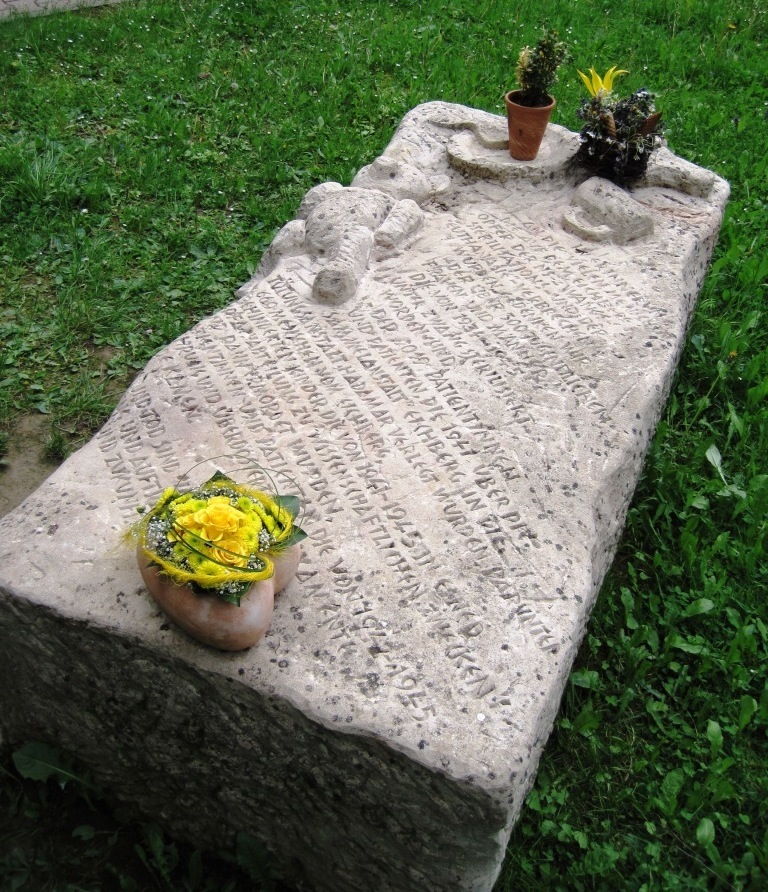 The arrival of so many small children at the tiny train station at Hattenheim could not have gone unnoticed . . .
These attempts to shed light on the atrocities committed at the Eichberg may have done little to change the regional population’s lack of interest in this topic, however.
—Lutz Kaelber
“You ever eat grass-fed beef?” This from a biker in Starbucks, eavesdropping on my conversation with a friend.
“Yeah,” I said. “It’s good.”
He curled his lip. “Tastes like grass.”
“You have to cook it right,” I told him.
He grunted disapproval. A confederate flag was stitched to his sleeve and he wore a Penn State cap. I suppose that willingness to display the former is evidence of a certain inurement to public opinion that enables one to impart lifestyle instruction to strangers while wearing the latter.
In the week after former Penn State assistant football coach Jerry Sandusky was convicted of forty-five counts of child sexual abuse, analysts reported sales of Penn State merchandise were forty percent lower than normal. That was still sixty percent too high for me.
I’m sure sales will creep higher as people forget about what Jerry Sandusky did there. The forgetting can’t happen soon enough, according to sports writer Adam Jacobi. “The school just needs a continuation of the usual,” he writes.
A continuation of the usual. I don’t know how much more this heart-sickened world can bear to continue the usual.
Instead of continuing the usual, I propose that Pennsylvania authorities raze every building where Sandusky raped a child. Afterward, they should raze every building where Penn State officials—including the university’s president, head of university police, athletic director, and revered football coach—agreed to ignore his predation.
Finally, after the demolition crews have taken a break, they should raze Beaver Stadium, because we all know that if Jerry Sandusky had been assistant chemistry professor rather than assistant football coach, he would have gone straight to jail years earlier.
It’s not uncommon to destroy buildings where great evil has occurred. After pediatrician Earl Bradley was convicted on 103 counts of raping or molesting children in Lewes, Delaware, his town demolished the site where he preyed on them. Likewise, a community group in Milwaukee bought the apartment building where Jeffrey Dahmer desecrated so many bodies, and tore it down.
The purgative instinct doesn’t always carry the day. People in the low-income Brownsville, Texas neighborhood where John Allen Rubio and Angela Camacho beheaded their three small children don’t have the clout to combat preservationists enamored with the murder site’s architecture, but they’ve made clear they want it destroyed.
Perhaps we tear down structures that have hidden evil because, as French historian Pierre Nora says, “Memory attaches itself to sites, whereas history attaches itself to events.”
We tear down sites where evil was done as one might sever a rotted limb and cauterize the stump. Sometimes we mark the place, a signpost for future generations, as the Cambodians did with the Tuol Sleng school, site of Khmer Rouge tortures, as Germans did at Auschwitz, as Rwandans did at Murambi where gutless French soldiers let 45,000 Tutsis be hacked to death and then built a volleyball court over their graves.
The instinct of those who feel complicit in evil is either to confess it, or to hide it.
Consider the Eichberg and Kalmenhof hospitals, where German doctors and nurses murdered hundreds of “defective” children and babies during the second world war, in what they called “special children’s wards.” Sociologist Lutz Kaelber found that townspeople quickly wrote the crimes out of their history, such that in 1978 a director at Kalmenhof could earnestly declare that nobody was killed by Nazis in his facility.
Cultural critic Norman Klein writes: “Forgetting is a twin: its tandem effect is best called ‘simultaneous distraction,’ the instant when one memory defoliates another.”
We forget best, in other words, when we have something to displace the memories we associate with a site. Like that French volleyball court.
Like football, pep rallies, homecomings, and graduations. Like a thousand distractions that will help Penn State boosters forget that an utterly corrupt administration—from the president to the janitors—enabled a serial child rapist because of an insatiable hunger for football victories.
In this light, the university’s removal of Joe Paterno’s statue doesn’t sound punitive. It sounds like people bent on forgetting.
I wonder if Penn State will yield what Kaelber calls “memory agents.” These are people like two pastors at Eichberg, who started giving visitors and patients tours in 2005, because the small memorial to the 476 children murdered there was obscured.
Similarly, for fifteen years after the war, an unknown Kalmenhof nurse led groups of schoolchildren to the grounds where bodies of at least 369 executed children had been chucked in the dirt.
“Remembering was arduous,” Klein writes of the task facing classical scholars. And it still is. We must be deliberate about embedding memory in our surroundings.
Sometimes, when a great, shameful evil has been allowed to take root, the best reminder is a hole, a vacant place. That emptiness, like a cauterized wound, can serve as a reminder to all who see it that something rotten once grew there. Something rotten we allowed to grow so deep that we had to cut it away.
Note: Lutz Kaelber is quoted from the article “Child Murder in Nazi Germany: The Memory of Nazi Medical Crimes and Commemoration of ‘Children’s Euthanasia’ Victims at Two Facilities (Eichberg, Kalmenhof).”
Previous Post

September 26, 2012
My Mother's Lullabies
Next Post
September 30, 2012 Teaching and Seeing
Browse Our Archives
Select a Category A. G. Harmon Alissa Wilkinson Allison Backous Art Authors Brad Fruhauff Bradford Winters Bryan Bliss Caroline Langston Chad Thomas Johnston Chris Hoke Christiana N. Peterson Culture D.G. Myers D.L. Mayfield Daniel Bowman Jr. David Griffith Elizabeth Duffy Faith Film Greg Wolfe Guest Contributor Interview Jan Vallone Jeffrey Overstreet Jessica Eddings-Roeser Jessica Mesman Griffith Kelly Foster Lindsey Crittenden Morgan Meis music Natalie Vestin Nick Olson Peggy Rosenthal Personal Reflection Poetry Friday Reflection Relationships Review Richard Chess Richard Cole Sara Zarr Shannon Huffman Polson Sonya Bilocerkowycz Tania Runyan Tony Woodlief Topical Categories Uncategorized Vic Sizemore Writing
Select a Month October 2018 September 2018 August 2018 July 2018 June 2018 May 2018 April 2018 March 2018 February 2018 January 2018 December 2017 November 2017 October 2017 September 2017 August 2017 July 2017 June 2017 May 2017 April 2017 March 2017 February 2017 January 2017 December 2016 November 2016 October 2016 September 2016 August 2016 July 2016 June 2016 May 2016 April 2016 March 2016 February 2016 January 2016 December 2015 November 2015 October 2015 September 2015 August 2015 July 2015 June 2015 May 2015 April 2015 March 2015 February 2015 January 2015 December 2014 November 2014 October 2014 September 2014 August 2014 July 2014 June 2014 May 2014 April 2014 March 2014 February 2014 January 2014 December 2013 November 2013 October 2013 September 2013 August 2013 July 2013 June 2013 May 2013 April 2013 March 2013 February 2013 January 2013 December 2012 November 2012 October 2012 September 2012 August 2012 July 2012 June 2012 May 2012 February 2008
Follow Us!
TAKE THE
Religious Wisdom Quiz
In 2 Timothy, what does Paul say about everyone who wants to live a godly life?
Select your answer to see how you score.
They will face trials They will be blessed They will be persecuted They will receive a crown
Related posts from Good Letters



Recently Soft Hearts and Thin Skin

The Life-Changing Magic of Picking Nits
TRENDING AT PATHEOS Catholic

The Parable Of The Sower And The Word...
One of Christ’s most famous parables is that of the sower who...

Rejecting Doom: Christian Hope And Human Action
Christianity is a religion of hope. We are to have hope and...

Why I Choose the Eucharist Over the Sermon
Choose the Eucharist, Not the Sermon What are we supposed to get...

5 Design Elements Found in Spiritually Rooted Homes
Putting Spirituality Into Home Decor Our homes are more than our living...

Credo: A Story of God Told with the...
About 10 years ago, I began to imagine a personal "Credo" that...

The Anatomy of Divine Revelation in Catholic Thought
The claim that God has made Himself known to human beings is...
view all Catholic blogs
Ad-Free & Subscriber Log-In Subscription Support
- About Us
- 2026 Calendar
- Videos
- Podcasts
- Library of World Religions
- Faith In Media Tracker
- Advertise With Us
- Write for Us
- Privacy Policy
- Terms of Service
- Do Not Sell My Data
- Contact Us
- Radiant Digital
- Manage Newsletter Subscriptions
- Unsubscribe From Notifications
- Sitemap
Copyright 2008-2026, Patheos. All rights reserved.
Subscription Support Ad-Free & Subscriber Log-In
Follow Patheos