
BuddhistCatholicContemplativeEvangelicalGeneral ChristianHinduJewishLatter-day SaintMuslimNew VisionsProgressive Christian
Beliefs
- Buddhist
- Catholic
- Contemplative
- Evangelical
- General Christian
- Hindu
- Jewish
- Latter-day Saint
- More Voices
- Muslim
- New Visions
- Pagan
- Progressive Christian
Topics
- Religion News
- Food and Religion
- Sports and Religion
- Religious Art
- Religious Music and Entertainment
- Religious Events
- History and Religion
- Style and Religion
- Politics and Religion
- Women in Religion
- Recreation Outdoors and Religion
- Business Finance and Religion
- Careers Workplace and Religion
- Education and Religion
- Family Parenting and Religion
- Health Fitness and Religion
- Home and Religion
- Relationships and Religion
- Technology and Religion
- Travel and Religion
Columnists
- Buddhist Columnists
- Business Finance and Religion Columnists
- Careers Workplace and Religion Columnists
- Catholic Columnists
- Contemplative Columnists
- Education and Religion Columnists
- Evangelists Columnists
- Family Parenting and Religion Columnists
- General Christian Columnists
- Health Fitness and Religion Columnists
- Hindu Columnists
- History and Religion Columnists
- Home and Religion Columnists
- Jewish Columnists
- More Voices Columnists
- Latter Day Columnists
- Muslim Columnists
- New Visions Columnists
- Nonreligious Columnists
- Pagan Columnists
- Politics and Religion Columnists
- Progressive Columnists
- Recreation Outdoors and Religion Columnists
- Relationships and Religion Columnists
- Religion News Columnists
- Religious Art Columnists
- Religious Events Columnists
- Religious Music and Entertainment Columnists
- Sports and Religion Columnists
- Style and Religion Columnists
- Technology and Religion Columnists
- Travel and Religion Columnists
- Women in Religion Columnists
Resource Library
- 2026 Calendar
- Library of World Religions
- The 100 Most Holy Places on Earth
- Patheos Answers
- Podcasts
- Videos
- Faith Leaders Database
- Anglican Episcopalian
- Bahai
- Baptist
- Buddhism
- Christianity
- Confucianism
- Eastern Orthodoxy
- Hinduism
- Holiness and Pentecostal
- ISKCON
- Islam
- Judaism
- Lutheran
- Methodist
- The Church of Jesus Christ of Latter-day Saints
- New Age
- Paganism
- Presbytarian and Reformed
- Protestantism
- Religion Behind the Scenes
- Roman Catholic
- Scientology
- Shia Islam
- Sikhism
- Sufism
- Sunni Islam
- Taoism
- Zen
- See all religions
Research Tools
 Ad-Free & Subscriber Log-In Subscription Support
Ad-Free & Subscriber Log-In Subscription Support
Follow Patheos 

- Trending:
- Forgiveness
- |
- Marriage
- |
- Consciousness
- |
- Death Penalty
- |
- Election
- |
- Halloween
 Good Letters
-
Contributors
- Home
- Catholic
- The Theological Imagination of David Foster Wallace, Part Two
The Theological Imagination of David Foster Wallace, Part Two
Last updated on: August 31, 2015 at 3:07 pm by David Griffith
The Theological Imagination of David Foster Wallace, Part Two 2015-08-31T15:07:54-07:00 David Griffith
Patheos Explore the world's faith through different perspectives on religion and spirituality! Patheos has the views of the prevalent religions and spiritualities of the world.
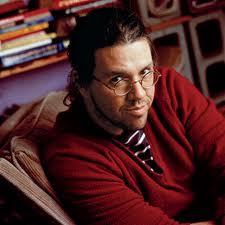 Continued from yesterday.
In his now infamous 2005 commencement speech at Kenyon College, David Foster Wallace tells a parable about two men, an atheist and a Christian, sitting in a bar in the Alaskan wilderness debating the existence of God. The two men interpret the world in two different ways, the believer thinking that his friend’s survival in a recent blizzard was the result of a half-hearted yet answered prayer, and the atheist believing that “all that was was two Eskimos that came along and showed me the way out.”
Wallace, raised by professors in university towns (Ithaca and then Champaign-Urbana) cautions the Kenyon students against applying too eagerly the relativistic liberal arts stance of simply allowing both men to be right because their beliefs are shaped by separate cultural forces and experiences.
Wallace says that it’s not that neither man is correct, it’s that both display “blind certainty, a close-mindedness that amounts to an imprisonment so total that the prisoner doesn’t even know he’s locked up.”
In other words, education is about freedom through self-knowledge, an interrogation of what we unthinkingly take to be true. Through self-knowledge we temper our arrogance and gain a real freedom that Wallace says allows us to “truly to care about other people and to sacrifice for them over and over in myriad petty, unsexy ways every day.”
Wallace goes on to boldly claim, “That is being educated, and understanding how to think. The alternative is unconsciousness, the default setting, the rat race, the constant gnawing sense of having had, and lost, some infinite thing.”
By framing Lane’s and Sheri’s predicament and Wallace’s Kenyon address in Christian terms, I’m not trying to claim Wallace for the Church, nor am I trying to jury-rig some causality between faith, or struggles with it, and literary excellence. But the facts are what they are.
Many of our finest, most enduring writers have written about spiritual struggle. Imagine the work of Hawthorne, Whitman, Twain, Flannery O’Connor, Updike, Cheever, etc. without theology (“reasoning or discussion concerning the Deity,” as Augustine put it) and without the arrogant American belief that we are the New Jerusalem, what Alfred Kazin calls that “high sense of himself so famous in the American character.”
Note that Wallace stood before the Kenyon class of 2005 and advised them to root out this paranoid arrogance brought on by the mere feeling of “having had, and lost, some infinite thing.”
This fear and arrogance also echoes in the chambers of Lane’s heart, a heart that he feels is slowly freezing, hardening against Sheri and against God.
The thing Sheri wants is Lane to say that he loves her. Lane knows this, but is filled with fear and dread that he does not love her. Wallace writes at the conclusion of the story:
Why is he so sure he doesn’t love her? Why is one kind of love any different? What if he has no earthly idea what love is? What would even Jesus do? . . . What if he was just afraid, if the truth was no more than this, and if what to pray for was not even love but simple courage, to meet both her eyes as she says it and trust his heart.
To my mind, this is one of the most moving passages in DFW’s work. Of course, there is some question as to whether this ending bears any resemblance to Wallace’s own thoughts on the truth. So, without assigning them to him, I do feel confident in saying that Wallace believed that fear stands in the way of embracing truth. And while it is easy to diagnose, it is hard to cure.
I’d be willing to wager that a similar fear plagued David Foster Wallace throughout his life. Was it his undoing? No, that fear alone wouldn’t suffice, but fear of the truth, of coming down on one side or the other, “choosing what to think about,” what to commit oneself to is some days a scary impossible decision, especially if your mind is as filigreed as Wallace’s.
Wallace said that religion gives you something to focus on outside of yourself, an object, a cause; what Berrigan might call the constant object of our intellects, the thing that we are constantly struggling against. Berrigan suggests we are drawn to writers like Wallace by the “vitality of the struggle . . . the power and honesty with which its terms are illuminated.”
Berrigan sees this struggle as a “vocation to the world of reality,” a vocation modeled after Jesus’ relationship to mankind, as teacher who helps the unseeing disciples reconcile the real, earthly things of this world, with the promise of transcendence.
Those who come to embrace this vocation—artists, priests, and ministers, certain scientists, and philosophers—do so not because they feel certain that they know the correct balance between the earthly and the transcendent, nor necessarily because they doubt it’s possible, but because they have a sense that it is in the space between these two poles that we shuttle; it is where we spend the vast majority of our time, and so it must be there that the answers will be found.
Though Wallace lacked any certainty as to what is next, if anything, his work unequivocally asserts that pain and suffering (psychological as well as physical) is a constant amplifier of the theological imagination. We become like Job and so many other otherwise good people who find themselves asking “Lord, why me?”
Given accounts of just how acute Wallace’s illness was and how many pages he composed in his relatively short life, he labored heroically at his vocation, and though his suicide has left us unsettled, his work points in the direction of a culprit: A culture that values the virtual rather than the actual and appearance over substance. A culture so addicted to being entertained that it is claiming our ability to be alone with ourselves.
Previous Post

September 20, 2012
The Theological Imagination of David Foster Wallace, Part One
Next Post
September 23, 2012 A Story About Beauty
Browse Our Archives
Select a Category A. G. Harmon Alissa Wilkinson Allison Backous Art Authors Brad Fruhauff Bradford Winters Bryan Bliss Caroline Langston Chad Thomas Johnston Chris Hoke Christiana N. Peterson Culture D.G. Myers D.L. Mayfield Daniel Bowman Jr. David Griffith Elizabeth Duffy Faith Film Greg Wolfe Guest Contributor Interview Jan Vallone Jeffrey Overstreet Jessica Eddings-Roeser Jessica Mesman Griffith Kelly Foster Lindsey Crittenden Morgan Meis music Natalie Vestin Nick Olson Peggy Rosenthal Personal Reflection Poetry Friday Reflection Relationships Review Richard Chess Richard Cole Sara Zarr Shannon Huffman Polson Sonya Bilocerkowycz Tania Runyan Tony Woodlief Topical Categories Uncategorized Vic Sizemore Writing
Select a Month October 2018 September 2018 August 2018 July 2018 June 2018 May 2018 April 2018 March 2018 February 2018 January 2018 December 2017 November 2017 October 2017 September 2017 August 2017 July 2017 June 2017 May 2017 April 2017 March 2017 February 2017 January 2017 December 2016 November 2016 October 2016 September 2016 August 2016 July 2016 June 2016 May 2016 April 2016 March 2016 February 2016 January 2016 December 2015 November 2015 October 2015 September 2015 August 2015 July 2015 June 2015 May 2015 April 2015 March 2015 February 2015 January 2015 December 2014 November 2014 October 2014 September 2014 August 2014 July 2014 June 2014 May 2014 April 2014 March 2014 February 2014 January 2014 December 2013 November 2013 October 2013 September 2013 August 2013 July 2013 June 2013 May 2013 April 2013 March 2013 February 2013 January 2013 December 2012 November 2012 October 2012 September 2012 August 2012 July 2012 June 2012 May 2012 February 2008
Follow Us!
TAKE THE
Religious Wisdom Quiz
Who said: "Yet I hold this against you: You have forsaken the love you had at first"?
Select your answer to see how you score.
The Spirit Jesus (to the church in Ephesus) John An angel
Related posts from Good Letters

On Writing Odes: Taking Time to Celebrate


Leonard Cohen’s Holy and Broken Hallelujah

Ready or Not for the Days of Awe
TRENDING AT PATHEOS Catholic

Creation, Preservation, and Teleology in Catholic Theology
As I write this, it is very early Monday morning. Like millions...

The Parable Of The Sower And The Word...
One of Christ’s most famous parables is that of the sower who...

Rejecting Doom: Christian Hope And Human Action
Christianity is a religion of hope. We are to have hope and...

Why I Choose the Eucharist Over the Sermon
Choose the Eucharist, Not the Sermon What are we supposed to get...

5 Design Elements Found in Spiritually Rooted Homes
Putting Spirituality Into Home Decor Our homes are more than our living...

Credo: A Story of God Told with the...
About 10 years ago, I began to imagine a personal "Credo" that...
view all Catholic blogs
Ad-Free & Subscriber Log-In Subscription Support
- About Us
- 2026 Calendar
- Videos
- Podcasts
- Library of World Religions
- Faith In Media Tracker
- Advertise With Us
- Write for Us
- Privacy Policy
- Terms of Service
- Do Not Sell My Data
- Contact Us
- Radiant Digital
- Manage Newsletter Subscriptions
- Unsubscribe From Notifications
- Sitemap
Copyright 2008-2026, Patheos. All rights reserved.
Subscription Support Ad-Free & Subscriber Log-In
Follow Patheos