
BuddhistCatholicContemplativeEvangelicalGeneral ChristianHinduJewishLatter-day SaintMuslimNew VisionsProgressive Christian
Beliefs
- Buddhist
- Catholic
- Contemplative
- Evangelical
- General Christian
- Hindu
- Jewish
- Latter-day Saint
- More Voices
- Muslim
- New Visions
- Pagan
- Progressive Christian
Topics
- Religion News
- Food and Religion
- Sports and Religion
- Religious Art
- Religious Music and Entertainment
- Religious Events
- History and Religion
- Style and Religion
- Politics and Religion
- Women in Religion
- Recreation Outdoors and Religion
- Business Finance and Religion
- Careers Workplace and Religion
- Education and Religion
- Family Parenting and Religion
- Health Fitness and Religion
- Home and Religion
- Relationships and Religion
- Technology and Religion
- Travel and Religion
Columnists
- Buddhist Columnists
- Business Finance and Religion Columnists
- Careers Workplace and Religion Columnists
- Catholic Columnists
- Contemplative Columnists
- Education and Religion Columnists
- Evangelists Columnists
- Family Parenting and Religion Columnists
- General Christian Columnists
- Health Fitness and Religion Columnists
- Hindu Columnists
- History and Religion Columnists
- Home and Religion Columnists
- Jewish Columnists
- More Voices Columnists
- Latter Day Columnists
- Muslim Columnists
- New Visions Columnists
- Nonreligious Columnists
- Pagan Columnists
- Politics and Religion Columnists
- Progressive Columnists
- Recreation Outdoors and Religion Columnists
- Relationships and Religion Columnists
- Religion News Columnists
- Religious Art Columnists
- Religious Events Columnists
- Religious Music and Entertainment Columnists
- Sports and Religion Columnists
- Style and Religion Columnists
- Technology and Religion Columnists
- Travel and Religion Columnists
- Women in Religion Columnists
Resource Library
- 2026 Calendar
- Library of World Religions
- The 100 Most Holy Places on Earth
- Patheos Answers
- Podcasts
- Videos
- Faith Leaders Database
- Anglican Episcopalian
- Bahai
- Baptist
- Buddhism
- Christianity
- Confucianism
- Eastern Orthodoxy
- Hinduism
- Holiness and Pentecostal
- ISKCON
- Islam
- Judaism
- Lutheran
- Methodist
- The Church of Jesus Christ of Latter-day Saints
- New Age
- Paganism
- Presbytarian and Reformed
- Protestantism
- Religion Behind the Scenes
- Roman Catholic
- Scientology
- Shia Islam
- Sikhism
- Sufism
- Sunni Islam
- Taoism
- Zen
- See all religions
Research Tools
 Ad-Free & Subscriber Log-In Subscription Support
Ad-Free & Subscriber Log-In Subscription Support
Follow Patheos 

- Trending:
- Forgiveness
- |
- Marriage
- |
- Consciousness
- |
- Death Penalty
- |
- Election
- |
- Halloween
 Good Letters
-
Contributors
- Home
- Catholic
- Shakespeare: God’s Will
Shakespeare: God’s Will
Last updated on: September 24, 2012 at 9:56 pm by A. G. Harmon
Shakespeare: God’s Will 2012-09-24T21:56:43-07:00 A. G. Harmon
Patheos Explore the world's faith through different perspectives on religion and spirituality! Patheos has the views of the prevalent religions and spiritualities of the world.
 Has the Lord God graced us with any poetic mind as elegant and potent as that of his darling, William Shakespeare? No, I say, No!—thrice and four times, No! Fie upon it. Out, damned calumny!
And don’t speak any garbage about him not really being him; nobody outside Bigfoot believers and Roswell Rosicrucians seriously contends it. He was him, all right, and a thrashing from crown to crow’s foot is owed to any villainous cur who repeats such bold and saucy wrongs.
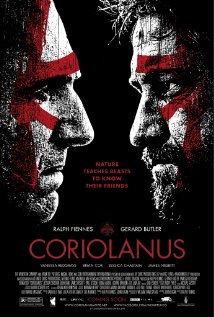
The occasion of my praise is to once again bring forth Shakespeare’s good, so that not for one second may it lay interred with his bones. So let it not be with God’s Will. For I have recently seen Ralph Fiennes’ film version of Coriolanus, the tragedy most beloved to those of a formalist persuasion (T.S. Eliot and company didn’t think much of Hamlet—they preferred Coriolanus; I disagree, but more of that anon), and it is a thing well made.
Coriolanus is about revenge—a favorite theme in Shakespeare—something all desire, all suffer for. Its power wields about indiscriminately, redounding upon the vengeful as often as it lands upon the victim—a bloody muddle of indignation, pride, and wrath.
In Coriolanus, we have a rapacious Roman war hero (Fiennes), the son of a lionhearted mother, Volumnia (Vanessa Redgrave). She’s like the Spartan women who sent their sons into battle, handing them their shields and saying “With this or on this,” meaning they’d either return from battle victorious, armed with shields, or dead, carried on their shields. Win or die.
But Coriolanus is a victim of the very thing that makes him what he is. Honor is his undoing. The Roman is a killing machine who cannot abide the company of his people. He is glorious on the field, arrogant in the court, and utterly unfit for the consular office others thrust upon him. To Coriolanus, diplomacy is craven, and he will not curry the favor of the rabble that he champions.
Then Shakespeare raises things a notch by showing the masses to be contemptible: The Romans are a boorish mob, as unworthy of credit as Coriolanus says. Their spokesmen, the tribunes, are despicable too; they crave power in the name of the “people.”
Everybody gets a coat of blackwash, but you don’t realize that at first. You’re all set to side with the common man, vulnerable to the populist pabulum they recite. A widespread mistake is to confound poverty and purity, as though hearts of gold reside necessarily in those who want. Of course, Shakespeare uses the error.
There are better lines in Will’s other plays, but when you’re talking about better lines in Shakespeare, you’re talking about white, five-carat diamonds compared to yellow, three-carat diamonds. One’s not as valuable, but we’re still talking serious jewels. And the greatest value comes by the power of compression—when a single line is packed with such tension that it drips like oil from an olive.
Here’s a sample:
Coriolanus to the mob, mocking their fickle support: “What’s the matter, you dissentious rogues; That, rubbing the poor itch of your opinion, Make yourselves scabs?”
Coriolanus rallying his troops, offering himself as their weapon: “O, me alone! Make you a sword of me!”
Volumnia venting her rage at Coriolanus’ banishment: “Anger’s my meat; I sup upon myself; And so shall starve with feeding.”
Look at those images—the counter-play, the inversion, the density.
Still, they aren’t quite equal to those in Hamlet, where exquisite lines are spoken within a disorienting theater-scape of metaphysical quandaries. We’re watching a play, yes, but we’re watching players in a play who watch a play too. If all the world is in fact a stage, and we . . .
Then, in a trice, the wall is behind us. We’re swept inside the drama like carnival-goers lost in a house of mirrors. We’re watching them, but who exactly is watching us?
We are asked: What is it to be? That’s a hell of a question all by itself. But then the questioning goes further: What is it not to be?
— ay, there’s the rub; For in that sleep of death what dreams may come; When we have shuffled off this mortal coil?. . . Thus Conscience does make Cowards of us all, And thus the Native hue of Resolution
Is sicklied o’er, with the pale cast of Thought.
The actions and inactions of both avengers, Hamlet and Coriolanus, undo them, playing not only upon questions of who we are and what roles we should take, but also questions of where we are and what all this playing means.
Further still: What is it to do, or to be, God’s will?
I’ll relate a little exchange with a student regarding Hamlet, to illustrate the payoff that comes when someone realizes for the first time what the old boy can do:
Him: But Hamlet won’t act.
Me: And that’s what you want him to do? Act?
Him: Yes.
Me: I’d say he’s an actor. But I guess you mean you want him to murder Claudius?
Him: Right.
Me: He kills Polonious. Isn’t that acting?
Him: That was by mistake.
Me: But wasn’t it acting?
Him: Yeah, but…
Me: And he sees that the traitors Rosencrantz and Guildenstern get what they deserve?
Him: Yes, but he draws back whenever it comes to Claudius. He won’t act there.
Me: He spurs the king’s conscience, doesn’t he, in the play-within-a-play? Doesn’t that act bring about some consequence? If he hadn’t acted as he did—
Him: But that play-within-a-play stuff is more about acting and the theater and double entendre.
Me: Yes. It’s acting. Hamlet acts a lot. He’s in a play.
Silence from him.
Him: Wait, so you mean—so when you say “act,” you mean—
Silence from me.
Him: Wait—what are we talking about here? Where are we?
A+, my son. A+.
Previous Post

September 23, 2012
A Story About Beauty
Next Post
September 25, 2012 Raising Sons and Raising Men
Browse Our Archives
Select a Category A. G. Harmon Alissa Wilkinson Allison Backous Art Authors Brad Fruhauff Bradford Winters Bryan Bliss Caroline Langston Chad Thomas Johnston Chris Hoke Christiana N. Peterson Culture D.G. Myers D.L. Mayfield Daniel Bowman Jr. David Griffith Elizabeth Duffy Faith Film Greg Wolfe Guest Contributor Interview Jan Vallone Jeffrey Overstreet Jessica Eddings-Roeser Jessica Mesman Griffith Kelly Foster Lindsey Crittenden Morgan Meis music Natalie Vestin Nick Olson Peggy Rosenthal Personal Reflection Poetry Friday Reflection Relationships Review Richard Chess Richard Cole Sara Zarr Shannon Huffman Polson Sonya Bilocerkowycz Tania Runyan Tony Woodlief Topical Categories Uncategorized Vic Sizemore Writing
Select a Month October 2018 September 2018 August 2018 July 2018 June 2018 May 2018 April 2018 March 2018 February 2018 January 2018 December 2017 November 2017 October 2017 September 2017 August 2017 July 2017 June 2017 May 2017 April 2017 March 2017 February 2017 January 2017 December 2016 November 2016 October 2016 September 2016 August 2016 July 2016 June 2016 May 2016 April 2016 March 2016 February 2016 January 2016 December 2015 November 2015 October 2015 September 2015 August 2015 July 2015 June 2015 May 2015 April 2015 March 2015 February 2015 January 2015 December 2014 November 2014 October 2014 September 2014 August 2014 July 2014 June 2014 May 2014 April 2014 March 2014 February 2014 January 2014 December 2013 November 2013 October 2013 September 2013 August 2013 July 2013 June 2013 May 2013 April 2013 March 2013 February 2013 January 2013 December 2012 November 2012 October 2012 September 2012 August 2012 July 2012 June 2012 May 2012 February 2008
Follow Us!
TAKE THE
Religious Wisdom Quiz
Which short letter urges forgiveness for a runaway slave named Onesimus?
Select your answer to see how you score.
2 Timothy Titus Jude Philemon
Related posts from Good Letters

The Crown and Victoria: Tales of Two Queens



TRENDING AT PATHEOS Catholic

Rejecting Doom: Christian Hope And Human Action
Christianity is a religion of hope. We are to have hope and...

It’s What Comes From Within Which Matters
One of the most difficult things for us to understand is why...

Why I Choose the Eucharist Over the Sermon
Choose the Eucharist, Not the Sermon What are we supposed to get...

5 Design Elements Found in Spiritually Rooted Homes
Putting Spirituality Into Home Decor Our homes are more than our living...

Credo: A Story of God Told with the...
About 10 years ago, I began to imagine a personal "Credo" that...

The Anatomy of Divine Revelation in Catholic Thought
The claim that God has made Himself known to human beings is...
view all Catholic blogs
Ad-Free & Subscriber Log-In Subscription Support
- About Us
- 2026 Calendar
- Videos
- Podcasts
- Library of World Religions
- Faith In Media Tracker
- Advertise With Us
- Write for Us
- Privacy Policy
- Terms of Service
- Do Not Sell My Data
- Contact Us
- Radiant Digital
- Manage Newsletter Subscriptions
- Unsubscribe From Notifications
- Sitemap
Copyright 2008-2026, Patheos. All rights reserved.
Subscription Support Ad-Free & Subscriber Log-In
Follow Patheos