
BuddhistCatholicContemplativeEvangelicalGeneral ChristianHinduJewishLatter-day SaintMuslimNew VisionsProgressive Christian
Beliefs
- Buddhist
- Catholic
- Contemplative
- Evangelical
- General Christian
- Hindu
- Jewish
- Latter-day Saint
- More Voices
- Muslim
- New Visions
- Pagan
- Progressive Christian
Topics
- Religion News
- Food and Religion
- Sports and Religion
- Religious Art
- Religious Music and Entertainment
- Religious Events
- History and Religion
- Style and Religion
- Politics and Religion
- Women in Religion
- Recreation Outdoors and Religion
- Business Finance and Religion
- Careers Workplace and Religion
- Education and Religion
- Family Parenting and Religion
- Health Fitness and Religion
- Home and Religion
- Relationships and Religion
- Technology and Religion
- Travel and Religion
Columnists
- Buddhist Columnists
- Business Finance and Religion Columnists
- Careers Workplace and Religion Columnists
- Catholic Columnists
- Contemplative Columnists
- Education and Religion Columnists
- Evangelists Columnists
- Family Parenting and Religion Columnists
- General Christian Columnists
- Health Fitness and Religion Columnists
- Hindu Columnists
- History and Religion Columnists
- Home and Religion Columnists
- Jewish Columnists
- More Voices Columnists
- Latter Day Columnists
- Muslim Columnists
- New Visions Columnists
- Nonreligious Columnists
- Pagan Columnists
- Politics and Religion Columnists
- Progressive Columnists
- Recreation Outdoors and Religion Columnists
- Relationships and Religion Columnists
- Religion News Columnists
- Religious Art Columnists
- Religious Events Columnists
- Religious Music and Entertainment Columnists
- Sports and Religion Columnists
- Style and Religion Columnists
- Technology and Religion Columnists
- Travel and Religion Columnists
- Women in Religion Columnists
Resource Library
- 2026 Calendar
- Library of World Religions
- The 100 Most Holy Places on Earth
- Patheos Answers
- Podcasts
- Videos
- Faith Leaders Database
- Anglican Episcopalian
- Bahai
- Baptist
- Buddhism
- Christianity
- Confucianism
- Eastern Orthodoxy
- Hinduism
- Holiness and Pentecostal
- ISKCON
- Islam
- Judaism
- Lutheran
- Methodist
- The Church of Jesus Christ of Latter-day Saints
- New Age
- Paganism
- Presbytarian and Reformed
- Protestantism
- Religion Behind the Scenes
- Roman Catholic
- Scientology
- Shia Islam
- Sikhism
- Sufism
- Sunni Islam
- Taoism
- Zen
- See all religions
Research Tools
 Ad-Free & Subscriber Log-In Subscription Support
Ad-Free & Subscriber Log-In Subscription Support
Follow Patheos 

- Trending:
- Forgiveness
- |
- Marriage
- |
- Consciousness
- |
- Death Penalty
- |
- Election
- |
- Halloween
 Good Letters
-
Contributors
- Home
- Catholic
- Imago Dei
Imago Dei
Last updated on: September 13, 2012 at 11:19 am by Peggy Rosenthal
Imago Dei 2012-09-13T11:19:24-07:00 Peggy Rosenthal
Patheos Explore the world's faith through different perspectives on religion and spirituality! Patheos has the views of the prevalent religions and spiritualities of the world.
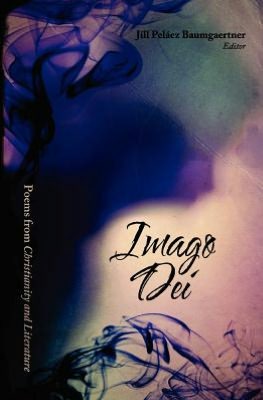 What does it mean to write poems in the Christian tradition? Creative writing teachers at Christian colleges wrestle with this question every day, as do many poets who write out of their grounding in Christian faith.
If I were teaching poetry at a Christian college, I’d hand my students the new anthology Imago Dei, published by Abilene Christian University Press. The poems—selected by Jill Peláez Baumgaertner, who teaches at Wheaton College and is Poetry Editor of The Christian Century and a poet herself—are drawn from the journal Christianity and Literature over its past sixty years.
What delights await the reader of this volume!
It’s no surprise to find in Imago Dei (Latin for “Image of God”) a poem on the Nativity or on Easter. But watch what Barbara Crooker does in “Cold Easter.” Beginning with an unusually chilly Easter day, she moves seamlessly into unexpected places:
a sputter of snow that turns the air white, but the grass
burns its green fire, and nothing sticks. Nothing lasts,
my mother says, fading from my eyes, and none of the fancy
tricks in the doctor’s bag can make her stay.
Unsurprisingly we find in Imago Dei poems focusing on gospel passages. Read what Robert Cording crafts in “The Man Running Naked into the Dark.” Beginning with the strange episode that occurs only in Mark (14:51-2), where “the soldiers / catch hold of his linen cloth, and the man twists away,” Cording astonishes us with his imagining of what it must have been like for this man to feel
Christ’s eyes
upon him and how, in them, he knows what it is
like to be entirely himself.
In Imago Dei there are, of course, poems about death. But watch Paul Willis’s unexpected playfulness in his sonnet “The Attempt,” recounting overheard phone calls reporting on a loved one’s dying:
You spoke it calmly for the hundredth time,
as if you were inscribing in the sands
a medical report before the climb
of tide erased it when you should replace
the dead receiver on the waiting hook.
I’d say it’s a surprise, though, to find Chris Willerton’s childhood memory of learning “How to Use the Kaleidoscope.” Willerton caresses each remembered detail of the amazing patterns he made by holding the kaleidoscope to the light and gently turning it. It’s lovely to watch his experience become a metaphor for God, with whom “each beauty is multiplied” and “The / moving force is your hand, invisible.”
It’s also surprising to read in Imago Dei Joseph Chelius’s “Heart Talk,” musing on the ways that family and medical staff encourage the poet’s nephew, who is in the hospital with heart disease. Chelius compares everyone’s supportive words (“Hang in there, Buddy… / we’re pulling for you.”) to “baseball chatter.”
that tactile conversation men employ
on the job or field:
the ball whipped round the horn
after competent play, smacking
the leather of each fielder’s glove
in short declarative sentences;
or the right tool passed up,
the flashlight beam as solid
as a knitting needle, threading
the way through a darkened place.
“How serviceable such gestures,” the poem goes on, “the pumped fist, the quick thumbs up.” Not a word in the poem explicitly about God, and yet isn’t this a perfect imago dei, image of God?
It’s an unexpected delight to read Shanna Powlus Wheeler’s “Opussum in Daylight,” intercutting an account of trapping the offending opossum (“Gray baby, we caught you / in a Havahart cage below the front step”) with apostrophes to the trapped creature (“O dew-tipped hair, O furred fear, O little body electric.”)
Another delight is Bill Ellis’s romp with Emily Dickinson in “Venetian Blinds, with Apologies to Emily.”
You can tell all the truth
by the way
they slant
—tilted into the sun
Finally, for the Image community there’s the pleasant discovery of many familiar poets in Imago Dei: Jeanne Murray Walker, Luci Shaw, Mark Jarman, Scott Cairns, Dana Gioia, and Robert Cording.
So, then, what does it mean to write poems in the Christian tradition? All of the above, and more.
Baumgaertner answers the question through her selection of poems, but also in the prose of her preface. The selected poems, she writes, share “an awareness of human experience as a part of a grand narrative, of the imago dei embedded in human nature, and of the sense of connection to something much larger than themselves.”
I suspect that the poetry of all religious traditions shares this awareness of human experience as part of a grand narrative. What is perhaps uniquely Christian, though, is the sense of God’s image embedded in our very human nature.
It is the wonder of incarnation that can make every word a Word.
Previous Post
September 11, 2012
If This Isn’t an Emergency, Please Hang up and Dial 9/11
Next Post

September 13, 2012 Monks, Mandalas, and Faith Healing
Browse Our Archives
Select a Category A. G. Harmon Alissa Wilkinson Allison Backous Art Authors Brad Fruhauff Bradford Winters Bryan Bliss Caroline Langston Chad Thomas Johnston Chris Hoke Christiana N. Peterson Culture D.G. Myers D.L. Mayfield Daniel Bowman Jr. David Griffith Elizabeth Duffy Faith Film Greg Wolfe Guest Contributor Interview Jan Vallone Jeffrey Overstreet Jessica Eddings-Roeser Jessica Mesman Griffith Kelly Foster Lindsey Crittenden Morgan Meis music Natalie Vestin Nick Olson Peggy Rosenthal Personal Reflection Poetry Friday Reflection Relationships Review Richard Chess Richard Cole Sara Zarr Shannon Huffman Polson Sonya Bilocerkowycz Tania Runyan Tony Woodlief Topical Categories Uncategorized Vic Sizemore Writing
Select a Month October 2018 September 2018 August 2018 July 2018 June 2018 May 2018 April 2018 March 2018 February 2018 January 2018 December 2017 November 2017 October 2017 September 2017 August 2017 July 2017 June 2017 May 2017 April 2017 March 2017 February 2017 January 2017 December 2016 November 2016 October 2016 September 2016 August 2016 July 2016 June 2016 May 2016 April 2016 March 2016 February 2016 January 2016 December 2015 November 2015 October 2015 September 2015 August 2015 July 2015 June 2015 May 2015 April 2015 March 2015 February 2015 January 2015 December 2014 November 2014 October 2014 September 2014 August 2014 July 2014 June 2014 May 2014 April 2014 March 2014 February 2014 January 2014 December 2013 November 2013 October 2013 September 2013 August 2013 July 2013 June 2013 May 2013 April 2013 March 2013 February 2013 January 2013 December 2012 November 2012 October 2012 September 2012 August 2012 July 2012 June 2012 May 2012 February 2008
Follow Us!
TAKE THE
Religious Wisdom Quiz
True or False: The Israelites crossed the Red Sea by boat.
Select your answer to see how you score.
FALSE TRUE
Related posts from Good Letters


On Writing Odes: Taking Time to Celebrate

Poetry Friday: "The Burned Butterfly"

A Conversation with Alicia Ostriker: Part 1
TRENDING AT PATHEOS Catholic

Rejecting Doom: Christian Hope And Human Action
Christianity is a religion of hope. We are to have hope and...

It’s What Comes From Within Which Matters
One of the most difficult things for us to understand is why...

Why I Choose the Eucharist Over the Sermon
Choose the Eucharist, Not the Sermon What are we supposed to get...

5 Design Elements Found in Spiritually Rooted Homes
Putting Spirituality Into Home Decor Our homes are more than our living...

Credo: A Story of God Told with the...
About 10 years ago, I began to imagine a personal "Credo" that...

The Anatomy of Divine Revelation in Catholic Thought
The claim that God has made Himself known to human beings is...
view all Catholic blogs
Ad-Free & Subscriber Log-In Subscription Support
- About Us
- 2026 Calendar
- Videos
- Podcasts
- Library of World Religions
- Faith In Media Tracker
- Advertise With Us
- Write for Us
- Privacy Policy
- Terms of Service
- Do Not Sell My Data
- Contact Us
- Radiant Digital
- Manage Newsletter Subscriptions
- Unsubscribe From Notifications
- Sitemap
Copyright 2008-2026, Patheos. All rights reserved.
Subscription Support Ad-Free & Subscriber Log-In
Follow Patheos