
BuddhistCatholicContemplativeEvangelicalGeneral ChristianHinduJewishLatter-day SaintMuslimNew VisionsProgressive Christian
Beliefs
- Buddhist
- Catholic
- Contemplative
- Evangelical
- General Christian
- Hindu
- Jewish
- Latter-day Saint
- More Voices
- Muslim
- New Visions
- Pagan
- Progressive Christian
Topics
- Religion News
- Food and Religion
- Sports and Religion
- Religious Art
- Religious Music and Entertainment
- Religious Events
- History and Religion
- Style and Religion
- Politics and Religion
- Women in Religion
- Recreation Outdoors and Religion
- Business Finance and Religion
- Careers Workplace and Religion
- Education and Religion
- Family Parenting and Religion
- Health Fitness and Religion
- Home and Religion
- Relationships and Religion
- Technology and Religion
- Travel and Religion
Columnists
- Buddhist Columnists
- Business Finance and Religion Columnists
- Careers Workplace and Religion Columnists
- Catholic Columnists
- Contemplative Columnists
- Education and Religion Columnists
- Evangelists Columnists
- Family Parenting and Religion Columnists
- General Christian Columnists
- Health Fitness and Religion Columnists
- Hindu Columnists
- History and Religion Columnists
- Home and Religion Columnists
- Jewish Columnists
- More Voices Columnists
- Latter Day Columnists
- Muslim Columnists
- New Visions Columnists
- Nonreligious Columnists
- Pagan Columnists
- Politics and Religion Columnists
- Progressive Columnists
- Recreation Outdoors and Religion Columnists
- Relationships and Religion Columnists
- Religion News Columnists
- Religious Art Columnists
- Religious Events Columnists
- Religious Music and Entertainment Columnists
- Sports and Religion Columnists
- Style and Religion Columnists
- Technology and Religion Columnists
- Travel and Religion Columnists
- Women in Religion Columnists
Resource Library
- 2026 Calendar
- Library of World Religions
- The 100 Most Holy Places on Earth
- Patheos Answers
- Podcasts
- Videos
- Faith Leaders Database
- Anglican Episcopalian
- Bahai
- Baptist
- Buddhism
- Christianity
- Confucianism
- Eastern Orthodoxy
- Hinduism
- Holiness and Pentecostal
- ISKCON
- Islam
- Judaism
- Lutheran
- Methodist
- The Church of Jesus Christ of Latter-day Saints
- New Age
- Paganism
- Presbytarian and Reformed
- Protestantism
- Religion Behind the Scenes
- Roman Catholic
- Scientology
- Shia Islam
- Sikhism
- Sufism
- Sunni Islam
- Taoism
- Zen
- See all religions
Research Tools
 Ad-Free & Subscriber Log-In Subscription Support
Ad-Free & Subscriber Log-In Subscription Support
Follow Patheos 

- Trending:
- Forgiveness
- |
- Marriage
- |
- Consciousness
- |
- Death Penalty
- |
- Election
- |
- Halloween
 Good Letters
-
Contributors
- Home
- Catholic
- Varieties of Quiet: Christian Wiman’s Pensées
Varieties of Quiet: Christian Wiman’s Pensées
Last updated on: August 6, 2012 at 10:55 pm by Peggy Rosenthal
Varieties of Quiet: Christian Wiman’s Pensées 2012-08-06T22:55:44-07:00 Peggy Rosenthal
Patheos Explore the world's faith through different perspectives on religion and spirituality! Patheos has the views of the prevalent religions and spiritualities of the world.
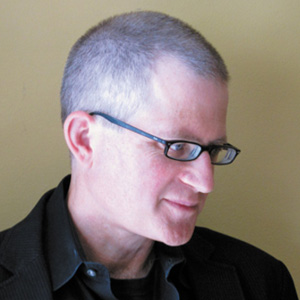 So profound are Christian Wiman’s pensées in the current issue of Image that I feel impertinent even engaging them. But they are so deeply engaging that I can’t refrain.
Pensées is my term to describe these reflections, not Wiman’s. He calls the essay “Varieties of Quiet.” When I first read the title, I thought it would be about meditation.
But no, it’s about what language can’t say, especially the language of faith—and even the language of poetry. I say “even” because Wiman is a poet, and editor of Poetry magazine.
Wiman comes down hard on the language of Christianity—because it doesn’t speak to his soul’s experience. He writes that church, with its language of communal worship, “is the last place in the world where [people] are going to find God.”
I nod assent, remembering a Catholic friend’s counsel, when I was moving toward baptism years ago, that joining the institution should be the last step in a conversion process. As it was for me, thank God.
Wiman does go to church (though he gets so bored there “that I often recite poems to myself in my head”). It’s the language of dogma, which has become too glib, too easy, that he can’t relate to.
“I don’t know what it means to say that Christ ‘died for my sins’ (who wants that? who invented that perverse calculus?).”
My relief at reading this statement of Wiman’s is appropriately beyond words. I’ve never understood this formulation either.
Rationally, it makes no sense. I spend all of Lent every year, and particularly Holy Week, trying to get my mind around this core belief of my Christian faith.
And yet, like Wiman:
I do understand—or intuit, rather—the notion of God not above or beyond or immune to human suffering but in the very midst of it, intimately with us in our sorrow, our sense of abandonment, our hellish astonishment at finding ourselves utterly alone, utterly helpless. How to speak of these things? Language, even as it reaches for a life beyond this one, must bear the mark of being lost.
Yet how does language bear this mark? And what, then, about the language of poetry?
Writing poetry is Wiman’s salvation—in a sense.
Yet (another yet; the movement of his pensées is a twisting string of and yet turnarounds) for poetry to save, we must be already healthy enough to reach for salvation.
Wiman is not healthy. He lives with a dreadful disease that could take his life at any moment. And so:
When life is thriving in us, we crave to get beyond it: experience that takes us out of ourselves, poetry that articulates a shape and space for the inexpressible, prayer that obliterates self-consciousness for the sake of God. When it is death that is thriving in us, though, when the inexpressible has begun to seep into us like some last ineluctable dusk, and the tick of each instant is the click of a door closing us out…
What then?
Then…he weeps.
What I do is whine.
I have lived what Wiman is saying here. When I feel healthy and perky (like today, with lovely energy to write this post), I can pray and read poetry and feel enwrapped in God’s love. But, oh, on those hard, exhausted days that seem hopeless, not even my husband’s caring love can convince me of God’s.
We used to sing compline together before turning out the lights at bedtime. But when I started suffering from an insomnia that no drugs or alternative treatments could relieve, I couldn’t keep singing all the compline lines about sleeping in God’s peace, like Psalm 4’s “I lie down in peace and sleep comes at once, / For you alone, Lord, make me dwell in safety.”
My husband would try to encourage me: “It’s a prayer for sleep, it’s not a promise of sleep.”
I just whined: “But the promise won’t be kept for me, so to pray it only upsets me more.”
Yet, yet… though there is, Wiman says, a “disconnect between language and life,” writing poetry makes possible for him a “creative abandon.”
“Or,” he amends, “perhaps I should say that I simply cannot live with the same creative abandon with which I can (sometimes) write, because life is a hell of a lot more difficult—and important—than art.”
Whew. I have sat a long time in silence since keyboarding that sentence.
He ends the essay with art: With a poem. A poem that is mostly silence. A couple words… then space. A few more words… then more space.
It’s as if the words are there in order to create the silence that surrounds them.
This is a difficult post to end, because I know I haven’t made a dent in the depths of Wiman’s pensées. Reader, do read them.
Click here to read an excerpt from “Varieties of Quiet.”
Previous Post

August 3, 2012
Shouting “Meaningless!” at the Devil: On Mötley Crüe and Ecclesiastes
Next Post
August 7, 2012 The Summer I Wasn't Attacked by a Shark
Browse Our Archives
Select a Category A. G. Harmon Alissa Wilkinson Allison Backous Art Authors Brad Fruhauff Bradford Winters Bryan Bliss Caroline Langston Chad Thomas Johnston Chris Hoke Christiana N. Peterson Culture D.G. Myers D.L. Mayfield Daniel Bowman Jr. David Griffith Elizabeth Duffy Faith Film Greg Wolfe Guest Contributor Interview Jan Vallone Jeffrey Overstreet Jessica Eddings-Roeser Jessica Mesman Griffith Kelly Foster Lindsey Crittenden Morgan Meis music Natalie Vestin Nick Olson Peggy Rosenthal Personal Reflection Poetry Friday Reflection Relationships Review Richard Chess Richard Cole Sara Zarr Shannon Huffman Polson Sonya Bilocerkowycz Tania Runyan Tony Woodlief Topical Categories Uncategorized Vic Sizemore Writing
Select a Month October 2018 September 2018 August 2018 July 2018 June 2018 May 2018 April 2018 March 2018 February 2018 January 2018 December 2017 November 2017 October 2017 September 2017 August 2017 July 2017 June 2017 May 2017 April 2017 March 2017 February 2017 January 2017 December 2016 November 2016 October 2016 September 2016 August 2016 July 2016 June 2016 May 2016 April 2016 March 2016 February 2016 January 2016 December 2015 November 2015 October 2015 September 2015 August 2015 July 2015 June 2015 May 2015 April 2015 March 2015 February 2015 January 2015 December 2014 November 2014 October 2014 September 2014 August 2014 July 2014 June 2014 May 2014 April 2014 March 2014 February 2014 January 2014 December 2013 November 2013 October 2013 September 2013 August 2013 July 2013 June 2013 May 2013 April 2013 March 2013 February 2013 January 2013 December 2012 November 2012 October 2012 September 2012 August 2012 July 2012 June 2012 May 2012 February 2008
Follow Us!
TAKE THE
Religious Wisdom Quiz
What did Job's wife suggest he do during his suffering?
Select your answer to see how you score.
Curse God and die Rebuke his friends Flee to Egypt Burn offerings
Related posts from Good Letters


On Writing Odes: Taking Time to Celebrate

Poetry Friday: "The Burned Butterfly"

A Conversation with Alicia Ostriker: Part 1
TRENDING AT PATHEOS Catholic

Rejecting Doom: Christian Hope And Human Action
Christianity is a religion of hope. We are to have hope and...

It’s What Comes From Within Which Matters
One of the most difficult things for us to understand is why...

Why I Choose the Eucharist Over the Sermon
Choose the Eucharist, Not the Sermon What are we supposed to get...

5 Design Elements Found in Spiritually Rooted Homes
Putting Spirituality Into Home Decor Our homes are more than our living...

Credo: A Story of God Told with the...
About 10 years ago, I began to imagine a personal "Credo" that...

The Anatomy of Divine Revelation in Catholic Thought
The claim that God has made Himself known to human beings is...
view all Catholic blogs
Ad-Free & Subscriber Log-In Subscription Support
- About Us
- 2026 Calendar
- Videos
- Podcasts
- Library of World Religions
- Faith In Media Tracker
- Advertise With Us
- Write for Us
- Privacy Policy
- Terms of Service
- Do Not Sell My Data
- Contact Us
- Radiant Digital
- Manage Newsletter Subscriptions
- Unsubscribe From Notifications
- Sitemap
Copyright 2008-2026, Patheos. All rights reserved.
Subscription Support Ad-Free & Subscriber Log-In
Follow Patheos