
BuddhistCatholicContemplativeEvangelicalGeneral ChristianHinduJewishLatter-day SaintMuslimNew VisionsProgressive Christian
Beliefs
- Buddhist
- Catholic
- Contemplative
- Evangelical
- General Christian
- Hindu
- Jewish
- Latter-day Saint
- More Voices
- Muslim
- New Visions
- Pagan
- Progressive Christian
Topics
- Religion News
- Food and Religion
- Sports and Religion
- Religious Art
- Religious Music and Entertainment
- Religious Events
- History and Religion
- Style and Religion
- Politics and Religion
- Women in Religion
- Recreation Outdoors and Religion
- Business Finance and Religion
- Careers Workplace and Religion
- Education and Religion
- Family Parenting and Religion
- Health Fitness and Religion
- Home and Religion
- Relationships and Religion
- Technology and Religion
- Travel and Religion
Columnists
- Buddhist Columnists
- Business Finance and Religion Columnists
- Careers Workplace and Religion Columnists
- Catholic Columnists
- Contemplative Columnists
- Education and Religion Columnists
- Evangelists Columnists
- Family Parenting and Religion Columnists
- General Christian Columnists
- Health Fitness and Religion Columnists
- Hindu Columnists
- History and Religion Columnists
- Home and Religion Columnists
- Jewish Columnists
- More Voices Columnists
- Latter Day Columnists
- Muslim Columnists
- New Visions Columnists
- Nonreligious Columnists
- Pagan Columnists
- Politics and Religion Columnists
- Progressive Columnists
- Recreation Outdoors and Religion Columnists
- Relationships and Religion Columnists
- Religion News Columnists
- Religious Art Columnists
- Religious Events Columnists
- Religious Music and Entertainment Columnists
- Sports and Religion Columnists
- Style and Religion Columnists
- Technology and Religion Columnists
- Travel and Religion Columnists
- Women in Religion Columnists
Resource Library
- 2026 Calendar
- Library of World Religions
- The 100 Most Holy Places on Earth
- Patheos Answers
- Podcasts
- Videos
- Faith Leaders Database
- Anglican Episcopalian
- Bahai
- Baptist
- Buddhism
- Christianity
- Confucianism
- Eastern Orthodoxy
- Hinduism
- Holiness and Pentecostal
- ISKCON
- Islam
- Judaism
- Lutheran
- Methodist
- The Church of Jesus Christ of Latter-day Saints
- New Age
- Paganism
- Presbytarian and Reformed
- Protestantism
- Religion Behind the Scenes
- Roman Catholic
- Scientology
- Shia Islam
- Sikhism
- Sufism
- Sunni Islam
- Taoism
- Zen
- See all religions
Research Tools
 Ad-Free & Subscriber Log-In Subscription Support
Ad-Free & Subscriber Log-In Subscription Support
Follow Patheos 

- Trending:
- Forgiveness
- |
- Marriage
- |
- Consciousness
- |
- Death Penalty
- |
- Election
- |
- Halloween
 Good Letters
-
Contributors
- Home
- Catholic
- Making Do Has Its Place
Making Do Has Its Place
Last updated on: July 18, 2013 at 10:19 am by A. G. Harmon
Making Do Has Its Place 2013-07-18T10:19:31-07:00 A. G. Harmon
Patheos Explore the world's faith through different perspectives on religion and spirituality! Patheos has the views of the prevalent religions and spiritualities of the world.
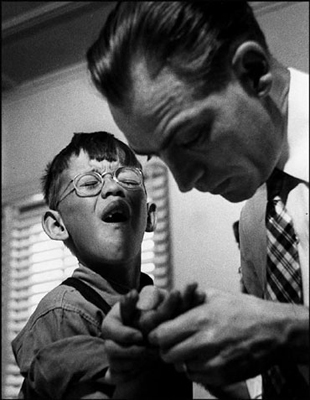 When I was in college, some group or the other sponsored a blood drive. I’d never donated before, so when the nurse told me I had type B, I was mildly surprised. Everybody before me and after had been type O, that of the universal donor. I’d just assumed I would be too.
Later, when I asked my father, a doctor, he said that I’d inherited that blood type from him. It’s not the rarest, but he laughingly told me that I’d better not get into any accidents in a small town.
I looked into things a little further, and found that while I could receive blood from type O, in an emergency situation, I could not live forever on it. I had to have my own type eventually.
So the size of the town that I could have an accident in could be smaller by at least that much—enough to have a good supply of type O, even if they didn’t have much type B. I could be sustained for a time, but then I’d need to get somewhere bigger. I mused that this would be the size of town with a Pizza Hut but no Applebee’s.
Of course, all this would be dependent upon the skill of the emergency room doctor. He’d have to get me going on type O to see me through the crisis. If he was hesitant and wanted to ship me off to a bigger place—so that someone could start me out with my own type rather than improvise for the time being—I’d run the risk of bleeding out.
Maybe I would make it and maybe I wouldn’t. It all depended on whether he would make do.
Now for the transition to the higher meaning: I returned to my father asking about that ad hoc decision to use what was available, to utilize what would serve. He said that was the difference between doctors. Some would have the guts to move ahead with whatever was at hand. Some would not.
To put it another way—in an emergency, some would step forward, bend down, and use a pocket knife to open up the blocked trachea of a man lying in a cow pasture; some would hold back, stymied by the imperfect conditions. The man in the field was at the mercy of the other’s courage.
But then, on the other side of the emergency, another dilemma presented itself. What was made to suffice in the limited circumstances must necessarily be set aside when better options presented themselves
Making do has its place, but trying to turn insufficient means into a way of living, a mode of existence, is equivalent to attempting to survive on disaster rations. Man can make it for a while on bread and water alone, but higher authorities than I have said you can’t live on those two things for long.
That is the predicament that often presents itself, and it calls for two different kinds of vision and nerve. You must not be so paralyzed by a situation and its lack of perfection that it stymies all action whatsoever.
As the old saying goes, nothing would be accomplished if all possible objections must first be overcome. But then again, nothing can flourish if it is not provided with as many of the circumstances as possible that are meant to bring it to full flower.
It seems that a great quandary in every life is knowing when to start an endeavor. It never seems like the auspicious time. There are so many who counsel us to wait, filled with good reasons. Sometimes those are indeed the wiser voices.
But if there’s enough to get going; enough to prime the engine and find a good tail wind—and of course enough of the future to see your way through—then the initial impetus to go must be encouraged. Type B can get out of the blocks on type O.
Then, after the start, there comes a time when more must be provided. The proper environment must be found, the sufficient means located. Type B must find type B.
What has been a leg-up, a boost, must be let go of in favor of that which will sustain. Otherwise, what has started will stall out. A holding pattern cannot go on indefinitely, lest adequacy become the enemy of achievement.
Previous Post

August 10, 2012
The Final Chapter in a Promising Young Life
Next Post
August 14, 2012 Shaping the Heart
Browse Our Archives
Select a Category A. G. Harmon Alissa Wilkinson Allison Backous Art Authors Brad Fruhauff Bradford Winters Bryan Bliss Caroline Langston Chad Thomas Johnston Chris Hoke Christiana N. Peterson Culture D.G. Myers D.L. Mayfield Daniel Bowman Jr. David Griffith Elizabeth Duffy Faith Film Greg Wolfe Guest Contributor Interview Jan Vallone Jeffrey Overstreet Jessica Eddings-Roeser Jessica Mesman Griffith Kelly Foster Lindsey Crittenden Morgan Meis music Natalie Vestin Nick Olson Peggy Rosenthal Personal Reflection Poetry Friday Reflection Relationships Review Richard Chess Richard Cole Sara Zarr Shannon Huffman Polson Sonya Bilocerkowycz Tania Runyan Tony Woodlief Topical Categories Uncategorized Vic Sizemore Writing
Select a Month October 2018 September 2018 August 2018 July 2018 June 2018 May 2018 April 2018 March 2018 February 2018 January 2018 December 2017 November 2017 October 2017 September 2017 August 2017 July 2017 June 2017 May 2017 April 2017 March 2017 February 2017 January 2017 December 2016 November 2016 October 2016 September 2016 August 2016 July 2016 June 2016 May 2016 April 2016 March 2016 February 2016 January 2016 December 2015 November 2015 October 2015 September 2015 August 2015 July 2015 June 2015 May 2015 April 2015 March 2015 February 2015 January 2015 December 2014 November 2014 October 2014 September 2014 August 2014 July 2014 June 2014 May 2014 April 2014 March 2014 February 2014 January 2014 December 2013 November 2013 October 2013 September 2013 August 2013 July 2013 June 2013 May 2013 April 2013 March 2013 February 2013 January 2013 December 2012 November 2012 October 2012 September 2012 August 2012 July 2012 June 2012 May 2012 February 2008
Follow Us!
TAKE THE
Religious Wisdom Quiz
Who was the cupbearer to the king who fasted and prayed for Jerusalem?
Select your answer to see how you score.
Haggai Nehemiah Ezra Zerubbabel
Related posts from Good Letters


A Conversation with Alicia Ostriker: Part 1

A Conversation with Alicia Ostriker: Part 2

TRENDING AT PATHEOS Catholic

Rejecting Doom: Christian Hope And Human Action
Christianity is a religion of hope. We are to have hope and...

It’s What Comes From Within Which Matters
One of the most difficult things for us to understand is why...

Why I Choose the Eucharist Over the Sermon
Choose the Eucharist, Not the Sermon What are we supposed to get...

5 Design Elements Found in Spiritually Rooted Homes
Putting Spirituality Into Home Decor Our homes are more than our living...

Credo: A Story of God Told with the...
About 10 years ago, I began to imagine a personal "Credo" that...

The Anatomy of Divine Revelation in Catholic Thought
The claim that God has made Himself known to human beings is...
view all Catholic blogs
Ad-Free & Subscriber Log-In Subscription Support
- About Us
- 2026 Calendar
- Videos
- Podcasts
- Library of World Religions
- Faith In Media Tracker
- Advertise With Us
- Write for Us
- Privacy Policy
- Terms of Service
- Do Not Sell My Data
- Contact Us
- Radiant Digital
- Manage Newsletter Subscriptions
- Unsubscribe From Notifications
- Sitemap
Copyright 2008-2026, Patheos. All rights reserved.
Subscription Support Ad-Free & Subscriber Log-In
Follow Patheos