
BuddhistCatholicContemplativeEvangelicalGeneral ChristianHinduJewishLatter-day SaintMuslimNew VisionsProgressive Christian
Beliefs
- Buddhist
- Catholic
- Contemplative
- Evangelical
- General Christian
- Hindu
- Jewish
- Latter-day Saint
- More Voices
- Muslim
- New Visions
- Pagan
- Progressive Christian
Topics
- Religion News
- Food and Religion
- Sports and Religion
- Religious Art
- Religious Music and Entertainment
- Religious Events
- History and Religion
- Style and Religion
- Politics and Religion
- Women in Religion
- Recreation Outdoors and Religion
- Business Finance and Religion
- Careers Workplace and Religion
- Education and Religion
- Family Parenting and Religion
- Health Fitness and Religion
- Home and Religion
- Relationships and Religion
- Technology and Religion
- Travel and Religion
Columnists
- Buddhist Columnists
- Business Finance and Religion Columnists
- Careers Workplace and Religion Columnists
- Catholic Columnists
- Contemplative Columnists
- Education and Religion Columnists
- Evangelists Columnists
- Family Parenting and Religion Columnists
- General Christian Columnists
- Health Fitness and Religion Columnists
- Hindu Columnists
- History and Religion Columnists
- Home and Religion Columnists
- Jewish Columnists
- More Voices Columnists
- Latter Day Columnists
- Muslim Columnists
- New Visions Columnists
- Nonreligious Columnists
- Pagan Columnists
- Politics and Religion Columnists
- Progressive Columnists
- Recreation Outdoors and Religion Columnists
- Relationships and Religion Columnists
- Religion News Columnists
- Religious Art Columnists
- Religious Events Columnists
- Religious Music and Entertainment Columnists
- Sports and Religion Columnists
- Style and Religion Columnists
- Technology and Religion Columnists
- Travel and Religion Columnists
- Women in Religion Columnists
Resource Library
- 2026 Calendar
- Library of World Religions
- The 100 Most Holy Places on Earth
- Patheos Answers
- Podcasts
- Videos
- Faith Leaders Database
- Anglican Episcopalian
- Bahai
- Baptist
- Buddhism
- Christianity
- Confucianism
- Eastern Orthodoxy
- Hinduism
- Holiness and Pentecostal
- ISKCON
- Islam
- Judaism
- Lutheran
- Methodist
- The Church of Jesus Christ of Latter-day Saints
- New Age
- Paganism
- Presbytarian and Reformed
- Protestantism
- Religion Behind the Scenes
- Roman Catholic
- Scientology
- Shia Islam
- Sikhism
- Sufism
- Sunni Islam
- Taoism
- Zen
- See all religions
Research Tools
 Ad-Free & Subscriber Log-In Subscription Support
Ad-Free & Subscriber Log-In Subscription Support
Follow Patheos 

- Trending:
- Forgiveness
- |
- Marriage
- |
- Consciousness
- |
- Death Penalty
- |
- Election
- |
- Halloween
 Good Letters
-
Contributors
- Home
- Catholic
- Finding Poetry and Meaning in Internet Clicks
Finding Poetry and Meaning in Internet Clicks
Last updated on: July 18, 2013 at 10:13 am by Richard Chess
Finding Poetry and Meaning in Internet Clicks 2013-07-18T10:13:52-07:00 Richard Chess
Patheos Explore the world's faith through different perspectives on religion and spirituality! Patheos has the views of the prevalent religions and spiritualities of the world.
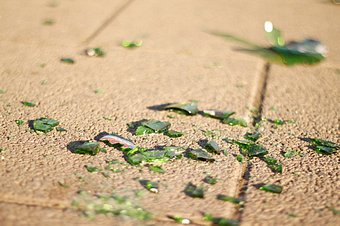 Three minutes, maybe four. Six minutes, maybe seven. A little bit of time.
This morning open Google chrome to my homepage the University of North Carolina Asheville. Once it’s loaded, a quick glance at upcoming events. A post Civil War lecture.
First thought: Living in the South, I really should know more about the Civil War and its aftermath. Click.
The link takes me to the North Carolina Center for Creative Retirement’s Appalachian Studies Authors Series. I’ve already received an e-mail message and read a story in the Asheville Citizen Times about this series.
When I first learned about it, and on reading about the series again this morning I feel envy, doubt, fear. How did the NCCCR get Charles Frazier, a pretty reclusive, nationally celebrated writer who lives in Asheville? Should I take greater interest in his work and the work of other local authors who explore regional culture?
Are my tastes in literature too cosmopolitan (read: Jewish) for this community?
On the way down the screen to find information on the talk, I see information on other NCCCR programs: Asheville Community Theatre’s Readers Theatre, Astronomy Club of Asheville, Celebrating Life in the Mountains, Dante Lecture—stop.
A special lecture by a noted Dante scholar, retired from Brandeis where, among other things, he served as the Chair of the School of Humanities. Why don’t I know him? Am I failing to network enough on campus?
The (at this point not so) new director of the NCCCR seems to be doing a good job organizing and presenting interesting programs. Why hasn’t she noticed me, if not my work as a writer, then my work organizing programs for campus and community? Am I irrelevant, inadequate?
I drag cursor to the bookmarks bar. Find Good Letters. Words. Made Flesh. Click.
“Weddings, Women, Sweets, and Wishes”: 133 Facebook shares, fourteen Tweets, 152 other shares.
Check my most recent Good Letters post, more than a week before: Seventeen Facebook shares, five Tweets, twenty-two other shares. Is my work not interesting enough to share widely? Click.
Scan The New York Times headlines:
“Citing Growth, Fed Chief Gives No Hints of New Stimulus.” Will this keep the market from recovering from its recent losses? What about my investments?
“Obama’s Campaign Raised $60 Million in May.” Will Obama have enough funding to campaign aggressively and effectively this fall?
“San Diego and San Jose Lead Way in Pension Cuts”; “The Alzheimer’s Gene: One Family’s Saga”; “CT Scans Increase Children’s Cancer Risk, Study Finds.”
Retirement, health, politics, worry, worry, and more worry. Uncertainty and fear.
Good morning. Click, click, click. Tick, tock, these words that say time is passing.
For me, this morning, like many mornings, the passage of the short period of time (eight, nine minutes?) between completing my morning practice (sitting meditation, reading of the daily psalm before and after the sit) and beginning to write (journal, essay, poem) might more accurately be represented by the words click, click.
Nine or ten minutes, not much time. Insignificant, really. Really?
So often I’ve pointed out to students—lit students, young poets—how poets of one generation often direct their attentions to places, people, and situations that previous generations of poets ignored because they were too trivial or domestic or simply not the stuff of serious poetry.
One example is W. C. Williams’ poem “Between Walls.”
Between Walls
the back wings
of the
hospital where
nothing
will grow lie
cinders
in which shine
the broken
pieces of a green
bottle
Such an unlikely place to find a poem!
So often I’ve encouraged students to look away from the words in a poem that seem most important. In “Between Walls,” the words hospital, cinders, shine, broken, pieces, green, and bottle.
Instead of these words, I might say to students, consider “of the” and “of a.”
How expressive could these two nearly identical, functional phrases be? What about the order in which they occur, first “the” then “a”? Anything of interest?
From “of the” to “of a,” the poem moves from definite to indefinite, specific to generic, narrow to wide. This development corresponds to a change in what’s perceived. From lifelessness, “the back wings/of the//hospital where/nothing//will grow” to life, broken and beautiful, “shine/the broken//pieces of a green/bottle.”
When one widens one’s view of things, to take in more than one’s personal interests (from the hospital to a bottle), one may find beauty where it’s least expected.
Of the, of a. Words that might have been easily overlooked turn out to express the poem’s deepest wisdom!
What about the ten or eleven minutes I spend clicking around before getting down to work? Might they have any wisdom to offer?
I don’t know enough; I’m out of touch; I’m not smart enough, talented enough; I’m not in control—of the economy, the government, the genetic destiny of my own body….
Is this the story I tell myself with every click?
Is there another underlying story? Is it this: I’m vulnerable; I’m imperfect; I’m mortal; I’m afraid?
Clicking away—morning, afternoon, and evening, that habit, foolish or wise, may not be, finally, so harmful.
The destructive habit may be this: Feeding, as if it were ravenous, the belief that I must be in control, powerful, all knowing, always at the heart of things. Anything less means I’m a failure.
The unproductive habit may be turning away, again and again, from the fundamental story of life, at least of my life: I’m vulnerable; I’m imperfect; I’m mortal; I’m afraid.
Nourishment, perhaps, is to be found right there, in the very experience of that which I have been conditioned to see as weakness that needs to be overcome.
Why do I practice meditation? Why do I read the daily psalm? Why do I write?
One reason has become clear to me now, to practice being with, rather than clicking away from, life itself, broken, shining, green.
Previous Post

August 1, 2012
Loaves and Fishes
Next Post
August 3, 2012 Shouting “Meaningless!” at the Devil: On Mötley Crüe and Ecclesiastes
Browse Our Archives
Select a Category A. G. Harmon Alissa Wilkinson Allison Backous Art Authors Brad Fruhauff Bradford Winters Bryan Bliss Caroline Langston Chad Thomas Johnston Chris Hoke Christiana N. Peterson Culture D.G. Myers D.L. Mayfield Daniel Bowman Jr. David Griffith Elizabeth Duffy Faith Film Greg Wolfe Guest Contributor Interview Jan Vallone Jeffrey Overstreet Jessica Eddings-Roeser Jessica Mesman Griffith Kelly Foster Lindsey Crittenden Morgan Meis music Natalie Vestin Nick Olson Peggy Rosenthal Personal Reflection Poetry Friday Reflection Relationships Review Richard Chess Richard Cole Sara Zarr Shannon Huffman Polson Sonya Bilocerkowycz Tania Runyan Tony Woodlief Topical Categories Uncategorized Vic Sizemore Writing
Select a Month October 2018 September 2018 August 2018 July 2018 June 2018 May 2018 April 2018 March 2018 February 2018 January 2018 December 2017 November 2017 October 2017 September 2017 August 2017 July 2017 June 2017 May 2017 April 2017 March 2017 February 2017 January 2017 December 2016 November 2016 October 2016 September 2016 August 2016 July 2016 June 2016 May 2016 April 2016 March 2016 February 2016 January 2016 December 2015 November 2015 October 2015 September 2015 August 2015 July 2015 June 2015 May 2015 April 2015 March 2015 February 2015 January 2015 December 2014 November 2014 October 2014 September 2014 August 2014 July 2014 June 2014 May 2014 April 2014 March 2014 February 2014 January 2014 December 2013 November 2013 October 2013 September 2013 August 2013 July 2013 June 2013 May 2013 April 2013 March 2013 February 2013 January 2013 December 2012 November 2012 October 2012 September 2012 August 2012 July 2012 June 2012 May 2012 February 2008
Follow Us!
TAKE THE
Religious Wisdom Quiz
What Christian group is known for their "Circuit Riders" in history?
Select your answer to see how you score.
Baptists Lutherans Anglicans Methodists
Related posts from Good Letters

On Writing Odes: Taking Time to Celebrate


Leonard Cohen’s Holy and Broken Hallelujah

Ready or Not for the Days of Awe
TRENDING AT PATHEOS Catholic

Rejecting Doom: Christian Hope And Human Action
Christianity is a religion of hope. We are to have hope and...

It’s What Comes From Within Which Matters
One of the most difficult things for us to understand is why...

Why I Choose the Eucharist Over the Sermon
Choose the Eucharist, Not the Sermon What are we supposed to get...

5 Design Elements Found in Spiritually Rooted Homes
Putting Spirituality Into Home Decor Our homes are more than our living...

Credo: A Story of God Told with the...
About 10 years ago, I began to imagine a personal "Credo" that...

The Anatomy of Divine Revelation in Catholic Thought
The claim that God has made Himself known to human beings is...
view all Catholic blogs
Ad-Free & Subscriber Log-In Subscription Support
- About Us
- 2026 Calendar
- Videos
- Podcasts
- Library of World Religions
- Faith In Media Tracker
- Advertise With Us
- Write for Us
- Privacy Policy
- Terms of Service
- Do Not Sell My Data
- Contact Us
- Radiant Digital
- Manage Newsletter Subscriptions
- Unsubscribe From Notifications
- Sitemap
Copyright 2008-2026, Patheos. All rights reserved.
Subscription Support Ad-Free & Subscriber Log-In
Follow Patheos