
BuddhistCatholicContemplativeEvangelicalGeneral ChristianHinduJewishLatter-day SaintMuslimNew VisionsProgressive Christian
Beliefs
- Buddhist
- Catholic
- Contemplative
- Evangelical
- General Christian
- Hindu
- Jewish
- Latter-day Saint
- More Voices
- Muslim
- New Visions
- Pagan
- Progressive Christian
Topics
- Religion News
- Food and Religion
- Sports and Religion
- Religious Art
- Religious Music and Entertainment
- Religious Events
- History and Religion
- Style and Religion
- Politics and Religion
- Women in Religion
- Recreation Outdoors and Religion
- Business Finance and Religion
- Careers Workplace and Religion
- Education and Religion
- Family Parenting and Religion
- Health Fitness and Religion
- Home and Religion
- Relationships and Religion
- Technology and Religion
- Travel and Religion
Columnists
- Buddhist Columnists
- Business Finance and Religion Columnists
- Careers Workplace and Religion Columnists
- Catholic Columnists
- Contemplative Columnists
- Education and Religion Columnists
- Evangelists Columnists
- Family Parenting and Religion Columnists
- General Christian Columnists
- Health Fitness and Religion Columnists
- Hindu Columnists
- History and Religion Columnists
- Home and Religion Columnists
- Jewish Columnists
- More Voices Columnists
- Latter Day Columnists
- Muslim Columnists
- New Visions Columnists
- Nonreligious Columnists
- Pagan Columnists
- Politics and Religion Columnists
- Progressive Columnists
- Recreation Outdoors and Religion Columnists
- Relationships and Religion Columnists
- Religion News Columnists
- Religious Art Columnists
- Religious Events Columnists
- Religious Music and Entertainment Columnists
- Sports and Religion Columnists
- Style and Religion Columnists
- Technology and Religion Columnists
- Travel and Religion Columnists
- Women in Religion Columnists
Resource Library
- 2026 Calendar
- Library of World Religions
- The 100 Most Holy Places on Earth
- Patheos Answers
- Podcasts
- Videos
- Faith Leaders Database
- Anglican Episcopalian
- Bahai
- Baptist
- Buddhism
- Christianity
- Confucianism
- Eastern Orthodoxy
- Hinduism
- Holiness and Pentecostal
- ISKCON
- Islam
- Judaism
- Lutheran
- Methodist
- The Church of Jesus Christ of Latter-day Saints
- New Age
- Paganism
- Presbytarian and Reformed
- Protestantism
- Religion Behind the Scenes
- Roman Catholic
- Scientology
- Shia Islam
- Sikhism
- Sufism
- Sunni Islam
- Taoism
- Zen
- See all religions
Research Tools
 Ad-Free & Subscriber Log-In Subscription Support
Ad-Free & Subscriber Log-In Subscription Support
Follow Patheos 

- Trending:
- Forgiveness
- |
- Marriage
- |
- Consciousness
- |
- Death Penalty
- |
- Election
- |
- Halloween
 Good Letters
-
Contributors
- Home
- Catholic
- My Kingdom Come
My Kingdom Come
Last updated on: June 27, 2013 at 1:26 pm by A. G. Harmon
My Kingdom Come 2013-06-27T13:26:41-07:00 A. G. Harmon
Patheos Explore the world's faith through different perspectives on religion and spirituality! Patheos has the views of the prevalent religions and spiritualities of the world.
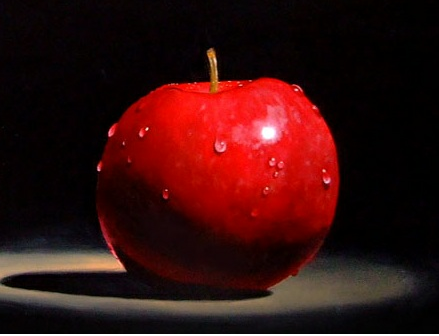 “For God doth know that in the day ye eat thereof, then your eyes shall be opened, and ye shall be as gods, knowing good and evil.” – Genesis 3:5
I figured something out. I’m not sure of the theology, so don’t call me on the terms I use or on the methodology I employ. Still, I’m fairly certain of the result. As such, I rise Archimedes-like from the bath, feverish with my solution and eager for its impartation (I won’t run buck naked down the street shouting about it like he did, but I’m pretty pleased nonetheless).
The scriptural passage above—in that lovely Jacobean English—was spoken by our first friend, our bosom pal, the most subtle of all the friendly beasts in the neighborhood (when it was still fresh and new and unfenced): the wily serpent of ancient lore. In the creation story, this line is the point at which the tension builds. Deceit is being worked here—the apple, offered; the trap, laid. The rest of the story needs no rehearsing, and it’s merely ancillary to my discovery anyhow. For I’m interested in the language set out above, in particular, the phrase “and ye shall be as gods.”
That’s the part where, historically, I’ve absolved myself of at least some portion of original sin, the fallen state that we’ve inherited like a leopard does his spots, as C. S. Lewis would say. This business of being as a god seemed only hyperbole before, just part of the ruse the serpent in the story played to secure our first parents’ disobedience.
There now; disobedience—that was the stuff of sin for me. I could see my way to owning a part of that. Rejecting the good, accepting the bad; that sounded very familiar. I could even concede that I fooled myself most of the time when it came to the good and the bad. As Aristotle predicted, like a true son of my race, I would tell myself that the bad is the good, so that I could permit myself to have it. After all, no one chooses what he thinks is bad, said the Stagyrite, he simply rationalizes it into a semblance of the good.
But see, that was my problem. I thought that sin was just a matter of disobedience. A matter of doing what you were told not to do or not doing what you should—of choosing the wrong instead of the right. Now I spot my folly. That was just the means by which the great sin was achieved. I disobeyed, yes, but only as the vehicle to get what I really wanted: to be God.
This thought struck me like one of those epiphanies that both surprise and repulse: the kind of startlingly unpleasant experience of thinking someone reflected in a store window is particularly unattractive, right before you realize that the particularly unattractive person is you.
And as with all such repulsions, I started to reject it: When have I thought myself God? When have I usurped God’s place?
But again, the grace of intellectual honesty made me concede that the experience of such a thing is common, though not in some melodramatic fashion. That is, the usurpation occurs not by way of ceremony or statement, but by action and consequence: I act as though I am my own creation, my own autonomous state, eternally begotten of my own fiat. Yes, it leads me to disobey, but only because I have first pronounced that I am entitled to—I can, because I am (pace Descartes).
“This is my realm,” I say, as a god feels its scope, “and all is permitted me here,” as a god tests it.
I posit that humanity’s great sin amounts to the staking of a claim, the planting of a banner. This corner becomes a private sphere—a strike-free zone, as it were—off limits—self-governing—a country unto itself. There is but one crown, and no dominion can bear two masters.
At first, there are terms of peace. “This one little area is all I claim,” we say to God. “I make no war with you. Just this one modest plot.”
Then we bear our teeth.
“But it is mine. And you must stay out of it. Here I have my say. All else is yours, but this. I retain dominion, power, over this.”
Except, of course, they grow, these borders do; they never remain so small. I have revanchist tendencies. I spoil for empire. More and more of my heart must be ceded.
And when that happens, the world shrinks—I become all eyes—wet tongue—greased lips—hands slippery, sweaty, sly. There is only my will and its object then. From my sovereign throne, I bestow the fullness of my magnanimity upon myself, and speak in the native language of my land:
Have all that you see before you, my good and faithful servant. You have not toiled, nor have you reaped. You have made no promises, sworn no vows; you have pledged no part of yourself to what you would have. But take it anyway; use it; drain it; plunder and plow, pillage and sack—grow full upon it and shove it aside when you are done. Prosper long upon this earth, this realm, your kingdom.
So we who are not God clamber upon the throne clumsily, sharp elbows and skinned knees, like a child acceding to a place too high—fumbling into a masquerade glory, a Mardi Gras fraudulence we eventually start to believe in.
God has spoken in fire: “I am.” But how often we repeat those words, reflexively, with the referent for the great pronoun changed, and the voice of the speaker so subtle that it is hard to recognize it as our own.
A.G. Harmon teaches Shakespeare, Law and Literature, Jurisprudence, and Writing at The Catholic University of America in Washington, D.C. His novel, A House All Stilled, won the 2001 Peter Taylor Prize for the Novel.
Previous Post

June 29, 2012
Baseball and the Law of God
Next Post
July 3, 2012 Coming Home to Fatherhood
Browse Our Archives
Select a Category A. G. Harmon Alissa Wilkinson Allison Backous Art Authors Brad Fruhauff Bradford Winters Bryan Bliss Caroline Langston Chad Thomas Johnston Chris Hoke Christiana N. Peterson Culture D.G. Myers D.L. Mayfield Daniel Bowman Jr. David Griffith Elizabeth Duffy Faith Film Greg Wolfe Guest Contributor Interview Jan Vallone Jeffrey Overstreet Jessica Eddings-Roeser Jessica Mesman Griffith Kelly Foster Lindsey Crittenden Morgan Meis music Natalie Vestin Nick Olson Peggy Rosenthal Personal Reflection Poetry Friday Reflection Relationships Review Richard Chess Richard Cole Sara Zarr Shannon Huffman Polson Sonya Bilocerkowycz Tania Runyan Tony Woodlief Topical Categories Uncategorized Vic Sizemore Writing
Select a Month October 2018 September 2018 August 2018 July 2018 June 2018 May 2018 April 2018 March 2018 February 2018 January 2018 December 2017 November 2017 October 2017 September 2017 August 2017 July 2017 June 2017 May 2017 April 2017 March 2017 February 2017 January 2017 December 2016 November 2016 October 2016 September 2016 August 2016 July 2016 June 2016 May 2016 April 2016 March 2016 February 2016 January 2016 December 2015 November 2015 October 2015 September 2015 August 2015 July 2015 June 2015 May 2015 April 2015 March 2015 February 2015 January 2015 December 2014 November 2014 October 2014 September 2014 August 2014 July 2014 June 2014 May 2014 April 2014 March 2014 February 2014 January 2014 December 2013 November 2013 October 2013 September 2013 August 2013 July 2013 June 2013 May 2013 April 2013 March 2013 February 2013 January 2013 December 2012 November 2012 October 2012 September 2012 August 2012 July 2012 June 2012 May 2012 February 2008
Follow Us!
TAKE THE
Religious Wisdom Quiz
What is the biblical view of work?
Select your answer to see how you score.
Avoid work Work hard as for the Lord Only kings should work Work is a curse
Related posts from Good Letters


The Life-Changing Magic of Picking Nits

Black Mirror and My Superego Nightmare

The Crown and Victoria: Tales of Two Queens
TRENDING AT PATHEOS Catholic

Rejecting Doom: Christian Hope And Human Action
Christianity is a religion of hope. We are to have hope and...

It’s What Comes From Within Which Matters
One of the most difficult things for us to understand is why...

Why I Choose the Eucharist Over the Sermon
Choose the Eucharist, Not the Sermon What are we supposed to get...

5 Design Elements Found in Spiritually Rooted Homes
Putting Spirituality Into Home Decor Our homes are more than our living...

Credo: A Story of God Told with the...
About 10 years ago, I began to imagine a personal "Credo" that...

The Anatomy of Divine Revelation in Catholic Thought
The claim that God has made Himself known to human beings is...
view all Catholic blogs
Ad-Free & Subscriber Log-In Subscription Support
- About Us
- 2026 Calendar
- Videos
- Podcasts
- Library of World Religions
- Faith In Media Tracker
- Advertise With Us
- Write for Us
- Privacy Policy
- Terms of Service
- Do Not Sell My Data
- Contact Us
- Radiant Digital
- Manage Newsletter Subscriptions
- Unsubscribe From Notifications
- Sitemap
Copyright 2008-2026, Patheos. All rights reserved.
Subscription Support Ad-Free & Subscriber Log-In
Follow Patheos