
BuddhistCatholicContemplativeEvangelicalGeneral ChristianHinduJewishLatter-day SaintMuslimNew VisionsProgressive Christian
Beliefs
- Buddhist
- Catholic
- Contemplative
- Evangelical
- General Christian
- Hindu
- Jewish
- Latter-day Saint
- More Voices
- Muslim
- New Visions
- Pagan
- Progressive Christian
Topics
- Religion News
- Food and Religion
- Sports and Religion
- Religious Art
- Religious Music and Entertainment
- Religious Events
- History and Religion
- Style and Religion
- Politics and Religion
- Women in Religion
- Recreation Outdoors and Religion
- Business Finance and Religion
- Careers Workplace and Religion
- Education and Religion
- Family Parenting and Religion
- Health Fitness and Religion
- Home and Religion
- Relationships and Religion
- Technology and Religion
- Travel and Religion
Columnists
- Buddhist Columnists
- Business Finance and Religion Columnists
- Careers Workplace and Religion Columnists
- Catholic Columnists
- Contemplative Columnists
- Education and Religion Columnists
- Evangelists Columnists
- Family Parenting and Religion Columnists
- General Christian Columnists
- Health Fitness and Religion Columnists
- Hindu Columnists
- History and Religion Columnists
- Home and Religion Columnists
- Jewish Columnists
- More Voices Columnists
- Latter Day Columnists
- Muslim Columnists
- New Visions Columnists
- Nonreligious Columnists
- Pagan Columnists
- Politics and Religion Columnists
- Progressive Columnists
- Recreation Outdoors and Religion Columnists
- Relationships and Religion Columnists
- Religion News Columnists
- Religious Art Columnists
- Religious Events Columnists
- Religious Music and Entertainment Columnists
- Sports and Religion Columnists
- Style and Religion Columnists
- Technology and Religion Columnists
- Travel and Religion Columnists
- Women in Religion Columnists
Resource Library
- 2026 Calendar
- Library of World Religions
- The 100 Most Holy Places on Earth
- Patheos Answers
- Podcasts
- Videos
- Faith Leaders Database
- Anglican Episcopalian
- Bahai
- Baptist
- Buddhism
- Christianity
- Confucianism
- Eastern Orthodoxy
- Hinduism
- Holiness and Pentecostal
- ISKCON
- Islam
- Judaism
- Lutheran
- Methodist
- The Church of Jesus Christ of Latter-day Saints
- New Age
- Paganism
- Presbytarian and Reformed
- Protestantism
- Religion Behind the Scenes
- Roman Catholic
- Scientology
- Shia Islam
- Sikhism
- Sufism
- Sunni Islam
- Taoism
- Zen
- See all religions
Research Tools
 Ad-Free & Subscriber Log-In Subscription Support
Ad-Free & Subscriber Log-In Subscription Support
Follow Patheos 

- Trending:
- Forgiveness
- |
- Marriage
- |
- Consciousness
- |
- Death Penalty
- |
- Election
- |
- Halloween
 Good Letters
-
Contributors
- Home
- Catholic
- A Psalm for Surgery
A Psalm for Surgery
Last updated on: June 27, 2013 at 2:23 pm by Richard Chess
A Psalm for Surgery 2013-06-27T14:23:36-07:00 Richard Chess
Patheos Explore the world's faith through different perspectives on religion and spirituality! Patheos has the views of the prevalent religions and spiritualities of the world.
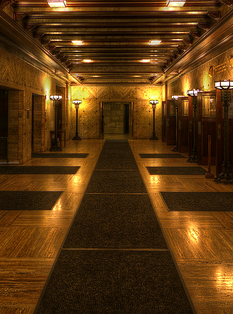 Seamless, my passage through a day and from day to day: from dawn to dusk, from sleep to waking. Though sleep may be interrupted, the story of life, this life, my life continues uninterrupted.
From sand glazed by sun to the wet edge of sand (“in nature there are few sharp lines” writes A.R. Ammons in “Corsons Inlet”) where the thinnest sheet of water spreads over the feet, to full immersion in the Atlantic Ocean and back to the beach towel, the chair, the novel; from house to yard, empty wallet to loaded, stained teeth to polished, one motion.
Yes, time, my time, is calendared, gridded: slots for waking and sleeping, exercising and eating, teaching, grading, meeting, reading, watching, sitting (to meditate and pray, to receive and send), walking (down the hall, down the stairs, across the road, around the circle led by a dog), and lying down.
I move seamlessly from one grid to another: the grid of the academic year, the grid of the Jewish calendar, the grid of the American calendar, the grid of broadcast dayparting, the grid of medical care.
This time, my time, my story: it goes on, unbound, uninterrupted, forever. Until it doesn’t.
Just ask the sons of Korah. Yes, I know, we have met them before, we have leaned into their psalm, the psalm for Monday. But Monday follows Monday follows Monday. So, we meet again (and again).
And what do they have to say today? Space comes before time.
There is a place, the city of God, they call it in Psalm 48. Splendid and sublime, they call it. On God’s mountain, God’s city. In God’s city, God’s temple. In God’s temple, a place within a place within a place. At the center of the place within a place within a place, we meditate. Meditate on Your kindness.
Inside, inside, the psalmist speaks to, not of God. That’s what the pronouns tell us: Her citadels become Your temple*.* What do the sons of Korah know? Moving within creates the possibility for intimacy, immediacy.
And, because the sons of Korah are human, what else can they do, upon encountering God’s presence in this place, but try to expand God’s temple? Expand until it “reaches the ends of the earth,” they say, so that others may stand or sit and meditate within it, so that others may come to know and praise God.
But it can’t be enlarged. And they know it. How do we know they know? Because they try so hard to convince us that the limits of space can be overcome.
“Walk all about Zion, encircle her,” we are instructed as the psalm turns toward its conclusion. “Count her towers, review her ramparts, scan her citadels.” The temple and the city in which it stands are not boundless. Its walls do not contain this planet, let alone this galaxy, or the more than a hundred billion galaxies in the observable universe.
Count, review, scan: know this place. This place, its modest measure of earth. This temple, this particular place, the dwelling place of God on earth. The only way to defeat the force or forces that will destroy it: Mark and memorize its features. Turn it into time.
This Body, this specific body: scanned (CT, MRI), counted (its chemistry, its mass), reviewed (notice the long scar—its seam—that runs the length of the abdomen).
And the surgeon (who sings his own songs of praise) says, the simple operation first. Then, if necessary, we’ll discuss the benefits of another, a much bigger deal. The odds are small that will be necessary.
The scans, the lab work, the statistics, the collective intelligence and experience of a good physician, radiologist, oncologist, surgeon: as certain and reassuring as they can be, given the information they are capable of gathering up to this point.
The cellular picture, however, will be revealed only later. After.
For a day, I could see it: the tear in the fabric—surgery, a small cut underneath the ribs—the beginning of the abrupt ending of the story, my story.
Irrational to think the worst. Yet . . .
What do the sons of Korah know? I am a son of Korah; I am author of this psalm. Presence contains absence; intimacy contains distance; life contains death; wholeness contains brokenness: these are the names of God.
What do the sons of Korah know? Fear. Irrational to think the worst. And too easy. Not hard enough.
Space dissolves into time.
Tell [Zion’s] story to later generations;
tell of our God who will guide us forever.
Forever: how clever, our invention. Intended to comfort. A lie.
But that’s too easy, dismissing forever as a lie.
What does it take to know what the sons of Korah know? “What we once heard we now have witnessed.” That’s what they say after seeing for themselves the defeat of those who conspire against God.
What do the sons of Korah know? God will guide us forever. Did they witness this? Intuit it? If and when I witness that, I will tell its story, the story of continuity, seamlessness, in whatever way I can to whoever will listen.
Richard Chess is the author of three books of poetry, Tekiah, Chair in the Desert, and Third Temple. Poems of his have appeared in Telling and Remembering: A Century of American Jewish Poetry, Bearing the Mystery: Twenty Years of IMAGE, and Best Spiritual Writing 2005. He is the Roy Carroll Professor of Honors Arts and Sciences at the University of North Carolina at Asheville. He is also the director of UNC Asheville’s Center for Jewish Studies.
Previous Post

July 9, 2012
The Stations of the Cross on the A Train, Part Three
Next Post
July 11, 2012 The Bleeding Woman: an Imagining
Browse Our Archives
Select a Category A. G. Harmon Alissa Wilkinson Allison Backous Art Authors Brad Fruhauff Bradford Winters Bryan Bliss Caroline Langston Chad Thomas Johnston Chris Hoke Christiana N. Peterson Culture D.G. Myers D.L. Mayfield Daniel Bowman Jr. David Griffith Elizabeth Duffy Faith Film Greg Wolfe Guest Contributor Interview Jan Vallone Jeffrey Overstreet Jessica Eddings-Roeser Jessica Mesman Griffith Kelly Foster Lindsey Crittenden Morgan Meis music Natalie Vestin Nick Olson Peggy Rosenthal Personal Reflection Poetry Friday Reflection Relationships Review Richard Chess Richard Cole Sara Zarr Shannon Huffman Polson Sonya Bilocerkowycz Tania Runyan Tony Woodlief Topical Categories Uncategorized Vic Sizemore Writing
Select a Month October 2018 September 2018 August 2018 July 2018 June 2018 May 2018 April 2018 March 2018 February 2018 January 2018 December 2017 November 2017 October 2017 September 2017 August 2017 July 2017 June 2017 May 2017 April 2017 March 2017 February 2017 January 2017 December 2016 November 2016 October 2016 September 2016 August 2016 July 2016 June 2016 May 2016 April 2016 March 2016 February 2016 January 2016 December 2015 November 2015 October 2015 September 2015 August 2015 July 2015 June 2015 May 2015 April 2015 March 2015 February 2015 January 2015 December 2014 November 2014 October 2014 September 2014 August 2014 July 2014 June 2014 May 2014 April 2014 March 2014 February 2014 January 2014 December 2013 November 2013 October 2013 September 2013 August 2013 July 2013 June 2013 May 2013 April 2013 March 2013 February 2013 January 2013 December 2012 November 2012 October 2012 September 2012 August 2012 July 2012 June 2012 May 2012 February 2008
Follow Us!
TAKE THE
Religious Wisdom Quiz
What city did Paul visit where the people worshiped "an unknown god"?
Select your answer to see how you score.
Rome Corinth Athens Ephesus
Related posts from Good Letters


A Conversation with Alicia Ostriker: Part 1

A Conversation with Alicia Ostriker: Part 2

Leonard Cohen’s Holy and Broken Hallelujah
TRENDING AT PATHEOS Catholic

Rejecting Doom: Christian Hope And Human Action
Christianity is a religion of hope. We are to have hope and...

It’s What Comes From Within Which Matters
One of the most difficult things for us to understand is why...

Why I Choose the Eucharist Over the Sermon
Choose the Eucharist, Not the Sermon What are we supposed to get...

5 Design Elements Found in Spiritually Rooted Homes
Putting Spirituality Into Home Decor Our homes are more than our living...

Credo: A Story of God Told with the...
About 10 years ago, I began to imagine a personal "Credo" that...

The Anatomy of Divine Revelation in Catholic Thought
The claim that God has made Himself known to human beings is...
view all Catholic blogs
Ad-Free & Subscriber Log-In Subscription Support
- About Us
- 2026 Calendar
- Videos
- Podcasts
- Library of World Religions
- Faith In Media Tracker
- Advertise With Us
- Write for Us
- Privacy Policy
- Terms of Service
- Do Not Sell My Data
- Contact Us
- Radiant Digital
- Manage Newsletter Subscriptions
- Unsubscribe From Notifications
- Sitemap
Copyright 2008-2026, Patheos. All rights reserved.
Subscription Support Ad-Free & Subscriber Log-In
Follow Patheos