
BuddhistCatholicContemplativeEvangelicalGeneral ChristianHinduJewishLatter-day SaintMuslimNew VisionsProgressive Christian
Beliefs
- Buddhist
- Catholic
- Contemplative
- Evangelical
- General Christian
- Hindu
- Jewish
- Latter-day Saint
- More Voices
- Muslim
- New Visions
- Pagan
- Progressive Christian
Topics
- Religion News
- Food and Religion
- Sports and Religion
- Religious Art
- Religious Music and Entertainment
- Religious Events
- History and Religion
- Style and Religion
- Politics and Religion
- Women in Religion
- Recreation Outdoors and Religion
- Business Finance and Religion
- Careers Workplace and Religion
- Education and Religion
- Family Parenting and Religion
- Health Fitness and Religion
- Home and Religion
- Relationships and Religion
- Technology and Religion
- Travel and Religion
Columnists
- Buddhist Columnists
- Business Finance and Religion Columnists
- Careers Workplace and Religion Columnists
- Catholic Columnists
- Contemplative Columnists
- Education and Religion Columnists
- Evangelists Columnists
- Family Parenting and Religion Columnists
- General Christian Columnists
- Health Fitness and Religion Columnists
- Hindu Columnists
- History and Religion Columnists
- Home and Religion Columnists
- Jewish Columnists
- More Voices Columnists
- Latter Day Columnists
- Muslim Columnists
- New Visions Columnists
- Nonreligious Columnists
- Pagan Columnists
- Politics and Religion Columnists
- Progressive Columnists
- Recreation Outdoors and Religion Columnists
- Relationships and Religion Columnists
- Religion News Columnists
- Religious Art Columnists
- Religious Events Columnists
- Religious Music and Entertainment Columnists
- Sports and Religion Columnists
- Style and Religion Columnists
- Technology and Religion Columnists
- Travel and Religion Columnists
- Women in Religion Columnists
Resource Library
- 2026 Calendar
- Library of World Religions
- The 100 Most Holy Places on Earth
- Patheos Answers
- Podcasts
- Videos
- Faith Leaders Database
- Anglican Episcopalian
- Bahai
- Baptist
- Buddhism
- Christianity
- Confucianism
- Eastern Orthodoxy
- Hinduism
- Holiness and Pentecostal
- ISKCON
- Islam
- Judaism
- Lutheran
- Methodist
- The Church of Jesus Christ of Latter-day Saints
- New Age
- Paganism
- Presbytarian and Reformed
- Protestantism
- Religion Behind the Scenes
- Roman Catholic
- Scientology
- Shia Islam
- Sikhism
- Sufism
- Sunni Islam
- Taoism
- Zen
- See all religions
Research Tools
 Ad-Free & Subscriber Log-In Subscription Support
Ad-Free & Subscriber Log-In Subscription Support
Follow Patheos 

- Trending:
- Forgiveness
- |
- Marriage
- |
- Consciousness
- |
- Death Penalty
- |
- Election
- |
- Halloween
 Good Letters
-
Contributors
- Home
- Catholic
- A Story More Durable Than Flesh and Stone
A Story More Durable Than Flesh and Stone
Last updated on: June 26, 2013 at 1:32 pm by Richard Chess
A Story More Durable Than Flesh and Stone 2013-06-26T13:32:16-07:00 Richard Chess
Patheos Explore the world's faith through different perspectives on religion and spirituality! Patheos has the views of the prevalent religions and spiritualities of the world.
 Yom Rishon (l’Shabbat): the first day toward the coming Shabbat: Sunday on the Gregorian calendar.
And the psalmist asks, “Who may ascend the mountain of Y-H-V-H?” And the psalmist asks, “Who may rise in God’s sanctuary?”
Yom Sheni (l’Shabbat): the second day toward the coming Shabbat: Monday on the Western calendar.
And the psalmist says, “In your temple, God, we meditate upon your kindness.”
Thus, we progress, from day to day, from psalm to psalm, from below to above, from mundane to sacred. Stitching together the liturgy the rabbis create, or receive, a story and pass it on. A story to counter the story of loss, ruin, extinction.
Within the prison of time, an urge to overcome time’s vanquishing and vanishing. Our own vanishing.
On Monday a worshipper might remember, as she reads Psalm 48, the psalm for Monday, that yesterday, just yesterday, she wondered with the psalmist if she were worthy of ascending to the sanctuary, God’s sanctuary.
Today, yes, today! She meditates with the psalmist in God’s temple, upon the Divine’s kindness. Day stitched to day.
Imagination: the seamstress. Memory: the thread.
But this victory over time? Only for a moment.
“Walk all about Zion, encircle her,” instructs the psalmist, in the penultimate verses of Psalm 48. “Count her towers, review her ramparts, scan her citadels.”
Yes, behold, pay loving attention to every detail, for this, this is God’s dwelling place on earth. “In her citadels,” writes the psalmist, God is “known . . . as a refuge.”
“Then tell her story,” instructs the psalmist, “to later generations; tell of our God who will guide us forever.”
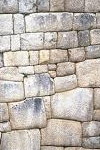
Zion’s towers will not stand tall forever; her citadels will not stand strong forever. Stone will turn into story.
Already in the morning, this is known. Already, in the morning, the dawning of evening: the day’s vanishing begins even as daylight arrives.
Anxious, afraid. Even in the place of God is the erasure of the place. The body, too, the body of the beloved, is the erasure of the body.
So try to remember some details. These words from a psalmist of another century, closer to our own but receding. (One is tempted to say into darkness, but can a dark century become even darker as it recedes from the present?)
“Remember the clothing / of the one you love,” instructs Yehuda Amichai, psalmist of a later generation, “so that on the day of loss you’ll be able to say: last seen / wearing such-and-such, brown jacket, white hat.”
Remember some details so that you’ll be able to turn her life, when it has vanished, into story. Story: more durable than flesh, more durable than stone.
More durable than time? How does God, who is the erasure of God, answer that one? Oblivion.
“Try to remember some details,” Amichai implores.
Try to remember some details. For the world
is filled with people who were torn from their sleep
with no one to mend the tear,
and unlike wild beasts they live
each in his lonely hiding place and they die
together on battlefields
and in hospitals.
Hasn’t Amichai’s century (the twentieth) ended and a new one begun? How does Time answer that one? Is Time bored by the question, bored by our obsession with counting?
Number our days: Yom Rishon (first day; May 6, 2012, this particular first day), Yom Sheni (second day; May 7, 2012, this particular second day) until our daily counting ends: Shabbat: the day on which our counting rests.
Alas, how soon the counting resumes.
And the poem, the psalm of a later generation:
And the earth will swallow all of them,
good and evil together, like the followers of Korah,
all of them in their rebellion against death,
their mouths open till the last moment,
praising and cursing in a single
howl.
Rebels: rabbis. Rabbis who stitched together the days with psalms, the Psalm for Monday, who will ascend; the Psalm for Tuesday, in your temple, God, we meditate upon your kindness.
Day linked to day: story: how we rebel against death.
Korah rebelled against Moses. And to rebel against Moses is to rebel against God. (But isn’t God a rebellion against God?) For his act, Korah was swallowed by earth. Korah’s sons, who witnessed their father’s rebellion, and, as ordered by God, the earth’s swallowing, instruct us to walk all about Zion, which they know is oblivion, source of the story we are instructed to tell and tell.
And in its telling is our rebellion that will guide us forever.
Richard Chess is the author of three books of poetry, Tekiah, Chair in the Desert, and Third Temple. Poems of his have appeared in Telling and Remembering: A Century of American Jewish Poetry, Bearing the Mystery: Twenty Years of IMAGE, and Best Spiritual Writing 2005. He is the Roy Carroll Professor of Honors Arts and Sciences at the University of North Carolina at Asheville. He is also the director of UNC Asheville’s Center for Jewish Studies.
Previous Post

May 21, 2012
Telemachus to Odysseus
Next Post
May 23, 2012 Good Letters: Words. Made Flesh.
Browse Our Archives
Select a Category A. G. Harmon Alissa Wilkinson Allison Backous Art Authors Brad Fruhauff Bradford Winters Bryan Bliss Caroline Langston Chad Thomas Johnston Chris Hoke Christiana N. Peterson Culture D.G. Myers D.L. Mayfield Daniel Bowman Jr. David Griffith Elizabeth Duffy Faith Film Greg Wolfe Guest Contributor Interview Jan Vallone Jeffrey Overstreet Jessica Eddings-Roeser Jessica Mesman Griffith Kelly Foster Lindsey Crittenden Morgan Meis music Natalie Vestin Nick Olson Peggy Rosenthal Personal Reflection Poetry Friday Reflection Relationships Review Richard Chess Richard Cole Sara Zarr Shannon Huffman Polson Sonya Bilocerkowycz Tania Runyan Tony Woodlief Topical Categories Uncategorized Vic Sizemore Writing
Select a Month October 2018 September 2018 August 2018 July 2018 June 2018 May 2018 April 2018 March 2018 February 2018 January 2018 December 2017 November 2017 October 2017 September 2017 August 2017 July 2017 June 2017 May 2017 April 2017 March 2017 February 2017 January 2017 December 2016 November 2016 October 2016 September 2016 August 2016 July 2016 June 2016 May 2016 April 2016 March 2016 February 2016 January 2016 December 2015 November 2015 October 2015 September 2015 August 2015 July 2015 June 2015 May 2015 April 2015 March 2015 February 2015 January 2015 December 2014 November 2014 October 2014 September 2014 August 2014 July 2014 June 2014 May 2014 April 2014 March 2014 February 2014 January 2014 December 2013 November 2013 October 2013 September 2013 August 2013 July 2013 June 2013 May 2013 April 2013 March 2013 February 2013 January 2013 December 2012 November 2012 October 2012 September 2012 August 2012 July 2012 June 2012 May 2012 February 2008
Follow Us!
TAKE THE
Religious Wisdom Quiz
What happened to Jesus 40 days after His resurrection?
Select your answer to see how you score.
He went back into hiding He performed one last miracle He ascended into heaven He visited the temple
Related posts from Good Letters

A Conversation with Alicia Ostriker: Part 1

Leonard Cohen’s Holy and Broken Hallelujah

Ready or Not for the Days of Awe

TRENDING AT PATHEOS Catholic

Rejecting Doom: Christian Hope And Human Action
Christianity is a religion of hope. We are to have hope and...

It’s What Comes From Within Which Matters
One of the most difficult things for us to understand is why...

Why I Choose the Eucharist Over the Sermon
Choose the Eucharist, Not the Sermon What are we supposed to get...

5 Design Elements Found in Spiritually Rooted Homes
Putting Spirituality Into Home Decor Our homes are more than our living...

Credo: A Story of God Told with the...
About 10 years ago, I began to imagine a personal "Credo" that...

The Anatomy of Divine Revelation in Catholic Thought
The claim that God has made Himself known to human beings is...
view all Catholic blogs
Ad-Free & Subscriber Log-In Subscription Support
- About Us
- 2026 Calendar
- Videos
- Podcasts
- Library of World Religions
- Faith In Media Tracker
- Advertise With Us
- Write for Us
- Privacy Policy
- Terms of Service
- Do Not Sell My Data
- Contact Us
- Radiant Digital
- Manage Newsletter Subscriptions
- Unsubscribe From Notifications
- Sitemap
Copyright 2008-2026, Patheos. All rights reserved.
Subscription Support Ad-Free & Subscriber Log-In
Follow Patheos