
BuddhistCatholicContemplativeEvangelicalGeneral ChristianHinduJewishLatter-day SaintMuslimNew VisionsProgressive Christian
Beliefs
- Buddhist
- Catholic
- Contemplative
- Evangelical
- General Christian
- Hindu
- Jewish
- Latter-day Saint
- More Voices
- Muslim
- New Visions
- Pagan
- Progressive Christian
Topics
- Religion News
- Food and Religion
- Sports and Religion
- Religious Art
- Religious Music and Entertainment
- Religious Events
- History and Religion
- Style and Religion
- Politics and Religion
- Women in Religion
- Recreation Outdoors and Religion
- Business Finance and Religion
- Careers Workplace and Religion
- Education and Religion
- Family Parenting and Religion
- Health Fitness and Religion
- Home and Religion
- Relationships and Religion
- Technology and Religion
- Travel and Religion
Columnists
- Buddhist Columnists
- Business Finance and Religion Columnists
- Careers Workplace and Religion Columnists
- Catholic Columnists
- Contemplative Columnists
- Education and Religion Columnists
- Evangelists Columnists
- Family Parenting and Religion Columnists
- General Christian Columnists
- Health Fitness and Religion Columnists
- Hindu Columnists
- History and Religion Columnists
- Home and Religion Columnists
- Jewish Columnists
- More Voices Columnists
- Latter Day Columnists
- Muslim Columnists
- New Visions Columnists
- Nonreligious Columnists
- Pagan Columnists
- Politics and Religion Columnists
- Progressive Columnists
- Recreation Outdoors and Religion Columnists
- Relationships and Religion Columnists
- Religion News Columnists
- Religious Art Columnists
- Religious Events Columnists
- Religious Music and Entertainment Columnists
- Sports and Religion Columnists
- Style and Religion Columnists
- Technology and Religion Columnists
- Travel and Religion Columnists
- Women in Religion Columnists
Resource Library
- 2026 Calendar
- Library of World Religions
- The 100 Most Holy Places on Earth
- Patheos Answers
- Podcasts
- Videos
- Faith Leaders Database
- Anglican Episcopalian
- Bahai
- Baptist
- Buddhism
- Christianity
- Confucianism
- Eastern Orthodoxy
- Hinduism
- Holiness and Pentecostal
- ISKCON
- Islam
- Judaism
- Lutheran
- Methodist
- The Church of Jesus Christ of Latter-day Saints
- New Age
- Paganism
- Presbytarian and Reformed
- Protestantism
- Religion Behind the Scenes
- Roman Catholic
- Scientology
- Shia Islam
- Sikhism
- Sufism
- Sunni Islam
- Taoism
- Zen
- See all religions
Research Tools
 Ad-Free & Subscriber Log-In Subscription Support
Ad-Free & Subscriber Log-In Subscription Support
Follow Patheos 

- Trending:
- Forgiveness
- |
- Marriage
- |
- Consciousness
- |
- Death Penalty
- |
- Election
- |
- Halloween
 Good and Truth
- Home
- Progressive Christian
- Does God Harden Hearts?
Does God Harden Hearts?
Last updated on: May 2, 2017 at 6:51 am by Coleman Glenn
Does God Harden Hearts? 2017-05-02T06:51:48-07:00 Coleman Glenn
Patheos Explore the world's faith through different perspectives on religion and spirituality! Patheos has the views of the prevalent religions and spiritualities of the world.
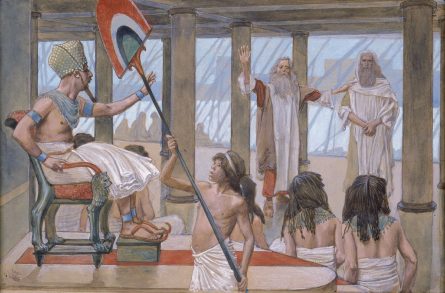
Lee Woofenden has an excellent post today on the question of whether God hardens anyone’s heart, and whether we can be held responsible if He does. Lee outlines his answer:
The Bible often speaks according to the human appearance rather than the divine reality.
This is necessary for the Bible to achieve God’s purpose for it: to save our eternal souls.
God will not allow us to achieve enlightenment that we are unable to sustain.
God’s love and mercy is turned into its opposite in people who are opposed to God.
Lee starts by tackling the most well-known Biblical examples of God apparently hardening people’s hearts: the account from Exodus of Pharaoh’s heart being hardened against releasing the Children of Israel, and Paul’s reference to this in Romans 9. Lee again:
Paul refers to the example of Pharaoh:
The Lord said to Moses, “When you return to Egypt, see that you perform before Pharaoh all the wonders I have given you the power to do. But I will harden his heart so that he will not let the people go.” (Exodus 4:21)
There you have it! It’s God’s fault that Pharaoh wouldn’t let the people of Israel go! It’s God’s fault that the Egyptians had to suffer all those plagues!
But even in the story itself, covering Exodus chapters 4 to 14, there are hints that it’s not quite so simple. Yes, ten times it says that the Lord hardened the hearts of Pharaoh and his officials. But seven times it says that Pharaoh and his officials hardened their hearts. So who did the hardening, God or Pharaoh?
Expanding on the first point in his outline quoted above, Lee suggests that the entire Bible is written in accommodation to the receptibility of its hearers and readers:
When God spoke to the people of Bible times, God not only had to speak in their particular language, but also in the concepts they knew about and believed. There was only so much God could say without completely losing his audience.
In the New Testament, Jesus was well aware of the limitations on what he could say even to his closest disciples. That’s why he said to them, “I still have many things to say to you, but you cannot bear them now” (John 16:12). He could tell them only as much as their minds (and hearts) were capable of grasping at that time.
I think this principle is even clearer in Jesus’ words on divorce: “Moses, because of the hardness of your hearts, permitted you to divorce your wives, but from the beginning it was not so” (Matthew 19:8).
I encourage you to read the whole article to see how Lee expands on the other points.
As it happens, I read these chapters in Exodus just a few weeks ago, and I’d already been thinking about how God could be said to harden Pharaoh’s heart when I read Lee’s post. In particular, I’ve been reflecting on the principle Lee expounds in his fourth part: “God’s love and mercy is turned into its opposite in people who are opposed to God.”
This is the sense in which I think God really could be said to have caused the hardening of Pharaoh’s heart, even though I think it’s clear from other passages in Scripture that God never causes evil. What can lead to a hardened heart is a closer presence of God, which forces a decision one way or another – do I change, or do I double-down on where I already am?
I see something like this with my kids. Sometimes my kids get upset when they can’t have something they want. When that happens, I frequently offer them an alternative. More often than not, they reject the alternative (and it occasionally ends up hurled across the room). Giving them the choice ends up hardening them against whatever is being offered. But there are times when they do take the alternative, and even more times when they grudgingly accept it later after first firmly rejecting it. Giving them that choice, I think, is still an act of love.
I see the same thing in myself. If I’m in a bad mood and my wife gently suggests doing something that will bring me out of it, I sometimes react by retreating even more thoroughly into my grumpiness. I could blame Anne for hardening my heart – if she hadn’t said anything, I wouldn’t have gotten defensive about that bad mood. But the reality is, I’ve hardened myself in response to her loving suggestion.
I think that’s the dynamic at work in the story of Pharaoh. God draws closer and it dawns on Pharaoh that he could let the people of Israel go, he could do the right thing. And he almost does. But the full realization of what that will mean snaps him back to his earlier reluctance, which he then clings to even more zealously. Has God hardened his heart? Sort of. But only in the sense that He opened Pharaoh’s eyes a bit, and He knew that Pharaoh would respond by hardening his own heart against God’s loving offer.
(Image by James Tissot – http://www.thejewishmuseum.org/onlinecollection/object_collection.php?objectid=26342&artistlist=1&an=James Jacques Joseph Tissot, Public Domain, Link)
Previous Post

April 25, 2017
In Defense of Religious Extremism
Next Post

May 5, 2017 The Best Things: Worship Music Edition
Browse Our Archives
Select a Category Art Books Culture Humor Miscellany Morality Movies Music Personal Politics Religion Science Sermons The Best Things Theatre Uncategorized
Select a Month April 2019 October 2018 September 2018 July 2018 May 2018 April 2018 February 2018 January 2018 December 2017 November 2017 October 2017 September 2017 August 2017 July 2017 June 2017 May 2017 April 2017 March 2017 February 2017 January 2017 November 2016 July 2016 May 2016 April 2016 March 2016 September 2015 June 2015 May 2015 April 2015 March 2015 November 2014 October 2014 June 2014 May 2014 April 2014 March 2014 February 2014 November 2013 October 2013 September 2013 August 2013 June 2013 May 2013 April 2013 March 2013 October 2012 September 2012 July 2012 June 2012 May 2012 April 2012 March 2012 February 2012 January 2012 December 2011 November 2011 October 2011 September 2011 August 2011 July 2011 May 2011 April 2011 March 2011 February 2011 January 2011 December 2010 November 2010 September 2010 August 2010 July 2010 June 2010 May 2010 April 2010 January 2010
Follow Us!
TAKE THE
Religious Wisdom Quiz
Which book of the Bible contains the story of Gideon?
Select your answer to see how you score.
Joshua Judges 2 Kings 1 Samuel
Related posts from Good and Truth


Four Ways of Looking at a Mirror

What Type of Christian Are You?

TRENDING AT PATHEOS Progressive Christian

What Being a Modern-Day Apostle Means to Me
In my last column, I discussed the ins and outs of modern-day...

Did Ancient China Once Worship the God of...
Across human history, a common thread weaves through the origins of the...

Love Your Neighbor – Including Earth-Kin: Lev. 19,...
God’s command to love your neighbor means acting in an ethical and...

Lead a Church Study of “Jesus and Lao...
Guest writer Jack Thomas (The Irreverent Reverend) reflects on leading his church...

Pastoral Wisdom for Responding to Sermon Pushback
Getting sermon pushback on your social justice sermon? Learn practical, Proverbs-based strategies...

Principles for Understanding the Apostolic Ministry Today
Whenever people discover that my formal ministry title is "apostle," as in...
view all Progressive Christian blogs
Ad-Free & Subscriber Log-In Subscription Support
- About Us
- 2026 Calendar
- Videos
- Podcasts
- Library of World Religions
- Faith In Media Tracker
- Advertise With Us
- Write for Us
- Privacy Policy
- Terms of Service
- Do Not Sell My Data
- Contact Us
- Radiant Digital
- Manage Newsletter Subscriptions
- Unsubscribe From Notifications
- Sitemap
Copyright 2008-2026, Patheos. All rights reserved.
Subscription Support Ad-Free & Subscriber Log-In
Follow Patheos