
BuddhistCatholicContemplativeEvangelicalGeneral ChristianHinduJewishLatter-day SaintMuslimNew VisionsProgressive Christian
Beliefs
- Buddhist
- Catholic
- Contemplative
- Evangelical
- General Christian
- Hindu
- Jewish
- Latter-day Saint
- More Voices
- Muslim
- New Visions
- Pagan
- Progressive Christian
Topics
- Religion News
- Food and Religion
- Sports and Religion
- Religious Art
- Religious Music and Entertainment
- Religious Events
- History and Religion
- Style and Religion
- Politics and Religion
- Women in Religion
- Recreation Outdoors and Religion
- Business Finance and Religion
- Careers Workplace and Religion
- Education and Religion
- Family Parenting and Religion
- Health Fitness and Religion
- Home and Religion
- Relationships and Religion
- Technology and Religion
- Travel and Religion
Columnists
- Buddhist Columnists
- Business Finance and Religion Columnists
- Careers Workplace and Religion Columnists
- Catholic Columnists
- Contemplative Columnists
- Education and Religion Columnists
- Evangelists Columnists
- Family Parenting and Religion Columnists
- General Christian Columnists
- Health Fitness and Religion Columnists
- Hindu Columnists
- History and Religion Columnists
- Home and Religion Columnists
- Jewish Columnists
- More Voices Columnists
- Latter Day Columnists
- Muslim Columnists
- New Visions Columnists
- Nonreligious Columnists
- Pagan Columnists
- Politics and Religion Columnists
- Progressive Columnists
- Recreation Outdoors and Religion Columnists
- Relationships and Religion Columnists
- Religion News Columnists
- Religious Art Columnists
- Religious Events Columnists
- Religious Music and Entertainment Columnists
- Sports and Religion Columnists
- Style and Religion Columnists
- Technology and Religion Columnists
- Travel and Religion Columnists
- Women in Religion Columnists
Resource Library
- 2026 Calendar
- Library of World Religions
- The 100 Most Holy Places on Earth
- Patheos Answers
- Podcasts
- Videos
- Faith Leaders Database
- Anglican Episcopalian
- Bahai
- Baptist
- Buddhism
- Christianity
- Confucianism
- Eastern Orthodoxy
- Hinduism
- Holiness and Pentecostal
- ISKCON
- Islam
- Judaism
- Lutheran
- Methodist
- The Church of Jesus Christ of Latter-day Saints
- New Age
- Paganism
- Presbytarian and Reformed
- Protestantism
- Religion Behind the Scenes
- Roman Catholic
- Scientology
- Shia Islam
- Sikhism
- Sufism
- Sunni Islam
- Taoism
- Zen
- See all religions
Research Tools
 Ad-Free & Subscriber Log-In Subscription Support
Ad-Free & Subscriber Log-In Subscription Support
Follow Patheos 

- Trending:
- Forgiveness
- |
- Marriage
- |
- Consciousness
- |
- Death Penalty
- |
- Election
- |
- Halloween
 Good and Truth
- Home
- Progressive Christian
- 120 Years of a Swedenborgian “Benedict Option”
120 Years of a Swedenborgian “Benedict Option”
Last updated on: March 16, 2017 at 10:54 am by Coleman Glenn
120 Years of a Swedenborgian “Benedict Option” 2017-03-16T10:54:03-07:00 Coleman Glenn
Patheos Explore the world's faith through different perspectives on religion and spirituality! Patheos has the views of the prevalent religions and spiritualities of the world.
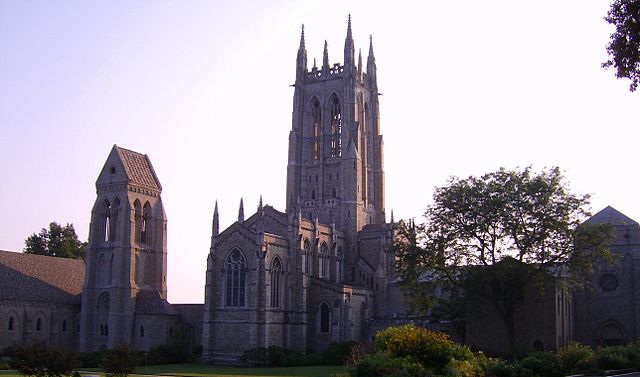
Rod Dreher’s long-awaited book The Benedict Option was released on Tuesday, and it’s already sparking spirited debate among various Christian readers. My copy of the book just arrived, and I’m hoping to explore in further posts what the New Church can learn from the Benedict Option. For this post, though, I want to talk instead about what the Benedict Option can learn from the New Church.
What is the Benedict Option?
In simplest terms, the “Benedict Option” is a decision by Christians to find their primary identity in strong Christian communities, rather than in a culture that has become anti-Christian. From the FAQ on Rod Dreher’s blog :
What is the Benedict Option?
The “Benedict Option” refers to Christians in the contemporary West who cease to identify the continuation of civility and moral community with the maintenance of American empire, and who therefore are keen to construct local forms of community as loci of Christian resistance against what the empire represents. Put less grandly, the Benedict Option — or “Ben Op” — is an umbrella term for Christians who accept [Alasdair] MacIntyre’s critique of modernity, and who also recognize that forming Christians who live out Christianity according to Great Tradition requires embedding within communities and institutions dedicated to that formation.
Rod expounds on what that means: not necessarily “running to the hills” or joining a monastery, but creating thriving communities wherever you are, and making those communities of faith central to your life.
A New Church Benedict Option: The General Church of the New Jerusalem
This is familiar territory for American Swedenborgians. The General Church of the New Jerusalem broke away from its parent denomination in the 1890’s with the intention of forming more distinctive New Church communities and culture. This involved adopting the position that the Christianity of the surrounding culture was false and toxic (a view based in part on passages such as Brief Exposition §103 that describe the danger of trying to simultaneously embrace the doctrine of the New Church and the doctrine of the extant churches in Christendom). To ensure the strength and growth of the New Church, it was thought, it would be important to found New Church schools and societies that could raise children with distinctive New Church education and foster distinctive New Church social life. In other words, it would become a Swedenborgian equivalent of the Benedict Option. My hometown of Bryn Athyn, PA, the bishop’s seat for the church, is the most notable example of this kind of community.
In some sense, Swedenborgianism is uniquely suited to creating healthy intentional religious communities. We have explicit doctrine that those of different faiths can be saved , that it is wrong for any group to think of themselves as more living and “in the light” than others , and that it is harmful to compel anyone in matters of worship.
In many ways, the experiment has been a success: the General Church has seen slow but steady growth over the last century, and a lot of people deeply value the communities that have fostered their faith. There have been very real failings, though, and I don’t want to dismiss those. Any insular community can lead to an “insiders vs. outsiders” mentality, and although I think the church has taken good steps toward combatting this in recent years, we still have work to do here. But I don’t think that negates the good that can happen in counter-cultural, distinctively New Church communities. What I would like to see is a productive conversation where we openly acknowledge what has worked, what hasn’t worked, and where we can go from here.
An open discussion: what have we learned, and where do we go from here?
So, my question for General Church readers (and here I also welcome input from folks from other religious backgrounds with experience in this kind of community):
1.) What, in your experience, have been the most positive aspects of the intentional, separatist community model of the General Church?
2.) What, in your experience, have been the biggest pitfalls of this model?
3.) What would you suggest, going forward, to making New Church intentional communities stronger and more healthy ?
Feel free to answer as many or few of these as you want. I don’t want this to turn into denomination bashing (either of the General Church or any other denomination), and I won’t post comments with personal attacks – please try to leave names out of it if possible. But I do think that now is as good a time as any to begin an honest assessment of where we’ve been, where we are now, and what the future might hold. My hope is that even for members of other denominations, Swedenborgian and otherwise, this conversation will inform similar discussions about how to foster healthy faith communities in a culture that will always be hostile to some aspects of them.
(Image of Bryn Athyn Cathedral by Coemgenus at English Wikipedia(Original text: en:User:Coemgenus) – en:User:Coemgenus, Public Domain, Link)
General Church of the New Jerusalem
Previous Post

March 14, 2017
Why I Don't Say "Swedenborg Says..."
Next Post

March 18, 2017 Small-town Faith Comes to Broadway in "Come From Away"
Browse Our Archives
Select a Category Art Books Culture Humor Miscellany Morality Movies Music Personal Politics Religion Science Sermons The Best Things Theatre Uncategorized
Select a Month April 2019 October 2018 September 2018 July 2018 May 2018 April 2018 February 2018 January 2018 December 2017 November 2017 October 2017 September 2017 August 2017 July 2017 June 2017 May 2017 April 2017 March 2017 February 2017 January 2017 November 2016 July 2016 May 2016 April 2016 March 2016 September 2015 June 2015 May 2015 April 2015 March 2015 November 2014 October 2014 June 2014 May 2014 April 2014 March 2014 February 2014 November 2013 October 2013 September 2013 August 2013 June 2013 May 2013 April 2013 March 2013 October 2012 September 2012 July 2012 June 2012 May 2012 April 2012 March 2012 February 2012 January 2012 December 2011 November 2011 October 2011 September 2011 August 2011 July 2011 May 2011 April 2011 March 2011 February 2011 January 2011 December 2010 November 2010 September 2010 August 2010 July 2010 June 2010 May 2010 April 2010 January 2010
Follow Us!
TAKE THE
Religious Wisdom Quiz
We were commanded to send away our foreign wives and children to remain faithful to God. Who are we?
Select your answer to see how you score.
The standing army The Levites The Priests The returning exiles
Related posts from Good and Truth


Four Ways of Looking at a Mirror

What Type of Christian Are You?

TRENDING AT PATHEOS Progressive Christian

Why Christians Have a Sacred Duty to Vote:...
The Bible offers strong support for the sacred duty to vote. Here...

What Being a Modern-Day Apostle Means to Me
In my last column, I discussed the ins and outs of modern-day...

Did Ancient China Once Worship the God of...
Across human history, a common thread weaves through the origins of the...

Love Your Neighbor – Including Earth-Kin: Lev. 19,...
God’s command to love your neighbor means acting in an ethical and...

Lead a Church Study of “Jesus and Lao...
Guest writer Jack Thomas (The Irreverent Reverend) reflects on leading his church...

Principles for Understanding the Apostolic Ministry Today
Whenever people discover that my formal ministry title is "apostle," as in...
view all Progressive Christian blogs
Ad-Free & Subscriber Log-In Subscription Support
- About Us
- 2026 Calendar
- Videos
- Podcasts
- Library of World Religions
- Faith In Media Tracker
- Advertise With Us
- Write for Us
- Privacy Policy
- Terms of Service
- Do Not Sell My Data
- Contact Us
- Radiant Digital
- Manage Newsletter Subscriptions
- Unsubscribe From Notifications
- Sitemap
Copyright 2008-2026, Patheos. All rights reserved.
Subscription Support Ad-Free & Subscriber Log-In
Follow Patheos