
BuddhistCatholicContemplativeEvangelicalGeneral ChristianHinduJewishLatter-day SaintMuslimNew VisionsProgressive Christian
Beliefs
- Buddhist
- Catholic
- Contemplative
- Evangelical
- General Christian
- Hindu
- Jewish
- Latter-day Saint
- More Voices
- Muslim
- New Visions
- Pagan
- Progressive Christian
Topics
- Religion News
- Food and Religion
- Sports and Religion
- Religious Art
- Religious Music and Entertainment
- Religious Events
- History and Religion
- Style and Religion
- Politics and Religion
- Women in Religion
- Recreation Outdoors and Religion
- Business Finance and Religion
- Careers Workplace and Religion
- Education and Religion
- Family Parenting and Religion
- Health Fitness and Religion
- Home and Religion
- Relationships and Religion
- Technology and Religion
- Travel and Religion
Columnists
- Buddhist Columnists
- Business Finance and Religion Columnists
- Careers Workplace and Religion Columnists
- Catholic Columnists
- Contemplative Columnists
- Education and Religion Columnists
- Evangelists Columnists
- Family Parenting and Religion Columnists
- General Christian Columnists
- Health Fitness and Religion Columnists
- Hindu Columnists
- History and Religion Columnists
- Home and Religion Columnists
- Jewish Columnists
- More Voices Columnists
- Latter Day Columnists
- Muslim Columnists
- New Visions Columnists
- Nonreligious Columnists
- Pagan Columnists
- Politics and Religion Columnists
- Progressive Columnists
- Recreation Outdoors and Religion Columnists
- Relationships and Religion Columnists
- Religion News Columnists
- Religious Art Columnists
- Religious Events Columnists
- Religious Music and Entertainment Columnists
- Sports and Religion Columnists
- Style and Religion Columnists
- Technology and Religion Columnists
- Travel and Religion Columnists
- Women in Religion Columnists
Resource Library
- 2026 Calendar
- Library of World Religions
- The 100 Most Holy Places on Earth
- Patheos Answers
- Podcasts
- Videos
- Faith Leaders Database
- Anglican Episcopalian
- Bahai
- Baptist
- Buddhism
- Christianity
- Confucianism
- Eastern Orthodoxy
- Hinduism
- Holiness and Pentecostal
- ISKCON
- Islam
- Judaism
- Lutheran
- Methodist
- The Church of Jesus Christ of Latter-day Saints
- New Age
- Paganism
- Presbytarian and Reformed
- Protestantism
- Religion Behind the Scenes
- Roman Catholic
- Scientology
- Shia Islam
- Sikhism
- Sufism
- Sunni Islam
- Taoism
- Zen
- See all religions
Research Tools
 Ad-Free & Subscriber Log-In Subscription Support
Ad-Free & Subscriber Log-In Subscription Support
Follow Patheos 

- Trending:
- Forgiveness
- |
- Marriage
- |
- Consciousness
- |
- Death Penalty
- |
- Election
- |
- Halloween
 Good and Truth
- Home
- Progressive Christian
- Imperfect Courage: A Sermon
Imperfect Courage: A Sermon
Last updated on: February 20, 2017 at 6:50 am by Coleman Glenn
Imperfect Courage: A Sermon 2017-02-20T06:50:08-07:00 Coleman Glenn
Patheos Explore the world's faith through different perspectives on religion and spirituality! Patheos has the views of the prevalent religions and spiritualities of the world.
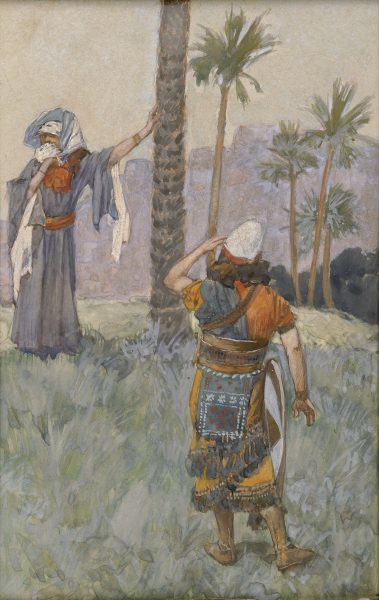
Readings: Judges 4:4-16; Matthew 14:22-33; Arcana Coelestia 4249
A Fearful Hero
And Barak said to [Deborah], “If you will go with me, then I will go; but if you will not go with me, I will not go!” So she said, “I will surely go with you; nevertheless there will be no glory for you in the journey you are taking, for the LORD will sell Sisera into the hand of a woman. (Judges 4:8-9)
In our lesson from the Old Testament today, we read the story of Barak and Deborah, from the book of Judges. Some have suggested that the book of Judges should be called “the book of heroes”; it tells of the heroes whom the Lord raised up to save Israel when they had been captured by their enemies and repented of the evil that led to their capture. Some of these judges, like Samson, had legendary strength. Others demonstrated great cleverness and bravery.
But some of them don’t seem particularly heroic at all. When the prophetess Deborah told the commander Barak that the Lord would deliver the enemy army led by Sisera into his hands, Barak did not say, “Then I will do it.” No – he said, “If you will not go with me, I will not go!” Now asking for help is not a bad thing – but Barak’s response shows a lack of trust in the Lord’s promise of victory. He was afraid, even after being given assurances that the Lord was with him. But even in his fear, the Lord was able to use him to rescue Israel. And the Lord did so in a way that made it clear that the glory was not Barak’s own. In fact, the glory was not even to Deborah. Instead, Sisera was killed by a woman named Jael, who invited him into her own tent and put him to death while he slept. It’s a surprising story, but one that clearly shows the reality – the Lord can bring victory through anyone, even people who do not have perfect courage.
Fear in New Beginnings
We are in the fourth week of a five-week series called “Create: Make Space for Restorative Practice.” We’ve been talking about the steps we can take to make more room for the Lord in our lives, whether that’s by choosing to start each day reflecting on Scripture, or taking up a creative practice like painting or writing or running, or simply by remembering to take a day of Sabbath rest each week. Last week we heard about the impediments that will inevitably crop up when we make a decision to do something new and different in our spiritual lives (video here, sermon starts at 36:55). This week we are focusing on one of those impediments in particular: fear. And we’re also talking about what is needed to overcome fear. We’re talking about courage.
Any new endeavor tends to bring some fear along with it: fear of what other people will think, fear that we won’t have what it takes to stick with it, fear that we don’t really have a clue what we’re doing. And fear that we’ll fail. This is true even for things that aren’t particularly spiritual in themselves – starting a new job, entering a new year in school, moving to a new town.
But when we start a new spiritual practice, the stakes can be even higher, so the fear can be even greater. We worry that if we fail, our spiritual lives might be in jeopardy. Maybe we’ll never really be spiritual people. Maybe we’re going to go to hell. Maybe we’re going to let the Lord down. We read about this in our lesson from Arcana Coelestia: “Fear and distress are the first stage in temptations, and they are precursors to the turning round or the change taking place within a state” (AC 4249).
The Bedside Monster of Self-Reflection
This is true of many spiritual practices, but maybe especially so with self-reflection. In previous weeks, we’ve heard about the value in taking time to slow down, to be with our thoughts, to reflect on Scripture and on the Lord’s presence in our lives. But part of the reason that is difficult is that it can be scary to be alone with our own thoughts. And even more frightening than this is when we decide to intentionally examine our thoughts, actions, and intentions as part of the process of repentance.
In this process, we’re called to examine the actions we’ve taken, as well as the things we would do if there were no chance of getting found out, no fear of punishment. We’re called to take those things and hold them up against the Lord’s commandments, and openly acknowledge where we have sinned. If we do this honestly, it brings us to some pretty dark places. It is difficult to come face to face with the ugliness that hell has put inside us. But it’s essential to begin here if we’re then to move on to the next phase: a prayer to the Lord for help, and a decision to change how we live.
This fear can be behind a hesitation to practice self-reflection, even if we think the reason we’re avoiding it is simply that we’re busy. It’s useful, then, to simply acknowledge this fact: especially if we haven’t done it much or at all before, this practice is scary. This is explained in True Christian Religion:
[Many in the Protestant world] find real repentance highly distasteful. The reason is that some are unwilling and some are afraid to repent, and lack of practice turns into a habit and leads to unwillingness, and eventually gains the endorsement of the reasoning intellect. In some cases it leads to sorrow, fear and terror at the idea of repentance…. [I spoke to some] who said that when they have it in mind to examine themselves, they are struck by fear and terror, as if they saw a monster beside their bed in the twilight. (TCR 561, 562)
The fear there is intense.
Stepping into Fear
But there is hope. The Lord knows we will experience that kind of fear, and He calls us to walk through it. The biggest hurdle is forcing ourselves to take the first step. And then we take another, and then another, and every step is easier than the last. We might not do it perfectly, but gradually over time, we form a habit. And finally, it can even come to the place where we enjoy doing self-examination and repentance, as hard as that might be to believe.
When we are able to take overcome our fears enough to that first step and begin to make a habit out of a new spiritual practice, we often find ourselves doing things we never thought possible. It can almost be like walking on water. In our lesson from the New Testament this morning, we read about Peter doing just this. The disciples were at sea in a boat at night. A great storm came up, with fierce winds and high waves. And then – a figure was coming toward them across the waves. They were terrified. This is where we often are when we first think of starting something new – a new commitment to reading the Word daily, a new commitment to do something creative, or a new commitment to examine ourselves and repent. We don’t know what we’re doing, really. There are storms all around. We are afraid.
But as the figure grew closer, the disciples saw that it was not a ghost, but the Lord. The Lord said to them, “Have confidence; it is I; do not be afraid” (Matthew 14:27). We turn to the Lord’s Word and we are given assurances that even in the storms, the Lord is with us.
Even then, we don’t have total confidence. Peter answered Him, “Lord, if it is You, command me to come to You on the water” (Matthew 14:28). Notice that Peter says “if” it is You. He’s still not sure – but if the Lord calls Him, he’s willing to take that very first step. The Lord said, “Come.” And so Peter did take that first step out of the safety of the boat, onto the tempestuous waves – and he discovered he was walking on the water.
That’s the kind of experience we can have as we trust the Lord. We feel fear, but we willingly take that first step onto the stormy sea. We push through and begin whatever spiritual practice we have set our minds on. We find that we can set aside time every day for the Lord. We succeed in examining ourselves, discovering a particular evil, and choosing to stop acting in a way that we have acted. And miracle of miracles – it works. We do what we didn’t think was possible. We create something we didn’t know we’d be capable of creating. We stop our tongues when we were about to lash out at someone. We withstand the temptations of lust. And we realize – I am doing this. This really might be possible.
Another, Deeper Fear
It would be nice if the story finished there – we face our fears, we take the first step, and we discover that everything after that is easy. But that’s not the way the story goes. We read: “But when [Peter] saw that the wind was boisterous, he was afraid; and beginning to sink he cried out, ‘Lord, save me!’” (Matthew 14:30). Even while he was walking on the water, he looked around and he realized – this is impossible. What was I thinking? I can’t do this. And immediately, he began to sink.
We’ve probably all had this experience before. We start something, and we think it’s going OK. And then – something goes wrong. We spend hours trying to create something that won’t come out right at all. We miss a day, and then another day, of our daily Scripture reading, and start to slip back into old patterns. We fail in our resolution not to yell at our spouse, or not to talk about people behind their backs. And we realize our first apparent success was only an illusion. We know who we are. We’re not fooling anyone. This is not going to work. We are sinking.
And those initial fears from before we started come flooding back, but with even greater intensity now. At least then we had the luxury of not knowing that we couldn’t do it. Now we are trying and we are failing. We start to despair that there is any hope for us at all. There is a story from the Old Testament that illustrates this well. The Children of Israel had been slaves in Egypt, but Moses had been called to lead them to freedom. Following plague after plague, Pharaoh had finally agreed to let them go. In the middle of the night, they left, on their way to the promised land, a land of milk and honey. The impossible had happened – they were free! On their journey, they came to a great sea, and they camped beside it. And then, coming from behind them, in the distance they saw Pharaoh’s entire army charging straight for them. Pharaoh had changed his mind. With the sea on one side and the army on the other, they were trapped. There was no way out. And they cried out to God, “Were there no graves in Egypt, that you have taken us to die in the wilderness?” Wouldn’t it have been better not to have started at all than to start only to fail? These are the kinds of thoughts we can have when, after starting to walk on water, we begin to sink.
Despair and comfort
But there is hope. The children of Israel were miraculously saved as Jehovah split the sea for them. Peter cried out to the Lord, “Lord, save me.” “And immediately Jesus stretched out His hand and caught Him, and said to Him, ‘O you of little faith, why did you doubt?’ And when they got into the boat, the wind ceased” (Matthew 14:31-32). Arcana Coelestia describes the fear and despair exemplified in the cry of the Israelites – “were there no graves in Egypt? – and also the hope on the other side. We read:
These words, it is self-evident, are words of despair. They are also the kind that are thought by people in a state of despair, which is the final phase of a temptation. At that time they are on a slope so to speak or slipping down to hell. Yet thinking in that way at such times does no harm, and the angels take no notice of it; for each person’s power is limited, and when temptation stretches him to the absolute limit of his power he cannot stand up to anything further and starts to slip. At that point however, that is, when he is on the slope and starts to slip, he is raised by the Lord and thereby delivered from despair. (AC 8165)
It is inevitable that when we begin a new spiritual practice, especially one that involves self-examination and repentance, we will come to the point where we fear we are hopeless, that we will never change. We start to sink. And in that moment, we can do what Peter did – we cry out, “Lord, save me!”
And the Lord immediately reaches out His hand to us. This doesn’t mean we need to stop trying – we need to fight with all our might. But from that moment on, we begin to recognize the truth – that we really cannot do this ourselves, but the Lord can pull us through it. This is why the Lord lets us come into those states of terror and despair at all – He knows that only in experiencing that will we ever acknowledge a key reality. The reality is this: we fear that we are not good enough, that we will never be good enough. And those moments of despair teach us that we’re right – we are not good enough. But they teach us something else, too – we don’t need to be good enough. The Lord loves us anyway, and can bring us victory anyway. From Arcana Coelestia:
When [people] are reduced to such a state that they perceive hell in themselves, and this to such a degree as to despair of ever being able to be saved, then for the first time their persuasion [that they are without sin] is broken, and with it their pride, and their contempt of others in comparison with themselves, and also the arrogance that they are the only ones who are saved; and they can be led into the true confession of faith, not only that all good is from the Lord, but also that all things are of His mercy. (AC 2694)
This is the key to help us through the fear that comes with a new spiritual or creative practice. We will have a fear of failing – and the way to deal with that fear is not to try to convince ourselves that we won’t fail, but to acknowledge that we will fail, and the Lord can help us back up every time. If we have sinned, we still can repent. The Lord will work through us and for us even in our imperfections.
Conclusion
So what do we take away from all of this? It’s important to know that we can expect to experience fear as we begin something new. If we push through that fear and take the first step, we find that with the Lord’s help, we can do the impossible. Even then, we come to the point where fear returns, and we start to fear that we will never be saved. At the moment of despair, though, the Lord reaches out His hand to lift us up, and we are given a new kind of confidence: not that we can save ourselves, but that the Lord can save us. And we are reassured that the Lord not only can save us, but that He wants nothing more. The Lord said to His disciples, “Do not fear, little flock, for it is your Father’s good pleasure to give you the kingdom.” (Luke 12:32).
Note: I delivered this sermon at the Bryn Athyn Cathedral on February 19, 2017. Video is online here; readings begin at 30:15, sermon begins at 42:07.
(Scripture taken from the New King James Version®. Copyright © 1982 by Thomas Nelson. Used by permission. All rights reserved. Image of “Deborah Beneath the Palm Tree” by James Tissot – Public Domain, Link)
Previous Post
February 16, 2017
Does God Give Us More Than We Can Handle?
Next Post

February 22, 2017 How La La Land Failed to Earn Its Ending
Browse Our Archives
Select a Category Art Books Culture Humor Miscellany Morality Movies Music Personal Politics Religion Science Sermons The Best Things Theatre Uncategorized
Select a Month April 2019 October 2018 September 2018 July 2018 May 2018 April 2018 February 2018 January 2018 December 2017 November 2017 October 2017 September 2017 August 2017 July 2017 June 2017 May 2017 April 2017 March 2017 February 2017 January 2017 November 2016 July 2016 May 2016 April 2016 March 2016 September 2015 June 2015 May 2015 April 2015 March 2015 November 2014 October 2014 June 2014 May 2014 April 2014 March 2014 February 2014 November 2013 October 2013 September 2013 August 2013 June 2013 May 2013 April 2013 March 2013 October 2012 September 2012 July 2012 June 2012 May 2012 April 2012 March 2012 February 2012 January 2012 December 2011 November 2011 October 2011 September 2011 August 2011 July 2011 May 2011 April 2011 March 2011 February 2011 January 2011 December 2010 November 2010 September 2010 August 2010 July 2010 June 2010 May 2010 April 2010 January 2010
Follow Us!
TAKE THE
Religious Wisdom Quiz
Who is described as "a beloved physician" and accompanied Paul?
Select your answer to see how you score.
Titus Silas Mark Luke
Related posts from Good and Truth
A Heavy Cross or an Easy Yoke?
Cut from the Sermon: What Jesus Said About...
The Two Witnesses: A Sermon on Revelation 11
As We Forgive Our Debtors: A Sermon on...
TRENDING AT PATHEOS Progressive Christian

What Being a Modern-Day Apostle Means to Me
In my last column, I discussed the ins and outs of modern-day...

Did Ancient China Once Worship the God of...
Across human history, a common thread weaves through the origins of the...

Love Your Neighbor – Including Earth-Kin: Lev. 19,...
God’s command to love your neighbor means acting in an ethical and...

Lead a Church Study of “Jesus and Lao...
Guest writer Jack Thomas (The Irreverent Reverend) reflects on leading his church...

Pastoral Wisdom for Responding to Sermon Pushback
Getting sermon pushback on your social justice sermon? Learn practical, Proverbs-based strategies...

Principles for Understanding the Apostolic Ministry Today
Whenever people discover that my formal ministry title is "apostle," as in...
view all Progressive Christian blogs
Ad-Free & Subscriber Log-In Subscription Support
- About Us
- 2026 Calendar
- Videos
- Podcasts
- Library of World Religions
- Faith In Media Tracker
- Advertise With Us
- Write for Us
- Privacy Policy
- Terms of Service
- Do Not Sell My Data
- Contact Us
- Radiant Digital
- Manage Newsletter Subscriptions
- Unsubscribe From Notifications
- Sitemap
Copyright 2008-2026, Patheos. All rights reserved.
Subscription Support Ad-Free & Subscriber Log-In
Follow Patheos