
BuddhistCatholicContemplativeEvangelicalGeneral ChristianHinduJewishLatter-day SaintMuslimNew VisionsProgressive Christian
Beliefs
- Buddhist
- Catholic
- Contemplative
- Evangelical
- General Christian
- Hindu
- Jewish
- Latter-day Saint
- More Voices
- Muslim
- New Visions
- Pagan
- Progressive Christian
Topics
- Religion News
- Food and Religion
- Sports and Religion
- Religious Art
- Religious Music and Entertainment
- Religious Events
- History and Religion
- Style and Religion
- Politics and Religion
- Women in Religion
- Recreation Outdoors and Religion
- Business Finance and Religion
- Careers Workplace and Religion
- Education and Religion
- Family Parenting and Religion
- Health Fitness and Religion
- Home and Religion
- Relationships and Religion
- Technology and Religion
- Travel and Religion
Columnists
- Buddhist Columnists
- Business Finance and Religion Columnists
- Careers Workplace and Religion Columnists
- Catholic Columnists
- Contemplative Columnists
- Education and Religion Columnists
- Evangelists Columnists
- Family Parenting and Religion Columnists
- General Christian Columnists
- Health Fitness and Religion Columnists
- Hindu Columnists
- History and Religion Columnists
- Home and Religion Columnists
- Jewish Columnists
- More Voices Columnists
- Latter Day Columnists
- Muslim Columnists
- New Visions Columnists
- Nonreligious Columnists
- Pagan Columnists
- Politics and Religion Columnists
- Progressive Columnists
- Recreation Outdoors and Religion Columnists
- Relationships and Religion Columnists
- Religion News Columnists
- Religious Art Columnists
- Religious Events Columnists
- Religious Music and Entertainment Columnists
- Sports and Religion Columnists
- Style and Religion Columnists
- Technology and Religion Columnists
- Travel and Religion Columnists
- Women in Religion Columnists
Resource Library
- 2026 Calendar
- Library of World Religions
- The 100 Most Holy Places on Earth
- Patheos Answers
- Podcasts
- Videos
- Faith Leaders Database
- Anglican Episcopalian
- Bahai
- Baptist
- Buddhism
- Christianity
- Confucianism
- Eastern Orthodoxy
- Hinduism
- Holiness and Pentecostal
- ISKCON
- Islam
- Judaism
- Lutheran
- Methodist
- The Church of Jesus Christ of Latter-day Saints
- New Age
- Paganism
- Presbytarian and Reformed
- Protestantism
- Religion Behind the Scenes
- Roman Catholic
- Scientology
- Shia Islam
- Sikhism
- Sufism
- Sunni Islam
- Taoism
- Zen
- See all religions
Research Tools
 Ad-Free & Subscriber Log-In Subscription Support
Ad-Free & Subscriber Log-In Subscription Support
Follow Patheos 

- Trending:
- Forgiveness
- |
- Marriage
- |
- Consciousness
- |
- Death Penalty
- |
- Election
- |
- Halloween
 Good and Truth
- Home
- Progressive Christian
- How La La Land Failed to Earn Its Ending
How La La Land Failed to Earn Its Ending
Last updated on: March 7, 2017 at 8:47 am by Coleman Glenn
How La La Land Failed to Earn Its Ending 2017-03-07T08:47:54-07:00 Coleman Glenn
Patheos Explore the world's faith through different perspectives on religion and spirituality! Patheos has the views of the prevalent religions and spiritualities of the world.
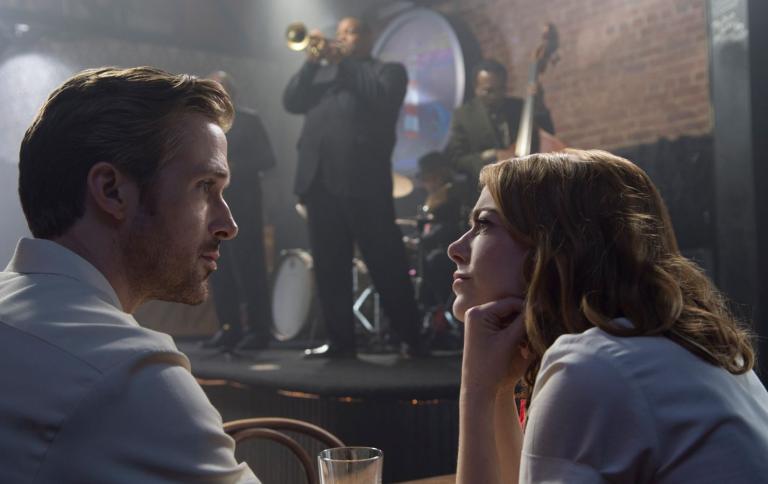
WARNING: Spoilers abound! If you haven’t seen La La Land yet, run to the theater and do so; then come back here so we can argue about it.
I love old movies, and in particular, I love old musicals. Back when I had cable, my DVR was regularly full of classic (and not-so-classic) musicals recorded off TCM. I don’t mind the lame plots (invariably: engaged people get un-engaged from the wrong people and then engaged to the right people) or the inexplicable bursting into song and dance. So when I first saw a trailer for La La Land, I put its opening date on the calendar and told my wife Anne that for my birthday, I wanted tickets. We went and saw it in its first week. I expected to love it. And parts of it I did love. I’d even say that I enjoyed the ending. But I walked away from the theater feeling like they’d missed an opportunity. The whole movie led up to an ending that felt like taking the easy way out.
“Now wait!” you might be saying. (I did mention there’d be spoilers, right? Cause spoilers start now.) “They didn’t give us the unrealistic fairy tale ending! They gave us real life! How is that the easy way out?” Fair questions. But I question whether the ending we saw was actually real life, or if it was simply the assumption of what real life must be. I don’t mind bittersweet endings. But a movie has to earn its ending, and I don’t think La La Land earned the one it had.
It could be said that the whole first part of La La Land asks the question, “Is it possible to devote oneself to one’s dreams and still make room for love?” The tension of the film revolves around that question, as we see Mia and Sebastian fight together for each other’s dreams even as they struggle to find a balance between their relationship and their vocations. After Mia drives back home and leaves L.A. behind, Sebastian drives out and convinces her to give it another shot. When she’s given the chance to star in a film in France, Sebastian tells her that she has to devote herself 100% to the opportunity.
Then we cut to five years later, where Mia is happily married and has a child with someone who is not Sebastian. In doing so, we cut out the most important part of the movie. Because there is nothing we’ve seen in either character’s actions up to this point that suggests they will simply let things go at that. There’s nothing to suggest that when Mia moves to France, she won’t even bother to keep in touch with Sebastian. Sure, it’s conceivable that they’d lose touch, break apart. But in skipping ahead five years, the film simply assumes the viewer is in the know – of course, this is the way life works. People drift apart. Work takes priority. You make new relationships.
And that’s where I see the laziness. Because in my experience, that is not the way life inevitably works. It sometimes does, yes, and it would have been fine to tell the story of how it did. But sometimes people fight to make relationships and jobs work. Sometimes they succeed, and sometimes they fail. Despite Sebastian’s insistence that Mia devote herself completely to her work, it’s clear that she was willing to put work into some kind of relationship – you don’t usually just drift into marriage and kids. To leave it as a fuzzy bittersweet inevitability is too much of a shortcut.
I will confess that my personal convictions about marriage come into play here. I know that in the final scenes I’m supposed to feel wistful and heartachey. But I don’t. I feel annoyed that Mia’s husband has been turned into a cardboard cutout, a foil for the real romantic story of what might have been. There’s every indication that Mia’s marriage is a genuine one, and I get that that tension is supposed to be there. But during the admittedly glorious dream sequence, the pastor inside me wants to shout, in the immortal words of Bob Newhart, “Stop it!” Yep, maybe I’m being too moralistic, but daydreaming about past relationships is not something I find particularly healthy for a marriage, and it’s hard for me to sympathize.
The parting look at the end between Mia and Sebastian contains worlds of unspoken might-have-beens. It also contains worlds of assumptions about what is allowed to constitute a satisfying ending in modern cinema. The bittersweet, we’re-OK-and-that’s-enough ending – this is the sophisticated ending. Subverting expectations has itself become the new norm, and I was disappointed that the film took that well-trodden path rather than striking out for new territory that was neither the cliché of yesteryear nor the cliché of today. (And no, I don’t know exactly what such an ending would have looked like.)
To be fair, this kind of ending isn’t actually new – it’s been around for decades, even stretching back into the golden age of film. But it’s not the ending for the kind of movie I hoped I was watching – an unapologetic throwback to the populist movie musicals of the thirties and forties and fifties and sixties, a movie that might even revive musicals for normal people. Instead, it was a good enough film for the kind of people who like that kind of film (and I do!), but not a revolution. In the end, maybe it’s my own fault for expecting too much. I won’t begrudge it any Oscars it may win this Sunday, but I’m left feeling disappointed at what could have been. (And hey, maybe that means the film had its intended effect on me after all.)
UPDATE: A “real-life broadway couple” agrees that Mia and Sebastian could have made it work, so clearly I’m right.
(Photo credit: Dale Robinette / Lionsgate / Summit Entertainment)
Previous Post

February 20, 2017
Imperfect Courage: A Sermon

Browse Our Archives
Select a Category Art Books Culture Humor Miscellany Morality Movies Music Personal Politics Religion Science Sermons The Best Things Theatre Uncategorized
Select a Month April 2019 October 2018 September 2018 July 2018 May 2018 April 2018 February 2018 January 2018 December 2017 November 2017 October 2017 September 2017 August 2017 July 2017 June 2017 May 2017 April 2017 March 2017 February 2017 January 2017 November 2016 July 2016 May 2016 April 2016 March 2016 September 2015 June 2015 May 2015 April 2015 March 2015 November 2014 October 2014 June 2014 May 2014 April 2014 March 2014 February 2014 November 2013 October 2013 September 2013 August 2013 June 2013 May 2013 April 2013 March 2013 October 2012 September 2012 July 2012 June 2012 May 2012 April 2012 March 2012 February 2012 January 2012 December 2011 November 2011 October 2011 September 2011 August 2011 July 2011 May 2011 April 2011 March 2011 February 2011 January 2011 December 2010 November 2010 September 2010 August 2010 July 2010 June 2010 May 2010 April 2010 January 2010
Follow Us!
TAKE THE
Religious Wisdom Quiz
True or False: Balaam's donkey spoke to him.
Select your answer to see how you score.
TRUE FALSE
Related posts from Good and Truth

When the devil tries to ruin Christmas (in...

Does the Trinity Matter? A Swedenborgian View of...


Four Ways of Looking at a Mirror
TRENDING AT PATHEOS Progressive Christian

What Being a Modern-Day Apostle Means to Me
In my last column, I discussed the ins and outs of modern-day...

Did Ancient China Once Worship the God of...
Across human history, a common thread weaves through the origins of the...

Love Your Neighbor – Including Earth-Kin: Lev. 19,...
God’s command to love your neighbor means acting in an ethical and...

Lead a Church Study of “Jesus and Lao...
Guest writer Jack Thomas (The Irreverent Reverend) reflects on leading his church...

Pastoral Wisdom for Responding to Sermon Pushback
Getting sermon pushback on your social justice sermon? Learn practical, Proverbs-based strategies...

Principles for Understanding the Apostolic Ministry Today
Whenever people discover that my formal ministry title is "apostle," as in...
view all Progressive Christian blogs
Ad-Free & Subscriber Log-In Subscription Support
- About Us
- 2026 Calendar
- Videos
- Podcasts
- Library of World Religions
- Faith In Media Tracker
- Advertise With Us
- Write for Us
- Privacy Policy
- Terms of Service
- Do Not Sell My Data
- Contact Us
- Radiant Digital
- Manage Newsletter Subscriptions
- Unsubscribe From Notifications
- Sitemap
Copyright 2008-2026, Patheos. All rights reserved.
Subscription Support Ad-Free & Subscriber Log-In
Follow Patheos