
BuddhistCatholicContemplativeEvangelicalGeneral ChristianHinduJewishLatter-day SaintMuslimNew VisionsProgressive Christian
Beliefs
- Buddhist
- Catholic
- Contemplative
- Evangelical
- General Christian
- Hindu
- Jewish
- Latter-day Saint
- More Voices
- Muslim
- New Visions
- Pagan
- Progressive Christian
Topics
- Religion News
- Food and Religion
- Sports and Religion
- Religious Art
- Religious Music and Entertainment
- Religious Events
- History and Religion
- Style and Religion
- Politics and Religion
- Women in Religion
- Recreation Outdoors and Religion
- Business Finance and Religion
- Careers Workplace and Religion
- Education and Religion
- Family Parenting and Religion
- Health Fitness and Religion
- Home and Religion
- Relationships and Religion
- Technology and Religion
- Travel and Religion
Columnists
- Buddhist Columnists
- Business Finance and Religion Columnists
- Careers Workplace and Religion Columnists
- Catholic Columnists
- Contemplative Columnists
- Education and Religion Columnists
- Evangelists Columnists
- Family Parenting and Religion Columnists
- General Christian Columnists
- Health Fitness and Religion Columnists
- Hindu Columnists
- History and Religion Columnists
- Home and Religion Columnists
- Jewish Columnists
- More Voices Columnists
- Latter Day Columnists
- Muslim Columnists
- New Visions Columnists
- Nonreligious Columnists
- Pagan Columnists
- Politics and Religion Columnists
- Progressive Columnists
- Recreation Outdoors and Religion Columnists
- Relationships and Religion Columnists
- Religion News Columnists
- Religious Art Columnists
- Religious Events Columnists
- Religious Music and Entertainment Columnists
- Sports and Religion Columnists
- Style and Religion Columnists
- Technology and Religion Columnists
- Travel and Religion Columnists
- Women in Religion Columnists
Resource Library
- 2026 Calendar
- Library of World Religions
- The 100 Most Holy Places on Earth
- Patheos Answers
- Podcasts
- Videos
- Faith Leaders Database
- Anglican Episcopalian
- Bahai
- Baptist
- Buddhism
- Christianity
- Confucianism
- Eastern Orthodoxy
- Hinduism
- Holiness and Pentecostal
- ISKCON
- Islam
- Judaism
- Lutheran
- Methodist
- The Church of Jesus Christ of Latter-day Saints
- New Age
- Paganism
- Presbytarian and Reformed
- Protestantism
- Religion Behind the Scenes
- Roman Catholic
- Scientology
- Shia Islam
- Sikhism
- Sufism
- Sunni Islam
- Taoism
- Zen
- See all religions
Research Tools
 Ad-Free & Subscriber Log-In Subscription Support
Ad-Free & Subscriber Log-In Subscription Support
Follow Patheos 

- Trending:
- Forgiveness
- |
- Marriage
- |
- Consciousness
- |
- Death Penalty
- |
- Election
- |
- Halloween
 Good and Truth
- Home
- Progressive Christian
- A Heavy Cross or an Easy Yoke?
A Heavy Cross or an Easy Yoke?
Last updated on: February 10, 2017 at 12:43 pm by Coleman Glenn
A Heavy Cross or an Easy Yoke? 2017-02-10T12:43:37-07:00 Coleman Glenn
Patheos Explore the world's faith through different perspectives on religion and spirituality! Patheos has the views of the prevalent religions and spiritualities of the world.
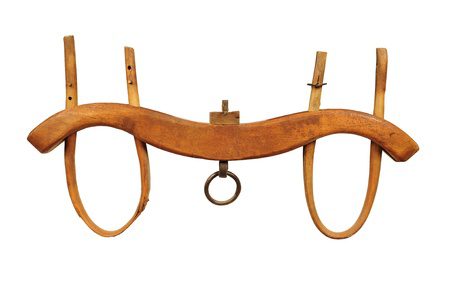
Matt Walsh has a typically provocative post up on The Blaze entitled “If you find it easy to be a Christian, you probably aren’t one.” Is he right? There are certainly passages from the New Testament that would seem to suggest so. Jesus did say,
If anyone desires to come after Me, let him deny himself, and take up his cross daily, and follow Me. For whoever desires to save his life will lose it, but whoever loses his life for My sake will save it” (Luke 9:23-24).
But there are other New Testament passages that seem to suggest the opposite, that the Christian life should be easy. Most notable are Jesus’ words in Matthew:
Come to Me, all you who labor and are heavy laden, and I will give you rest. Take My yoke upon you and learn from Me, for I am gentle and lowly in heart, and you will find rest for your souls. For My yoke is easy and My burden is light (Matthew 11:28-30).
So which is it? Is the Christian life a heavy cross or a light burden? The answer, of course, is both. But the “easiness” of a genuine Christian life is far different from the “easiness” of nominal Christianity, a Christianity that requires nothing from its adherents.
Freedom or Servitude?
Walsh argues that the biggest obstacle to genuine Christianity in America is not persecution, but temptation to sin. There are countless versions of Christianity (and other faiths) to choose from, and you’re bound to be able to find one that will excuse whatever sin you happen to be drawn to.
But isn’t it good to have options? Isn’t freedom part of the point of being a Christian? Walsh nicely sums up the difference between genuine freedom and false freedom:
That’s the easy faith. The tempting one. The faith that preaches a Christ who died so that we may be freed to sin, rather than freed from sin. A difference of only one word, but the gap between them is as wide as the gap between Heaven and Hell.
It’s a good point, and important to keep in mind. But it’s also important to remember that living a Christian life should lead to a sense of genuine freedom and relief even in this lifetime. There are millions of Christians who will attest to way that their faith brought them out of harmful lifestyles or addiction. But that kind of freedom happens as a result of a willing submission to the Lord’s Word. Jesus said, “If you abide in My word, you are My disciples indeed. And you shall know the truth, and the truth shall make you free” (John 8:31-32). First we abide in His Word as disciples, then we know the truth, and only then are we made free.
Peace or a Sword?
That kind of freedom brings with it a great sense of peace. Jesus said to His disciples, “Peace I leave with you; my peace I give to you” (John 14:27). But again, this kind of peace only comes about after a willing submission to the Lord’s Word – and that takes an act of will, a battle between our new man and our old man. It’s a fight. Jesus said, “Do not think that I came to bring peace on earth. I did not come to bring peace but a sword” (Matthew 10:34). Paul exhorted the Ephesians to take up the whole armor of God in battle against the powers of evil:
Stand therefore, having girded your waist with truth, having put on the breastplate of righteousness, and having shod your feet with the preparation of the gospel of peace; above all, taking the shield of faith with which you will be able to quench all the fiery darts of the wicked one. And take the helmet of salvation, and the sword of the Spirit, which is the word of God. (Ephesians 6:14-17)
The Doctrine of the New Church puts this in terms of fighting against sin as if of ourselves while acknowledging that it the Lord Jesus Christ acting in us and through us. We need to know that it won’t feel like the Lord acting through us when we fight against the urge to tear someone else down. It’s only in retrospect that we realize that it was only by His grace that we were able to resist.
Even here, though, there can be a kind of peace within the conflict, a peace in knowing that we are acting in the Lord. A passage from Arcana Coelestia puts it this way:
A person who is being regenerated first experiences a state of serenity, but as he moves on into the new life so he moves into a state that is not serene. For evils and falsities which he has taken into himself previously now emerge and show themselves, and these trouble him, so much so at length that he undergoes temptations and trials from the devil’s crew who try all the time to destroy his state of new life. But despite this a state of peace exists with him inmostly. …In all the conflicts he experiences he sees that state as the end in view…, and this is what enables him to overcome. (Arcana Coelestia §3696)
“Fear Not” or “Fear and Trembling”?
In his final point, Walsh stresses the need for continuous repentance. He writes,
“Work out your salvation with fear and trembling,” St. Paul tells the Philippians. To which the modern Christian says, “Dude, chill.” I think we’re safer adopting St. Paul’s approach than that of the super chill psuedo-Christian. What reaction can we have but fear and trembling when we honestly confront the vileness of our sin? How many of us have even attempted such a confrontation?”
Genuine introspection can be a terrifying thing to do. I happen to be preaching on fear and courage next Sunday, and in the course of my research I came across this great passage from True Christian Religion, explaining why repentance was not widely practiced in the Protestant world:
The reason is that some are unwilling and some are afraid to repent, and lack of practice turns into a habit and leads to unwillingness, and eventually to acquiescence as the result of reasoning by the understanding. In some cases it leads to sorrow, fear and terror at the idea of repentance… [I spoke to some,] and they said that when they have it in mind to examine themselves, they are struck by fear and terror, as if they saw a monster beside their bed in the twilight.
It is genuinely frightening to start the work of self-examination and repentance. It’s hard to face the reality of what’s inside us. But it does get easier with practice. As with servitude that turns into freedom and the sword that turns into peace, this fear can be transformed into a kind of joy in repentance. Eventually, rebuke from God can be experienced as a blessing; the Lord says in Revelation 3:19, “Those whom I love I rebuke and chasten,” and the Psalmist writes, “It is good for me that I have been afflicted, that I may learn Your statutes” (Psalm 119:71).
This doesn’t mean the fear of finding sin in ourselves ever goes away, but I it is transformed. It’s here that I might part ways with Walsh. Walsh writes, “I’m not really convinced that it’s possible to feel too guilty for your sin or too afraid of the eternal fire, but I’m sure those who cross that line, wherever it is, are in far better shape than those who never approach it.” I agree to a point – we should never lose the horror at the evil we’re capable of, and that does start as a fear of going to hell. But as a person grows spiritually, that fear becomes less one of “the eternal fire,” and more a fear of being hellish – a fear of letting down the Lord, a fear of doing anything that will hurt others. It becomes a fear that is actually love at its heart. From Arcana Coelestia:
As regards the holy fear which is signified in the Word by “the fear of God,” be it known that this fear is love, but love such as is the love of little children toward their parents, of parents toward their children, of consorts toward each other, who fear to do anything which displeases, thus which in any way does injury to love. (Arcana Coelestia §8925)
The Race of Faith
So is the Christian life difficult or easy? It’s both. The best way of reconciling this seeming contradiction is through the metaphor of the Christian life as a race. As the author of the Epistle to the Hebrews put it:
Therefore we also, since we are surrounded by so great a cloud of witnesses, let us lay aside every weight, and the sin which so easily ensnares us, and let us run with endurance the race that is set before us. (Hebrews 12:1)
It is hard to run a race. It takes training, dedication, and perseverance. But if you talk to any long distance runner, they’ll tell you that at some point while they’re running, they get a second wind. (As it happens, the word for “wind” in Hebrew, Greek, and Latin is the same as the word for both “breath” and “spirit.” Coincidence? Maybe, maybe not.) Runners push themselves to the point of exhaustion – muscles burning, breath difficult, sweat pouring out. And then – something changes, and they find that their body is almost running itself. They are “being run.” They still have to work at it, their muscles and breath are still straining – but they find that in some sense it has become easy.
To couch potatoes, all that might seem pointless. Sure, maybe running gets easy at some point, but it’s even easier to sit around and watch TV. Those people miss the reality that the easiness of a second wind is deep, fulfilling, and life-giving – the opposite of the bored ennui of laziness. But unless those couch dwellers decide to start moving themselves, they’ll never really get the difference.
It’s the same with couch Christians vs. marathon Christians. Being a couch Christian – a Christian in name only, who maybe said the sinner’s prayer once and puts up Christmas lights – feels easy, but it’s not authentic. Being a marathon Christian takes work – but even in that work there is a joy. Even before reaching the destination there are second winds and experiences of ease – experiences of a genuine peace that surpasses anything a couch Christian can imagine.
One final point, lest I come across as holier-than-thou. I try to be a marathon Christian, but sometimes I slow down and get out of shape. And every time that happens (as anyone who has stopped exercising will tell you), it’s hard to get started again. It takes effort to do the challenging work of introspection and continuous repentance. But it’s worth it. There is joy and peace and ease not just at the finish line, but in the running of the race itself.
Scripture taken from the New King James Version®. Copyright © 1982 by Thomas Nelson. Used by permission. All rights reserved. Image copyright: balefire9 / 123RF Stock Photo
Previous Post

February 7, 2017
A New (To Me) Swedenborgian Blog
Next Post

February 13, 2017 Eternal Love in Heavenly Bodies
Browse Our Archives
Select a Category Art Books Culture Humor Miscellany Morality Movies Music Personal Politics Religion Science Sermons The Best Things Theatre Uncategorized
Select a Month April 2019 October 2018 September 2018 July 2018 May 2018 April 2018 February 2018 January 2018 December 2017 November 2017 October 2017 September 2017 August 2017 July 2017 June 2017 May 2017 April 2017 March 2017 February 2017 January 2017 November 2016 July 2016 May 2016 April 2016 March 2016 September 2015 June 2015 May 2015 April 2015 March 2015 November 2014 October 2014 June 2014 May 2014 April 2014 March 2014 February 2014 November 2013 October 2013 September 2013 August 2013 June 2013 May 2013 April 2013 March 2013 October 2012 September 2012 July 2012 June 2012 May 2012 April 2012 March 2012 February 2012 January 2012 December 2011 November 2011 October 2011 September 2011 August 2011 July 2011 May 2011 April 2011 March 2011 February 2011 January 2011 December 2010 November 2010 September 2010 August 2010 July 2010 June 2010 May 2010 April 2010 January 2010
Follow Us!
TAKE THE
Religious Wisdom Quiz
What does God question Job about, showing His wisdom in creation?
Select your answer to see how you score.
Religious rituals Kingdoms Battles Animals and nature
Related posts from Good and Truth


Four Ways of Looking at a Mirror

What Type of Christian Are You?

TRENDING AT PATHEOS Progressive Christian

What Being a Modern-Day Apostle Means to Me
In my last column, I discussed the ins and outs of modern-day...

Did Ancient China Once Worship the God of...
Across human history, a common thread weaves through the origins of the...

Love Your Neighbor – Including Earth-Kin: Lev. 19,...
God’s command to love your neighbor means acting in an ethical and...

Lead a Church Study of “Jesus and Lao...
Guest writer Jack Thomas (The Irreverent Reverend) reflects on leading his church...

Pastoral Wisdom for Responding to Sermon Pushback
Getting sermon pushback on your social justice sermon? Learn practical, Proverbs-based strategies...

Principles for Understanding the Apostolic Ministry Today
Whenever people discover that my formal ministry title is "apostle," as in...
view all Progressive Christian blogs
Ad-Free & Subscriber Log-In Subscription Support
- About Us
- 2026 Calendar
- Videos
- Podcasts
- Library of World Religions
- Faith In Media Tracker
- Advertise With Us
- Write for Us
- Privacy Policy
- Terms of Service
- Do Not Sell My Data
- Contact Us
- Radiant Digital
- Manage Newsletter Subscriptions
- Unsubscribe From Notifications
- Sitemap
Copyright 2008-2026, Patheos. All rights reserved.
Subscription Support Ad-Free & Subscriber Log-In
Follow Patheos