
BuddhistCatholicContemplativeEvangelicalGeneral ChristianHinduJewishLatter-day SaintMuslimNew VisionsProgressive Christian
Beliefs
- Buddhist
- Catholic
- Contemplative
- Evangelical
- General Christian
- Hindu
- Jewish
- Latter-day Saint
- More Voices
- Muslim
- New Visions
- Pagan
- Progressive Christian
Topics
- Religion News
- Food and Religion
- Sports and Religion
- Religious Art
- Religious Music and Entertainment
- Religious Events
- History and Religion
- Style and Religion
- Politics and Religion
- Women in Religion
- Recreation Outdoors and Religion
- Business Finance and Religion
- Careers Workplace and Religion
- Education and Religion
- Family Parenting and Religion
- Health Fitness and Religion
- Home and Religion
- Relationships and Religion
- Technology and Religion
- Travel and Religion
Columnists
- Buddhist Columnists
- Business Finance and Religion Columnists
- Careers Workplace and Religion Columnists
- Catholic Columnists
- Contemplative Columnists
- Education and Religion Columnists
- Evangelists Columnists
- Family Parenting and Religion Columnists
- General Christian Columnists
- Health Fitness and Religion Columnists
- Hindu Columnists
- History and Religion Columnists
- Home and Religion Columnists
- Jewish Columnists
- More Voices Columnists
- Latter Day Columnists
- Muslim Columnists
- New Visions Columnists
- Nonreligious Columnists
- Pagan Columnists
- Politics and Religion Columnists
- Progressive Columnists
- Recreation Outdoors and Religion Columnists
- Relationships and Religion Columnists
- Religion News Columnists
- Religious Art Columnists
- Religious Events Columnists
- Religious Music and Entertainment Columnists
- Sports and Religion Columnists
- Style and Religion Columnists
- Technology and Religion Columnists
- Travel and Religion Columnists
- Women in Religion Columnists
Resource Library
- 2026 Calendar
- Library of World Religions
- The 100 Most Holy Places on Earth
- Patheos Answers
- Podcasts
- Videos
- Faith Leaders Database
- Anglican Episcopalian
- Bahai
- Baptist
- Buddhism
- Christianity
- Confucianism
- Eastern Orthodoxy
- Hinduism
- Holiness and Pentecostal
- ISKCON
- Islam
- Judaism
- Lutheran
- Methodist
- The Church of Jesus Christ of Latter-day Saints
- New Age
- Paganism
- Presbytarian and Reformed
- Protestantism
- Religion Behind the Scenes
- Roman Catholic
- Scientology
- Shia Islam
- Sikhism
- Sufism
- Sunni Islam
- Taoism
- Zen
- See all religions
Research Tools
 Ad-Free & Subscriber Log-In Subscription Support
Ad-Free & Subscriber Log-In Subscription Support
Follow Patheos 

- Trending:
- Forgiveness
- |
- Marriage
- |
- Consciousness
- |
- Death Penalty
- |
- Election
- |
- Halloween
 Good and Truth
- Home
- Progressive Christian
- Learning from Children
Learning from Children
Last updated on: May 11, 2016 at 5:09 am by Coleman Glenn
Learning from Children 2016-05-11T05:09:25-07:00 Coleman Glenn
Patheos Explore the world's faith through different perspectives on religion and spirituality! Patheos has the views of the prevalent religions and spiritualities of the world.
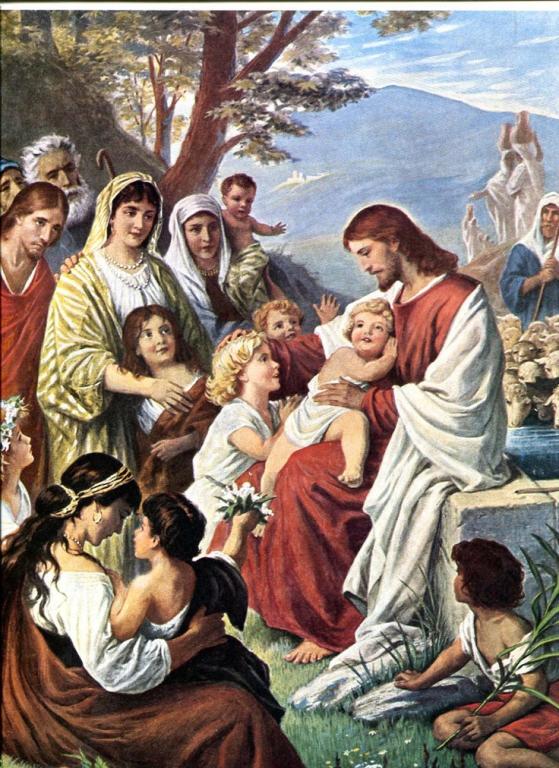
When I learned over a month ago that Patheos would be featuring children’s spirituality on the public square, I was excited – it’s something my wife Anne and I have been thinking about a lot lately, as we’ve been instituting the Godly Play program here at New Church Westville. The fundamental principle of Godly Play is that children are inherently spiritual; what they lack is a language to articulate and refine that spirituality. In connection with this, I’ve been thinking about how to approach a New Church (i.e. Swedenborgian) theology of childhood. In some traditions, there’s very little to work with; in the New Church, we have the opposite problem – there is a massive amount in Swedenborg’s own writings and in the writings of New Church theologians and educators since his time that relates directly to the spirituality of children.
So, I had hoped to come up with a concise blog post summarising what I’ve learned from children – how I’m learning to see the abstract theological concepts about childhood in actual, living, breathing children. Unfortunately, with our recent bad news and the upheaval of very quickly preparing to move back to North America, I won’t have time for that. Instead, I’ll just share two of my favourite ideas on childhood from Swedenborg.
Children Have an Innate Sense of Reverence
One of my favourite things about Godly Play is that it respects children’s sense of reverence. I was fortunate enough to have been raised with parents who respected this too; and it’s sad to me that popular culture – including Christian pop culture – seems to assume that kids need to be entertained, distracted, and made to laugh. They’re capable of much more. There’s a passage from Arcana Coelestia that captures this childlike reverence. This describes a scene in heaven, and I know very well that it doesn’t always work like this here on earth – but I also know that there are precious moments when our two-year-old son has quietly gone to his worship bookshelf on his own and knelt down and prayed. Here’s that passage:
Young children [in heaven] are taught in particular by means of representatives suited to their disposition; and how beautiful these representatives are and at the same time how filled with wisdom from within. nobody can possibly believe. ….. Let merely one representative which I have been allowed to witness be recounted here, from which the nature of all others may be inferred. They represented the Lord rising up out of the tomb, and at the same time His Human united to the Divine. This was done in a manner so wise as to surpass all human wisdom, and yet at the same time in a manner that was innocent and that of a young child. They also presented the idea of a tomb, but not at the same time an idea of the Lord, except in so remote a way that one scarcely perceived it to be the Lord, except so to speak a long way off. … After that, with utmost carefulness, they introduced into the tomb something air-like, yet seeming to be lightly filled with moisture, by which they meant, also with an appropriate remoteness, spiritual life in baptism. After that I saw them represent the Lord’s descent to those that are bound and His ascent with those that are bound into heaven, which they did with matchless carefulness and reverence. And the representation had a child-like feature in that when they represented the Lord among the bound on the lower earth, they let down scarcely visible, soft and very slender cords with which they effected the Lord’s ascent. All along they acted with a holy fear lest anything at all in the representation should border on anything devoid of the spiritual-celestial within it. There are other representatives besides these, such as games that are appropriate to the minds of young children by which they are introduced into knowledges of truth and into affections for good. (Arcana Coelestia n*.* 2299)
Children are a living picture of innocence
It has become fashionable among scholars in recent decades to claim that Jesus’ high regard for children – e.g. His saying, “Let the little children come to me,” that His followers must become like little children – had almost everything to do with their lowly status in the culture and little to do with any inherent qualities of childhood. With all due respect to scholarship, I don’t buy it. Yes, their lowly place in society is part of the picture – but the image from Isaiah 11 of “a little child shall lead them,” for example, is clearly about more than just the lowly being raised up. It’s about the qualities of childhood, and chief among these innocence. In New Church theology, innocence is regarded as one of the highest and deepest things within a person. And the innocence of childhood serves as an image of true innocence, which comes with wisdom. From Heaven and Hell:
The innocence of childhood or of little children is not genuine innocence, for it is innocence not in internal form but only in external form. Nevertheless one may learn from it what innocence is, since it shines forth from the face of children and from some of their movements and from their first speech, and affects those about them. It can be seen that children have no internal thought, for they do not yet know what is good and what is evil, or what is true and what is false, of which such thought consists. Consequently they have no prudence from what is their own, no purpose or deliberation, thus no end that looks to evil; neither have they anything of their own acquired from love of self and the world; they do not attribute anything to themselves, regarding all that they have as received from their parents; they are content with the few and paltry things presented to them, and find delight in them; they have no worry about food and clothing, and none about the future; they do not look to the world and covet many things from it; they love their parents and nurses and their child companions with whom they play in innocence; they suffer themselves to be led; they give heed and obey. (Heaven and Hell n. 277)
Anyone with kids knows that this sounds a bit idealised – “give heed and obey” doesn’t happen quite so often as we might like in this house – and yet (hopefully) most parents can recognise the truth in it. We’ve had those moments where the kids are playing nicely with each other and our hearts fill up. According to Swedenborg, that is their innocence touching something innocent in ourselves. And that childhood innocence serves as a foundation upon which genuine innocence is built:
The innocence of little children is not genuine innocence, because as yet it is without wisdom. Genuine innocence is wisdom. For so far as anyone is wise he loves to be led by the Lord, or what is the same, so far as anyone is led by the Lord he is wise. Therefore little children are led from the external innocence in which they are at the beginning, and which is called the innocence of infancy, to internal innocence, which is the innocence of wisdom. This innocence is the end that directs all their instruction and progress. Therefore, when they have attained to the innocence of wisdom, the innocence of infancy, which in the meanwhile has served them as a foundation, is joined to them. (Heaven and Hell n. 341)
Previous Post

April 29, 2016
Shock and Blessings
Next Post
July 11, 2016 What's Wrong with a Tree of Knowledge?
Browse Our Archives
Select a Category Art Books Culture Humor Miscellany Morality Movies Music Personal Politics Religion Science Sermons The Best Things Theatre Uncategorized
Select a Month April 2019 October 2018 September 2018 July 2018 May 2018 April 2018 February 2018 January 2018 December 2017 November 2017 October 2017 September 2017 August 2017 July 2017 June 2017 May 2017 April 2017 March 2017 February 2017 January 2017 November 2016 July 2016 May 2016 April 2016 March 2016 September 2015 June 2015 May 2015 April 2015 March 2015 November 2014 October 2014 June 2014 May 2014 April 2014 March 2014 February 2014 November 2013 October 2013 September 2013 August 2013 June 2013 May 2013 April 2013 March 2013 October 2012 September 2012 July 2012 June 2012 May 2012 April 2012 March 2012 February 2012 January 2012 December 2011 November 2011 October 2011 September 2011 August 2011 July 2011 May 2011 April 2011 March 2011 February 2011 January 2011 December 2010 November 2010 September 2010 August 2010 July 2010 June 2010 May 2010 April 2010 January 2010
Follow Us!
TAKE THE
Religious Wisdom Quiz
What does Jesus teach about serving others?
Select your answer to see how you score.
Serve only family Whoever wants to be great must be a servant Never serve Only serve the rich
Related posts from Good and Truth


Four Ways of Looking at a Mirror

What Type of Christian Are You?

TRENDING AT PATHEOS Progressive Christian

What Being a Modern-Day Apostle Means to Me
In my last column, I discussed the ins and outs of modern-day...

Did Ancient China Once Worship the God of...
Across human history, a common thread weaves through the origins of the...

Love Your Neighbor – Including Earth-Kin: Lev. 19,...
God’s command to love your neighbor means acting in an ethical and...

Lead a Church Study of “Jesus and Lao...
Guest writer Jack Thomas (The Irreverent Reverend) reflects on leading his church...

Pastoral Wisdom for Responding to Sermon Pushback
Getting sermon pushback on your social justice sermon? Learn practical, Proverbs-based strategies...

Principles for Understanding the Apostolic Ministry Today
Whenever people discover that my formal ministry title is "apostle," as in...
view all Progressive Christian blogs
Ad-Free & Subscriber Log-In Subscription Support
- About Us
- 2026 Calendar
- Videos
- Podcasts
- Library of World Religions
- Faith In Media Tracker
- Advertise With Us
- Write for Us
- Privacy Policy
- Terms of Service
- Do Not Sell My Data
- Contact Us
- Radiant Digital
- Manage Newsletter Subscriptions
- Unsubscribe From Notifications
- Sitemap
Copyright 2008-2026, Patheos. All rights reserved.
Subscription Support Ad-Free & Subscriber Log-In
Follow Patheos