
BuddhistCatholicContemplativeEvangelicalGeneral ChristianHinduJewishLatter-day SaintMuslimNew VisionsProgressive Christian
Beliefs
- Buddhist
- Catholic
- Contemplative
- Evangelical
- General Christian
- Hindu
- Jewish
- Latter-day Saint
- More Voices
- Muslim
- New Visions
- Pagan
- Progressive Christian
Topics
- Religion News
- Food and Religion
- Sports and Religion
- Religious Art
- Religious Music and Entertainment
- Religious Events
- History and Religion
- Style and Religion
- Politics and Religion
- Women in Religion
- Recreation Outdoors and Religion
- Business Finance and Religion
- Careers Workplace and Religion
- Education and Religion
- Family Parenting and Religion
- Health Fitness and Religion
- Home and Religion
- Relationships and Religion
- Technology and Religion
- Travel and Religion
Columnists
- Buddhist Columnists
- Business Finance and Religion Columnists
- Careers Workplace and Religion Columnists
- Catholic Columnists
- Contemplative Columnists
- Education and Religion Columnists
- Evangelists Columnists
- Family Parenting and Religion Columnists
- General Christian Columnists
- Health Fitness and Religion Columnists
- Hindu Columnists
- History and Religion Columnists
- Home and Religion Columnists
- Jewish Columnists
- More Voices Columnists
- Latter Day Columnists
- Muslim Columnists
- New Visions Columnists
- Nonreligious Columnists
- Pagan Columnists
- Politics and Religion Columnists
- Progressive Columnists
- Recreation Outdoors and Religion Columnists
- Relationships and Religion Columnists
- Religion News Columnists
- Religious Art Columnists
- Religious Events Columnists
- Religious Music and Entertainment Columnists
- Sports and Religion Columnists
- Style and Religion Columnists
- Technology and Religion Columnists
- Travel and Religion Columnists
- Women in Religion Columnists
Resource Library
- 2026 Calendar
- Library of World Religions
- The 100 Most Holy Places on Earth
- Patheos Answers
- Podcasts
- Videos
- Faith Leaders Database
- Anglican Episcopalian
- Bahai
- Baptist
- Buddhism
- Christianity
- Confucianism
- Eastern Orthodoxy
- Hinduism
- Holiness and Pentecostal
- ISKCON
- Islam
- Judaism
- Lutheran
- Methodist
- The Church of Jesus Christ of Latter-day Saints
- New Age
- Paganism
- Presbytarian and Reformed
- Protestantism
- Religion Behind the Scenes
- Roman Catholic
- Scientology
- Shia Islam
- Sikhism
- Sufism
- Sunni Islam
- Taoism
- Zen
- See all religions
Research Tools
 Ad-Free & Subscriber Log-In Subscription Support
Ad-Free & Subscriber Log-In Subscription Support
Follow Patheos 

- Trending:
- Forgiveness
- |
- Marriage
- |
- Consciousness
- |
- Death Penalty
- |
- Election
- |
- Halloween
 Good and Truth
- Home
- Progressive Christian
- Cut from the Sermon: What Jesus Said About His Coming
Cut from the Sermon: What Jesus Said About His Coming
Last updated on: June 10, 2015 at 12:29 am by Coleman Glenn
Cut from the Sermon: What Jesus Said About His Coming 2015-06-10T00:29:06-07:00 Coleman Glenn
Patheos Explore the world's faith through different perspectives on religion and spirituality! Patheos has the views of the prevalent religions and spiritualities of the world.
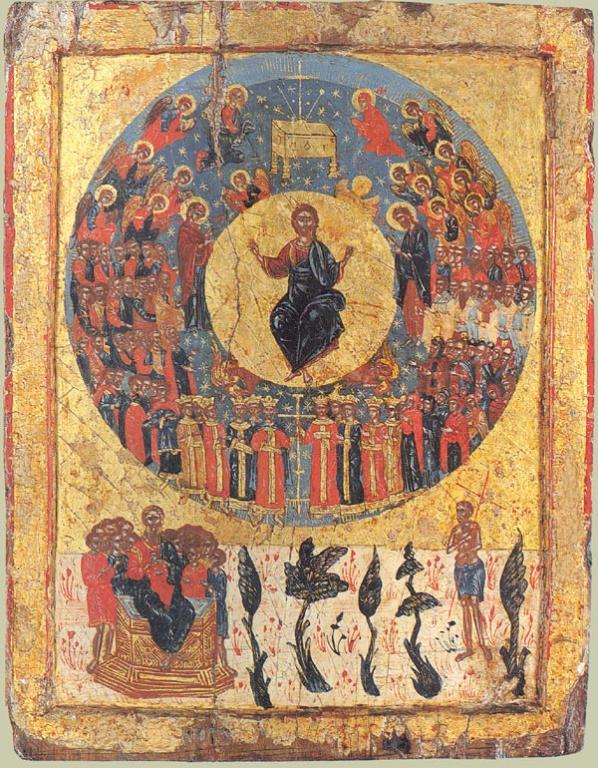 This past Sunday, I preached on the Second Coming of the Lord – asking “what is the Second Coming, and what does it mean to me?” Give it a listen. This sermon was a tough one – the first draft was double the length it needed to be, so there was a fair amount of painful cutting. I always find it particularly hard to cut Scripture passages; maybe posting these sections here will help assuage the pain a little. The first section I cut way back was on the Lord’s words about His purpose in His first coming:
Throughout His life, the Lord was doing two main things. First of all, He was glorifying His humanity – that is, He was replacing everything that was merely Human with a Divine Human. By doing this, by changing the way He could related to humanity, by bringing about a closer presence not only with people in this world, but also with the angels of heaven – He drew nearer to the evil as well as the good, and caused a judgment to happen on those evil spirits who had been infesting heaven. That’s why we read in passages like John 12:31, “Now is the judgment of this world; now shall the prince of this world be cast out.” What brought that about that casting out of hell? The presence of the Divine in the Human; just a little earlier in that chapter, we read that Jesus said, “The hour is come that the Son of Man should be glorified” (John 12:23), and that glorification is the union of the Divine and the human within Himself.
The Lord’s words in that chapter highlight one more thing: that His coming was not the coming that the Jewish people had been expecting. They had expected a Messiah who would come as a worldly king, who would literally sit on the throne of David and raise Israel up above every other nation. And it’s no wonder – that’s what the prophets literally predicted. And yet in that chapter of John where He spoke of being glorified and judging Satan, the Lord also spoke of His own death and resurrection. According to the Jews readings of Scripture, that had never been part of the plan. And so when He said to them, speaking of His death and resurrection, “And I, if I be lifted up from the earth, will draw all to Myself” (John 12:32) they were confused. We read, “The crowd answered Him, ‘We have heard out of the Law that Christ remains for ever; and how can You say that the Son of Man must be lifted up?’” Jesus’ coming, according to Himself, was to involve death, and rising into heaven, and calling all to Himself – a reference to that raising of a New Church that we mentioned earlier as a hallmark of every coming. Later, in response to Pilate’s questioning about whether He was a king, Jesus said, “My kingdom is not of this world” (John 18:36).
The second section, which I ended up cutting completely, was on the Lord’s words about His return:
The Lord’s incarnation and resurrection remains unique in the history of His comings. He did it once; He does not need to do it again. The power he took on at that time has not left Him. And yet, even while in the world He predicted that He would need to come again. He predicted that after a time, hearts would grow cold, and that men would turn away (e.g. Matthew 24:12). And He said, He would return. He would return to give further revelation – He said to His disciples, “I have spoken to you in figurative language; but the time is coming when I will no longer speak to you in figurative language, but I will tell you plainly about the Father” (John 16:25). He would return to bring judgment to the evil – He said, “”When the Son of Man comes in His glory, and all the holy angels with Him, then He will sit on the throne of His glory. All the nations will be gathered before Him, and He will separate them one from another, as a shepherd divides his sheep from the goats” (Matthew 25:31-32). And He would return to renew His kingdom – He said, “And the Son of Man will send His angels with a great sound of a trumpet, and they will gather together His elect from the four winds, from one end of heaven to the other” (Matthew 24:31).
There. If you read those before (or after) listening, I’ll feel much better about having provided enough Scriptural grounding for the sermon.
(Image is a Greek icon of the Second Coming; http://commons.wikimedia.org/wiki/File:Icon_second_coming.jpg)
Previous Post
May 20, 2015
Cut from the Sermon: Feeling Guilty about Being Serene
Next Post

September 11, 2015 Two Snarky Comics and a Sermonette on Science
Browse Our Archives
Select a Category Art Books Culture Humor Miscellany Morality Movies Music Personal Politics Religion Science Sermons The Best Things Theatre Uncategorized
Select a Month April 2019 October 2018 September 2018 July 2018 May 2018 April 2018 February 2018 January 2018 December 2017 November 2017 October 2017 September 2017 August 2017 July 2017 June 2017 May 2017 April 2017 March 2017 February 2017 January 2017 November 2016 July 2016 May 2016 April 2016 March 2016 September 2015 June 2015 May 2015 April 2015 March 2015 November 2014 October 2014 June 2014 May 2014 April 2014 March 2014 February 2014 November 2013 October 2013 September 2013 August 2013 June 2013 May 2013 April 2013 March 2013 October 2012 September 2012 July 2012 June 2012 May 2012 April 2012 March 2012 February 2012 January 2012 December 2011 November 2011 October 2011 September 2011 August 2011 July 2011 May 2011 April 2011 March 2011 February 2011 January 2011 December 2010 November 2010 September 2010 August 2010 July 2010 June 2010 May 2010 April 2010 January 2010
Follow Us!
TAKE THE
Religious Wisdom Quiz
Which prophet was told not to marry or have children as a sign?
Select your answer to see how you score.
Jeremiah Ezra Micah Isaiah
Related posts from Good and Truth


Four Ways of Looking at a Mirror

What Type of Christian Are You?

TRENDING AT PATHEOS Progressive Christian

Why Christians Have a Sacred Duty to Vote:...
The Bible offers strong support for the sacred duty to vote. Here...

What Being a Modern-Day Apostle Means to Me
In my last column, I discussed the ins and outs of modern-day...

Did Ancient China Once Worship the God of...
Across human history, a common thread weaves through the origins of the...

Love Your Neighbor – Including Earth-Kin: Lev. 19,...
God’s command to love your neighbor means acting in an ethical and...

Lead a Church Study of “Jesus and Lao...
Guest writer Jack Thomas (The Irreverent Reverend) reflects on leading his church...

Principles for Understanding the Apostolic Ministry Today
Whenever people discover that my formal ministry title is "apostle," as in...
view all Progressive Christian blogs
Ad-Free & Subscriber Log-In Subscription Support
- About Us
- 2026 Calendar
- Videos
- Podcasts
- Library of World Religions
- Faith In Media Tracker
- Advertise With Us
- Write for Us
- Privacy Policy
- Terms of Service
- Do Not Sell My Data
- Contact Us
- Radiant Digital
- Manage Newsletter Subscriptions
- Unsubscribe From Notifications
- Sitemap
Copyright 2008-2026, Patheos. All rights reserved.
Subscription Support Ad-Free & Subscriber Log-In
Follow Patheos