
BuddhistCatholicContemplativeEvangelicalGeneral ChristianHinduJewishLatter-day SaintMuslimNew VisionsProgressive Christian
Beliefs
- Buddhist
- Catholic
- Contemplative
- Evangelical
- General Christian
- Hindu
- Jewish
- Latter-day Saint
- More Voices
- Muslim
- New Visions
- Pagan
- Progressive Christian
Topics
- Religion News
- Food and Religion
- Sports and Religion
- Religious Art
- Religious Music and Entertainment
- Religious Events
- History and Religion
- Style and Religion
- Politics and Religion
- Women in Religion
- Recreation Outdoors and Religion
- Business Finance and Religion
- Careers Workplace and Religion
- Education and Religion
- Family Parenting and Religion
- Health Fitness and Religion
- Home and Religion
- Relationships and Religion
- Technology and Religion
- Travel and Religion
Columnists
- Buddhist Columnists
- Business Finance and Religion Columnists
- Careers Workplace and Religion Columnists
- Catholic Columnists
- Contemplative Columnists
- Education and Religion Columnists
- Evangelists Columnists
- Family Parenting and Religion Columnists
- General Christian Columnists
- Health Fitness and Religion Columnists
- Hindu Columnists
- History and Religion Columnists
- Home and Religion Columnists
- Jewish Columnists
- More Voices Columnists
- Latter Day Columnists
- Muslim Columnists
- New Visions Columnists
- Nonreligious Columnists
- Pagan Columnists
- Politics and Religion Columnists
- Progressive Columnists
- Recreation Outdoors and Religion Columnists
- Relationships and Religion Columnists
- Religion News Columnists
- Religious Art Columnists
- Religious Events Columnists
- Religious Music and Entertainment Columnists
- Sports and Religion Columnists
- Style and Religion Columnists
- Technology and Religion Columnists
- Travel and Religion Columnists
- Women in Religion Columnists
Resource Library
- 2026 Calendar
- Library of World Religions
- The 100 Most Holy Places on Earth
- Patheos Answers
- Podcasts
- Videos
- Faith Leaders Database
- Anglican Episcopalian
- Bahai
- Baptist
- Buddhism
- Christianity
- Confucianism
- Eastern Orthodoxy
- Hinduism
- Holiness and Pentecostal
- ISKCON
- Islam
- Judaism
- Lutheran
- Methodist
- The Church of Jesus Christ of Latter-day Saints
- New Age
- Paganism
- Presbytarian and Reformed
- Protestantism
- Religion Behind the Scenes
- Roman Catholic
- Scientology
- Shia Islam
- Sikhism
- Sufism
- Sunni Islam
- Taoism
- Zen
- See all religions
Research Tools
 Ad-Free & Subscriber Log-In Subscription Support
Ad-Free & Subscriber Log-In Subscription Support
Follow Patheos 

- Trending:
- Forgiveness
- |
- Marriage
- |
- Consciousness
- |
- Death Penalty
- |
- Election
- |
- Halloween
 Good and Truth
- Home
- Progressive Christian
- Idolatry: Staring at Your Own Finger
Idolatry: Staring at Your Own Finger
Last updated on: May 4, 2015 at 2:19 am by Coleman Glenn
Idolatry: Staring at Your Own Finger 2015-05-04T02:19:24-07:00 Coleman Glenn
Patheos Explore the world's faith through different perspectives on religion and spirituality! Patheos has the views of the prevalent religions and spiritualities of the world.
 A month or so ago I was trying to put Samuel (one and a half) to bed and he was being a complete goofball: swaying from side to side, dancing in circles, and cycling through all his animal sounds in rapid succession. As I lay there on his bed, my primary thought was, “Ugh – do I have time to go get my phone to film this? It’s too dark anyway. Shoot! This would be PERFECT to share on Facebook.” After several minutes agonising over how I might be able to record this – all the while only half paying attention to Samuel – I came to my senses and realised I should probably just engage with my son and enjoy his innocent expression of silliness. At the time I didn’t have a word for my temporary obsession with capturing and sharing the moment, but I think I might now: idolatry.
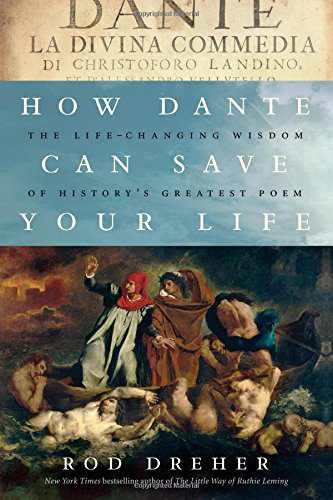
I’ve been reading Rod Dreher’s excellent new book, How Dante Can Save Your Life, which I mentioned in a post a few weeks ago. In the book Rod recounts how he’d found himself in a “dark wood” of bitterness and resentment when he moved to his childhood home expecting reconciliation with his family and found that the same problems remained as had always been there. In this dark wood he stumbled across Dante’s Divine Comedy, which he credits (along with his priest and his therapist) for bringing him back into the light. One of the key moments for Rod came in reading about the hell of idolaters in the Inferno and realising that he had made an idol out of family and place.
In simplest term, idolatry is preferring an image of a thing to the thing itself. Ultimately, that means preferring anything to God, since the ultimate purpose of everything good is to serve as an image and vessel for God’s love; in Swedenborgian terms, “the universe in its greatest and least elements and in its first and last elements is so full of Divine love and wisdom that it can be said to be Divine love and wisdom in an image” (Divine Love and Wisdom §52). What Rod discovered was that he had mistakenly been seeing family as an end in itself, rather than an “icon,” an imperfect image of God’s perfect love. From the book:
It wasn’t simply that I saw family, place, and religion as idols – that is, as ends in themselves – but that my distorted vision prevented me from seeing them as they really were: as icons, damaged though they may be, through which the light of God shone. They were not ends, but imperfect means to the perfect end: God.
Anything can be an idol, because we can make anything an end in itself – food, friendship, family, etc. – rather than seeing it in its proper place, as a means to the ultimate end of everything in the universe: God’s conjunction with man.
So – what does all this have to do with my temporary obsession with Facebook-ing my son’s antics? Well, what was going on there was this: I was paying more attention to the image I wanted to create of childhood joy than to the childish joy itself. Now it’s true that it would be a mistake to idolise childhood joy as an end in itself, too – but if I’m stuck even before that, I need to deal with idolatry on that most basic level. To stop idolising food, a glutton needs to start eating for the sake of a healthy mind and body, even though health, too, can become an idol.
None of this is to say that I think sharing precious moments with others is a bad thing. Not at all! I fully intend to continue sharing entertaining stories on Facebook, and I hope my friends and family do the same. The problem was that I let my obsession with capturing an image distract me from the thing itself that I wanted to share. It’s not that the impulse to share was bad – it’s that it was wrongly ordered.
This kind of idolatry, I think, falls into the category of idolising “the works of our own hands” (Isaiah 2:8, Jeremiah 1:16, etc.). This kind of idolatry has always been a temptation for those who create, and for writers and speakers in particular – preachers included. The way preaching, for example, is supposed to work is that through study and prayer, a preacher gains some insight from God’s Word, and then sets about to find a way to help others see that same thing. A good sermon is a finger pointing the listener to look in the right direction so that he can see for himself the truth that the preacher is trying to convey.
Unfortunately, it’s very easy for a writer or preacher to get so caught up in how they will convey that insight that they start to pay more attention to their own presentation of the truth than to the truth itself. Even without trying, they slip into idolising the thing they are creating. And they don’t even have to think it’s particularly great to make an idol of it – simply to focus on it rather than on the original truth that they glimpsed. Instead of looking toward where they are pointing, they can begin staring at their own finger.
To use a very recent personal example: last week I blogged on an insight that I’ve had into my relationship with Anne, namely, that she tends to start with the ideal and try to draw the real world up to it, whereas I tend to start with real and try to nudge it in the direction of the ideal. I mentioned that it’s been behind several disagreements. Well, later in the week Anne and I disagreed about something – I don’t remember what now – and my first impulse was to try to make it fit into that paradigm, to make it about our different ways of approaching the world. Turns out, it wasn’t about that at all. Lots of our arguments aren’t. And, more than that, there are plenty of cases where I’m more of an idealist and where Anne is more of a realist. The insight I described in that post is very real and very useful – but now that I’ve put it in words and shared it, the temptation is to see everything through that frame, to fall in love with that way of looking at things and try to force everything to fit the dynamic I described there. That, I think, is a perfect illustration of idolising the work of my own hands: instead of using that insight as a tool for looking at our relationship, I try to bend the relationship to fit the tool. I make the image more essential than the thing itself it is supposed to serve.
So, how to avoid this kind of idolatry? There’s a great passage from Married Love about the love of growing wise vs. the love of wisdom, which I think applies more broadly as well. Here’s the passage:
Wisdom cannot take form in a person except through a love of growing wise. If this love is removed, a person is completely incapable of becoming wise. On the other hand, when a person has acquired wisdom for himself as a result of that love, and he loves that wisdom in himself or himself on account of that wisdom, then he forms another love, which is a love of wisdom. There are, in consequence, two loves in a man, one of which is the love of growing wise, which comes first, and the second of which is the love of wisdom, which comes afterwards. But if this second love continues on in a man, it is an evil love, and is called conceit or love of his own intelligence. (Married Love §88)
Notice that: even if a person has discovered something genuinely true and wise, if he starts to love it in himself, or love himself on account of that, it becomes evil and false. He makes an idol out of it, stares at his own finger, and instead of becoming wise becomes foolish. The solution? Focus instead on the love of growing wise. Applied more widely: the love of sharing something precious, or creating something that points to truth, is great. The problem only arises when we start to focus more on the form or creation that we’ve made than on continually appreciating / searching for those things of value. In the highest degree, this means loving God and seeking to know Him more, rather than loving our own picture of Him, the sight we’ve had of Him in the past. To fall in love even with an accurate image eventually distorts the image and becomes idolatry.
So, to sum up / notes to self: don’t stare at your finger. Don’t confuse the image of a thing for the thing itself. Don’t assume you’ve found the purpose for a thing until you’ve seen how it serves the ultimate purpose of conjoining God with man.
And I’ll still post goofy videos of my kids on Facebook. I just won’t grump about it if I don’t have a camera handy to capture everything.
Previous Post
April 25, 2015
The World As It Is, or As It Ought to Be?
Next Post

May 20, 2015 Cut from the Sermon: Feeling Guilty about Being Serene
Browse Our Archives
Select a Category Art Books Culture Humor Miscellany Morality Movies Music Personal Politics Religion Science Sermons The Best Things Theatre Uncategorized
Select a Month April 2019 October 2018 September 2018 July 2018 May 2018 April 2018 February 2018 January 2018 December 2017 November 2017 October 2017 September 2017 August 2017 July 2017 June 2017 May 2017 April 2017 March 2017 February 2017 January 2017 November 2016 July 2016 May 2016 April 2016 March 2016 September 2015 June 2015 May 2015 April 2015 March 2015 November 2014 October 2014 June 2014 May 2014 April 2014 March 2014 February 2014 November 2013 October 2013 September 2013 August 2013 June 2013 May 2013 April 2013 March 2013 October 2012 September 2012 July 2012 June 2012 May 2012 April 2012 March 2012 February 2012 January 2012 December 2011 November 2011 October 2011 September 2011 August 2011 July 2011 May 2011 April 2011 March 2011 February 2011 January 2011 December 2010 November 2010 September 2010 August 2010 July 2010 June 2010 May 2010 April 2010 January 2010
Follow Us!
TAKE THE
Religious Wisdom Quiz
What does the name "Abraham" mean?
Select your answer to see how you score.
Strong leader Blessed man Shelter Father of many
Related posts from Good and Truth


Four Ways of Looking at a Mirror

What Type of Christian Are You?

TRENDING AT PATHEOS Progressive Christian

Why Christians Have a Sacred Duty to Vote:...
The Bible offers strong support for the sacred duty to vote. Here...

What Being a Modern-Day Apostle Means to Me
In my last column, I discussed the ins and outs of modern-day...

Did Ancient China Once Worship the God of...
Across human history, a common thread weaves through the origins of the...

Love Your Neighbor – Including Earth-Kin: Lev. 19,...
God’s command to love your neighbor means acting in an ethical and...

Lead a Church Study of “Jesus and Lao...
Guest writer Jack Thomas (The Irreverent Reverend) reflects on leading his church...

Principles for Understanding the Apostolic Ministry Today
Whenever people discover that my formal ministry title is "apostle," as in...
view all Progressive Christian blogs
Ad-Free & Subscriber Log-In Subscription Support
- About Us
- 2026 Calendar
- Videos
- Podcasts
- Library of World Religions
- Faith In Media Tracker
- Advertise With Us
- Write for Us
- Privacy Policy
- Terms of Service
- Do Not Sell My Data
- Contact Us
- Radiant Digital
- Manage Newsletter Subscriptions
- Unsubscribe From Notifications
- Sitemap
Copyright 2008-2026, Patheos. All rights reserved.
Subscription Support Ad-Free & Subscriber Log-In
Follow Patheos