
BuddhistCatholicContemplativeEvangelicalGeneral ChristianHinduJewishLatter-day SaintMuslimNew VisionsProgressive Christian
Beliefs
- Buddhist
- Catholic
- Contemplative
- Evangelical
- General Christian
- Hindu
- Jewish
- Latter-day Saint
- More Voices
- Muslim
- New Visions
- Pagan
- Progressive Christian
Topics
- Religion News
- Food and Religion
- Sports and Religion
- Religious Art
- Religious Music and Entertainment
- Religious Events
- History and Religion
- Style and Religion
- Politics and Religion
- Women in Religion
- Recreation Outdoors and Religion
- Business Finance and Religion
- Careers Workplace and Religion
- Education and Religion
- Family Parenting and Religion
- Health Fitness and Religion
- Home and Religion
- Relationships and Religion
- Technology and Religion
- Travel and Religion
Columnists
- Buddhist Columnists
- Business Finance and Religion Columnists
- Careers Workplace and Religion Columnists
- Catholic Columnists
- Contemplative Columnists
- Education and Religion Columnists
- Evangelists Columnists
- Family Parenting and Religion Columnists
- General Christian Columnists
- Health Fitness and Religion Columnists
- Hindu Columnists
- History and Religion Columnists
- Home and Religion Columnists
- Jewish Columnists
- More Voices Columnists
- Latter Day Columnists
- Muslim Columnists
- New Visions Columnists
- Nonreligious Columnists
- Pagan Columnists
- Politics and Religion Columnists
- Progressive Columnists
- Recreation Outdoors and Religion Columnists
- Relationships and Religion Columnists
- Religion News Columnists
- Religious Art Columnists
- Religious Events Columnists
- Religious Music and Entertainment Columnists
- Sports and Religion Columnists
- Style and Religion Columnists
- Technology and Religion Columnists
- Travel and Religion Columnists
- Women in Religion Columnists
Resource Library
- 2026 Calendar
- Library of World Religions
- The 100 Most Holy Places on Earth
- Patheos Answers
- Podcasts
- Videos
- Faith Leaders Database
- Anglican Episcopalian
- Bahai
- Baptist
- Buddhism
- Christianity
- Confucianism
- Eastern Orthodoxy
- Hinduism
- Holiness and Pentecostal
- ISKCON
- Islam
- Judaism
- Lutheran
- Methodist
- The Church of Jesus Christ of Latter-day Saints
- New Age
- Paganism
- Presbytarian and Reformed
- Protestantism
- Religion Behind the Scenes
- Roman Catholic
- Scientology
- Shia Islam
- Sikhism
- Sufism
- Sunni Islam
- Taoism
- Zen
- See all religions
Research Tools
 Ad-Free & Subscriber Log-In Subscription Support
Ad-Free & Subscriber Log-In Subscription Support
Follow Patheos 

- Trending:
- Forgiveness
- |
- Marriage
- |
- Consciousness
- |
- Death Penalty
- |
- Election
- |
- Halloween
 Good and Truth
- Home
- Progressive Christian
- Abandon Hope: Dante, Swedenborg, and the Eternity of Hell
Abandon Hope: Dante, Swedenborg, and the Eternity of Hell
Last updated on: April 10, 2015 at 3:14 am by Coleman Glenn
Abandon Hope: Dante, Swedenborg, and the Eternity of Hell 2015-04-10T03:14:03-07:00 Coleman Glenn
Patheos Explore the world's faith through different perspectives on religion and spirituality! Patheos has the views of the prevalent religions and spiritualities of the world.
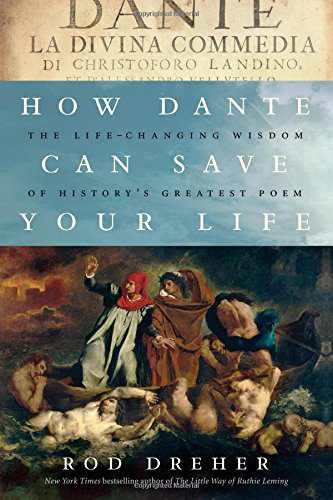
 I’m looking forward to reading Rod Dreher’s upcoming book How Dante Can Save Your Life, about Dreher’s life-changing experience reading Dante’s Divine Comedy. Inspired partly by Dreher’s blogging and partly by conversations I had last year with a congregant back in western Canada, I finally dove into the Divine Comedy a few weeks ago, and I’ve made my way with Dante down through the Inferno and on through to the base of Mount Purgatory. I may pause here at the foot of the mountain for a while; I’ve gotten too frustrated with the terrible formatting of the Kindle edition of Mark Musa’s translation, and I’ve ordered the physical copy (which will also make it easier to read alongside Dreher’s book, which I plan to read on the Kindle). This being Africa, it may be a month before the book arrives. But this gives me some time to blog on my thoughts so far.
The congregant I mentioned from Canada is a devout New Churchwoman, and after reading the Divine Comedy she was convinced that Dante had actually had some visions of heaven and hell, so close was his vision to the vision Swedenborg related as fact some 450 years later. I’m not so sure of that – Swedenborg himself suggests that there is enough in Scripture to give the basic ideas of heaven and hell that his works flesh out. Besides this, having read the Inferno, there are plenty of aspects of Dante’s theology that I find to be very flawed. In fact on first reading it even seemed to me that his view of God’s judgment might be of a God who enjoyed punishing those who had rejected Him.
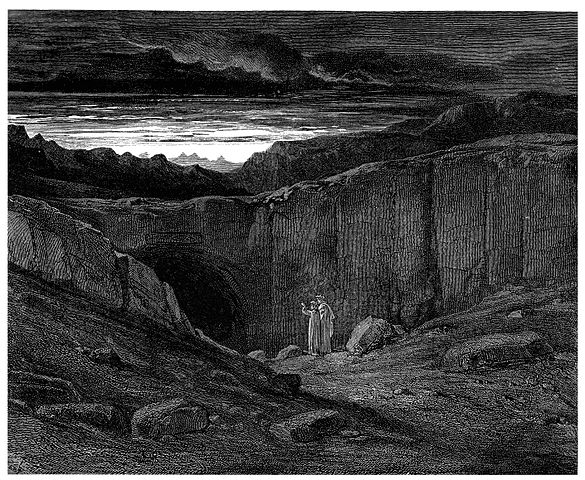
 But that initial reading is almost certainly too shallow. There are hints along the way that more is going on here than a story about gruesome punishments designed to instil a fear of God as Divine Torturer. Rod has a great post up today with excerpts from his book describing Dante’s vision of hell. Here’s Dreher, explaining how hell can be said to have been made by “primal love” and still offer no hope of escape for those who are bound there (the signpost above hell famously reads in part “Abandon Hope, All Ye Who Enter Here”):
These are men and women who have no hope, because their eternal fates have already been decided. To have “lost the good of the intellect” [as Dante’s guide Virgil has said of them] means they are no longer reasoning creatures, but zombies, more or less. That is, they have become one with their sinfulness, and therefore one-dimensional. They have no hope because their condition will last forever.
What does it mean to say that “love” made this horrible place [as Dante sees written on the gates of hell]? It is the love that will not force itself upon a man, but rather one that will give him for eternity what he chooses in the temporal life. … Hell is for those who will not have God, those who made a final, remorseless choice for their own passions over unity with and submission to their Creator. Satan’s sin was to rebel against God. The root of all sin is this fundamental pride, a pride that prefers the Self, with all its disordered passions, to God. God is loving, but God is also just; in His love, He will give us what we choose.
This lines up exactly with the New Church concept of hell: a self-created (but inescapable) world that naturally arises when people who love themselves above all else are brought together. A key concept here that is not made explicit in Dante but can be glimpsed suggestively is the New Church concept of a ruling love: a person essentially is what they love above all else. According to New Church theology, the ruling loves of everyone in heaven are love of God and love of the neighbour; the ruling loves of everyone in hell are the love of self and of the world (i.e. money, pleasure, etc.). From Heaven and Hell:
The angels declare that the life of the ruling love is never changed in any one even to eternity, since everyone is his love; consequently to change that love in a spirit is to take away or extinguish his life; and for the reason that man after death is no longer capable of being reformed by instruction, as in the world, because the outmost plane, which consists of natural knowledges and affections, is then quiescent and not being spiritual cannot be opened; and upon that plane the interiors pertaining to the mind and disposition rest as a house rests on its foundation; and on this account such as the life of one’s love had been in the world such he continues to be to eternity. (HH §480)
In the past I’ve struggled with the justice of that – how could a just and merciful God take away the means a person has of repenting? How could God, in the words that Dante puts in the mouth of his guide Virgil, take away “the good of the intellect” and leave the hell-bound alone with their ruling love? But on further reading in the Doctrine of the New Church, it’s become clearer: God takes away the knowledge of goodness and truth with the evil after death because they’ve already chosen. To eternity, they would not use it for repentance – they would use it to deceive, and so taking it away is the means of protecting the innocent. So, for example, again from Heaven and Hell:
It is a great grief to the angels that learned men for the most part ascribe all things to nature, and have thereby so closed up the interiors of their minds as to be unable to see any thing of truth from the light of truth, which is the light of heaven. In consequence of this such in the other life are deprived of their ability to reason that they may not disseminate falsities among the simple good and lead them astray; and are sent away into desert places. (HH §464)
In the end, I think the only way to reconcile the idea of a just and merciful God with an eternal hell is to believe that those in hell have made a fundamental choice about who they are, a choice that they do not want to change, even if temporarily they would claim repentance in order to be free of the pain that they receive when they try to act on their evil intentions.
(Image is Gustave Doré’s illustration of Dante and Virgil at the gates of hell.)
Previous Post
March 30, 2015
Why Satisfaction Theory Is So Satisfying (Even Though It's Wrong)
Next Post

April 25, 2015 The World As It Is, or As It Ought to Be?
Browse Our Archives
Select a Category Art Books Culture Humor Miscellany Morality Movies Music Personal Politics Religion Science Sermons The Best Things Theatre Uncategorized
Select a Month April 2019 October 2018 September 2018 July 2018 May 2018 April 2018 February 2018 January 2018 December 2017 November 2017 October 2017 September 2017 August 2017 July 2017 June 2017 May 2017 April 2017 March 2017 February 2017 January 2017 November 2016 July 2016 May 2016 April 2016 March 2016 September 2015 June 2015 May 2015 April 2015 March 2015 November 2014 October 2014 June 2014 May 2014 April 2014 March 2014 February 2014 November 2013 October 2013 September 2013 August 2013 June 2013 May 2013 April 2013 March 2013 October 2012 September 2012 July 2012 June 2012 May 2012 April 2012 March 2012 February 2012 January 2012 December 2011 November 2011 October 2011 September 2011 August 2011 July 2011 May 2011 April 2011 March 2011 February 2011 January 2011 December 2010 November 2010 September 2010 August 2010 July 2010 June 2010 May 2010 April 2010 January 2010
Follow Us!
TAKE THE
Religious Wisdom Quiz
I was a scribe skilled in the Law, and I set my heart to study, practice, and teach it. Who am I?
Select your answer to see how you score.
Solomon Nehemiah Ezra Samuel
Related posts from Good and Truth


Four Ways of Looking at a Mirror

What Type of Christian Are You?

TRENDING AT PATHEOS Progressive Christian

Why Christians Have a Sacred Duty to Vote:...
The Bible offers strong support for the sacred duty to vote. Here...

What Being a Modern-Day Apostle Means to Me
In my last column, I discussed the ins and outs of modern-day...

Did Ancient China Once Worship the God of...
Across human history, a common thread weaves through the origins of the...

Love Your Neighbor – Including Earth-Kin: Lev. 19,...
God’s command to love your neighbor means acting in an ethical and...

Lead a Church Study of “Jesus and Lao...
Guest writer Jack Thomas (The Irreverent Reverend) reflects on leading his church...

Principles for Understanding the Apostolic Ministry Today
Whenever people discover that my formal ministry title is "apostle," as in...
view all Progressive Christian blogs
Ad-Free & Subscriber Log-In Subscription Support
- About Us
- 2026 Calendar
- Videos
- Podcasts
- Library of World Religions
- Faith In Media Tracker
- Advertise With Us
- Write for Us
- Privacy Policy
- Terms of Service
- Do Not Sell My Data
- Contact Us
- Radiant Digital
- Manage Newsletter Subscriptions
- Unsubscribe From Notifications
- Sitemap
Copyright 2008-2026, Patheos. All rights reserved.
Subscription Support Ad-Free & Subscriber Log-In
Follow Patheos