
BuddhistCatholicContemplativeEvangelicalGeneral ChristianHinduJewishLatter-day SaintMuslimNew VisionsProgressive Christian
Beliefs
- Buddhist
- Catholic
- Contemplative
- Evangelical
- General Christian
- Hindu
- Jewish
- Latter-day Saint
- More Voices
- Muslim
- New Visions
- Pagan
- Progressive Christian
Topics
- Religion News
- Food and Religion
- Sports and Religion
- Religious Art
- Religious Music and Entertainment
- Religious Events
- History and Religion
- Style and Religion
- Politics and Religion
- Women in Religion
- Recreation Outdoors and Religion
- Business Finance and Religion
- Careers Workplace and Religion
- Education and Religion
- Family Parenting and Religion
- Health Fitness and Religion
- Home and Religion
- Relationships and Religion
- Technology and Religion
- Travel and Religion
Columnists
- Buddhist Columnists
- Business Finance and Religion Columnists
- Careers Workplace and Religion Columnists
- Catholic Columnists
- Contemplative Columnists
- Education and Religion Columnists
- Evangelists Columnists
- Family Parenting and Religion Columnists
- General Christian Columnists
- Health Fitness and Religion Columnists
- Hindu Columnists
- History and Religion Columnists
- Home and Religion Columnists
- Jewish Columnists
- More Voices Columnists
- Latter Day Columnists
- Muslim Columnists
- New Visions Columnists
- Nonreligious Columnists
- Pagan Columnists
- Politics and Religion Columnists
- Progressive Columnists
- Recreation Outdoors and Religion Columnists
- Relationships and Religion Columnists
- Religion News Columnists
- Religious Art Columnists
- Religious Events Columnists
- Religious Music and Entertainment Columnists
- Sports and Religion Columnists
- Style and Religion Columnists
- Technology and Religion Columnists
- Travel and Religion Columnists
- Women in Religion Columnists
Resource Library
- 2026 Calendar
- Library of World Religions
- The 100 Most Holy Places on Earth
- Patheos Answers
- Podcasts
- Videos
- Faith Leaders Database
- Anglican Episcopalian
- Bahai
- Baptist
- Buddhism
- Christianity
- Confucianism
- Eastern Orthodoxy
- Hinduism
- Holiness and Pentecostal
- ISKCON
- Islam
- Judaism
- Lutheran
- Methodist
- The Church of Jesus Christ of Latter-day Saints
- New Age
- Paganism
- Presbytarian and Reformed
- Protestantism
- Religion Behind the Scenes
- Roman Catholic
- Scientology
- Shia Islam
- Sikhism
- Sufism
- Sunni Islam
- Taoism
- Zen
- See all religions
Research Tools
 Ad-Free & Subscriber Log-In Subscription Support
Ad-Free & Subscriber Log-In Subscription Support
Follow Patheos 

- Trending:
- Forgiveness
- |
- Marriage
- |
- Consciousness
- |
- Death Penalty
- |
- Election
- |
- Halloween
 Good and Truth
- Home
- Progressive Christian
- Do People Become Angels?
Do People Become Angels?
Last updated on: May 3, 2013 at 8:00 am by Coleman Glenn
Do People Become Angels? 2013-05-02T16:38:57-07:00 Coleman Glenn
Patheos Explore the world's faith through different perspectives on religion and spirituality! Patheos has the views of the prevalent religions and spiritualities of the world.
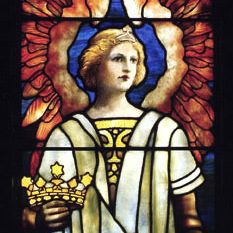 As I mentioned in my previous post, Andrea Garrison’s book In the Presence of Angels is written with the assumption that people become angels. Garrison writes, “We are in essence angels in training preparing for a higher level of service.” That’s not a foreign idea in our culture – e.g., Clarence the angel from It’s a Wonderful Life was a man who died during Mark Twain’s era – but most Christian and Jewish traditions would consider this to be inaccurate, teaching instead that angels are a separate created type of being. But according to Emanuel Swedenborg, it’s true – angels are simply departed human beings.
Now, it’s fairly difficult to prove this conclusively from the Bible – but it’s also fairly difficult to prove from the Bible that angels are not departed people. Contrary to what some may think, the Bible doesn’t answer this decisively either way. And in fact there are some indications that angels are people who have lived in this world.
The Swedenborgian website “What the Bible Says” includes a page with a number of Scriptural references indicating that angels and people are of the same race. For example, there are several stories in Scripture where the same angel will sometimes be called “a man” and at other times “an angel” (e.g. Judges 13:3,6,8-11).
But perhaps the strongest evidence that an angel is the spirit of a person who has departed can be found two passages in Acts. The first of these is in chapter 12 of Acts, which describes Peter’s miraculous escape from prison and his appearance to the other Christians at the house of Mary. When Peter arrived at the door, the servant girl recognized his voice, and was so excited that she left him there and ran back to tell the others that he had arrived. They did not believe her; but when she insisted, they said, “It is his angel” (Acts 12:15) The assumption seems to be that a person has “an angel” that can be mistaken for the person themselves.
Scholars disagree on exactly what this means. Some scholars argue that this reference to an angel is not to the person’s spirit, but to his guardian angel. But many scholars do support the interpretation that Peter’s “angel” means his departed spirit. And this reading is further supported by the second similar reference to angels in the book of Acts.
That occurs in Acts 23 in which a dispute arises between the Pharisees and Sadducees over the reality of the resurrection. Acts 23:8 says, “For Sadducees say that there is no resurrection—and no angel or spirit; but the Pharisees confess both.”
There’s disagreement about how to read this. The Sadducees almost certainly believed in angels in the sense of heavenly messengers sent from God (the word for “angel” literally means messenger, both in Hebrew and in Greek), since they held the five books of Moses to be authoritative scripture, and angels make several appearances in those books. What the Sadducees did not believe in was the resurrection from the dead, and so to me the most obvious reading of this statement in context is that they did not believe in an angel as something akin to a person’s “spirit” that was living on past death. That reading has support from numerous scholars, including David Daube and N.T. Wright (see this blog post from Ken Schenck, Dean of Wesley Seminary at Indiana Wesleyan University).
Of course, most of those scholars would say that these references do not imply that all Biblical references to “angels” refer to people who have died. But the fact that the term is sometimes used this way, I think, opens up that possibility; and at the very least it makes it hard to argue, as some do, that the only Biblical way to view angels is as a separate category of being, created independently from humans.
(Image is of “The Angel of Smyrna,” from the exhibit “In Company with Angels,” an exhibit of seven restored stained-glass windows created by Tiffany Studios in the early twentieth century for the Church of the New Jerusalem in Cincinnati, Ohio.)
Previous Post

May 2, 2013
Book Review: In the Presence of Angels
Next Post
May 6, 2013 The True Prosperity Gospel
Browse Our Archives
Select a Category Art Books Culture Humor Miscellany Morality Movies Music Personal Politics Religion Science Sermons The Best Things Theatre Uncategorized
Select a Month April 2019 October 2018 September 2018 July 2018 May 2018 April 2018 February 2018 January 2018 December 2017 November 2017 October 2017 September 2017 August 2017 July 2017 June 2017 May 2017 April 2017 March 2017 February 2017 January 2017 November 2016 July 2016 May 2016 April 2016 March 2016 September 2015 June 2015 May 2015 April 2015 March 2015 November 2014 October 2014 June 2014 May 2014 April 2014 March 2014 February 2014 November 2013 October 2013 September 2013 August 2013 June 2013 May 2013 April 2013 March 2013 October 2012 September 2012 July 2012 June 2012 May 2012 April 2012 March 2012 February 2012 January 2012 December 2011 November 2011 October 2011 September 2011 August 2011 July 2011 May 2011 April 2011 March 2011 February 2011 January 2011 December 2010 November 2010 September 2010 August 2010 July 2010 June 2010 May 2010 April 2010 January 2010
Follow Us!
TAKE THE
Religious Wisdom Quiz
Who was turned into a pillar of salt?
Select your answer to see how you score.
Lot's wife Ruth Naomi Lot
Related posts from Good and Truth


Four Ways of Looking at a Mirror

What Type of Christian Are You?

TRENDING AT PATHEOS Progressive Christian

What Being a Modern-Day Apostle Means to Me
In my last column, I discussed the ins and outs of modern-day...

Did Ancient China Once Worship the God of...
Across human history, a common thread weaves through the origins of the...

Love Your Neighbor – Including Earth-Kin: Lev. 19,...
God’s command to love your neighbor means acting in an ethical and...

Lead a Church Study of “Jesus and Lao...
Guest writer Jack Thomas (The Irreverent Reverend) reflects on leading his church...

Pastoral Wisdom for Responding to Sermon Pushback
Getting sermon pushback on your social justice sermon? Learn practical, Proverbs-based strategies...

Principles for Understanding the Apostolic Ministry Today
Whenever people discover that my formal ministry title is "apostle," as in...
view all Progressive Christian blogs
Ad-Free & Subscriber Log-In Subscription Support
- About Us
- 2026 Calendar
- Videos
- Podcasts
- Library of World Religions
- Faith In Media Tracker
- Advertise With Us
- Write for Us
- Privacy Policy
- Terms of Service
- Do Not Sell My Data
- Contact Us
- Radiant Digital
- Manage Newsletter Subscriptions
- Unsubscribe From Notifications
- Sitemap
Copyright 2008-2026, Patheos. All rights reserved.
Subscription Support Ad-Free & Subscriber Log-In
Follow Patheos