
BuddhistCatholicContemplativeEvangelicalGeneral ChristianHinduJewishLatter-day SaintMuslimNew VisionsProgressive Christian
Beliefs
- Buddhist
- Catholic
- Contemplative
- Evangelical
- General Christian
- Hindu
- Jewish
- Latter-day Saint
- More Voices
- Muslim
- New Visions
- Pagan
- Progressive Christian
Topics
- Religion News
- Food and Religion
- Sports and Religion
- Religious Art
- Religious Music and Entertainment
- Religious Events
- History and Religion
- Style and Religion
- Politics and Religion
- Women in Religion
- Recreation Outdoors and Religion
- Business Finance and Religion
- Careers Workplace and Religion
- Education and Religion
- Family Parenting and Religion
- Health Fitness and Religion
- Home and Religion
- Relationships and Religion
- Technology and Religion
- Travel and Religion
Columnists
- Buddhist Columnists
- Business Finance and Religion Columnists
- Careers Workplace and Religion Columnists
- Catholic Columnists
- Contemplative Columnists
- Education and Religion Columnists
- Evangelists Columnists
- Family Parenting and Religion Columnists
- General Christian Columnists
- Health Fitness and Religion Columnists
- Hindu Columnists
- History and Religion Columnists
- Home and Religion Columnists
- Jewish Columnists
- More Voices Columnists
- Latter Day Columnists
- Muslim Columnists
- New Visions Columnists
- Nonreligious Columnists
- Pagan Columnists
- Politics and Religion Columnists
- Progressive Columnists
- Recreation Outdoors and Religion Columnists
- Relationships and Religion Columnists
- Religion News Columnists
- Religious Art Columnists
- Religious Events Columnists
- Religious Music and Entertainment Columnists
- Sports and Religion Columnists
- Style and Religion Columnists
- Technology and Religion Columnists
- Travel and Religion Columnists
- Women in Religion Columnists
Resource Library
- 2026 Calendar
- Library of World Religions
- The 100 Most Holy Places on Earth
- Patheos Answers
- Podcasts
- Videos
- Faith Leaders Database
- Anglican Episcopalian
- Bahai
- Baptist
- Buddhism
- Christianity
- Confucianism
- Eastern Orthodoxy
- Hinduism
- Holiness and Pentecostal
- ISKCON
- Islam
- Judaism
- Lutheran
- Methodist
- The Church of Jesus Christ of Latter-day Saints
- New Age
- Paganism
- Presbytarian and Reformed
- Protestantism
- Religion Behind the Scenes
- Roman Catholic
- Scientology
- Shia Islam
- Sikhism
- Sufism
- Sunni Islam
- Taoism
- Zen
- See all religions
Research Tools
 Ad-Free & Subscriber Log-In Subscription Support
Ad-Free & Subscriber Log-In Subscription Support
Follow Patheos 

- Trending:
- Forgiveness
- |
- Marriage
- |
- Consciousness
- |
- Death Penalty
- |
- Election
- |
- Halloween
 Good and Truth
- Home
- Progressive Christian
- The Most Important Website You Will Ever Visit
The Most Important Website You Will Ever Visit
Last updated on: May 8, 2013 at 3:51 pm by Coleman Glenn
The Most Important Website You Will Ever Visit 2013-05-08T15:51:13-07:00 Coleman Glenn
Patheos Explore the world's faith through different perspectives on religion and spirituality! Patheos has the views of the prevalent religions and spiritualities of the world.
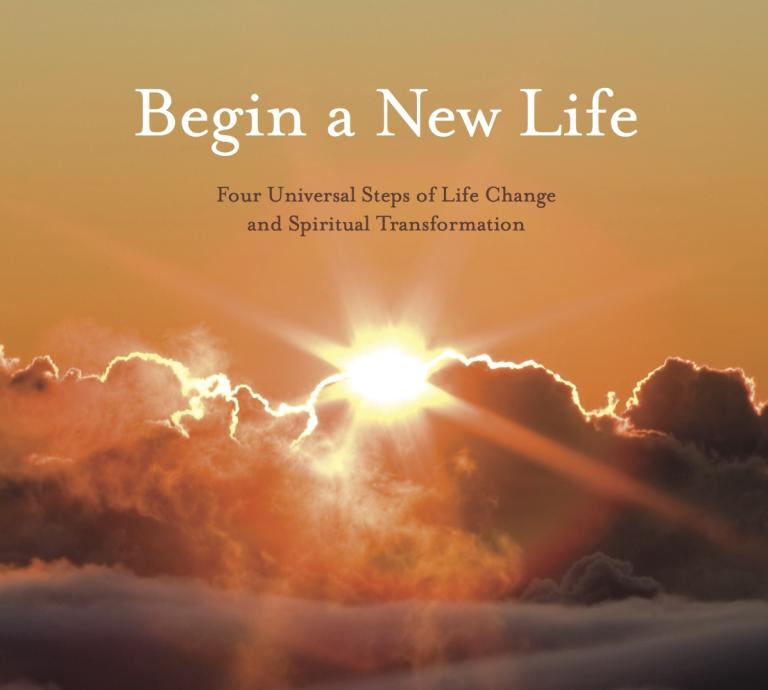 OK, the blog title may be a bit of an overstatement. Or maybe not. For the past eight years, Rev. Mark Pendleton has been developing a spiritual-growth program called “Begin a New Life,” based on Swedenborgian, Biblical teachings about the path of repentance. It’s finally ready for public release, and you can find it here: www.beginanewlife.info.
Now, a caveat: I have not actually used this program directly. But because it is squarely based in New Church teachings on the life of repentance, I regularly follow its steps, without the worksheets but often with pencil and paper in hand, and a list of the Ten Commandments beside me.
If there’s one thing I would emphasize from the information on the website, it’s the importance of praying directly to the Lord Jesus Christ in this process, rather than to a vague idea of God. The chapter from True Christian Religion on repentance – from which the bulk of the program is derived – puts it this way:
Confession ought to be made before the Lord God the Saviour, and then prayer should be offered for help and the power to resist evils.
The Lord God the Saviour ought to be approached, because He is the God of heaven and earth, the Redeemer and Saviour, whose attributes are omnipotence, omniscience and omnipresence, mercy itself together with righteousness; also because man is His creation, and the church is His sheep-fold. The New Testament contains in many places His command that man should approach, worship and adore Him. He instructed us to approach Him alone in this passage of John:
In truth I tell you, anyone who does not go into the sheep-fold through the gate, but climbs up another way, is a thief and a robber. But he who goes in through the gate is the shepherd of the sheep. I am the gate, anyone who goes in through me will be saved and will find pasture. A thief only comes to steal, slaughter and destroy. I have come so that they may have life and plenty. I am the good shepherd. John 10:1, 2, 9-11.
The reason one ought not to climb up another way is so as not to approach God the Father, as He is invisible, and therefore unapproachable and incapable of being conjoined to man. That is why He came into the world, and made Himself visible, approachable and capable of being joined to. This was exclusively so that man could be saved. For unless in approaching God we think about Him as a Man, all ideas about God are vain; they collapse like the power of sight directed towards the universe, that is, into empty space, or towards nature, or the objects inside nature that stand in the way.
God Himself, who from eternity is one, came into the world, as is perfectly plain from the way the Lord the Saviour was born: He was conceived by the power of the Most High through the Holy Spirit, and as a result His Human was born of the Virgin Mary. From this it follows that His soul was the Divine itself, which is called the Father, since God is indivisible; and that the Human so born is the Human of God the Father, which is called the Son of God (Luke 1:32, 34, 35). Again, it follows from these facts that when the Lord God the Saviour is approached, God the Father is also approached. That is why when Philip begged Him to show him the Father, He replied:
He who sees me, sees the Father. How is it then you say, Show us the Father? Do you not believe that I am in the Father, and the Father is in me? Believe me, I am in the Father and the Father is in me. John 14:6-11.
All this is included in the readings that accompany the program, but in case someone skips straight to the worksheets, I think it’s important that that be put front and centre. This whole process is about acting as if from your own power, and in that process realizing that it is really only through the Lord God Jesus Christ acting in you and through you that you’re able to overcome anything, that your heart can change.
I can’t overstate the importance of the life of repentance. It’s taught over and over and over throughout the Bible. It’s the most basic thing that is required of us to live faithfully. I’d go so far as to say that if you’re not repenting, you are not living as a Christian. Where this program is so useful is that it helps us to do that consciously and specifically, rather than saying in general terms, “I’m a miserable sinner” without realizing or addressing any of the sins that do dwell in us.
Mark has agreed to run this program here in Dawson Creek; I’m hoping to invite him up for some time this fall, and I’ll be sure to let you know when we work out the exact dates.
Previous Post

April 16, 2013
Is the New Church a Cult?
Next Post
May 1, 2013 God Means It For Good
Browse Our Archives
Select a Category Art Books Culture Humor Miscellany Morality Movies Music Personal Politics Religion Science Sermons The Best Things Theatre Uncategorized
Select a Month April 2019 October 2018 September 2018 July 2018 May 2018 April 2018 February 2018 January 2018 December 2017 November 2017 October 2017 September 2017 August 2017 July 2017 June 2017 May 2017 April 2017 March 2017 February 2017 January 2017 November 2016 July 2016 May 2016 April 2016 March 2016 September 2015 June 2015 May 2015 April 2015 March 2015 November 2014 October 2014 June 2014 May 2014 April 2014 March 2014 February 2014 November 2013 October 2013 September 2013 August 2013 June 2013 May 2013 April 2013 March 2013 October 2012 September 2012 July 2012 June 2012 May 2012 April 2012 March 2012 February 2012 January 2012 December 2011 November 2011 October 2011 September 2011 August 2011 July 2011 May 2011 April 2011 March 2011 February 2011 January 2011 December 2010 November 2010 September 2010 August 2010 July 2010 June 2010 May 2010 April 2010 January 2010
Follow Us!
TAKE THE
Religious Wisdom Quiz
What was the disciple Luke's profession?
Select your answer to see how you score.
Fisherman Tentmaker Physician Carpenter
Related posts from Good and Truth


Four Ways of Looking at a Mirror

What Type of Christian Are You?

TRENDING AT PATHEOS Progressive Christian

Why Christians Have a Sacred Duty to Vote:...
The Bible offers strong support for the sacred duty to vote. Here...

What Being a Modern-Day Apostle Means to Me
In my last column, I discussed the ins and outs of modern-day...

Did Ancient China Once Worship the God of...
Across human history, a common thread weaves through the origins of the...

Love Your Neighbor – Including Earth-Kin: Lev. 19,...
God’s command to love your neighbor means acting in an ethical and...

Lead a Church Study of “Jesus and Lao...
Guest writer Jack Thomas (The Irreverent Reverend) reflects on leading his church...

Principles for Understanding the Apostolic Ministry Today
Whenever people discover that my formal ministry title is "apostle," as in...
view all Progressive Christian blogs
Ad-Free & Subscriber Log-In Subscription Support
- About Us
- 2026 Calendar
- Videos
- Podcasts
- Library of World Religions
- Faith In Media Tracker
- Advertise With Us
- Write for Us
- Privacy Policy
- Terms of Service
- Do Not Sell My Data
- Contact Us
- Radiant Digital
- Manage Newsletter Subscriptions
- Unsubscribe From Notifications
- Sitemap
Copyright 2008-2026, Patheos. All rights reserved.
Subscription Support Ad-Free & Subscriber Log-In
Follow Patheos