
BuddhistCatholicContemplativeEvangelicalGeneral ChristianHinduJewishLatter-day SaintMuslimNew VisionsProgressive Christian
Beliefs
- Buddhist
- Catholic
- Contemplative
- Evangelical
- General Christian
- Hindu
- Jewish
- Latter-day Saint
- More Voices
- Muslim
- New Visions
- Pagan
- Progressive Christian
Topics
- Religion News
- Food and Religion
- Sports and Religion
- Religious Art
- Religious Music and Entertainment
- Religious Events
- History and Religion
- Style and Religion
- Politics and Religion
- Women in Religion
- Recreation Outdoors and Religion
- Business Finance and Religion
- Careers Workplace and Religion
- Education and Religion
- Family Parenting and Religion
- Health Fitness and Religion
- Home and Religion
- Relationships and Religion
- Technology and Religion
- Travel and Religion
Columnists
- Buddhist Columnists
- Business Finance and Religion Columnists
- Careers Workplace and Religion Columnists
- Catholic Columnists
- Contemplative Columnists
- Education and Religion Columnists
- Evangelists Columnists
- Family Parenting and Religion Columnists
- General Christian Columnists
- Health Fitness and Religion Columnists
- Hindu Columnists
- History and Religion Columnists
- Home and Religion Columnists
- Jewish Columnists
- More Voices Columnists
- Latter Day Columnists
- Muslim Columnists
- New Visions Columnists
- Nonreligious Columnists
- Pagan Columnists
- Politics and Religion Columnists
- Progressive Columnists
- Recreation Outdoors and Religion Columnists
- Relationships and Religion Columnists
- Religion News Columnists
- Religious Art Columnists
- Religious Events Columnists
- Religious Music and Entertainment Columnists
- Sports and Religion Columnists
- Style and Religion Columnists
- Technology and Religion Columnists
- Travel and Religion Columnists
- Women in Religion Columnists
Resource Library
- 2026 Calendar
- Library of World Religions
- The 100 Most Holy Places on Earth
- Patheos Answers
- Podcasts
- Videos
- Faith Leaders Database
- Anglican Episcopalian
- Bahai
- Baptist
- Buddhism
- Christianity
- Confucianism
- Eastern Orthodoxy
- Hinduism
- Holiness and Pentecostal
- ISKCON
- Islam
- Judaism
- Lutheran
- Methodist
- The Church of Jesus Christ of Latter-day Saints
- New Age
- Paganism
- Presbytarian and Reformed
- Protestantism
- Religion Behind the Scenes
- Roman Catholic
- Scientology
- Shia Islam
- Sikhism
- Sufism
- Sunni Islam
- Taoism
- Zen
- See all religions
Research Tools
 Ad-Free & Subscriber Log-In Subscription Support
Ad-Free & Subscriber Log-In Subscription Support
Follow Patheos 

- Trending:
- Forgiveness
- |
- Marriage
- |
- Consciousness
- |
- Death Penalty
- |
- Election
- |
- Halloween
 God and the Machine
- Home
- Catholic
- Everyday Prayer
Everyday Prayer
Last updated on: May 15, 2015 at 1:30 pm by Thomas L. McDonald
Everyday Prayer 2015-05-15T13:30:20-04:00 Thomas L. McDonald
Patheos Explore the world's faith through different perspectives on religion and spirituality! Patheos has the views of the prevalent religions and spiritualities of the world.
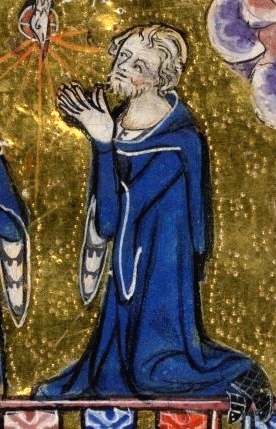
Pray without ceasing.
Prayer can be hard. Many of us follow the forms laid out by the Church because they are a good foundation upon which to build a prayer life. Whether it’s the Liturgy of the Hours or the Rosary, we drink from a deep and pure well that can nourish our spiritual life with the wisdom of the Church and voice of God in Scripture. When we do, we join the People of God in one prayer.
Yet this discipline of prayer is like any discipline: it requires work and practice. As with a diet or exercise regimen, it can become a burden. If we put all our eggs in that basket, we can feel like failures if our discipline slips.
This why the Rule of St. Benedict emphasizes brief, frequent prayers over long, focused prayer. He says: “Prayer ought to be short and fervent, unless it happens, that one is moved by the grace of God to prolong it.”
Did you catch that last part? Longer prayer is a function of grace. Now, Benedictines certainly pray the Divine Office hours, so he’s not dismissing that. Instead, he sees the Office as a way to stand in the presence of God:
“We believe that God is everywhere present, and that His all-seeing eye beholds both the good and the bad; but there are no circumstances in which we should have such a profound and lively conviction of these truths, as while we are engaged in singing the Divine Office.”
In these deeper practices, we learn about God and dispose ourselves to His action, but prayer—the reaching out to God with heart, mind, and word—can be a much simpler thing.
The most humble yet powerful prayer is the Sign of the Cross. Body, mind, and voice all work together to proclaim the Trinity and the saving power of the crucifixion all at once.
It’s common to say “let your life become a prayer,” but that’s not quite what I mean here. Rather, we need to make prayer—short, frequent prayer—a part of our lives. Nothing big, mind you: just what the Church calls ejaculations. (Yes, I know, I know: but the Church’s understanding of the word preceded the other meaning.) Bring our lives back to God all day long with all our actions, if only just for a moment.
Say the Jesus Prayer. Make the Sign of the Cross before act. Say “God be with me” before you make a phone call. Say an Our Father at random points in the. Offer up a “Requiem aeternam” or “Lord have mercy” when you hear of a tragedy.
We all want our prayers to be outsized, deep, moving, profound. That is a worthy goal, but it should not be the ordinary way of prayer for us. The ordinary way is the little way.
I remember a video I saw years ago in a diocesan training session. It showed a woman making the Sign of the Cross over a tray of muffins as she put them in the oven. At the time I thought it looked absurd, and it’s probably not something I’d do myself, but now I see where she was coming from, and I think she was absolutely correct. She was trying to sanctify the mundane. It’s way of praying with our whole being, and composing that prayer from the simple moments of life.
We are a sacramental people. We believe God dignified flesh by taking it on Himself in the incarnation. We believe God uses matter to convey the sacred. Time, too, can become sacred, and every moment that clicks by can be sanctified for us if we turn to God in that moment and ask His blessing upon it.
Turning to frequent, short prayer throughout the day is like opening a windowshade on a bright day. The new light baths the room to reveal things formerly unseen. God is that light. The anxiety and stress of everyday life is the windowshade. Prayer is when we choose, if only for a moment, to let that light in so that we may see our life anew.
I doubt that The Muffin Lady’s Prayer was “Lord, make these the best muffins ever!” Rather, I think she was simply using her actions—in this case an act of both love and necessity in providing food for her family–as a moment to turn to God in thanks and love. She was trying to open herself to holiness by sanctifying the simple things.
“Pray without ceasing,” we are told. This doesn’t mean every person commits themselves to a life of prayer like a cloistered contemplative, but rather that each one of us is commanded to turn to God in the midst of life. We draw near to God and dwell in His presence, weaving our prayer out of the simple stuff of life, and offering up our time, our actions, our emotions, our very bodies in an act of love and devotion.
More on prayer can be found here. Simon Tugwell’s Prayer in Practice, which inspired these posts, is a little gem.
Previous Post

May 14, 2015
DC Fanboy Nerdvana
Next Post
May 20, 2015 Joanne McPortland on the Call to Self-Destruction
Browse Our Archives
Select a Category Abortion Anthropology Archaeology Art Bible Books Chickens Church Computers Culture Wars Evil Fiction Film Games Ghosts Gospel of John Gospels History How I Pray Internet iPhone Islam Israel Jesus Judaism Language Lent Literature Marshall McLuhan Media Medieval Mental Health Mobile Movies Neil Postman News Old Testament Personal Political Pope Pope Benedict Pope Francis Prayer Robots Satan Sciency Sex Shakespeare Social Media Software St. Augustine Synod Synod on the Family Tarot Technology Television Theology Transhumanism Uncategorized Verbum
Select a Month November 2015 October 2015 September 2015 July 2015 June 2015 May 2015 April 2015 March 2015
Follow Us!
TAKE THE
Religious Wisdom Quiz
Who had a colorful coat from his father?
Select your answer to see how you score.
Daniel David Isaac Joseph
Related posts from God and the Machine
Joanne McPortland on the Call to Self-Destruction
TRENDING AT PATHEOS Catholic

The Parable Of The Sower And The Word...
One of Christ’s most famous parables is that of the sower who...

Rejecting Doom: Christian Hope And Human Action
Christianity is a religion of hope. We are to have hope and...

Why I Choose the Eucharist Over the Sermon
Choose the Eucharist, Not the Sermon What are we supposed to get...

5 Design Elements Found in Spiritually Rooted Homes
Putting Spirituality Into Home Decor Our homes are more than our living...

Credo: A Story of God Told with the...
About 10 years ago, I began to imagine a personal "Credo" that...

The Anatomy of Divine Revelation in Catholic Thought
The claim that God has made Himself known to human beings is...
view all Catholic blogs
Ad-Free & Subscriber Log-In Subscription Support
- About Us
- 2026 Calendar
- Videos
- Podcasts
- Library of World Religions
- Faith In Media Tracker
- Advertise With Us
- Write for Us
- Privacy Policy
- Terms of Service
- Do Not Sell My Data
- Contact Us
- Radiant Digital
- Manage Newsletter Subscriptions
- Unsubscribe From Notifications
- Sitemap
Copyright 2008-2026, Patheos. All rights reserved.
Subscription Support Ad-Free & Subscriber Log-In
Follow Patheos