
BuddhistCatholicContemplativeEvangelicalGeneral ChristianHinduJewishLatter-day SaintMuslimNew VisionsProgressive Christian
Beliefs
- Buddhist
- Catholic
- Contemplative
- Evangelical
- General Christian
- Hindu
- Jewish
- Latter-day Saint
- More Voices
- Muslim
- New Visions
- Pagan
- Progressive Christian
Topics
- Religion News
- Food and Religion
- Sports and Religion
- Religious Art
- Religious Music and Entertainment
- Religious Events
- History and Religion
- Style and Religion
- Politics and Religion
- Women in Religion
- Recreation Outdoors and Religion
- Business Finance and Religion
- Careers Workplace and Religion
- Education and Religion
- Family Parenting and Religion
- Health Fitness and Religion
- Home and Religion
- Relationships and Religion
- Technology and Religion
- Travel and Religion
Columnists
- Buddhist Columnists
- Business Finance and Religion Columnists
- Careers Workplace and Religion Columnists
- Catholic Columnists
- Contemplative Columnists
- Education and Religion Columnists
- Evangelists Columnists
- Family Parenting and Religion Columnists
- General Christian Columnists
- Health Fitness and Religion Columnists
- Hindu Columnists
- History and Religion Columnists
- Home and Religion Columnists
- Jewish Columnists
- More Voices Columnists
- Latter Day Columnists
- Muslim Columnists
- New Visions Columnists
- Nonreligious Columnists
- Pagan Columnists
- Politics and Religion Columnists
- Progressive Columnists
- Recreation Outdoors and Religion Columnists
- Relationships and Religion Columnists
- Religion News Columnists
- Religious Art Columnists
- Religious Events Columnists
- Religious Music and Entertainment Columnists
- Sports and Religion Columnists
- Style and Religion Columnists
- Technology and Religion Columnists
- Travel and Religion Columnists
- Women in Religion Columnists
Resource Library
- 2026 Calendar
- Library of World Religions
- The 100 Most Holy Places on Earth
- Patheos Answers
- Podcasts
- Videos
- Faith Leaders Database
- Anglican Episcopalian
- Bahai
- Baptist
- Buddhism
- Christianity
- Confucianism
- Eastern Orthodoxy
- Hinduism
- Holiness and Pentecostal
- ISKCON
- Islam
- Judaism
- Lutheran
- Methodist
- The Church of Jesus Christ of Latter-day Saints
- New Age
- Paganism
- Presbytarian and Reformed
- Protestantism
- Religion Behind the Scenes
- Roman Catholic
- Scientology
- Shia Islam
- Sikhism
- Sufism
- Sunni Islam
- Taoism
- Zen
- See all religions
Research Tools
 Ad-Free & Subscriber Log-In Subscription Support
Ad-Free & Subscriber Log-In Subscription Support
Follow Patheos 

- Trending:
- Forgiveness
- |
- Marriage
- |
- Consciousness
- |
- Death Penalty
- |
- Election
- |
- Halloween
 PaterFamilias Today
- Home
- Evangelical
- The Blessing of Stuckness: Pastoral Ministry and Localism
The Blessing of Stuckness: Pastoral Ministry and Localism
Last updated on: September 28, 2017 at 10:53 am by C. R. Wiley
The Blessing of Stuckness: Pastoral Ministry and Localism 2017-09-28T10:53:13-04:00 C. R. Wiley
Patheos Explore the world's faith through different perspectives on religion and spirituality! Patheos has the views of the prevalent religions and spiritualities of the world.
I’m speaking at The Front Porch Republic Conference at Hope College in a few days. The name of the conference is, Localism and the Professions. My contribution is pretty small. But here it is for what it is. What follows is a draft of the paper I will be reading.
Professionals profess things. That’s what professionals do. I’m a minister, I’m entrusted with professing the gospel.
Professionals should be surrounded by people who pay attention to what they have to say. They should be informed by their professors.
Mentioning information should bring Aristotle to mind, the man who identified the causes that inform everything. While every community begins with the materials causes that make a community possible, land for instance, there are three other causes that actually make a community out of the materials at hand.
It is worth noting that each of the traditional professions corresponds to one of these causes. I think it is fair to say that the medical profession attends to the efficient cause. Sick people don’t work. And if they don’t get well, they can take a community down with them. Then there is the legal profession. They are the stewards of a community’s formal cause. Through the administration of the laws, people can pursue their own goods even as they serve the common good. But it is the final cause, my profession, the clergy, that helps the community see what it is all for. We are the stewards of the final cause.
For reasons that have spawned a million books, I’m pretty much out of a traditional job. No one really wants to hear from me about what its all about. It is reflected in urban zoning. People don’t build churches on the town green anymore. And the old churches that do remain have adapted to the spirit of the age.
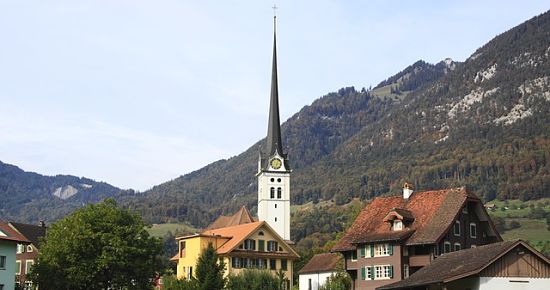
I live in New England where every town green is graced by a while clapboard Congregational church. But the only question people ask of those old buildings is, “What time is it?” when they glance at the steeple clock.
When people look to the clerisy for guidance it isn’t as a community, but as individuals. And generally they’re looking for what George Barna calls “life coaching” to help them reach their personal goals. I’m like the trainer down at the health center. I provide advice on a proper diet and work out regime for the spirit. Some of my colleagues have taken this up with gusto. They help people develop a personal relationship with Jesus in a meaningless world. I’m reminded of Harold Bloom’s take on the old hymn, “In the Garden”. People go there alone to commune with Jesus. And Bloom asked, “Just where is this garden, anyway?” It’s gnostic garden, he surmised, I think correctly. This place only exists inwardly.
The Blessing of Getting Stuck
Speaking of places, now that I’ve treated the professions, let’s look at the other operative word in title of this conference—localism.
I have come to grudgingly accepting that you don’t choose the location; the location chooses you.
I’ve moved around a lot during my time on the planet, first as luggage, then as the guy with the luggage. But I’ve been sitting on the same spot for the last ten years or so. The spot is in the Connecticut River valley, the rusted heart of industrial New England. The mills are largely gone; the gun makers are leaving, and if we ever beat our spears into pruning hooks the folks who work for Electric Boat will be out of work. But I won’t be leaving any time soon. I’ve set down some roots.
Not because I’m from around here. I’m from a different valley—the Ohio River valley, western Pennsylvania specifically. It’s a rusted belt too, but different enough that I don’t feel entirely at home in my new home. There’s no going back, though; I’m different enough now that western Pennsylvania isn’t home anymore. I’m a stranger wherever I go, I suppose.
I’m a minister, and we all know what Wendell Berry thinks of people in my vocation. We’re careerists, careening from church to church. We just don’t care enough about the places we’re called to. He’s right. But it begs a question. Yes, many of us blindly take our cues from mega-church pastors a thousand miles away, but the ladies in our churches often take their cues from a pastor who’s been dead for thirty years. And when a congregation turns on you, your best hope is to get out of Dodge as fast as you can. This can discourage putting down roots.
What does it mean to put down roots anyway? Does it mean buying a house? Shopping at farmers’ markets? Scolding yourself when you feel the urge to run?
After thinking about it a while I’ve concluded it means what the metaphor implies: it means drawing nourishment from the place where you’re planted.
I’m not talking about drawing something from the atmosphere of a place. Local color may inspire, but it won’t feed you (unless you can package it and sell it like they do on Cape Cod or in Vermont). What keeps you somewhere is productive property, the sort that can’t be moved. Wendell Berry has a farm. He cultivates it, draws a living from it. And he is a steward of it.
We can’t all get back to the farm, though–not soon, anyway. But there are other forms rooted property can take.
Small businesses usually work that way. Your reputation for minding the store takes years to build. Pastors know that a local businessman is worth three corporate executives. While the guy in the corner office may fill the offering plate with dough, his knowledge of a community is generally nil. And he could be transferred to Minneapolis in the blink of an eye. I’ve seen it: there he is; now he’s gone.
There is a risk to staying put. We should acknowledge it. That seems odd—what could be more conservative than putting down roots? But it is wildly speculative. The risk goes by the name: “opportunity cost.” By staying put you limit yourself to what this particular place can yield. And if you’ve made Detroit your home, well, too bad.
Local churches are somewhat like this. They’re not property—at least not a pastor’s property. But how my church fares will largely determine how I fare. While Connecticut isn’t Detroit, I do see young people leaving, and old folks too. It’s a hard place to start out, and a hard place to finish. It’s expensive to live here; it’s even more expensive to die here. Still, we’re holding our own, even growing some.
I wonder a bit about the future of my church, though. Someday she will be better served by a younger man. What then? Where will I go? I’ve seen old preachers kill their churches by using them as life support.
My church isn’t the only thing that keeps me here. There’s my wife’s family. We moved here between pastorates a decade ago in part because we wanted our kids to be around grandparents, aunts, uncles, and cousins. It was a good move. Then unexpectedly I received the call to be the pastor of the church I currently serve.
But there was another reason we moved here: investment real estate. I had collected some properties in the area on the side over the years.
When I was just starting out my wife and I went to visit a saintly pastor and wife who were getting along in years. They lived in a trailer. Their good cheer and hospitality spoke to their royal status in heaven amid their humble surroundings. But I was ashamed of the church for forgetting them. I’ve known others like them, elderly ministers living in trailers. Often they were the best men, not ladder-climbers, or namedroppers, just simple preachers who visited widows in their distress and went to fetch wayward children from the street. These were men I think even Wendell Berry would respect. But it was in the car during the ride home that I decided I would not become one of them. If possible, I would be both saintly and propertied. I don’t know if I’ve managed saintly—I’ve been told my faith is pretty earthy—but I’ve managed to become propertied. Maybe I’ve made some kind of trade, I don’t know. But I knew that day that, while I could trust the Lord to meet my needs, I could not trust the church.
That sounds terribly Protestant, I know. I suffer from the cautious love for the church that typifies the brand of Christianity I belong to.
I began investing in real estate in the early 1990s. I’ve done all right. Now I’m a freeholder. I even own enough to be considered a yeoman. I could have been a voter in colonial New England. It has afforded me a rare measure of independence for a preacher. I’ve not met another pastor who has done what I’ve done. But it has cost me something. I’m not free to get up and go. I’m rooted in the Connecticut River valley.
Commercial corporations have their own form of itinerancy. In the church the itinerancy was there from the start. The Son of Man had no place to lay his head, and Paul was a tentmaker—the perfect trade for a man on the road. Apostles didn’t set down roots. There was always another village on the other side of the hill that needed the gospel. But the apostles depended on the Lord. Their rootlessness distracts us from the roots that stuck straight up into the air. Corporation men are not rooted in the soil either. But their roots don’t reach up to heaven. They dig into corporations that float in the contested space between heaven and earth, where the Prince of the Power of the Air dwells.
Every formula for freedom I’ve come across contains some measure of dependency, usually hidden, like some secret ingredient. The Apostles enjoyed the freedom to be itinerate because they depended on bread from heaven; corporation men are unencumbered by local loyalties because they live like tiny corpuscles in national and transnational bodies. But the yeomanry: family farmers, small business owners, and people like me, depend directly on a particular place for a living. As those places fare, so do we.
 But we enjoy another form of freedom. We’re more self-reliant because we depend on things close at hand, things that grant us more agency than the rootless are granted. Sure, our local communities can’t separate themselves from the world entirely, as Berry’s fiction beautifully laments, but I’ll take the risks that come with my place over the freedom of the corporation man. He’s tied to the earth too. The body he lives in is a giant Mickey Mouse in the Macy’s Thanksgiving Day Parade. It’s tethered to the ground with strings too thin to be seen on television. But eventually everything that begins on earth falls back to earth and dies. There is great freedom in accepting this. I suppose I will die where I am planted.
__
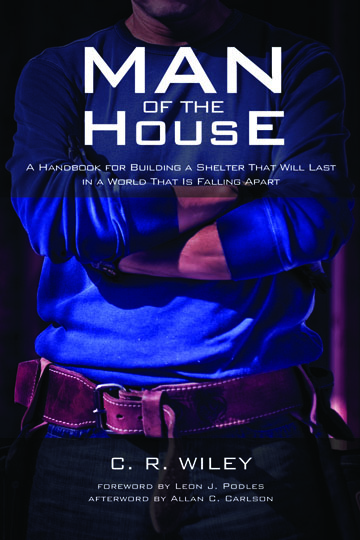
If you’d like to know more about my latest book before shelling out your hard-earned money for it, Wipf and Stock, the publisher of my book, Man of the House, has given me permission to share a little sample of the book with you. The hope, of course, is you will like it enough to purchase a copy. Enjoy!.
Click here to download the book excerpt as a PDF: Man of the House_Excerpt
Author and Speaking Appearances
Previous Post
September 19, 2017
You Say You Want Community? Yeah, Right.
Next Post
October 10, 2017 Man of the House Reviewed in Chronicles
Browse Our Archives
Select a Category Advising a Daughter Aristotle Art Atheism Author and Speaking Appearances Beauty Building Working Houses C R Wiley Children Community Creativity Cultural Apologetics Fatherhood Fiction Fidelity in marriage Film Freedom Gravitas H. P. Lovecraft Happiness Household Economy Infant Baptism Inklings Interpreting the Bible Interviews Jack Donovan Liturgy Localism Man of the House Manliness Martial Virtue Medieval Cosmology Metaphysics Mortimus Clay NecronomiCon New Left New Testament Household Codes Nietzsche Nominalism/Realism Politics Poverty Preaching Productive Property Reaching men Science Self-Sufficiency Side Hustles Social Ethics Social Security Spiritual Disciplines Sublime Techno-gnosticism The Pastor's Survival Guide Theology of the Family Tradition Uncategorized Virtue Weird Fiction
Select a Month February 2019 November 2018 October 2018 July 2018 June 2018 May 2018 April 2018 March 2018 February 2018 January 2018 December 2017 November 2017 October 2017 September 2017 August 2017 July 2017 June 2017 May 2017 April 2017 March 2017 February 2017 January 2017 December 2016 November 2016 October 2016 September 2016 August 2016 July 2016 June 2016 May 2016 April 2016 March 2016 February 2016 January 2016 December 2015
Follow Us!
TAKE THE
Religious Wisdom Quiz
Who said: "I am the Alpha and the Omega, who is, and who was, and who is to come, the Almighty"?
Select your answer to see how you score.
John God (the Lord God) An angel Jesus
Books by This Author Books by PaterFamilias Today
Books by C. R. Wiley

The Purloined Boy (The Weirdling Cycle #1)

Man of the House: A Handbook for Building a Shelter That Will Last in a World That Is Falling Apart
Related posts from PaterFamilias Today

Gutting Creation of Meaning Guts Scripture
Manhood at First Things and Touchstone


Appearing on The Dean Abbott Podcast, Among Other...
TRENDING AT PATHEOS Evangelical

How the author of the world's best hymn...
I've been working with John Newton for a while now. This makes...

Long before this Lectio Divina, Psalm 130 - the song - started...

What About the Trees? Another Living Parable
After I finished writing the last article about falling leaves as a...

Why Classical Education Is a Conversation, Not a...
Come and Read: Joy in Classical Education When I was a little...

Falling Leaves: A Living Parable on Letting Go
I’ve spent the vast majority of my life in the southeast corner...

Cornell University has received a great deal of negative publicity and intense...
view all Evangelical blogs
Ad-Free & Subscriber Log-In Subscription Support
- About Us
- 2026 Calendar
- Videos
- Podcasts
- Library of World Religions
- Faith In Media Tracker
- Advertise With Us
- Write for Us
- Privacy Policy
- Terms of Service
- Do Not Sell My Data
- Contact Us
- Radiant Digital
- Manage Newsletter Subscriptions
- Unsubscribe From Notifications
- Sitemap
Copyright 2008-2026, Patheos. All rights reserved.
Subscription Support Ad-Free & Subscriber Log-In
Follow Patheos