
BuddhistCatholicContemplativeEvangelicalGeneral ChristianHinduJewishLatter-day SaintMuslimNew VisionsProgressive Christian
Beliefs
- Buddhist
- Catholic
- Contemplative
- Evangelical
- General Christian
- Hindu
- Jewish
- Latter-day Saint
- More Voices
- Muslim
- New Visions
- Pagan
- Progressive Christian
Topics
- Religion News
- Food and Religion
- Sports and Religion
- Religious Art
- Religious Music and Entertainment
- Religious Events
- History and Religion
- Style and Religion
- Politics and Religion
- Women in Religion
- Recreation Outdoors and Religion
- Business Finance and Religion
- Careers Workplace and Religion
- Education and Religion
- Family Parenting and Religion
- Health Fitness and Religion
- Home and Religion
- Relationships and Religion
- Technology and Religion
- Travel and Religion
Columnists
- Buddhist Columnists
- Business Finance and Religion Columnists
- Careers Workplace and Religion Columnists
- Catholic Columnists
- Contemplative Columnists
- Education and Religion Columnists
- Evangelists Columnists
- Family Parenting and Religion Columnists
- General Christian Columnists
- Health Fitness and Religion Columnists
- Hindu Columnists
- History and Religion Columnists
- Home and Religion Columnists
- Jewish Columnists
- More Voices Columnists
- Latter Day Columnists
- Muslim Columnists
- New Visions Columnists
- Nonreligious Columnists
- Pagan Columnists
- Politics and Religion Columnists
- Progressive Columnists
- Recreation Outdoors and Religion Columnists
- Relationships and Religion Columnists
- Religion News Columnists
- Religious Art Columnists
- Religious Events Columnists
- Religious Music and Entertainment Columnists
- Sports and Religion Columnists
- Style and Religion Columnists
- Technology and Religion Columnists
- Travel and Religion Columnists
- Women in Religion Columnists
Resource Library
- 2026 Calendar
- Library of World Religions
- The 100 Most Holy Places on Earth
- Patheos Answers
- Podcasts
- Videos
- Faith Leaders Database
- Anglican Episcopalian
- Bahai
- Baptist
- Buddhism
- Christianity
- Confucianism
- Eastern Orthodoxy
- Hinduism
- Holiness and Pentecostal
- ISKCON
- Islam
- Judaism
- Lutheran
- Methodist
- The Church of Jesus Christ of Latter-day Saints
- New Age
- Paganism
- Presbytarian and Reformed
- Protestantism
- Religion Behind the Scenes
- Roman Catholic
- Scientology
- Shia Islam
- Sikhism
- Sufism
- Sunni Islam
- Taoism
- Zen
- See all religions
Research Tools
 Ad-Free & Subscriber Log-In Subscription Support
Ad-Free & Subscriber Log-In Subscription Support
Follow Patheos 

- Trending:
- Forgiveness
- |
- Marriage
- |
- Consciousness
- |
- Death Penalty
- |
- Election
- |
- Halloween
 PaterFamilias Today
- Home
- Evangelical
- Theological Foundations of the Family: Infant Baptism
Theological Foundations of the Family: Infant Baptism
Last updated on: April 7, 2017 at 8:45 am by C. R. Wiley
Theological Foundations of the Family: Infant Baptism 2017-04-07T08:45:32-04:00 C. R. Wiley
Patheos Explore the world's faith through different perspectives on religion and spirituality! Patheos has the views of the prevalent religions and spiritualities of the world.
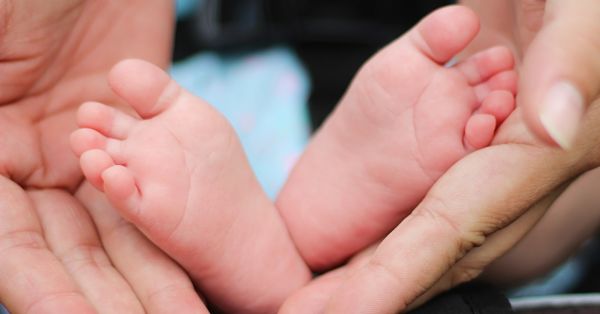
Largely it is axiomatic among libertarians that human institutions are fictions and only individuals are real.
It is used as a check to the the overweening ambitions of our social engineers. To keep those people from grinding us all down to a lowest common denominator, or turning us into cogs in machinery of the Total State, we must reduce the really real to the social atom we call the individual.
But this is a false choice because the libertarians and the social engineers share a common presupposition. Each believes that nature lacks a normative structure: things don’t come with purposes. We give the world its meaning.
But that must be wrong for the simple reason we are not really atoms at all. We’re social creatures by nature. We come with hooks and barbs and we cling.
Aristotle called us political animals. He didn’t mean we’re those creatures you run into on line who look with bloodshot eyes at their news feeds and spew out status updates and tweets in a never failing stream about the very, very latest thing that Trump did.
What he meant is human beings live in ordered communities. Anything else is would either make us gods or beasts.
This puts Baptists in a tough spot, because in the Christian world they are our libertarians. They pretty much think we’re all Adam freshly formed from the ground (except for the original sin thing) and we’re only duty bound by gratitude to God himself (if we so choose to be, oddly). If they didn’t think this way they’d baptize their babies.
Infant baptism is predicated on the truth that the cords that bind families together exist naturally and are there before we even know what it means to be an individual. You could say they’re more real in a way than individuals can ever hope to be. They make us who we are.
That may be heresy in the American religion, but when it comes to Christianity it is the way it has always been. And this is due to the fact that this is also the way Jews have looked at things in their own faith, and recall, Christians according to Paul have been grafted into Israel. What distinguishes Christians from Jews is not their understanding of what it means to be an individual. What distinguishes them is whether or not Jesus is the Messiah. For Jews the most important thing is being in Abraham, that makes you an heir of the Covenant promises. But Christians believe that Jesus is the true child of promise an the rightful heir of all the promises made to Abraham. Therefore being in Christ makes you Abraham’s heir.
The thing to consider when it comes to baptism is this: did those Jews and Christians know something we have forgotten? If you can accept that they did, not only will you look at infant baptism favorably, you will understand the Bible better. (You’ll also begin to understand why the whole modern obsession liberation is dangerous.)
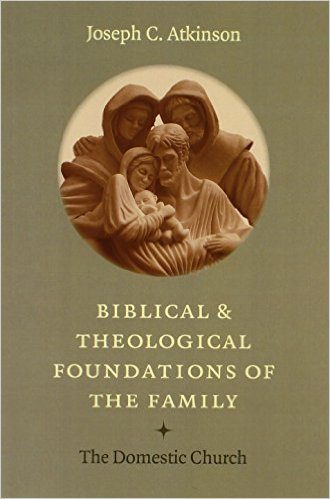 As readers of this blog know, I’ve been working my way through Joseph Atkinson’s, Biblical and Theological Foundations of the Family. Concerning the matter addressed above, here are a few excepts as they apply to baptism.
The manner in which Abraham functioned in the New Testament is once again reflective of the Semitic understanding of corporate personality which is foundational to Hebrew anthropology. Each family, tribe, or nation had its originating point in a single father to whom was given the covenant. All that sprung from Abraham is organically connected to him….
But we can also see how deeply this concept of corporate personality and its emphasis on organic unity continues to inform other realities in the New Covenant. The highest expression of this is found in the complete identification of the believer with Christ. (p.220)
Again, Atkinson dealing here with the libertarianism of the west explicitly;
The human person is not an autonomous, self determining entity, and neither is the family. The idea that a profound experience such as conversion to Christ could only affect an individual without affecting those with whom the person is ontologically connected (i.e. his family) is not possible within the Semitic mindset, which is also operating within the early Church. (p.225)
The correlation between circumcision (the mark of the Old Covenant) and baptism (the mark of the New) is a standard argument used by advocates of infant baptism. But Christian libertarians seldom find it persuasive largely because they assume that John the Baptist was a libertarian. But he wasn’t–and such a creature did not exist in the Church until recently.
For a paterfamilias in the first century, whether Jew or Greek, the idea that a man’s household didn’t convert when he did would have been unthinkable. Here’s Atkinson quoting Joachim Jeremias,
…when we consider family solidarity resting upon the authoritative influence of the head of the family it is scarcely conceivable that the baptism of a ‘household’ did not include all its members. (p.251)
And further, (this time Atkinson in his own voice):
…it would be virtually impossible for first century Jews to reject baptism of their children out of some regard for the autonomous rights or a novel belief in individualistic salvation. This would run counter to the Jewish experience of the covenant. (p.251)
Previous Post

March 31, 2017
Honest Work in a Virtual World, Thoughts on Working with Your Hands
Next Post

April 11, 2017 The Way of Men: Nietzsche or Aristotle?
Browse Our Archives
Select a Category Advising a Daughter Aristotle Art Atheism Author and Speaking Appearances Beauty Building Working Houses C R Wiley Children Community Creativity Cultural Apologetics Fatherhood Fiction Fidelity in marriage Film Freedom Gravitas H. P. Lovecraft Happiness Household Economy Infant Baptism Inklings Interpreting the Bible Interviews Jack Donovan Liturgy Localism Man of the House Manliness Martial Virtue Medieval Cosmology Metaphysics Mortimus Clay NecronomiCon New Left New Testament Household Codes Nietzsche Nominalism/Realism Politics Poverty Preaching Productive Property Reaching men Science Self-Sufficiency Side Hustles Social Ethics Social Security Spiritual Disciplines Sublime Techno-gnosticism The Pastor's Survival Guide Theology of the Family Tradition Uncategorized Virtue Weird Fiction
Select a Month February 2019 November 2018 October 2018 July 2018 June 2018 May 2018 April 2018 March 2018 February 2018 January 2018 December 2017 November 2017 October 2017 September 2017 August 2017 July 2017 June 2017 May 2017 April 2017 March 2017 February 2017 January 2017 December 2016 November 2016 October 2016 September 2016 August 2016 July 2016 June 2016 May 2016 April 2016 March 2016 February 2016 January 2016 December 2015
Follow Us!
TAKE THE
Religious Wisdom Quiz
Who was Miriam?
Select your answer to see how you score.
Moses' daughter Pharaoh's wife Moses' wife Moses' sister
Books by This Author Books by PaterFamilias Today
Books by C. R. Wiley

The Purloined Boy (The Weirdling Cycle #1)

Man of the House: A Handbook for Building a Shelter That Will Last in a World That Is Falling Apart
Related posts from PaterFamilias Today

Gutting Creation of Meaning Guts Scripture


Advice for a Single Woman Who Is Looking...

TRENDING AT PATHEOS Evangelical

The REST of Your Life: A Creative Wrestles...
This week I had a conversation with a good friend from church....

How the author of the world's best hymn...
I've been working with John Newton for a while now. This makes...

Long before this Lectio Divina, Psalm 130 - the song - started...

What About the Trees? Another Living Parable
After I finished writing the last article about falling leaves as a...

Why Classical Education Is a Conversation, Not a...
Come and Read: Joy in Classical Education When I was a little...

Cornell University has received a great deal of negative publicity and intense...
view all Evangelical blogs
Ad-Free & Subscriber Log-In Subscription Support
- About Us
- 2026 Calendar
- Videos
- Podcasts
- Library of World Religions
- Faith In Media Tracker
- Advertise With Us
- Write for Us
- Privacy Policy
- Terms of Service
- Do Not Sell My Data
- Contact Us
- Radiant Digital
- Manage Newsletter Subscriptions
- Unsubscribe From Notifications
- Sitemap
Copyright 2008-2026, Patheos. All rights reserved.
Subscription Support Ad-Free & Subscriber Log-In
Follow Patheos