
BuddhistCatholicContemplativeEvangelicalGeneral ChristianHinduJewishLatter-day SaintMuslimNew VisionsProgressive Christian
Beliefs
- Buddhist
- Catholic
- Contemplative
- Evangelical
- General Christian
- Hindu
- Jewish
- Latter-day Saint
- More Voices
- Muslim
- New Visions
- Pagan
- Progressive Christian
Topics
- Religion News
- Food and Religion
- Sports and Religion
- Religious Art
- Religious Music and Entertainment
- Religious Events
- History and Religion
- Style and Religion
- Politics and Religion
- Women in Religion
- Recreation Outdoors and Religion
- Business Finance and Religion
- Careers Workplace and Religion
- Education and Religion
- Family Parenting and Religion
- Health Fitness and Religion
- Home and Religion
- Relationships and Religion
- Technology and Religion
- Travel and Religion
Columnists
- Buddhist Columnists
- Business Finance and Religion Columnists
- Careers Workplace and Religion Columnists
- Catholic Columnists
- Contemplative Columnists
- Education and Religion Columnists
- Evangelists Columnists
- Family Parenting and Religion Columnists
- General Christian Columnists
- Health Fitness and Religion Columnists
- Hindu Columnists
- History and Religion Columnists
- Home and Religion Columnists
- Jewish Columnists
- More Voices Columnists
- Latter Day Columnists
- Muslim Columnists
- New Visions Columnists
- Nonreligious Columnists
- Pagan Columnists
- Politics and Religion Columnists
- Progressive Columnists
- Recreation Outdoors and Religion Columnists
- Relationships and Religion Columnists
- Religion News Columnists
- Religious Art Columnists
- Religious Events Columnists
- Religious Music and Entertainment Columnists
- Sports and Religion Columnists
- Style and Religion Columnists
- Technology and Religion Columnists
- Travel and Religion Columnists
- Women in Religion Columnists
Resource Library
- 2026 Calendar
- Library of World Religions
- The 100 Most Holy Places on Earth
- Patheos Answers
- Podcasts
- Videos
- Faith Leaders Database
- Anglican Episcopalian
- Bahai
- Baptist
- Buddhism
- Christianity
- Confucianism
- Eastern Orthodoxy
- Hinduism
- Holiness and Pentecostal
- ISKCON
- Islam
- Judaism
- Lutheran
- Methodist
- The Church of Jesus Christ of Latter-day Saints
- New Age
- Paganism
- Presbytarian and Reformed
- Protestantism
- Religion Behind the Scenes
- Roman Catholic
- Scientology
- Shia Islam
- Sikhism
- Sufism
- Sunni Islam
- Taoism
- Zen
- See all religions
Research Tools
 Ad-Free & Subscriber Log-In Subscription Support
Ad-Free & Subscriber Log-In Subscription Support
Follow Patheos 

- Trending:
- Forgiveness
- |
- Marriage
- |
- Consciousness
- |
- Death Penalty
- |
- Election
- |
- Halloween
 PaterFamilias Today
- Home
- Evangelical
- The Way of Men: Nietzsche or Aristotle?
The Way of Men: Nietzsche or Aristotle?
Last updated on: April 12, 2017 at 8:22 am by C. R. Wiley
The Way of Men: Nietzsche or Aristotle? 2017-04-12T08:22:43-04:00 C. R. Wiley
Patheos Explore the world's faith through different perspectives on religion and spirituality! Patheos has the views of the prevalent religions and spiritualities of the world.
When I was in graduate school (Harvard Divinity School) one of my professors put the choice starkly: “It is Nietzsche or Aristotle, make your choice.”*
It seemed off topic at the time, we were working through Montaigne’s essays. But it really wasn’t, because Montaigne, and others like him, have lead us away from Aristotle and in the end gave us Nietzsche.
I’ve been thinking about this for a long time as it applies to another question: “What does it mean to be a man–not just biologically and psychologically–but socially (meaning functionally) and even theologically?”
We all know what liberals think–manhood is essentially nothing.
I’ve never accepted that for a minute. I also know the price of admission to the circle of beautiful people is leaving my manhood at the door. (I’ve rejected the invitation enough times to know that.) If you doubt it, consider this. A few years back a book was published by one of the Seven Sisters with the charming title: The End of Men. The message being: there is nothing to masculinity that we can’t do without. (If a book were submitted to any of the major houses with the title The End of Women, or The End of Homosexuals, or even The End of African Americans, no one would touch it. That The End of Men actually was published is a backhanded compliment in a way–in means masculine men can take a punch.)
Back to Nietzsche and Aristotle
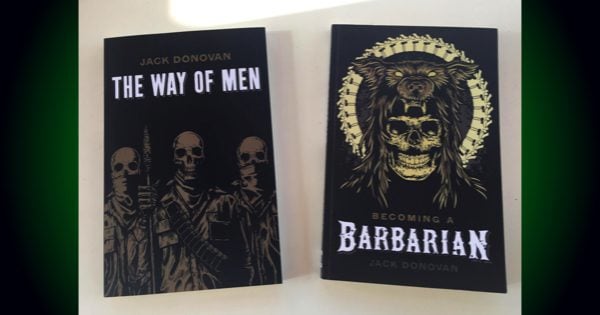
That a traditionally minded man like me should choose Aristotle likely leaves you unimpressed. (Now you know my choice.) But some men are looking to re-valorize manhood using Nietzsche. And one of the many who is popularizing this approach is named Jack Donovan.
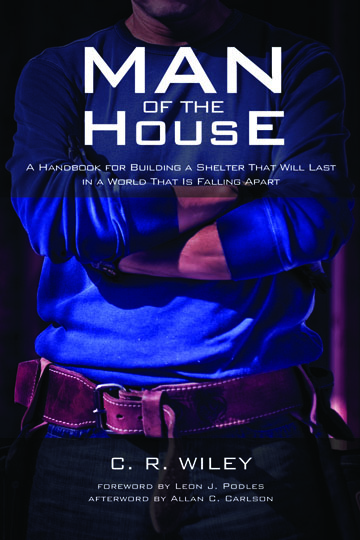 Jack has something of a cult-following among men on the edge. He’s written a number of books, the two most popular being The Way of Men and Becoming a Barbarian. I’ve read them both with a mixture of apprehension and appreciation. I’ve offered to send Jack a copy of my latest book Man of the House. I doubt that he will accept it, largely because he will smell Aristotle at a distance, among other things. Still, it was worth a try.
But let’s get back to Nietzsche and Aristotle and the choice. I think our books represent the choices a young man can make who knows manhood can mean something. Jack personifies Nietzsche and I am in my own way, Aristotle.
In the background is the metaphysics of the choice. Do we live in a world of given meanings, or do we make our meanings, fashioning them godlike from the raw materials of the natural world?
Regardless, followers of either way can agree the western world is a mess and on its way to collapse. The signs are all around us. And we can agree that men were made for times like these and the next world will call for the recovery of unfashionable virtues. But which ones?
We can also agree that those virtues will need hard edges in order to bring order out of chaos. But Jack wants to leapfrog over the recent history of the west to preChristian european traditions while I believe the virtues called for are still with us, just relegated to the periphery.
Where Jack is strong is on the subject of male fellowship and the history of men and their role on the edge. Men tend to thrive in environments that harden them. It’s those places that put the nagging questions about the purposes of manhood to rest. It is in defending the boundary, or slaying the beast, or even raising a shelter in the snow that men find their manhood confirmed, both to themselves, and to everybody else.
But when it comes to the larger picture, Jack has less to say. As with so many in Nietzsche’s school, Darwin is the guide. And Darwin largely is a disciple of Hobbes when it comes to purposes of social life. Survival is the thing.
But life together is more than a nonaggression pact. Aristotle taught that our ethics and our polities reinforce each other–move one and you move the other. But these do not exist suspended in water. They tend to serve our notions of human happiness and our convictions about the larger metaphysical order (or absence of it).
Jack has very little to say about any of that. He says next to nothing about women and children (at least in the books I’ve read). Just what is a man’s relationship to them apart from the bare facts that we wouldn’t be here without women and we once were children? It is in the tender places that the children of Nietzsche grow silent. (Which is something of a miracle; like Nietzsche they’re all products of the great tradition of German bombast.) The reason they have nothing to say says something about the problem with solipsism generally, it can’t talk itself out of itself.
But we do see some interesting things with Jack recently. He’s exploring Norse myths and looking for spiritual realities that will get him in touch with a larger world. It is not enough to merely reject modernity in all its contemptible softness. We must offer ourselves to something bigger than ourselves.
And to me that’s a positive development. It reminds me of something C. S. Lewis said on the subject of paganism.
** He was summarizing McIntyre, of course–but more generally summarizing the choice between discovering meaning and making it.*
Previous Post

April 6, 2017
Theological Foundations of the Family: Infant Baptism
Next Post

April 20, 2017 Re-enchanting Male & Female
Browse Our Archives
Select a Category Advising a Daughter Aristotle Art Atheism Author and Speaking Appearances Beauty Building Working Houses C R Wiley Children Community Creativity Cultural Apologetics Fatherhood Fiction Fidelity in marriage Film Freedom Gravitas H. P. Lovecraft Happiness Household Economy Infant Baptism Inklings Interpreting the Bible Interviews Jack Donovan Liturgy Localism Man of the House Manliness Martial Virtue Medieval Cosmology Metaphysics Mortimus Clay NecronomiCon New Left New Testament Household Codes Nietzsche Nominalism/Realism Politics Poverty Preaching Productive Property Reaching men Science Self-Sufficiency Side Hustles Social Ethics Social Security Spiritual Disciplines Sublime Techno-gnosticism The Pastor's Survival Guide Theology of the Family Tradition Uncategorized Virtue Weird Fiction
Select a Month February 2019 November 2018 October 2018 July 2018 June 2018 May 2018 April 2018 March 2018 February 2018 January 2018 December 2017 November 2017 October 2017 September 2017 August 2017 July 2017 June 2017 May 2017 April 2017 March 2017 February 2017 January 2017 December 2016 November 2016 October 2016 September 2016 August 2016 July 2016 June 2016 May 2016 April 2016 March 2016 February 2016 January 2016 December 2015
Follow Us!
TAKE THE
Religious Wisdom Quiz
Which Christian group follows the Five Points of Calvinism?
Select your answer to see how you score.
Pentecostals Baptists Reformed Methodists
Books by This Author Books by PaterFamilias Today
Books by C. R. Wiley

The Purloined Boy (The Weirdling Cycle #1)

Man of the House: A Handbook for Building a Shelter That Will Last in a World That Is Falling Apart
Related posts from PaterFamilias Today


Advice for a Single Woman Who Is Looking...
My Latest Appearance on The Chris Craft Show
TRENDING AT PATHEOS Evangelical

The REST of Your Life: A Creative Wrestles...
This week I had a conversation with a good friend from church....

How the author of the world's best hymn...
I've been working with John Newton for a while now. This makes...

Long before this Lectio Divina, Psalm 130 - the song - started...

What About the Trees? Another Living Parable
After I finished writing the last article about falling leaves as a...

Why Classical Education Is a Conversation, Not a...
Come and Read: Joy in Classical Education When I was a little...

Cornell University has received a great deal of negative publicity and intense...
view all Evangelical blogs
Ad-Free & Subscriber Log-In Subscription Support
- About Us
- 2026 Calendar
- Videos
- Podcasts
- Library of World Religions
- Faith In Media Tracker
- Advertise With Us
- Write for Us
- Privacy Policy
- Terms of Service
- Do Not Sell My Data
- Contact Us
- Radiant Digital
- Manage Newsletter Subscriptions
- Unsubscribe From Notifications
- Sitemap
Copyright 2008-2026, Patheos. All rights reserved.
Subscription Support Ad-Free & Subscriber Log-In
Follow Patheos