
BuddhistCatholicContemplativeEvangelicalGeneral ChristianHinduJewishLatter-day SaintMuslimNew VisionsProgressive Christian
Beliefs
- Buddhist
- Catholic
- Contemplative
- Evangelical
- General Christian
- Hindu
- Jewish
- Latter-day Saint
- More Voices
- Muslim
- New Visions
- Pagan
- Progressive Christian
Topics
- Religion News
- Food and Religion
- Sports and Religion
- Religious Art
- Religious Music and Entertainment
- Religious Events
- History and Religion
- Style and Religion
- Politics and Religion
- Women in Religion
- Recreation Outdoors and Religion
- Business Finance and Religion
- Careers Workplace and Religion
- Education and Religion
- Family Parenting and Religion
- Health Fitness and Religion
- Home and Religion
- Relationships and Religion
- Technology and Religion
- Travel and Religion
Columnists
- Buddhist Columnists
- Business Finance and Religion Columnists
- Careers Workplace and Religion Columnists
- Catholic Columnists
- Contemplative Columnists
- Education and Religion Columnists
- Evangelists Columnists
- Family Parenting and Religion Columnists
- General Christian Columnists
- Health Fitness and Religion Columnists
- Hindu Columnists
- History and Religion Columnists
- Home and Religion Columnists
- Jewish Columnists
- More Voices Columnists
- Latter Day Columnists
- Muslim Columnists
- New Visions Columnists
- Nonreligious Columnists
- Pagan Columnists
- Politics and Religion Columnists
- Progressive Columnists
- Recreation Outdoors and Religion Columnists
- Relationships and Religion Columnists
- Religion News Columnists
- Religious Art Columnists
- Religious Events Columnists
- Religious Music and Entertainment Columnists
- Sports and Religion Columnists
- Style and Religion Columnists
- Technology and Religion Columnists
- Travel and Religion Columnists
- Women in Religion Columnists
Resource Library
- 2026 Calendar
- Library of World Religions
- The 100 Most Holy Places on Earth
- Patheos Answers
- Podcasts
- Videos
- Faith Leaders Database
- Anglican Episcopalian
- Bahai
- Baptist
- Buddhism
- Christianity
- Confucianism
- Eastern Orthodoxy
- Hinduism
- Holiness and Pentecostal
- ISKCON
- Islam
- Judaism
- Lutheran
- Methodist
- The Church of Jesus Christ of Latter-day Saints
- New Age
- Paganism
- Presbytarian and Reformed
- Protestantism
- Religion Behind the Scenes
- Roman Catholic
- Scientology
- Shia Islam
- Sikhism
- Sufism
- Sunni Islam
- Taoism
- Zen
- See all religions
Research Tools
 Ad-Free & Subscriber Log-In Subscription Support
Ad-Free & Subscriber Log-In Subscription Support
Follow Patheos 

- Trending:
- Forgiveness
- |
- Marriage
- |
- Consciousness
- |
- Death Penalty
- |
- Election
- |
- Halloween
 PaterFamilias Today
- Home
- Evangelical
- Theological Foundations of the Family: Corporate Personality
Theological Foundations of the Family: Corporate Personality
Last updated on: February 16, 2017 at 10:54 am by C. R. Wiley
Theological Foundations of the Family: Corporate Personality 2017-02-16T10:54:11-04:00 C. R. Wiley
Patheos Explore the world's faith through different perspectives on religion and spirituality! Patheos has the views of the prevalent religions and spiritualities of the world.

I have long suspected that the real reason American evangelicals are so ignorant about the Old Testament is because it doesn’t support the individualistic and private religion they prefer.
Often when you hear someone say something like this you may safely assume that an advocate of the welfare state is about to use evangelicals as a foil for increasing the soft-totalitarianism progressives prefer. If that’s your fear, not to worry. For me Sweden is hell on earth (like Dante’s lowest level in the Inferno where Satan is encased in ice).
No, what I have in mind is much more intuitive and much older.
What we have in the Old Testament is centered on the family, not the welfare state. And there it is family connections that matter most. The individual is born into a family and the duties that attend to family life are what is stressed.
But there is something of a paradox at work here according to Joseph C. Atkinson, author of Biblical and Theological Foundations of the Family, because to the premodern way of looking at things an individual can be large enough so as to include other people.
This is what he refers to as The Corporate Personality.
The Corporate Personality in the Bible
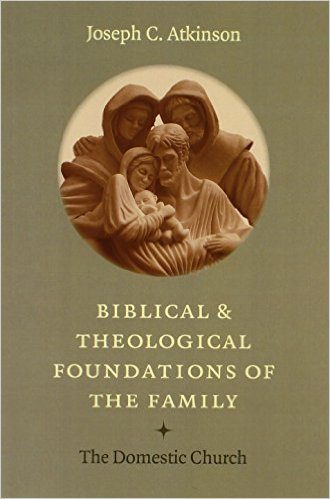
https://www.amazon.com/Biblical-Theological-Foundations-Family-Domestic/dp/0813221706/ref=sr_1_1?s=books&ie=UTF8&qid=1481117531&sr=1-1&keywords=biblical+and+theological+foundations+of+the+family
References to it are all over the place, but we miss their significance because we tend to understand everything we read through a set of modern lenses. (Putting it another way, we misunderstand what we read.)
Throughout the Old Testament we hear the people of God referred to as Israel time and again. And in the New Testament people are said to be in Adam or in Christ. In the case of the Old Testament we think of Israel as the name of a nation, like United States. But recall, Israel is the name of a person. (Nobody named United States has ever lived.)
Israel is Jacob, Esau’s brother, and he’s Isaac’s son. He was given the name Israel by the Lord to to confirm that he was the true heir of the covenant God had made with Abraham.
When it comes to the New Testament’s use of the preposition in we think of its use as either a figure of speech or as a concept without any physical reality. For example, when it comes to leaving Adam and entering Christ it is as though we merely move from one side of a ledger in God’s mind to another.
But these ways of thinking–seeing Israel as a nation and not a person, and seeing Adam and Christ as concepts and not people–miss the truth. They miss corporate personalities. People can be big–very, very big–and we can fit inside them.
Here’s another way of looking at what I’m talking about.
In the modern world people can unite and create a legal person. They can even draw thousands of people into it. We call this forming a corporation. (From corpus–Latin for body.) This is the process people generally have in mind when they speak about forming a church–you know, discrete individuals voluntary coming together to form a body. But to premodern people you actually start with a person, with a real body, and over generations that person can grow to include thousands, even millions of people. This is what happened with Israel, and it is also the case with Adam, and yes, even Christ.
Here’s Atkinson on how it works:
…there appears to be active in Hebrew thought a construct which is foundational to and permeates the Israelite understanding of family. Like many underlying factors, it is not obvious and, perhaps because it is not obvious, it is all the more powerful. In any consideration of the OT understanding of family, the sense of an “organic” dimension begins to emerge. There is a vital organic link between the generations; the common ancestor-father provides the very identity for the later generations of the tribe…. The family is conceived as an organic entity; both blessings and curses are visited on the whole family because of the father’s actions. (p.162)
This is what it means to be an Israelite–you enjoy the blessings of the covenant because Israel was the true heir and you are in him. (This, by the way, is what it means to be in Adam as well, suffering the consequences of original sin. And it follows that this is what it also means to be in Christ, enjoying the blessings of his righteousness.)
This has at least two very important implications for families today.
First, in the New Testament it is assumed that families still function in this way. (And now you know why the household codes are not merely the residue of first century culture that can be easily sloughed off.)
And second, it is through fathers principally, and mothers in a pinch, that the blessings of the covenant are passed on to family members to this very day.
Next Thursday I’ll present what this means for fathers when I discuss priestly fatherhood as it is described in Atkinson.
Next Post
February 25, 2017 Theological Foundations of the Family: Priestly Fatherhood
Browse Our Archives
Select a Category Advising a Daughter Aristotle Art Atheism Author and Speaking Appearances Beauty Building Working Houses C R Wiley Children Community Creativity Cultural Apologetics Fatherhood Fiction Fidelity in marriage Film Freedom Gravitas H. P. Lovecraft Happiness Household Economy Infant Baptism Inklings Interpreting the Bible Interviews Jack Donovan Liturgy Localism Man of the House Manliness Martial Virtue Medieval Cosmology Metaphysics Mortimus Clay NecronomiCon New Left New Testament Household Codes Nietzsche Nominalism/Realism Politics Poverty Preaching Productive Property Reaching men Science Self-Sufficiency Side Hustles Social Ethics Social Security Spiritual Disciplines Sublime Techno-gnosticism The Pastor's Survival Guide Theology of the Family Tradition Uncategorized Virtue Weird Fiction
Select a Month February 2019 November 2018 October 2018 July 2018 June 2018 May 2018 April 2018 March 2018 February 2018 January 2018 December 2017 November 2017 October 2017 September 2017 August 2017 July 2017 June 2017 May 2017 April 2017 March 2017 February 2017 January 2017 December 2016 November 2016 October 2016 September 2016 August 2016 July 2016 June 2016 May 2016 April 2016 March 2016 February 2016 January 2016 December 2015
Follow Us!
TAKE THE
Religious Wisdom Quiz
"Thou preparest a table for me in the presence of mine _____."
Select your answer to see how you score.
Friends Children Kinsmen Enemies
Books by This Author Books by PaterFamilias Today
Books by C. R. Wiley

The Purloined Boy (The Weirdling Cycle #1)

Man of the House: A Handbook for Building a Shelter That Will Last in a World That Is Falling Apart
Related posts from PaterFamilias Today

Gutting Creation of Meaning Guts Scripture


Advice for a Single Woman Who Is Looking...
TRENDING AT PATHEOS Evangelical

How the author of the world's best hymn...
I've been working with John Newton for a while now. This makes...

Long before this Lectio Divina, Psalm 130 - the song - started...

What About the Trees? Another Living Parable
After I finished writing the last article about falling leaves as a...

Why Classical Education Is a Conversation, Not a...
Come and Read: Joy in Classical Education When I was a little...

Falling Leaves: A Living Parable on Letting Go
I’ve spent the vast majority of my life in the southeast corner...

Cornell University has received a great deal of negative publicity and intense...
view all Evangelical blogs
Ad-Free & Subscriber Log-In Subscription Support
- About Us
- 2026 Calendar
- Videos
- Podcasts
- Library of World Religions
- Faith In Media Tracker
- Advertise With Us
- Write for Us
- Privacy Policy
- Terms of Service
- Do Not Sell My Data
- Contact Us
- Radiant Digital
- Manage Newsletter Subscriptions
- Unsubscribe From Notifications
- Sitemap
Copyright 2008-2026, Patheos. All rights reserved.
Subscription Support Ad-Free & Subscriber Log-In
Follow Patheos