
BuddhistCatholicContemplativeEvangelicalGeneral ChristianHinduJewishLatter-day SaintMuslimNew VisionsProgressive Christian
Beliefs
- Buddhist
- Catholic
- Contemplative
- Evangelical
- General Christian
- Hindu
- Jewish
- Latter-day Saint
- More Voices
- Muslim
- New Visions
- Pagan
- Progressive Christian
Topics
- Religion News
- Food and Religion
- Sports and Religion
- Religious Art
- Religious Music and Entertainment
- Religious Events
- History and Religion
- Style and Religion
- Politics and Religion
- Women in Religion
- Recreation Outdoors and Religion
- Business Finance and Religion
- Careers Workplace and Religion
- Education and Religion
- Family Parenting and Religion
- Health Fitness and Religion
- Home and Religion
- Relationships and Religion
- Technology and Religion
- Travel and Religion
Columnists
- Buddhist Columnists
- Business Finance and Religion Columnists
- Careers Workplace and Religion Columnists
- Catholic Columnists
- Contemplative Columnists
- Education and Religion Columnists
- Evangelists Columnists
- Family Parenting and Religion Columnists
- General Christian Columnists
- Health Fitness and Religion Columnists
- Hindu Columnists
- History and Religion Columnists
- Home and Religion Columnists
- Jewish Columnists
- More Voices Columnists
- Latter Day Columnists
- Muslim Columnists
- New Visions Columnists
- Nonreligious Columnists
- Pagan Columnists
- Politics and Religion Columnists
- Progressive Columnists
- Recreation Outdoors and Religion Columnists
- Relationships and Religion Columnists
- Religion News Columnists
- Religious Art Columnists
- Religious Events Columnists
- Religious Music and Entertainment Columnists
- Sports and Religion Columnists
- Style and Religion Columnists
- Technology and Religion Columnists
- Travel and Religion Columnists
- Women in Religion Columnists
Resource Library
- 2026 Calendar
- Library of World Religions
- The 100 Most Holy Places on Earth
- Patheos Answers
- Podcasts
- Videos
- Faith Leaders Database
- Anglican Episcopalian
- Bahai
- Baptist
- Buddhism
- Christianity
- Confucianism
- Eastern Orthodoxy
- Hinduism
- Holiness and Pentecostal
- ISKCON
- Islam
- Judaism
- Lutheran
- Methodist
- The Church of Jesus Christ of Latter-day Saints
- New Age
- Paganism
- Presbytarian and Reformed
- Protestantism
- Religion Behind the Scenes
- Roman Catholic
- Scientology
- Shia Islam
- Sikhism
- Sufism
- Sunni Islam
- Taoism
- Zen
- See all religions
Research Tools
 Ad-Free & Subscriber Log-In Subscription Support
Ad-Free & Subscriber Log-In Subscription Support
Follow Patheos 

- Trending:
- Forgiveness
- |
- Marriage
- |
- Consciousness
- |
- Death Penalty
- |
- Election
- |
- Halloween
 PaterFamilias Today
- Home
- Evangelical
- Freedom: I don’t think it means what you think it means
Freedom: I don’t think it means what you think it means
Last updated on: March 1, 2017 at 8:55 am by C. R. Wiley
Freedom: I don’t think it means what you think it means 2017-03-01T08:55:38-04:00 C. R. Wiley
Patheos Explore the world's faith through different perspectives on religion and spirituality! Patheos has the views of the prevalent religions and spiritualities of the world.
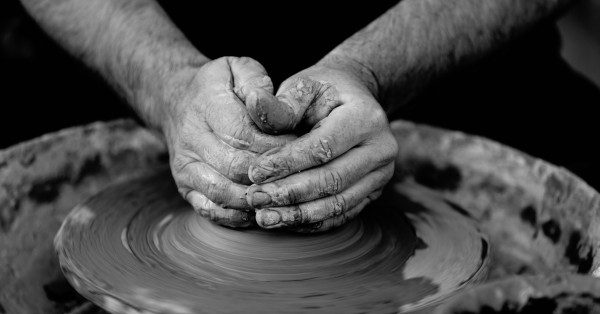
One of the conceptual blocks I ran into as a young convert was the notion that freedom is subject to morality.
Like just about everyone else I considered freedom to be amoral, or even better the highest moral value only grudgingly hemmed in by the freedom of other people.
Only later would I come to see that my convictions (if they could even be called convictions) were the same as the Utilitarians–people like Jeremy Bentham and John Stuart Mill–who saw the world in materialistic terms. The universe itself is an amoral place in this view, and the only moral consideration is what to do when your freedom bumps up against other people.
The Utilitarians did believe that there are other people and that we should be concerned for their happiness–the greatest good for the greatest number is the way it is usually remembered. I suppose we should be happy about that. But really, they shouldn’t receive too much credit. They were carried along on the coattails of the Golden Rule, “Do unto others as you would have them do unto you.”
Neutral Space and Social Experimentation
Mill in particular believed that this neutral space–meaning the amorality of both matter and freedom–makes social experimentation possible. People should be permitted to invent new ways to live, with the caveat of course, that they don’t hurt anyone besides themselves in the process.
We see this everywhere today–in the economy, particularly in the ways technology and our lives coalesce. But we see it most intimately with our home ways–our domestic arrangements and our sexual practices.
Sometimes the term “social engineering” is used to referred to this way of shaping social life. The term gives away more than it gives though. For one thing, people are not as malleable as the metaphor can imply. We’re not discrete objects that can be moved about without damage to ourselves or to others. We’re fuzzy and we tend to cling.
Real engineers understand the need to work with the structures inherent to their materials. Unfortunately social engineers don’t look at real people this way. (Perhaps because they don’t have a background in the real sciences.) For social engineers human beings are not subject to a human nature. These engineers believe in the freedom of the blank page. Anything less than that compromises our freedom to make whatever we please of ourselves.
Blank pages are not really blank
I was trained as a visual artist and I know some things about blank pages. For one thing, to actually draw something you must begin. Once you’ve begun, then what you’ve done goes a long way toward determining what you end up with. And if freedom is a blank page, the further you progress, the less freedom you have. (No wonder people can’t decide what to watch on television.)
But that’s not even the full story. Pages are never really blank. They come in different weights and textures. Some are designed for pen and ink, others for watercolors, others for oils. So the page contributes to the work–the quality of the work and what you can do on the page are limited by what the paper will permit. (And that’s not even considering the medium you’re working in or your tools and their quality.) So even the page inhibits your freedom.
But wait! There’s more bad news. There’s the whole matter of skill. Just because you’ve got the right paper and the best medium for what you want to do doesn’t mean you’ll actually be able to create the thing you envision. You may have no ability.
In art school the thing you do to hone your skill is copy. You copy great works of art, you use models and you work hard to reproduce what you see. And the reason you do these things, even in the age of photography, is because you want to be able to produce what you want to produce. Copying comes first, then comes creating your own work.
Not just freedom from, freedom for
What the preachers of the blank page miss is the real nature of freedom. Freedom is not keeping your options open. That’s keeping freedom in abeyance. It can even be a form of bondage–a slavery to indecision and fear.
True freedom is the freedom to pursue the good in truth. It gets you out of yourself. This is what the Apostle Paul was getting at when he spoke of freedom.
It’s a scary thing because freedom is intrinsically moral, not amoral. And this means you can get it wrong. It even means you are subject to judgment, not just your own judgment, but the judgments of others.
This isn’t all that difficult to understand really. We just don’t want to think about it. Amoral freedom comes with enormous blind spots. As I’ve mentioned, it blinds us to the nature of things. And that includes human nature. We’re not self-generating little gods–we’re rational, dependent creatures. Denying this makes us liars.
Where this comes home is at home. So much of the nonsense on gender and alternative lifestyles goes back to the error of the blank page and false notions of freedom. But if it were only the case that we were dealing with blank pages. If we were we could just throw the ugly products of false freedom in file 13. But we’re not. We’re dealing with real people, and human nature–expressed as male and female. And because of an amoral conception of freedom human beings are being trashed and wasted.
Previous Post
February 25, 2017
Theological Foundations of the Family: Priestly Fatherhood
Next Post

March 2, 2017 Theological Foundations of the Family: Family as Image of the Covenant
Browse Our Archives
Select a Category Advising a Daughter Aristotle Art Atheism Author and Speaking Appearances Beauty Building Working Houses C R Wiley Children Community Creativity Cultural Apologetics Fatherhood Fiction Fidelity in marriage Film Freedom Gravitas H. P. Lovecraft Happiness Household Economy Infant Baptism Inklings Interpreting the Bible Interviews Jack Donovan Liturgy Localism Man of the House Manliness Martial Virtue Medieval Cosmology Metaphysics Mortimus Clay NecronomiCon New Left New Testament Household Codes Nietzsche Nominalism/Realism Politics Poverty Preaching Productive Property Reaching men Science Self-Sufficiency Side Hustles Social Ethics Social Security Spiritual Disciplines Sublime Techno-gnosticism The Pastor's Survival Guide Theology of the Family Tradition Uncategorized Virtue Weird Fiction
Select a Month February 2019 November 2018 October 2018 July 2018 June 2018 May 2018 April 2018 March 2018 February 2018 January 2018 December 2017 November 2017 October 2017 September 2017 August 2017 July 2017 June 2017 May 2017 April 2017 March 2017 February 2017 January 2017 December 2016 November 2016 October 2016 September 2016 August 2016 July 2016 June 2016 May 2016 April 2016 March 2016 February 2016 January 2016 December 2015
Follow Us!
TAKE THE
Religious Wisdom Quiz
What does the Bible say about "bearing each other's burdens"?
Select your answer to see how you score.
Ignore troubles Help each other Complain Only help yourself
Books by This Author Books by PaterFamilias Today
Books by C. R. Wiley

The Purloined Boy (The Weirdling Cycle #1)

Man of the House: A Handbook for Building a Shelter That Will Last in a World That Is Falling Apart
Related posts from PaterFamilias Today

Transcendence: Meaning from Above

Gutting Creation of Meaning Guts Scripture


Advice for a Single Woman Who Is Looking...
TRENDING AT PATHEOS Evangelical

How the author of the world's best hymn...
I've been working with John Newton for a while now. This makes...

Long before this Lectio Divina, Psalm 130 - the song - started...

What About the Trees? Another Living Parable
After I finished writing the last article about falling leaves as a...

Why Classical Education Is a Conversation, Not a...
Come and Read: Joy in Classical Education When I was a little...

Falling Leaves: A Living Parable on Letting Go
I’ve spent the vast majority of my life in the southeast corner...

Cornell University has received a great deal of negative publicity and intense...
view all Evangelical blogs
Ad-Free & Subscriber Log-In Subscription Support
- About Us
- 2026 Calendar
- Videos
- Podcasts
- Library of World Religions
- Faith In Media Tracker
- Advertise With Us
- Write for Us
- Privacy Policy
- Terms of Service
- Do Not Sell My Data
- Contact Us
- Radiant Digital
- Manage Newsletter Subscriptions
- Unsubscribe From Notifications
- Sitemap
Copyright 2008-2026, Patheos. All rights reserved.
Subscription Support Ad-Free & Subscriber Log-In
Follow Patheos